


América
Astronomical Knowledge of the Mayans: Predictions, Calculations, and Meanings
Systematic Sky ObservationThe Mayan civilization, which flourished from approximately 2000 BCE to the 16th century, d...


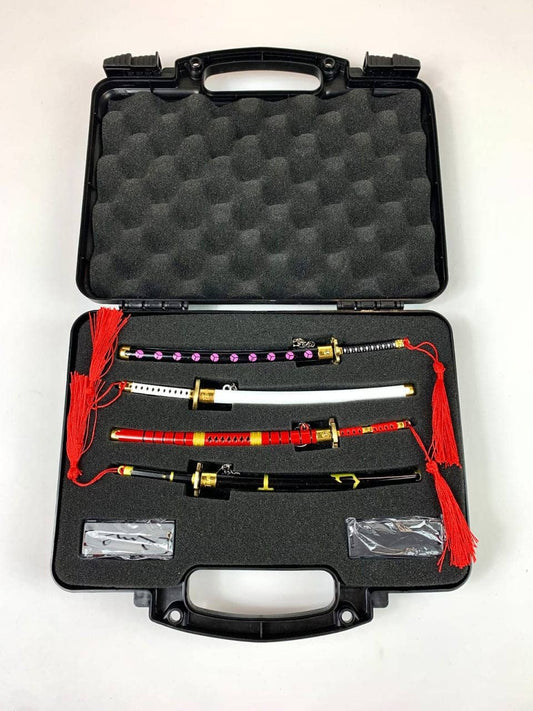


Thor, the god of thunder in Norse mythology, is a symbol of strength, courage, and protection. Son of Odin and defender of gods and humans, his adventures are narrated in...
Thor, the god of thunder, is one of the best-known and most revered figures in Norse mythology. His stories, myths, and symbols have left a profound mark on Viking culture and continue to be present in popular culture today. The figure of Thor not only represents strength and courage, but also protection and justice, core values for ancient Nordic society. In this article we explore its origin, its emblematic hammer Mjolnir, its role in the Eddas and its cultural and religious significance. Thor in Norse mythology: the god of thunder Thor, son of Odin, the supreme god, and Jörd, the goddess of the earth, is recognized as the god of thunder, storms, and fertility. His immense strength and unwavering courage make him a protector of both gods and humans. He is the husband of Sif, famous for her golden hair, and the father of several children, including Thrud, Modi, and Magni. During the Viking Age, Thor was central to Norse religion and culture. He not only defended humanity from giants and evil forces, but was also associated with the fertility of the land and the prosperity of the people. Meanwhile, his connection with thunder and lightning made him a feared and respected deity, capable of influencing nature and the daily lives of the Vikings. Thor personified the ideal of the valiant warrior and tireless protector, solidifying his status as one of the most revered gods in the Norse pantheon. The hammer Mjolnir: weapon and sacred symbol Mjolnir, the hammer, is Thor's most iconic object and one of the most powerful symbols in Norse mythology. This weapon was not only devastating in combat against giants and monsters, but it also had a deep symbolic value. Vikings carried amulets shaped like Mjolnir to invoke the god's protection and ensure safety during journeys, battles, and harvests. Mjolnir represents justice, order, and protection against chaos, solidifying Thor's image as the supreme defender of humanity and the gods. The importance of this hammer transcended Norse religion: its iconography appears on runestones, jewelry, and ritual objects, reflecting its cultural relevance and symbolic power for the ancient Vikings. Thor in myths and the Eddas The stories of Thor are preserved mainly in the Poetic Edda and in the prose of Snorri Sturluson, written in Iceland in the 13th century from much older oral traditions. Among the most well-known myths are: The theft of Mjolnir : Thor disguises himself as a bride to retrieve his hammer from the hands of the giant Thrym, demonstrating not only strength, but also cunning and ingenuity. The battle against Jörmungandr : the Midgard serpent, his archenemy, with whom it is prophesied that he will die during Ragnarok, the final battle of the gods. Hymir's Cauldron : Thor faces seemingly impossible challenges to obtain a giant cauldron meant for the gods, showing his perseverance and determination. These stories not only narrate spectacular adventures, but also reflect the values of Viking society: courage, loyalty, protection, and justice. Thor appears as the supreme warrior, always ready to face enormous forces to maintain order and security in the world. The cultural and religious significance of Thor Thor held a central place in the spiritual and cultural life of the Norse peoples. Warriors, farmers, and families venerated him, associating him with protection, fertility, and prosperity. His worship manifested itself in rituals, amulets, and runestones distributed throughout the Nordic world. Even with the Christianization of Scandinavia in the 10th and 11th centuries, Thor's influence remained alive in local folklore and traditions. Today, Thor continues to be an influential figure in modern culture, appearing in comics, movies, TV series and literature, maintaining his symbolic and cultural relevance. Their legacy reflects not only Viking mythology and history, but also the way the ancient Norse interpreted nature, warfare, and morality, leaving a lasting impact that transcends centuries. Thor, the god of thunder, symbolizes strength, courage, protection, and justice in Norse mythology. Its influence transcended the Viking Age, persisting in contemporary folklore and popular culture. Knowing its history and meaning allows for a better understanding of Norse mythology, as well as how the ancient Vikings interpreted the world and their relationship with the gods, solidifying Thor as an eternal figure of strength and heroism.
Read more
The Knights Templar were one of the most powerful and mysterious orders of the Middle Ages. Born after the First Crusade, they combined monastic life with military prowess, leaving a...
Who were the Knights Templar? The Order of the Temple, one of the most enigmatic of the Middle Ages, was born after the First Crusade around the year 1119 in Jerusalem, founded by Hugo de Payens and eight French knights. Its initial mission was to protect pilgrims traveling to the Holy Land, but it soon transformed into a powerful military and religious order, recognized by the Church at the Council of Troyes in 1129. With the support of Bernard of Clairvaux, they drafted their strict Latin Rule, inspired by that of Saint Benedict, which combined monastic life with military training. The Templars swore poverty, chastity and obedience, but their influence grew unstoppably. Their estates, castles, and financial networks spread throughout Europe and the Middle East, making them the first international bankers of the Middle Ages. Directly subordinate to the Pope, they were a feared and respected force, whose power rivaled that of kings. However, his success attracted the envy of Philip IV of France, who in 1307 ordered his arrest on charges of heresy and blasphemy. After years of torture and rigged trials, Pope Clement V officially dissolved the Order in 1312. Its last Grand Master, Jacques de Molay, was executed at the stake in 1314, giving rise to the Templar legend that still inspires fascination today. (Photo of the Medieval Templar Tabard, Various colors -Includes Hospitallers and Teutonic Knights-) The Templar sword: symbol of faith and power The Templar sword was much more than a weapon. It represented the union of Christian faith and military power. Its design came from the Carolingian swords, heirs of the Roman spatha, and evolved alongside the Crusades. Made from tempered steel and forged by master craftsmen, the Templars' swords had a straight, double-edged blade, with a simple cross on the hilt, a symbol of their sacred cause. During the 12th century, the need to face more resistant armor led to the development of thinner, pointed blades, adapted to both slashing and thrusting. In the 13th century, the one-and-a-half-hand swords emerged, longer and more versatile, offering a balance between reach and maneuverability. Each sword was blessed before entering combat, becoming an instrument of faith. The leaf was said to represent justice, and the edge, the defense of Christianity. (Photo by Templar Sword ) The shields of the Templars: protection and symbol of faith The Templar shield not only served as a defense, but also as a spiritual manifestation. Almond-shaped—inspired by the Norman shield—it offered effective protection on the battlefield and reflected the Order's visual identity. Its red cross on a white background symbolized sacrifice and purity, while the design conveyed the ideal of the Christian knight: to fight for the cross and die for it. During parades or masses before battles, the Templars placed their shields in front of the altar as an offering to God. To this day, this emblem remains one of the most recognizable icons of the Crusades and medieval European history. (Photo of the Templar wooden shield ) Templar armor: protection on the battlefield Templar armor combined strength and mobility, reflecting centuries of military innovation. At first they wore chain mail that covered the body from the neck to the knees, reinforced with metal gloves, a helmet and a conical helm. Over time, they adopted partial metal plates on their arms and legs, which increased their protection without sacrificing agility. Over their armor, they wore the iconic white cloak with a red cross, which not only identified the members of the Order, but also symbolized the purity of the soul and martyrdom in the name of Christ. Every piece of equipment—sword, shield, spear, or mace—belonged to the Order and had to be kept in perfect condition. The care of Templar weapons was a sign of discipline and devotion. The ensemble projected an imposing image: warriors of God, covered in iron and guided by faith. (Photo of the Great Templar helmet, functional ) The legacy of the Templars in culture and history Although the Order of the Temple was dissolved more than seven centuries ago, its imprint remains. The Templars were pioneers in military techniques, fortified architecture, and economic management systems. Their castles, such as Krak des Chevaliers and Safed, were models of defensive engineering. In Europe, places like Tomar (Portugal) and La Couvertoirade (France) retain their austere and strategic imprint. Today, the figure of the Knights Templar continues to inspire historical novels, films, video games, and documentaries. Their legend blends history, religion and mystery, turning them into eternal symbols of courage, loyalty and sacrifice. Templar swords, shields, and armor, displayed in museums around the world, recall the greatness of an order that, through steel and faith, forever changed the course of medieval history.
Read more
Discover the legendary dagger of Achilles, the Greek hero of the Trojan War. Beyond its famous armor and heel, this dagger represents speed, precision, and the warrior's personal anger ....
When we talk about the great heroes of Greek mythology, Achilles stands out as one of the most imposing names. Known for his invulnerability, superhuman strength, and crucial role in the Trojan War, Achilles is synonymous with glory, tragedy, and honor. However, beyond his legendary armor and famous heel, there is a lesser-known but equally fascinating weapon: the dagger of Achilles. Although his spear and sword are usually the center of attention, the dagger carried by this mythical warrior has a special place both in classical sources and in modern iconography and adaptations, such as in the film Troy (2004), where Brad Pitt embodies the demigod with a dagger as swift and lethal as himself. Achilles: The swift-footed warrior Achilles, son of the Nereid Thetis and King Peleus, was raised for glory. According to myths, his mother immersed him in the River Styx to make him invulnerable, holding him by the heel, his only weak point. Educated by the centaur Chiron, he learned the arts of war, medicine, and strategy. During the Trojan War, he commanded the Myrmidons and became the greatest Greek champion. His anger, his duel with Hector, and his tragic fate have been immortalized in Homer's Iliad, and later reinterpreted in film, literature, and video games. Achilles' armament: more than just a sword Achilles was a versatile warrior. He is depicted with a spear, shield, breastplate, and often a short dagger. This dagger was not just an accessory, but a lethal weapon in hand-to-hand combat and in situations where speed and precision were essential, unlike the spear given to him by his father Peleus, which was supposedly forged by the god Hephaestus. In many modern adaptations, it is depicted as a double-edged blade of Mycenaean steel or reinforced bronze, curved, perfectly balanced and with a Mycenaean aesthetic. Its hilt is decorated with olive, ivory, and marine motifs, in honor of his mother Thetis, and the scabbard is fitted to the thigh for quick access. Its design was intended for quick cutting, short-range hits, and accurate finishes. Although there is no unanimity about who forged Achilles' dagger, there are theories that attribute it to Hephaestus, the blacksmith god, famous for forging Achilles' armor at the request of Thetis. Other stories suggest that it was a gift from Chiron, his teacher, as a weapon of initiation or a symbol of warrior maturity. What is common is the idea that this dagger possessed special properties: eternal sharpness, perfect balance, and a spiritual connection with its wielder. Some classical poets describe it as “the bite of the night,” for its ability to dispatch enemies silently and with lethal precision. (Photo of the Dagger of Achilles ) Dagger symbolism: the hero's personal fury The dagger represents Achilles's most intimate and dark side. It is not the weapon of the gods, but the tool of a man wounded by the loss of Patroclus. When Achilles takes his dagger, he does so out of revenge, out of rage, out of personal justice. In this sense, the dagger is a reflection of his inner anger and his connection to his humanity. Cultural influence and legacy The figure of Achilles has profoundly influenced literature, art and cinema. His dagger, although less well-known than his armor, has become a cult piece in role-playing games, historical novels, comics, and films. It was not just any weapon, but an extension of his soul, a symbol of his humanity and his tragedy. Today, centuries later, we remain fascinated by this swift-footed hero, and by that dagger that, in Achilles' hands, was as silent as it was deadly. Because sometimes, the smallest weapon can have the deepest edge in history. You will find this dagger and much more at Swords and More .
Read more
The samurai of feudal Japan were not only warriors, but also bearers of a code of honor called bushido, where the katana was their soul and symbol of identity. This...
The samurai , warriors of feudal Japan, have fascinated for centuries with their ironclad code of conduct and their inseparable companion: the katana . This sword, forged with artistry and precision, was not simply a combat weapon, but , above all, a symbol of honor, spirituality, and lineage. In the life of the samurai, the katana represented his soul, his duty and his place in the world. (Photo of the Decorative Katana, white dragon sw1356 ) The path of bushido and the forging of character The philosophy of bushido , or "way of the warrior," was the central axis of samurai life. More than a set of rules, it was a moral guide based on loyalty , self-control , honesty , and personal sacrifice . These ideals weren't just learned in the dojo; they were instilled in them from childhood and manifested in every decision the warrior made. From a very young age, samurai trained in multiple disciplines: fencing, horsemanship, archery, and war strategies. Although they mastered several weapons, such as the naginata , the yari (spear) or the yumi (longbow), it was the katana that defined their status and spirituality. (Photo of the functional Japanese Katana S2220 ) The katana: a masterpiece with its own soul Each katana was unique. The forging process involved repeatedly folding the steel to give it flexibility and hardness, a technique that reflected not only skill but also devotion. Traditional blacksmiths were seen as almost mystical figures: their work required concentration, spiritual purity and respect for tradition. The result was a curved, lethal-edged blade designed for quick, accurate cuts. The decorated handles , in many cases, with ray skin, the lacquered scabbards , the personalized engravings and the tsuba (hand guard) , specially designed for each katana and its bearer, They made each sword an artistic object, full of symbolism. (Photo of Sharp Functional Katana - Blue Damascus Steel ) The daisho: katana and wakizashi, the inseparable pair Every samurai carried the daisho , the set formed by the katana and the wakizashi , a shorter sword. While the katana was used in open combat, the wakizashi served for defense in closed spaces and to execute seppuku , the ritual suicide that sealed the warrior's honor in case of dishonor. This pair of swords not only distinguished the samurai from other social classes, but also represented their responsibility and commitment to the bushido code. (Photo of the Katana-Wakizashi-Tanto Ornamental Set (JL029 SET BLU) ) The Ronin: Honor Without a Master Not all samurai remained in the service of a feudal lord. Some became ronin , wandering warriors, after losing their master. Although marginalized, many ronin maintained their values intact and continued to venerate their katana as a symbol of their noble past. Famous examples such as the 47 Ronin , who avenged their lord's death before committing seppuku, embody the depth of the bond between the warrior, honor, and his sword. Being a ronin did not mean renouncing bushido, but rather living it in solitude, with the katana as the only witness to his legacy. (Photo of decorative Katana in a wooden box of different colors ) The eternal symbolism of the katana Today, the katana remains a revered object. Beyond its beauty and technique, it represents timeless values : courage, sacrifice, integrity, precision, and the constant pursuit of perfection. Its presence in cinema, martial arts, and private collections is no coincidence. Owning a katana is like inheriting a piece of history. It is not a simple sword, but the echo of a civilization that elevated the use of the sword to an art form and discipline to a spiritual path. The katana doesn't just cut through the air; it cuts through time and connects us to an era where honor was more important than life.
Read more
The figure of the master forger Muramasa has transcended time, becoming a legendary symbol within Japanese culture. From Kabuki theater to video games and anime, his name resonates as a...
Are there swords that not only cut through flesh, but also transcend the barriers of time and culture, carrying with them stories of tragedy, power, and mysticism? The answer is: Yes. The figure of Muramasa, a 16th-century Japanese master blacksmith , is not only a symbol of forging excellence . He has left an indelible mark on literature and popular culture. From dramatic Kabuki theater scenes to intense video game battles, Muramasa's legacy extends far beyond the borders of feudal Japan. I invite you to discover how the legend of Muramasa has influenced modern narratives, fascinating generations. A name that endures beyond space and time Muramasa's presence in Literature and Theatre Muramasa's story isn't limited to his sword-making skills; his legend has been a recurring theme in Japanese literature and theater for centuries. In traditional Kabuki and Noh performances, Muramasa swords were more than weapons; they were symbols of internal and moral conflict. These dramas often explored themes of betrayal, honor, and destiny, where a character wielding a Muramasa sword could be seen as a bringer of death or a curse. An instrument of justice. This emotional complexity has allowed works that mention Muramasa to resonate with audiences, making his name synonymous with tragedy and power. The narrative surrounding these swords goes beyond the physical; they are representations of human struggle and the consequences of our actions. Thus, any viewer who has seen a play or read a story in which Muramasa appears as a symbol of doom can identify with the characters' dilemmas, making them feel a deep connection to the story. Manga and anime, the classics that couldn't be missing The world of manga and anime has also embraced the Muramasa image, where swords often possess magical or cursed properties. Series like "Bleach" and "Demon Slayer" feature characters wielding swords that evoke Muramasa's legendary craftsmanship. The narrative in these stories focuses on the lethal effectiveness of weapons and the curses they can bring, creating an atmosphere of tension and anticipation. This approach allows for the exploration of both the physical action and the emotional struggles of the characters, who must deal with the weight of their heritage. The sword becomes a symbol of power, but also of responsibility, opening the way to a world of emotions and personal growth to explore. Muramasa's arrival in the world of video games As we move into the digital age, the Muramasa name has found a new home in the world of video games. Titles like "Touken Rambu," "Final Fantasy," "Metal Gear Rising," "Nioh," "Muramasa: The Demon Blade," and "Sekiro: Shadows Die Twice" have incorporated Muramasa blades as powerful weapons for players to seek out and master. In these games, Muramasa not only represents mastery in forging, but is also associated with a mystique of danger and curse. In many games where it is mentioned , players embark on complex and challenging quests to acquire these swords, potentially facing enemies as lethal as the weapon itself. Muramasa's portrayal in this context allows players to experience the sword's duality: its allure and its destructive potential. This connection translates into a sense of accomplishment and, at the same time, unease, as the swordsman must sometimes navigate a series of moral dilemmas and challenges that reflect the reality of life itself. Muramasa on the world's screens. Its mention in Film and Television Film and television have been equally receptive to the legend of Muramasa, adapting his story into a variety of genres, from historical dramas to action and fantasy films. The presence of swords in a narrative often marks a pivotal point in the plot or defines a character's personality, and while they aren't always the main focus, their impact is undeniable. The choice to mention a Muramasa often has significant implications. Muramasa's adaptability to different genres and cultural contexts reflects its continued relevance in the collective consciousness. The legend of Muramasa has become an archetype that transcends borders, resonating in both East and West. This universality is a testament to its enduring appeal and the depth of emotions it evokes. The omnipresence of Muramasa 's legend What makes the legend of Muramasa so fascinating is its ability to permeate popular culture in a way that few other historical or mythological figures can. While many may not have a deep understanding of Japanese history or swordsmithing, the name "Muramasa" resonates in their minds, whether through a video game, TV series , anime, or film. This phenomenon demonstrates how cultural narratives can transcend time and space, creating a legacy that continues to inspire new generations. Muramasa's legacy extends beyond his mastery as a swordsman; he has become a symbol of struggle, power, and the complexity of the human condition. From classical theater to contemporary video games, his influence has reached diverse art forms, capturing the imagination of those seeking to explore the depths of emotion and morality through narrative. So, every time we hear his name, No matter where it is , we are reminded that we are not just standing before a sword, but before a legacy that lives on, a legacy that invites us to reflect on our own struggles and triumphs. It is a reminder that, although the past is marked by tragedy, it is also full of beauty and meaning, waiting to be discovered by those willing to wield the sword of knowledge. Do you like traditional weapons? Don't hesitate to visit our online store .
Read more
Yasuke was an African man who changed his destiny by becoming a warrior in feudal Japan, under the command of the legendary Oda Nobunaga. Known as the "black samurai," his...
In the heart of 16th-century Japan, during the Sengoku period, a dark-skinned foreigner would become a legend. His name was Yasuke, an African man who unexpectedly rose to prominence as a warrior in the court of the powerful daimyo Oda Nobunaga. This is the true story of the warrior many call the "black samurai" in the Land of the Rising Sun. His life spanned wars, betrayals, rituals of honor, and encounters between East and West that shaped the course of medieval Japan. From Africa to Japan: The Arrival of Yasuke The first stop on Yasuke's voyage to Japan was the port of Kuchinotsu on the island of Kyushu. He disembarked there, accompanying the Jesuit Alessandro Valignano as a slave, sent by Rome to oversee missionary work in Asia. His imposing figure , almost two meters tall , and his dark skin aroused astonishment in the locals , who were still sufficiently ignorant of the world outside their country that many, influenced by Japanese folklore, believed he was an oni , a kind of mythological demon. Valignano took advantage of this curiosity to establish relations and found a seminary in Kuchinotsu in exchange for weapons and ammunition. Shortly afterward, they moved to Nagasaki, a bastion of Japanese Christianity. There, Yasuke served not only as the missionary's personal escort but also as a Christian militia instructor and diplomatic guide. His mastery of Japanese and his martial discipline earned him respect among the locals. The meeting that would make him history Yasuke's life took a turn in 1581, when the Jesuits settled in Kyoto with the permission of Oda Nobunaga, who was the most powerful man in Japan and saw Christianity as a way to counter the power of the Buddhist clergy. During a ceremonial entry into the imperial capital, Yasuke led a procession alongside religious icons and children dressed as angels. His presence sparked riots, incited by Buddhist priests, but also caught the attention of Nobunaga himself. Impressed by Yasuke's appearance, Nobunaga invited him to his court. At first, believing his skin color to be a trick, he tried to remove the "ink" with a brush, but when he discovered it wasn't, he was fascinated. Yasuke then recounted his adventures to him in fluent Japanese, sealing his fate. The daimyo formally requested that it be given to him by the Jesuits. Thus, he was admitted as a member of the Oda clan , receiving a stipend, a residence, and the right to bear arms. His presence was so striking that he was used as a symbol of power and influence in audiences, inspections, and even sumo tournaments, where he demonstrated his strength by easily defeating his opponents. During the year 1582, Yasuke accompanied Nobunaga on his campaign against the Iga ninja. After an ambush that nearly cost the daimyo his life, it was he who, sword in hand, saved his lord from an explosion and a surprise attack. With this heroic act, he became his most trusted bodyguard. He then participated in the campaign against the Takeda clan, which culminated in the execution of the rival and the consolidation of Oda rule over much of Japan. Yasuke was always at Nobunaga's side, sharing victories and moments of peace, such as the days at Azuchi Castle. The Betrayal at Honno-ji Temple In June 1582, fate took a tragic turn. General Akechi Mitsuhide, resentful of Nobunaga, attacked Kyoto with 13,000 men. Taking advantage of the daimyo's unpreparedness, he surrounded him at Honno-ji Temple. Yasuke fought fiercely alongside his lord, defending the site. Sources differ on what happened next... Some claim that Nobunaga committed seppuku —samurai ritual suicide—accompanied by Yasuke, who later He would join the forces of his son , Oda Nobutada, continuing the resistance and finally, some suggest that he was captured and handed over to the Jesuits , since not being Japanese he should not be executed as such. Others say that he escaped after the fall of his lord. Be that as it may, Yasuke disappears from official records after that day, but remains shrouded in legend. Was he really an African samurai? Although he served the powerful daimyo Oda Nobunaga during the turbulent Sengoku period , his status as a samurai is a subject of debate among historians . According to historical records, Nobunaga was impressed by Yasuke's presence and abilities, granting him a house, a sword, and a stipend, indicating significant recognition. But some experts point out that there is no conclusive evidence that Yasuke ever received the formal rank of samurai (shibun). Despite this, in contemporary Japanese culture, Yasuke is frequently considered or called a samurai , due to his bravery and loyalty demonstrated in battle, which was on par with the most famous and renowned Samurai . An eternal legacy His story is not just an exotic anecdote from feudal Japan. It is a testament to a man who crossed continents, cultures, and languages to become more than just a servant: he was a warrior. symbol of respect and honor, in a closed and ritualistic society. Today, his figure has been honored in novels, documentaries, films, anime, and even a Netflix series. However, his legacy goes beyond fiction. Yasuke represents the real connection between Africa and Japan, in an era marked by war and faith. In an era where cultural boundaries were almost insurmountable walls, Yasuke broke all the molds. He was a slave, a servant, a bodyguard, a warrior, and finally , according to some historians , Samurai , the ultimate expression of honor in feudal Japan. Through his sword, loyalty, and bravery, he earned the respect of one of the most powerful men of his time. Although it cannot be said with certainty that he was a samurai in the formal sense of the term, his prominent role in Nobunaga's court and his active participation in key events of the time have given him a special place in Japanese history. His legacy lives on as a symbol of courage and loyalty, recognized and celebrated in various contemporary cultural events.
Read more
Aikido is a 20th-century Japanese discipline whose techniques and philosophy distinguish it from other martial arts, even those that inspired it, as its approach prioritizes harmony over confrontation, utilizing the...
Aikido is a Japanese martial art distinguished by its focus on harmony and the neutralization of aggression without resorting to violence. Its name is composed of three kanji: "Ai" (harmony), "Ki" (energy), and "Do" (path), which translates as "the path of harmony with energy." This discipline was developed by Morihei Ueshiba , known as Ōsensei, Grandmaster, during the first decades of the 20th century. Ueshiba combined techniques from various traditional martial arts, such as Daitō-ryū Aiki-jūjutsu , kenjutsu (Japanese fencing) and sōjutsu (spear handling), integrating them around a profound philosophy of peace and reconciliation. History and evolution of Aikido Morihei Ueshiba was born in 1883 in Japan and showed interest in martial arts from a young age. Throughout his life, he studied various disciplines, but it was in the 1920s that he began to develop what is now known as Aikido. His goal was to create an art that would allow one to defend oneself without causing harm to the opponent, thus reflecting his spiritual convictions influenced by Shintoism and Zen Buddhism . Aikido was officially named as such in 1942 and, after World War II, its practice expanded internationally, with dojos being established all over the world. Philosophy of Aikido Unlike other martial arts that may focus on competition or direct confrontation, Aikido promotes the idea that true victory is achieved over oneself. This philosophy is summarized in the concept of "masakatsu agatsu katsuhayabi" , which means "true victory is victory over oneself here and now." In this practice, the Aikido practitioner seeks to harmonize with the attacker's energy, redirecting and neutralizing it without inflicting harm. Techniques and elements of Aikido Aikido techniques are based on unbalancing the opponent, emphasizing the importance of blending with their energy and redirecting it rather than opposing it. Some of the fundamental techniques are: · Ikkyo : It consists of controlling the opponent by immobilizing his arm, directing it towards the ground and keeping it under control. · Irimi Nage : Known as the "entry throw", it involves stepping directly into the attacker and using his momentum to throw him. · Kote Gaeshi : This technique focuses on twisting the opponent's wrist, causing him to lose balance and fall. · Shiho Nage : Called the "four-way throw," it involves moving the opponent in a pattern that knocks them off balance and throws them to the ground. In addition, some traditional weapons are used to better connect with the principles of martial arts, focusing on the harmony of movements. Among these, the most commonly used are: · The bokken , a wooden katana used to learn cutting, disarming and defense techniques, which, in turn, serve to improve the fluidity and precision of movement. · The jo , a wooden stick measuring approximately 1.28 meters, used in striking, pushing, sweeping, blocking, and defense techniques, focusing on coordination, developing balance, and improving distance perception and body control. The wooden tanto , used primarily to learn how to handle dangerous situations and remain calm when reacting under pressure. It teaches defense against bladed weapon attacks and how to handle close-quarters confrontations, focusing on neutralizing the attacker and developing spatial awareness, quick reaction time, and the ability to adapt to unexpected movements. All of these techniques strengthen the connection between body and mind, increasing the calm and discipline needed in critical situations, as well as increasing awareness of oneself and one's surroundings. During training, it is essential for the Tori (defender) to recognize the timing and actions of the Uke (attacker) in order to connect with his energy and execute the technique effectively. Likewise, the Uke must be aware of the Tori's actions in order to receive the technique without suffering harm. What differentiates Aikido from other Martial Arts Aikido is distinguished from other martial arts in several key aspects: · A non-competitive approach : While disciplines such as karate or judo include competitions and tournaments, Aikido lacks them, emphasizing personal growth and cooperation between practitioners, and focusing primarily on its use for self-defense. · Using the opponent's energy : Unlike arts such as boxing or taekwondo , which are based on direct blows, Aikido uses circular movements to redirect the attacker's force, harnessing his own energy against him. · A philosophy of harmony and peace : While many martial arts focus on defeating one's opponent, Aikido seeks the peaceful resolution of conflicts, reflecting a profound philosophy of harmony and reconciliation. Benefits of Aikido and its fundamental principles The practice of Aikido offers multiple benefits, both physical and spiritual. On a physical level, it improves coordination, flexibility, balance, and posture, while strengthening muscles and stimulating circulation. But beyond the physical level, Aikido also acts as a path to inner growth: it reduces stress, promotes concentration, cultivates calm, and develops greater awareness of the present moment. These benefits are deeply linked to the fundamental principles of Aikido, which include nonresistance, control without aggression, harmony with the opponent, and mutual respect. One learns that true strength lies not in defeating others, but in overcoming one's own impulsive reactions, finding balance within the conflict. Essentially, Aikido is a form of self-discovery through movement. More than a self-defense technique, it is a discipline that integrates body, mind, and spirit into a single path of peace in the pursuit of harmony and self-knowledge. Its focus on the peaceful neutralization of aggression and its rejection of competition clearly differentiate it from other martial arts. Through its practice, values such as empathy, patience, and respect are developed, thus contributing to the search for a more peaceful and harmonious world. Would you like to have your own training weapons ? Don't hesitate to check out the link.
Read more
There are episodes in history that don't appear in most books, but that left deep wounds in the identity of a people. This is one of those stories that deserve...
The history of war is replete with moments of glory and heroism, but it is also marked by suffering and the loss of countless lives and cultures; World War II was no exception. One of the most painful episodes for their country after the attacks on Hiroshima and Nagasaki, and least remembered or acknowledged abroad, is the katana massacre that took place in Japan during the American occupation. This event not only symbolizes the devastation of a people, but also underscores the profound pain of a cultural identity forced to yield to an imminent conquest. More than the loss of objects, the loss of everything the katana meant to them, although this has been repeated numerous times, in different forms, throughout history and cultures. Japanese cultural heritage under threat The Second World War left deep scars on the heart of humanity. When American troops occupied Japan, their actions not only marked political history but also represented a devastating attack on the cultural identity of the Japanese people. One of the most painful episodes of this process was the "Katana Massacre," where hundreds of thousands of swords, symbols of samurai honor and tradition, were destroyed in a cruel display of power intended to demoralize the Japanese people. When Allied troops began the occupation, soldiers tasked with disarming Japanese combatants and citizens encountered not only modern weapons, but also ancient katanas. The decision was devastating. With each katana collected, the Japanese were robbed of a part of their past, for each sword told a story, a legacy forged in steel and passed down from generation to generation. The pain of that moment remains fresh in the Japanese collective memory. The katanas were piled up, silent witnesses to an indescribable feeling. For many, it was as if they were being stripped of their very essence. The tears of a people who had lost not only those legendary samurai swords, but also their legacy, echoed in the silence of the deserted streets. The image of the katanas being destroyed became an event that remains in the minds of that generation. It was not simply a military act; for the Japanese, it was an attack on their identity, a call to resignation. Japanese resistance to the destruction of katanas and their samurai culture In a climate of desperation and desire to preserve what represented the essence of their culture, while some hid their katanas in an effort to prevent them from being taken away, a group of citizens gathered to prevent further destruction of these relics. On the one hand, there was great resistance to handing over these sacred objects. Many Japanese refused, aware of their profound significance. Consequently, the American authorities applied drastic measures. Some were imprisoned, and others faced even harsher reprisals. Those who clung to their swords became symbols of a people who refused to surrender, to allow desolation to take over their spirit. For many, these acts of rebellion represented the last thread of hope amidst overwhelming darkness. On the other hand, those who chose to make their culture understood by foreigners sought, through fervent negotiations, to explain to the general in charge of the occupation, Douglas MacArthur, who had given the order to destroy the katanas, their importance as the soul of a nation marked by history, respect, and spirituality. The talks, which lasted several weeks, were tense and emotional. It is estimated that approximately 400,000 katanas were destroyed, and another 20,000 to 30,000 were lost. However, thanks to the tireless efforts and courage of those patriots, some katanas were recovered. Resilience and memory: The katana as a symbol of the Japanese spirit The mourning for the destroyed katanas is still felt today in Japan and throughout the Japanese diaspora around the world. It wasn't just a sword; each traditional katana held the story of brave warriors and skilled smiths, of sacrifices, and a legacy that spanned the centuries. Yet, despite what was lost—both destroyed and unaccounted for, as is the case with the legendary Honjo Masamune katana —the Japanese spirit is unbreakable: its identity and strength continued to shine. Over time, although healing the wounds of that dark period may seem impossible, as is the case with the losses of so many other countries and their people involved in these conflicts, the preservation of those katanas that were saved has become a beacon of hope and resilience, many of them becoming part of Japanese cultural heritage. Today's generations remember and pay tribute to a legacy that cannot be destroyed: that of a people fighting to keep their history and essence alive. The loss of their cultural heritage and the struggle to maintain their identity in the face of adversity serve as a powerful testament to the strength of the human spirit. May their katanas, though mostly lost, remain a symbol of the greatness of a people who, despite adversity, never surrendered to oblivion. History must be evoked not only as a reminder of a culture shock that we should not allow to be repeated, but also as a celebration of resilience, honor, and dignity in the struggle to preserve the culture and legacy of the past, to not forget where we come from and who we are. If you like katanas, you can't miss the katana collection in our store.
Read more
Hattori Hanzō is much more than the legendary swordsmith from Kill Bill . Behind the character is a key historical figure in the unification of Japan: a warrior who combined...
For many, Hattori Hanzō is a name recognized by his mention in Kill Bill, however, he is a key historical figure in the unification of Japan , that combines the best of two worlds that before and after it seem seemingly incompatible: the of the loyal warriors samurai of firm principles and that of the skillful invisible and lethal ninjas. His legacy lives on not only in books and temples, but also in movies, comics, video games, and in the imaginations of millions of fans. From military strategy to cinematic aesthetics, Hanzō represents the perfect warrior , able to move in the shadows, protect the innocent, and remain loyal to his ideals. I invite you to learn more about this particular warrior to whom Tarantino wanted to pay tribute in a subtle way . Hattori Hanzō: Japan's only known samurai ninja Hattori Hanzō , also known as Hattori Masanari, was born in 1542 in Mikawa Province, Japan. He was a loyal samurai and unsurpassed ninja, serving the Tokugawa clan during the Sengoku period, an era of conflict and civil war in Japan. His father, Hattori Yasunaga, was a renowned warrior and Hanzō inherited both military knowledge and espionage techniques and the art of stealth from the Iga clan, legendary ninjas from the village where he was born . From a young age, he demonstrated exceptional skills in hand-to-hand combat and the use of the katana. He was a great explorer, adept at unconventional tactics and infiltration strategies. Thanks to his cunning and bravery, he was nicknamed "Oni no Hanzō " ( Demon Hanzō ). by his enemies, who feared his nocturnal raids and his ability to appear and disappear like a ghost. Although he is remembered as a ninja, he was also a skilled military commander. His loyalty to the future shogun Tokugawa Ieyasu, whom he served faithfully as a samurai, was instrumental in consolidating the power of the Tokugawa clan, which would rule Japan for over 250 years. In addition to his battlefield skills, he mastered techniques such as kawarimi no jutsu (substitution technique) and the use of poisons , disguises, and traps to confuse his enemy. His combat style combined surprise and cunning, taking the ninja art to the highest level. His ability to carry out infiltration and sabotage missions was so remarkable that his name generated not only fear, but also respect among his enemies. Chronicles mention his leadership as one of the key factors that enabled the Tokugawa clan to consolidate its rule in a still fragmented Japan. The exploits of Hattori Hanzō serving the Tokugawa Clan One of the most notable achievements was his loyalty to Tokugawa Ieyasu, one of Japan's most influential feudal lords, who would eventually become shogun and unify the country. Hanzō not only protected Ieyasu in numerous battles, but also helped him escape from extremely dangerous situations. Among his notable achievements was the time he escorted Ieyasu's son through enemy territory , traversing dangerous routes in complete stealth. Thanks to his knowledge of the terrain and his network of Iga clan ninjas, he managed to bring him to safety, cementing his reputation as a loyal protector. He also helped rescue Lord Tokugawa's family after Oda Nobunaga's betrayal. These actions earned him a privileged position as a bodyguard and strategist. Even today in Tokyo, the Hanzō Gate (Hanzōmon) at the Imperial Palace and the Hanzōmon Line subway line bear his name, paying tribute to his legacy. Important historical battles of feudal Japan in which Hattori Hanzō participated Hanzō participated in several decisive battles during the Sengoku period, including: · The Battle of Mikatagahara (1572): where he used guerrilla tactics to harass the army of Takeda Shingen, a powerful daimyō of eastern Japan. · The Fushimi Castle Incident (1582): His actions helped ensure the safe retreat of Tokugawa Ieyasu following the assassination of Oda Nobunaga. · The defense of the Tokugawa clan: During the process of unification of Japan, Hanzō played a decisive role as the clan's security chief, organizing secret routes and a network of spies. · The Battle of Komaki and Nagakute (1584): where he collaborated with the Tokugawa clan generals in key defensive and offensive maneuvers. · The Battle of Sekigahara (1600): His strategic expertise and network of ninjas was essential in intercepting enemy messages and securing safe routes for Ieyasu's army. The sword of Hattori Hanzō Like every great warrior of feudal Japan, he possessed a sword worthy of his status. He was passionate about Japanese swords made in Mino Province (present-day Gifu Prefecture). One of his most prized swords is said to have been forged by Naoe Shizu, a master swordsmith of the Nanboku-chō period. This katana, characterized by its wide blade, its great curvature, and its forging pattern combining itame and nagarehada, was as beautiful as it was lethal. In a gesture reflecting his nobility, he gave it to Kaji Kinpei Katsutada, a vassal of Honda Tadakatsu, another of Tokugawa's great generals. This act demonstrates both his generosity and his central place in the network of loyalties and alliances that defined samurai politics. (Image of Kill Bill's sword, Hattori Hanzō, with folded blade ) His legacy in samurai history and pop culture Hanzō's legacy was so significant that his name appears on the famous Hanging Scroll of the Sixteen Heavenly Generals of Tokugawa (Tokugawa Juroku Shinsho). This group comprised the most loyal and powerful vassals who served Tokugawa Ieyasu during the unification of Japan. Many of them, like Hanzō, had served Ieyasu since the pacification of Mikawa Province. His portraits appear in temples and ceremonially arranged scrolls, representing the shogun's trusted hierarchy. His place on this list is a testament to his contribution not only as a warrior, but also as a strategic figure within the new order. He was one of its silent pillars, operating from the shadows as effectively as his colleagues did on the front lines. Hattori Hanzō's legacy lives on in both Japanese history and pop culture, where his name remains synonymous with honor, stealth, and loyalty.
Read more

