América
Astronomical Knowledge of the Mayans: Predictions, Calculations, and Meanings
Systematic Sky ObservationThe Mayan civilization, which flourished from approximately 2000 BCE to the 16th century, d...



Welcome to a new article on Swords and More. Today we will tell you about a topic that we are sure will be of interest to you: The Celts and their swords! About the Celts We can understand the ancient Celts as a community of diverse tribal groups that spread and populated vast regions of central and western Europe during the Bronze Age, approximately from 700 BC to 400 AD. From the Iberian Peninsula to the lands of Germany, crossing all of Europe and even reaching areas of Anatolia in the east and Ireland in the west. The Celts, although never united under a single state banner, shared certain cultural, religious and linguistic ties (despite their many differences between tribes, there are common elements to take into account) although they did not form a complex and united civilization. We can talk about different cultures of the Bronze Age that have subsequently been related to the expansion of the so-called Celtic peoples such as Hallstat and La Tène. Check out this amazing Celtic Cormac Sword! Hallstatt culture The Hallstatt culture, an archaeological civilization that flourished in Europe during the late Bronze Age and early Iron Age. Its name evokes the mystique of the Hallstatt Necropolis in Austria, where some 2,000 tombs and more than 6,000 buried treasures lie. This culture, which inherited legacies from the Urnfields, was distinguished by its skill in salt production and its increasingly intense trade with neighboring peoples. As it grew, it established connections with regions as far away as the Mediterranean and the vast steppes of Eastern Europe. Over time, iron became the central axis of its development, thus marking the beginning of the First Iron Age. La Tene culture The La Tène culture dates back to the period between 450 and 50 BC, taking its name from the place where its first remains were discovered, on the shores of Lake Neuchâtel in Switzerland. This culture emerged as the successor to the previously predominant Hallstatt culture (ca. 1200 - 450 BC), and quickly became the dominant artistic force in Central Europe. The treasures of La Tène culture have been found across a wide geographical range, from the green lands of Ireland to the vast plains of Romania, painting a picture of cultural exchange and connectivity across Western and Central Europe. Check out this Cruachan Celtic Short Sword! The Celtic Swords The Celts were skilled in metal forging, a skill that left an indelible mark on Roman military technology. From Gallic helmets to the famous Celtiberian swords, their influence was undeniable. We can distinguish several Eras: Bronze Age: Forged in bronze, these swords were rather short, with a triangular shape that made them unique, adorned with complex Celtic spiral patterns. Iron Age (First Period): Celtic swords grew in size and weight during this period. In addition to long swords, short swords, horseshoe daggers and antennae swords were also used. Iron Age (Second and Third Period): Celtic swords continued to evolve, adapting to the changing needs of the battlefield, reflecting the constant transformation of their society and technology. I love this Historical Celtic Short Sword! And what do you think of the Celts and their swords? Are you passionate about the Bronze Age? Tell us!
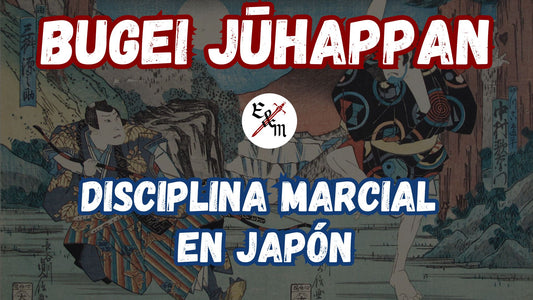
Read moreWelcome to a new article from Espadas Y Más. Today will be a very direct but also very informative post. We want to talk to you about Bugei Jūhappan, the traditional 18 martial disciplines of the Japanese arts. Check out this spectacular Yainohanzo katana! Bugei Jūhappan This selection of techniques was used by the samurai of the Tokugawa era in Japan. This concept was established by Hirayama Gyozo, and is based on previous Chinese concepts such as the 18 weapons of wushu. This Naginata is spectacular! In each Ryu-Ha the techniques and even disciplines may vary, at the discretion of each school, for this reason, the list may vary, but it is common to find the following disciplines in Bugei Jūhappan: - Kenjutsu (Swordsmanship) - Battojutsu (Unsheathed) - Sojutsu (Spear fighting) - Naginatajutsu (Fight with Naginata) - Kyujutsu (Archery) - Kyuba (Horse Archery) - Suijutsu , specifically To-suijutsu (Swimming) - Bōjutsu (stick fighting) - Nagamono (Polearm Fighting) - Torimono Dougu (Arrest Weapons) Weapons used by the Feudal Police of Japan to restrain or arrest someone without harming them. - Kakushi Buki Jutsu (Concealed Weapons) Small, easily concealed hand weapons used for emergency self-protection, such as brass knuckles, etc. - Jujutsu (Unarmed combat) - Shurikenjutsu (Blade Throwing) - Hojutsu (Musketeery) - Jouhou Kaishuu (Information gathering) - Chikujou (Fortifications) - Angou (signaling) - Jinei/Heihou (Strategy and Tactics) As you can see, the list is extensive and interesting, but there is also something less known but equally relevant, the Ninja Jūhakkei , more typical of the Shinobi, which consists of the previous techniques, added to the following: - Seishin teki kyōyō (Mental development and spiritual refinement) - Taijutsu (Unarmed Combat: Jutaijutsu, Daken Taijutsu, Koppo Jutsu, Kosshijutsu) - Bikenjutsu (Sword: Tantōjutsu, Kodachijutsu, Ōdachijutsu, Ninja tōjutsu, Ittojutsu, Nitojutsu) - Sōjutsu (Spear) - Naginatajutsu (Swordlance) - Bisentōjutsu (Halberd) - Kusarigamajutsu , Kyoketsu shoge (Sickle and chain, rope) - Roku shaku bōjutsu , Bōjutsu (Staff) - San shaku bō jutsu , jojutsu (Staff) - Shurikenjutsu , Senbannagejutsu (Throwing blades, usually to distract) - Kishajutsu (Mounted Archery) - Inton jutsu (Shinobi escape techniques) - Hokojutsu (Walking techniques) - Hensō jutsu (Shinobi clothing and disguise techniques) - Kakushi Bukijutsu (Hidden Weapons) - Ninyakujutsu (Use of medicine and poisons) - Gunryaku Heiho (Strategy) - Tenmon, Chimon (Strategies of Heaven and Earth, meteorology) If you notice, some disciplines are repeated, or are similar, and what changes is a greater imprint of the disciplines of concealment, espionage, infiltration, and related elements. This is due to the fact that in certain periods of Japanese history, part of the Shinobi, belonged in turn to the samurai caste, so the study of Bugei is intertwined with the needs of the study of the arts of concealment, so necessary for the Shinobi. We hope you enjoyed it, and that you are diligent in your training! If you want a good katana, check out our store!
Read moreWelcome to a new blog from Espadas Y Más! Today we will talk about the mythological and interesting figure of the TENGU and their relationship with the samurai. THE TENGU. JAPANESE FOLKLORE The tengu, a mysterious and captivating figure from Japanese folklore, has captured the imagination of generations with its appearance and supernatural powers. This being has left an indelible mark on Japanese culture and beliefs. From ancient legends to their depiction in modern art, tengu continue to be an object of interest for lovers of Japanese mythology. Check out our Katana Shop! Tengu are usually depicted with a long, sharp, bird-like beak , resembling that of a crow, extending from their mouth. They are also associated with enormous black wings, which allow them to fly at great speed and control the wind . They are said to be able to take the appearance of humans or animals in order to remain unnoticed. A unique feature of tengu is their long, sharp nose, one of the most recognizable symbols of the entity. The tengu's nose is believed to represent their wisdom and cunning, granting them knowledge and supernatural powers. Buy this spectacular Top Range katana! Legends of the tengu date back centuries in Japan. According to these legends, these entities are descendants of the Shinto gods and have existed since ancient times. There are countless stories and tales that narrate the exploits of the tengu, which has contributed to their fame and mystery to this day. One of the most famous stories about tengu takes place on Mount Takao , a sacred site located near Tokyo. According to legend, tengu reside deep within the forests of Takao and are watchful protectors of the mountain. It is said that if anyone ventures too close to their territory without permission, the tengu will punish them with strong gusts of wind and may temporarily paralyze them. Katana from The Last Samurai at your disposal In this legend, tengu are portrayed as powerful beings and protectors of their territory. Their ability to control the wind is believed to grant them mystical powers over nature and humans. This story has endured through the centuries and has contributed to the widespread belief that tengu are able to influence the weather. Another famous story related to the tengu involves the brave samurai warriors of Japan . According to legend, tengu are drawn to the spirit of the samurai and often appear to them in the form of birds or creatures with animal features. They are believed to be able to teach martial arts techniques and grant supernatural powers to those who demonstrate bravery and skill in battle. This Mushashi Functional Katana is amazing! This relationship between tengu and samurai has led to the belief that these creatures are associated with war and destruction. Some even believe that tengu are responsible for inciting conflict and disputes between humans, contributing to the fascination and fear surrounding tengu, as they are seen as powerful but potentially dangerous beings. The exact nature of tengu has been a matter of debate for centuries. Some interpretations see them as lesser divinities or protective spirits in Shinto, the ancient indigenous religion of Japan. They are thought to possess the ability to protect people from evil spirits and harmful deities. High quality Tanjiro Kamado Katana! However, there are those who perceive tengu as demonic and hellish entities. They are credited with malicious and deceitful acts, and are said to cause trouble for humans. Many narratives have depicted tengu as playful beings who enjoy creating chaos and confusion. Katana Ghost of Tsushima! In Japanese culture , they have featured in countless stories, plays, paintings and sculptures, becoming a recurring theme in Japanese art and literature. Exceptional YariNoHanzo Katana! In addition to their influence on art, tengu have also left their mark on the Japanese language. The word “tengu” has been used to describe people or things that are playful, mischievous, or cunning. This association with tengu has led to the creation of a rich terminology that reflects the influence of these creatures on the Japanese language. Today, tengu remain prominent figures in Japanese popular culture. They are frequently depicted in manga, anime, and video games, capturing the attention of audiences around the world. Their iconic image and role in Japanese legends have made them an enduring symbol of Japanese mythology.
Read moreWelcome to a new article from Espadas Y Más. Today, we will tell you about the parts of a sword. As you already know, weapons have varied greatly in potential and details throughout history, and the case of swords was not going to be any different, so in this article, we will talk specifically about the parts of a medieval sword, in general. We can't stop recommending our collection of Medieval Swords, we're sure you or your father will love them ;) PARTS OF A MEDIEVAL SWORD Pommel : The pommel is the part of the sword that is furthest from the tip. Its main function is to balance the sword, providing a counterweight to the blade. This allows for easier and more controlled handling of the sword. Additionally, in close combat situations, the pommel can be used as a blunt weapon to strike the opponent. Check out this medieval carbon steel sword Hilt : The hilt is the part of the sword that is held in the hand. It is designed to be comfortable and provide a good grip, allowing the user to handle the sword with precision and control. Often, the hilt is wrapped in leather or some other soft material to provide extra comfort and a better grip. Check out this one-handed medieval sword Guard or Crossguard : The guard, also known as the crossguard, is the part of the sword that is located between the hilt and the blade. Its main function is to protect the hand holding the sword from blows from the opponent. The guard can take many forms, from a simple crossbar to more complex and ornate designs. Check out this medieval German sword Blade : The blade is the long, straight part of the sword. It can be double-edged (sharpened on both sides) or single-edged. The blade ends in a point, which is used for stabbing. The length, width, and curvature of the blade can vary considerably depending on the type of sword and its purpose. Classic Medieval Sword Edge : The edge is the sharp edge of the blade. In a double-edged sword, both sides of the blade are sharpened. The cutting edge is the part of the sword that is used for cutting and slashing. Fluting : Fluting is a groove that runs the length of the blade. Its purpose is to reduce the weight of the sword without compromising its strength. This allows for easier and faster handling of the sword. Tip : The tip is the end of the blade, designed for stabbing or piercing. The shape of the tip can vary depending on the type of sword and its purpose. Check out this historic medieval sword Each of these parts has a specific purpose, and together they make the sword an effective tool for combat. Medieval swords were often customized for the knight who would use them, so they can vary in size, shape, and decoration. Although all swords share these basic characteristics, craftsmanship and innovation in their design have led to a wide variety of swords throughout history. We hope you enjoyed it! See you soon!
Read more
In this article we will explore the best curiosities about the Vikings. Dive into our Swords and More blog and learn the most incredible details about these warriors.
In this article we will explore the best curiosities about the Vikings. Dive into our Swords and More blog and learn the most incredible details about these Nordic warriors. Meaning of "Viking" : The word "Viking" translates to "pirate raider," reflecting a reputation for raiding and plundering, so it was a job! Viking Polytheism : Traditionally and prior to Christianization, the Vikings, like the rest of the peoples of Europe, were previously pagans and believed in various gods such as the Aesir and the Vanir, including Odin, Thor and Freya. Check out our Viking swords: https://espadasymas.com/collections/espadas-vikingas Viking Farmers : Contrary to the common image, many Vikings were farmers and ranchers, valuing their farms and working them hard until the time came to raid. Warriors and Sailors : The Vikings were Scandinavian warriors and sailors who not only raided, but also traded, explored, and settled in different regions. No Horns on Helmets : Contrary to popular stereotype, Viking warriors did not wear horns on their helmets during battles. Navigation without a Compass : On their voyages, the Vikings ventured out to sea without compasses, using astrolabes and the position of the sun to navigate. Check out our Viking shields: https://espadasymas.com/collections/escudos-vikingos Participation of Nordic Women : Nordic women had diverse roles, including property management, trading, and in some cases, participation in raids. Well-groomed Personal Appearance : Despite their "barbarian" image, Vikings cared about their personal appearance and were less dirty than one might think. Check out our Viking axes: https://espadasymas.com/collections/hachas-vikingas In our store you can enjoy the best Viking swords, shields, and axes. We hope you enjoyed this article and we recommend you take a look at our products!
Read more
The history of Japan. That magical country that calls to many of us, whether we are martial artists, fans of anime, Asian culture or simply travelers everywhere. There are few...
The history of Japan. That magical country that calls to many of us, whether we are martial artists, fans of anime, Asian culture or simply inveterate travelers. There are few things in Japanese history that fascinate us more than the word "Ninja." We tend to imagine mysterious warriors dressed in black leaping across rooftops on a military mission that usually involves assassination or the assault of a castle. On this subject, several things need to be clarified: -The Ninjas, whom we will call shinobis (or shinobi no mono) from now on (since it is a more historically correct term than the word ninja) existed , they are a real and relevant part of the history of Japan, however, their image has come to us distorted from Japanese cinema (heir to the image of the Kabuki theater). Check out our katanas: https://espadasymas.com/collections/katanas - Being a Shinobi was a job , the job of someone who was dedicated to espionage in the historical context of feudal Japan. There were also female Shinobi. -On many occasions, the Samurai was the same person who acted as a Shinobi. -They had a predilection for the art of disguise, camouflage and were highly effective. So what was a Shinobi really? Shinobi were the specialists in covert tactics in feudal Japan (In another article we will talk about Iga and Koga (Koka) ). Although their origins can be traced back to the 12th century or earlier, shinobi were active during territorial conflicts in Japan. There was a historical period in Japan where war was of special prominence and shinobi no mono were used with great alacrity, we are talking about the Sengoku Period (Special mention deserves the Oda Nobunaga incident in Iga , but we will also tell about that in another article ;) ) And where are martial arts? The role of the Shinobi was mostly focused on stealth, espionage, infiltration etc, however throughout the history of Japan martial arts techniques and schools have been developed, which are called Bujutsu , and more recently, Budo . During the training of the Shinobi, in addition to the rest of the skills, those with greater resources, also due to their training as samurai, were trained in martial arts, and within them, in some "special" techniques when using, for example, weapons. Check out our practice katanas: https://espadasymas.com/collections/katanas-de-practicas Can I learn Ninjutsu nowadays? The role of the Shinobi and therefore of ninjutsu as a bona fide profession has long since disappeared. The last records of Japan using such skills date back to World War II. However... In the last 50 years , different schools of Ninjutsu have proliferated, such as those related to the legacy of Takamatsu Sensei (DEP) and Hatsumi Sensei such as Bujinkan, Genbukan or Jinenkan and those that emerged from these. In addition, schools of other lineages such as those of Kawakami Sensei or Shunichiro Yunoki Sensei (DEP) have also amazed their students with their knowledge and training capabilities. All of these schools have developed their own teaching methods, which may vary from one to another, of course, modern life has changed and the context is not the same as that of Feudal Japan, but if you are interested in arts of Samurai and Shinobi origin, it would be a good place to look. Some of these schools give more importance to traditional ninjutsu, others focus on martial arts at first and then move on to details of historical ninjutsu disciplines, and of course, within each organization it also depends a lot on the teacher you meet. At Espadas Y Más we recommend taking this into account and looking for a school that prioritizes your evolution as a martial artist, that teaches those ninjutsu disciplines that you are looking for, and of course that respects your physical integrity and your freedom as a person and practitioner, in short, a school that is both good and healthy. Check out our naginata: https://espadasymas.com/products/uc3101-lanza-naginata-m48-united-cutlery-video
Read more
Amazon warriors are elevated as icons of bravery, prowess and female autonomy. Originating in Greek mythology but also present in diverse cultures, these warrior women have captured the imagination throughout...
In the vastness of mythology and history, Amazon warriors rise as icons of bravery, prowess and female autonomy. Originating in Greek mythology but also present in diverse cultures, these warrior women have captured the imagination throughout the centuries. In this article, we will explore the fascinating figure of the Amazon warriors, unraveling their mythological roots, their cultural impact and their resonance today as symbols of female empowerment. Mythological Origins: The Amazons in Ancient Greece From Greek mythology, the Amazons were skilled and brave warriors who lived in the Caucasus region of Asia Minor. Their reputation was forged in battle, and they were said to be descendants of Ares, the god of war. The story of the Amazons has been passed down through various legends and epics, where they often faced Greek heroes in combat. Cultural Archetypes: Female Warriors in Diverse Traditions We also find the Nordic Valkyries through to the Juchitán in Zapotec mythology. These figures embody the idea of female warriors who defy traditional gender roles and excel on the battlefield. The best warrior swords: https://espadasymas.com/collections/espadas Historical Warrior Queens: The Reality Behind the Myth Although the Amazons of mythology are mythical figures, history has also recorded the existence of real women warriors . From Queen Tomyris of the Massagetae in ancient times to the Dahomean warriors of 19th-century Africa, these military leaders defied expectations and fought bravely for their people. Literary and Cinematic Icons: The Amazons in Popular Culture Amazon warriors have found a prominent place in popular culture throughout the centuries. From classical epics to contemporary reinterpretations in comics and films, characters such as Queen Hippolyta of the Amazons in the Wonder Woman stories have taken the image of these warriors to new heights of visibility and empowerment. Wonder Woman's Sword: https://espadasymas.com/collections/dia-del-padre/products/espada-de-wonder-woman-mata-dioses-s3307?_pos=1&_psq=mata+dioses&_ss=e&_v=1.0 Female Empowerment Today: Amazons as Symbols In the modern era, the figure of the Amazon warrior has been adopted as a symbol of female empowerment. Their independence, combat skills, and resistance to traditional expectations have resonated with movements seeking gender equality and the recognition of female strength in all spheres of society. The essence of the Amazon warriors persists as a reminder that women have and will continue to defy expectations, forging their own destiny on the battlefield and beyond. Amazon warriors transcend time and mythology to inspire current and future generations, reminding us that strength and courage are genderless.
Read more
From medieval battlefields to Renaissance competitions, armour has witnessed and played a leading role in the evolution of warfare and craftsmanship over the centuries. In this article, we will explore...
From medieval battlefields to Renaissance competitions, armour has witnessed and played a leading role in the evolution of warfare and craftsmanship over the centuries. In this article, we will explore the fascinating world of armour, beyond its protective function, as artistic expressions and testimonies of military history, and how it has left a lasting mark on culture and aesthetics. History of Armor: Forging Defense and Style Through the Centuries The earliest armor dates back to ancient times, but it was during the Middle Ages that it reached its peak. Initially composed of layers of hardened cloth and leather, armor evolved into intricately designed metal structures. Each piece not only offered protection, but also displayed the wearer’s craftsmanship and wealth. Check out our armor at: https://espadasymas.com/collections/armaduras Types of Armor: From Intricate Plate to Artistic Chainmail Armor diversified into a variety of styles depending on the era and region. Full plate armor, such as that worn by medieval knights, offered complete coverage, while chainmail armor was flexible and effective against blows and cuts. Each design reflected not only tactical needs but also stylistic preferences. The Renaissance of Armor: Elegance and Functionality Fused During the Renaissance, armor reached new heights of elegance and functionality. Italian armorers, in particular, fused protection with fashion, creating armor that was not only effective in combat but also masterpieces of design. Ornamental details and engravings transformed armor into artistic expressions. Here you will find our complete armor: https://espadasymas.com/collections/armaduras-completes On the Battlefield: The Tactical Importance of Armor Beyond its imposing appearance, armor played a vital role in survival on the battlefield. Protecting against sword blows, spears, and arrows, these pieces of metal not only protected the warrior’s life but also influenced combat tactics, as armored units could face more risky situations. Decline and Resurrection: Armor Today With the advent of gunpowder, armor began to decline in use. However, its legacy lived on in culture and the imagination. Today, armor is admired in museums, used in historical reenactments, and prized as decorative items. Additionally, some industries, such as the sport of medieval combat, have seen a resurgence of interest in the functionality of armor. Armor in Art and Popular Culture: From Museums to Screens Armor has inspired countless works of art, from paintings to sculptures, and has left an indelible mark on popular culture. It appears in films, books, and video games, where its presence evokes an age of knights and heroes. The aesthetic of armor continues to influence contemporary design, fusing history and modernity. Conclusion: The Enduring Legacy of Armor More than just pieces of metal, armor bears witness to the evolution of warfare, craftsmanship, and military aesthetics throughout the centuries. From medieval battles to the silver screen, armor has stood the test of time as symbols of elegance, strength, and the indomitable spirit of those willing to defend what they believe is right. In every link and plate, armor tells stories of valor, strategy, and the eternal pursuit of perfection in the art of war. Check out our functional armor: https://espadasymas.com/collections/armaduras-functionales
Read more
Discover the origin and history of the emergence of the Medieval Sword. A mythical weapon used by knights and warriors of all kinds, visit our blog.
No weapon has captured the imagination and epic spirit like the medieval sword. Forged in the heat of battle and steeped in a rich tradition of craftsmanship, the medieval sword stands as an eternal symbol of honor, chivalry, and the fight for justice. In this article, we will explore the evolution, characteristics, and legacy of the medieval sword, an icon that has left an indelible mark on history and culture. https://espadasymas.com/collections/espadas-medievales Forging in the Age of Chivalry: The Birth of the Medieval Sword The Middle Ages witnessed the rise of chivalry and the need for efficient weapons on the battlefield. The medieval sword, with its sharp blade and balanced design, became the knight’s indispensable companion. Forged in the crucible of medieval metallurgy, these swords were testaments to the craftsmanship and technical prowess of the blacksmiths. Check out our forged medieval swords: https://espadasymas.com/collections/espadas-functionales More than just a Sharp Blade: With its double-edged blade and sharp point, it was versatile in close combat. Its design, which ranged from longswords to shortswords and daggers, allowed warriors to adapt to different combat situations. The guard and pommel were often ornate, displaying both artistic and functional details. The Age of Longswords: Combat and Technique During the height of the Middle Ages, longswords became synonymous with nobility and martial skill. These double-edged weapons were wielded with refined techniques, and knights underwent years of training to master the art of medieval fencing. Longswords, such as the Claymore and the Bastard Sword, became renowned for their versatility and lethality in skilled hands. This is a Claymore: https://espadasymas.com/collections/importaciones/products/espada-mandoble-claymore?_pos=1&_psq=claymore&_ss=e&_v=1.0 The Code of Chivalry: Honor and the Sword The medieval sword was not only an instrument of war; it was also a symbol of the code of chivalry. Knights swore to uphold justice, loyalty, and bravery, and their swords became silent witnesses to these ideals. The ceremony of bestowing a sword upon a knight was an act grounded in transcendence and symbolized commitment to these principles. Decline and Renaissance: From Wars to Collectibles Over time, advancing technology and war tactics changed, marking the decline of the military use of the medieval sword. However, its legacy lived on in culture and mythology. In modern times, medieval swords have experienced a renaissance, no longer just as tools of war, but also as collectibles and symbols of connection to the past. In Popular Culture: From Legends to Screens Medieval swords have transcended reality to become staples of popular culture. From Arthurian legends to cinematic epics, these swords have inspired stories that have stood the test of time. Every medieval sword has a story to tell, whether in the pages of a book or on the big screen. The Medieval Sword Endures Forged on the anvil of history and tempered in the flame of combat, the medieval sword continues to endure as a symbol of bravery and nobility. Its legacy has left a deep mark on history, culture, and mythology, reminding us that beyond its function as a weapon, the medieval sword is a timeless testament to craftsmanship and the essence of chivalry. Here you have all the medieval swords: https://espadasymas.com/collections/espadas-medievales
Read more