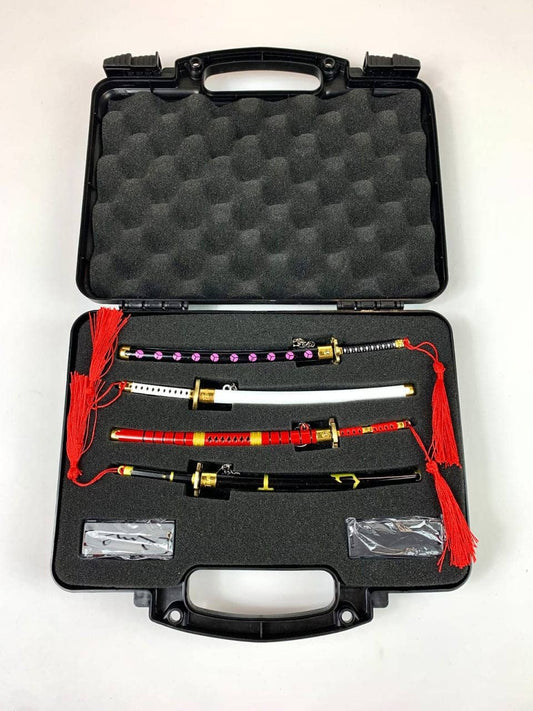


Muramasa, beyond history
Are there swords that not only cut flesh, but also transcend the barriers of time and culture, carrying with them stories of tragedy, power, and mysticism? The answer is: Yes.
The figure of Muramasa, a master Japanese blacksmith of the 16th century, is not just a symbol of excellence in smithing. He has left an indelible mark on literature and popular culture. From dramatic Kabuki theater scenes to intense video game battles, Muramasa's legacy extends far beyond the borders of feudal Japan.
I invite you to discover how the legend of Muramasa has influenced modern narratives, captivating generations.
A name that endures beyond space and time
The Presence of Muramasa in Literature and Theater
The story of Muramasa is not limited to his ability to create swords; his legend has been a recurrent theme in Japanese literature and theater for centuries.
In traditional Kabuki and Noh performances, Muramasa swords were more than weapons; they were symbols of internal and moral conflicts. These dramas often explored themes of betrayal, honor, and destiny, where a character wielding a Muramasa sword could be seen as a harbinger of death or an instrument of justice. This emotional complexity has allowed works mentioning Muramasa to resonate with audiences, making his name synonymous with tragedy and power.
The narrative surrounding these swords goes beyond the physical; they are representations of human struggle and the consequences of our actions. Thus, any spectator who has witnessed a play or read a story in which Muramasa appears as a symbol of fatality can identify with the dilemmas of its characters, making them feel a deep connection with the story.

Manga and Anime: The Classics where Muramasa could not be absent
The world of manga and anime has also embraced the figure of Muramasa, where swords often possess magical or cursed properties. Series like "Bleach" and "Demon Slayer" feature characters wielding swords that evoke Muramasa's legendary craftsmanship.
The narrative in these stories focuses on the lethal effectiveness of the weapons and the curses they can carry, creating an atmosphere of tension and anticipation.
This approach allows for the exploration of both physical action and the emotional conflicts of the characters, who must deal with the weight of their heritage. The sword becomes a symbol of power, but also of responsibility, paving the way for a world of emotions and personal growth to explore.
Muramasa's arrival in the world of video games
As we advance into the digital age, the name Muramasa has found a new home in the world of video games. Titles such as "Touken Rambu," "Final Fantasy," "Metal Gear Rising," "Nioh," "Muramasa: The Demon Blade," and "Sekiro: Shadows Die Twice" have incorporated Muramasa swords as powerful weapons that players must seek and master.
In these games, Muramasa not only represents mastery in smithing, but is also associated with a mystique of danger and curse.
In many games where it is mentioned, players embark on complex and challenging quests to acquire these swords, potentially facing enemies as lethal as the weapon itself.
The representation of Muramasa in this context allows players to experience the duality of the sword: its allure and its destructive potential. This connection translates into a sense of accomplishment and, at the same time, unease, as the wielder of the sword must sometimes navigate a series of moral dilemmas and challenges that reflect the reality of life itself.
Muramasa on screens around the world. Its mention in Film and Television
Cinema and television have been equally receptive to the legend of Muramasa, adapting its story to a variety of genres. From historical dramas to action and fantasy films.
The presence of swords in the narrative often marks a crucial point in the plot or defines a character's personality, and although they are not always the main focus, their impact is undeniable. The choice to mention a Muramasa usually has significant underlying reasons.
Muramasa's adaptability to different genres and cultural contexts reflects its continuing relevance in the collective consciousness. The legend of Muramasa has become an archetype that transcends borders, resonating in both East and West. This universality is a testament to its lasting appeal and the depth of emotions it evokes.

The omnipresence of the legend of Muramasa
What makes the legend of Muramasa so fascinating is its ability to penetrate popular culture in a way that few other historical or mythological figures can. Although many may not have a deep understanding of Japanese history or sword forging, the name "Muramasa" resonates in their minds, whether through a video game, series, anime, or movie. This phenomenon demonstrates how cultural narratives can transcend time and space, creating a legacy that continues to inspire new generations.
Muramasa's legacy goes beyond his mastery as a swordsmith; it has become a symbol of struggle, power, and the complexity of the human condition. From classical theater to contemporary video games, his influence has reached diverse art forms, capturing the imagination of those who seek to explore the depths of emotion and morality through narrative.
Thus, every time we hear his name, no matter where it is, we remember that we are not just dealing with a sword, but with a living legacy, a legacy that invites us to reflect on our own struggles and triumphs. It is a reminder that, although the past may be marked by tragedy, it is also full of beauty and meaning, waiting to be discovered by those willing to wield the sword of knowledge.
Do you like traditional weapons? Don't hesitate to visit our online store.