América
Astronomical Knowledge of the Mayans: Predictions, Calculations, and Meanings
Systematic Sky ObservationThe Mayan civilization, which flourished from approximately 2000 BCE to the 16th century, d...



Solo podemos reservar tu pedido por 00:00 debido a la alta demanda
Subtotal
0,00 €
Estimated total
0,00 €


Free shipping to all of the Iberian Peninsula from €60 (*Excludes islands)


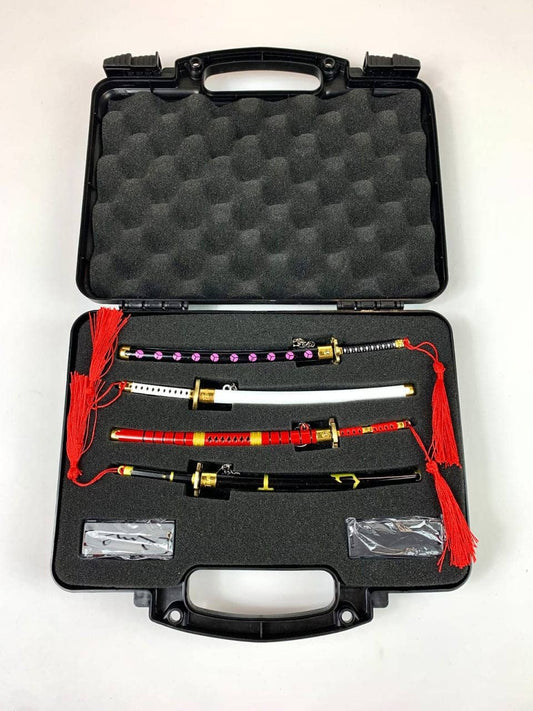
"Anime's legendary warrior weapons, forged in real steel"

Medieval archery was key in European warfare and hunting. Longbows, recurve bows, and compound bows, along with specialized arrows, allowed archers to deploy decisive strategies in battles and sieges. Its...
Medieval archery was a fundamental discipline in Europe during the Middle Ages, both in warfare and hunting. Bows and arrows were not only survival tools but also played a strategic role in battles and sieges. The evolution of archery reflects technological and tactical advancements that shaped medieval warfare. Origins of the Bow and Arrow Archery has roots dating back more than 60,000 years, when flint arrows, a type of crystallized stone with very sharp edges, were made. Prehistoric bows were quite simple and typically made from a single piece of flexible wood. They were essential for hunting, as the materials needed to make them and the arrows were easy to obtain and replace. Over time, bow technology was refined: curving and reinforcement techniques were developed, increasing their range, power, and durability. Thus, what began as a survival weapon became a key instrument in military conflicts and tournaments during the Middle Ages. The Bow in the Middle Ages During the Middle Ages, the bow was primarily used for hunting and combat in various regions of Europe. In the Iberian Peninsula, the presence of the crossbow was more significant in warfare due to its greater penetrating power and ease of use against armor. However, in other areas, such as England during the Hundred Years' War, the longbow became a decisive military weapon. English archers demonstrated their effectiveness in battles like Crécy and Agincourt, using bows of great range and accuracy. Types of Medieval Bows There are several types of bows from the medieval era: Longbow: Made from a single piece of wood, simple yet powerful, primarily used by infantry. Recurve bow: With limbs bent outwards, it allowed for greater power in a smaller space, ideal for mounted archers. Sometimes it was metallic or reinforced with sinew. Composite bow: A mix of wood, bone, and horn, used in Asia and the Middle East, less common in Western Europe due to its difficulty in manufacturing and maintenance. Each type of bow had specific applications, from open-field combat to hunting or defending fortified positions. Shooting Techniques In Europe, the European draw was developed, where the arrow was placed on the opposite side of the bow compared to the West, and the string was drawn with two or three fingers. In contrast, in Asia and among the Mongols, thumb draw was practiced, suitable for mounted archers, where the string is held with the thumb using a protective ring. These techniques reflect adaptations to different environments and combat tactics. Medieval Arrows Medieval arrows had several parts: the shaft (usually cedar), the arrowhead, feathers for stability, and the nock, reinforced with hardwood or horn to prevent breakage. In battles, arrows were transported without attached arrowheads, which were assembled on the field using animal glue or wax. The quality of the nock and feathers determined the durability and accuracy of each arrow. Tactical Importance of the Medieval Bow The medieval bow allowed armies to launch projectiles from a distance without direct contact. Archers organized in formations provided sustained fire, weakening the enemy before hand-to-hand combat. Furthermore, although the crossbow offered greater power, it required more reload time and limited mobility, while the bow combined speed and effectiveness.
Read more