América
Astronomical Knowledge of the Mayans: Predictions, Calculations, and Meanings
Systematic Sky ObservationThe Mayan civilization, which flourished from approximately 2000 BCE to the 16th century, d...




Spain preserves some of the most spectacular medieval fortresses in Europe, built on mountains, hills, and strategic enclaves. Castles such as Zafra, Almodóvar del Río, Loarre, and Ponferrada stand out...
Spain preserves some of the most spectacular medieval fortresses in Europe. Many were built on mountains, cliffs, or strategic hills to control roads, borders, and entire territories. Centuries after their construction, some of these fortresses are still so impressive that it's easy to associate them with the castles described by George R. R. Martin in the A Song of Ice and Fire novels or with the settings seen in the Game of Thrones series. Among them, four castles stand out, which, due to their location, appearance, or atmosphere, seem to belong to the world of Westeros: Zafra, Almodóvar del Río, Loarre, and Ponferrada. Zafra Castle: the fortress of secrets Zafra Castle in Guadalajara, Spain, was built during the 12th century on a narrow rocky ridge. The first thing that stands out is that it barely seems to have been built on the rock: it seems to emerge directly from it. The towers rise above enormous blocks of bare stone and the walls follow the irregular shapes of the terrain. From a distance, the complex gives the impression of being an almost inaccessible fortress. It is no coincidence that it was chosen to represent the Tower of Joy in the Game of Thrones series, an event for which it gained international fame. In the series, that place had to convey isolation, mystery, and a sense of being located at the end of the world. The castle already possessed exactly those characteristics. Key scenes related to Ned Stark's past and Jon Snow's origin were filmed there, taking advantage of the fact that it already conveyed that feeling. Almodóvar del Río Castle: the castle of the great lords Almodóvar del Río Castle has dominated a hill overlooking the Guadalquivir valley for over a thousand years. Its origin is Islamic, although it was expanded and transformed over centuries. Several crenellated towers stand out above the walls, forming a kind of stone crown visible from kilometers away. The Game of Thrones production used it to represent Highgarden, the seat of House Tyrell. The choice is easy to understand: in the books, Highgarden is described as the seat of one of the richest and most powerful families in Westeros, surrounded by fertile lands and gardens. The Cordoban castle shares that image of lordly power. It not only conveys military strength but also projects wealth, prestige, and control over the surrounding territory, exactly what was expected of the most powerful house in the Reach. Loarre Castle: a fortress worthy of the North Built in the 11th century, Loarre Castle stands on a mountain in the province of Huesca. It is one of the best-preserved Romanesque castles in Europe; its walls follow the curves of the mountain and seem to be part of the landscape itself. The gray stone towers stand out against the horizon of the Pyrenees, while forests and plains stretch at its feet. Although it never appeared in the series, many fans compare it to the fortresses of the North of Westeros. There is no official equivalent, but its massive walls, austere appearance, and mountainous surroundings recall the image that readers usually imagine when thinking of Winterfell or other northern fortresses described. Ponferrada Castle: the power of a Templar fortress Ponferrada Castle, in León, was one of the main fortresses of the Knights Templar on the Iberian Peninsula. Unlike other more stylized castles, here the feeling of military power dominates. The walls are enormous, the towers multiply around the enclosure, and the defensive gates clearly show their strategic function. Anyone who sees it can easily imagine a castle belonging to one of the great noble houses of Westeros. Its dimensions and complexity recall the border fortresses described in the novels, built to protect entire territories and house permanent garrisons. Particularly striking are the different defensive lines surrounding the enclosure, a characteristic that fits perfectly with the great military fortresses of the Game of Thrones universe. Spanish Game of Thrones settings, beyond the castles In addition to medieval castles, Spain provided several real locations that the Game of Thrones production used, almost without needing transformation, taking advantage of their architecture and surroundings as they exist. The Real Alcázar of Seville was chosen to represent the Water Gardens of Dorne. Its inner courtyards, with horseshoe arches, tiles, fountains, and ponds, create an enclosed space where water and light are protagonists, fitting the image of a warm and refined palace. The monumental city of Cáceres became King's Landing. Its stone streets, medieval towers, and irregular squares served as the basis for the capital of Westeros, complemented by digital effects to expand the city and reinforce its political scale. The complex of San Juan de Gaztelugatxe was used as Dragonstone. Its access via a narrow stone bridge over the sea, combined with a climb of more than 200 steps, reinforces the feeling of an isolated, strategic, and difficult-to-reach place. The Roman site of Itálica, near Seville, was transformed into the Dragonpit. Its stone amphitheater, with a circular shape and deep stands, served as a setting for key meetings within the story. Each of these real spaces contributed a distinct visual identity to the series, integrating historical architecture and audiovisual narrative into a single visual composition.
Read more
Can someone own the Moon? Throughout the 20th century, two men attempted to answer that question in a very peculiar way. From the surprising registration made by Chilean lawyer Jenaro...
Did you know that the Moon has already had two owners? The story of the Moon's first owners has given rise to some of the most striking curiosities of the 20th century. From the registration made by Jenaro Gajardo Vera in Chile to Dennis Hope's subsequent claim... Had you ever heard their stories? Jenaro Gajardo Vera and the registration of the Moon as property in Chile In 1954, in the city of Talca, Chile, lawyer Jenaro Gajardo Vera starred in one of the most curious stories of the 20th century: the registration of the Moon as property in his name at a local notary's office. The story begins when Jenaro encounters a particular requirement for members of a social club he wished to join: to be admitted, they had to prove ownership of an asset. Having no registered properties in his name, upon seeing the moon, that idea came to his mind. Under a legal provision of the time that allowed for the regularization of properties without clear title, he went to a notary and presented a document declaring himself the owner of Earth's natural satellite. The request followed the natural administrative procedure of the Chilean registration system of the time, with publications in the Official Gazette and formal procedures for its concretization. It is said that, in his will, Jenaro bequeathed ownership of the Moon to the People of Chile. From this, we can deduce that the process was indeed completed and, after so much effort and such a significant property, we can only hope that, at least, he was accepted into the club that led him to take such a measure, because although many may question the legitimacy of his actions, what no one can doubt is his desire to join it... Dennis Hope and his claim to the Moon thanks to a legal loophole In 1980, Dennis Hope starred in another of the most curious stories of the 20th century by claiming bodies in the solar system. The project arose, according to his own account, during a period of personal instability and economic difficulties. One day, he simply looked up at the Moon and thought it would be a good place to build; many properties could be housed there... Then, he knew that perhaps no one had thought of it before and decided to turn that thought into a profitable business... His curiosity led him to investigate the matter, and during that process, he ended up finding a document that would shape the course of his project: the 1967 Outer Space Treaty promoted by the United Nations, which states in Article II that outer space, including the Moon and other celestial bodies, cannot be subject to national appropriation. Hope interpreted the existence of a legal loophole, as the treaty states that the restriction applied to States, not to individuals, so he could claim rights over surfaces outside of Earth. In an interview, he stated: "They were ownerless lands." He sent formal letters to the United Nations, the U.S. government, the then Soviet Union, and other international bodies. In them, he communicated his intention to claim the Moon and other celestial bodies in the solar system, and requested guidance on the legal limits of that idea. According to his own statements, he received no formal response to these communications. Based on this lack of response, he interpreted the institutional silence as "tacit acceptance," that is, as a lack of opposition to his proposal. From that interpretation, he claimed to be able to dispose of surfaces outside of Earth and eventually began to develop a small-scale commercial system, selling plots in his area. During the rise of the public internet, his idea led to the creation of a commercial model under the name Lunar Embassy, where he sold plots of approximately one acre, assigned by coordinates on maps, along with the issuance of property certificates. Each plot was located on maps divided into grids, using coordinate references to mark specific positions, so that a specific location could be identified as if it were a terrestrial cartographic representation. Over time, he expanded the sale of land to other celestial bodies such as Mars, Venus, and Mercury. In various interviews, Hope stated that he had clients from various backgrounds, from anonymous individuals to Hollywood actors and celebrities such as Tom Hanks, Tom Cruise, John Travolta, Clint Eastwood, George Lucas, and Mick Jagger. Some former U.S. presidents, including Jimmy Carter, Ronald Reagan, and George H. W. Bush, and even some hotel companies, such as Hilton Hotels & Resorts and Marriott Hotels & Resorts, also acquired plots. The idea of owning land on the Moon or elsewhere in the solar system has become a cultural and commercial phenomenon, perhaps due to the expectation of populating space, or perhaps, simply to be able to say you own it or to tell the anecdote.
Read more
The summer of 2026 in Spain will be marked by major film releases such as Toy Story 5, Supergirl, and Minions 3. These franchises return to the big screen with...
The Spanish cinema release schedule for summer 2026 is packed with major productions that promise to fill movie theaters across the country. Among them, three titles stand out and are expected to capture the attention of family and young audiences: Toy Story 5, Supergirl, and Minions 3. These films not only represent the return of well-known franchises but also one of the most potent periods of the year for the Spanish box office. With release dates very close to each other, these premieres will turn the month of June into a true clash of animation and superhero movie giants. Toy Story 5: The Big Family Premiere of the Summer The most anticipated premiere in Spain will undoubtedly be Toy Story 5, which will hit cinemas on June 17, 2026, with its big opening weekend starting on June 19. Pixar's new installment brings back the saga's most iconic characters: Woody, Buzz Lightyear, and Jessie, in a story that once again focuses on the relationship between toys and the modern world. This time, the plot introduces a new conflict related to technology, where traditional toys must face a reality in which children play less and less in the classic way. The return of the franchise is a global cinematic event, as Toy Story is one of the most influential sagas in animation history. Its release will feature massive distribution and a strong box office impact. Supergirl: The New Boost for Superhero Cinema Another major release for the Spanish summer will be Supergirl, which will arrive in theaters on June 26, 2026. The film presents a new vision of the character Kara Zor-El, known as Supergirl, within the DC universe. Unlike other adaptations, this installment seeks to delve deeper into her identity, origin, and her role within a much broader world of heroes. The interest in Supergirl lies not only in her connection to Superman but also in her own evolution as an independent protagonist. The film blends action, science fiction, and emotional elements, making it one of the most important superhero film bets in 2026. Its release in Spain is highly anticipated, especially among DC universe fans. Minions 3 (Minions & Monsters): The Return of the Animation Phenomenon The third major premiere will be Minions 3, which will arrive in cinemas in Spain on July 1, 2026. The Illumination franchise returns with a new adventure starring the most chaotic and popular characters in recent animated cinema. While plot details remain partially secret, it is known that the Minions will once again embark on a mission full of humor, chaos, and absurd situations. Following the success of previous installments, this new film is designed to repeat the global box office phenomenon, especially among children and family audiences. Its release marks the close of this block of consecutive launches at the beginning of summer. A Clash of Giants in Spanish Cinemas The coincidence of these three premieres in just two weeks makes summer 2026 one of the most competitive in recent years for Spanish cinemas. Toy Story 5, Supergirl, and Minions 3 not only represent distinct genres—family animation, superheroes, and children's comedy—but also three very different strategies to attract audiences. While Toy Story 5 appeals to nostalgia and multiple generations of viewers, Supergirl seeks to consolidate the superhero universe with new stories, and Minions 3 bets on visual humor and younger audiences. With these releases, cinemas in Spain are preparing for one of the most important campaigns of the year. Major distributors are banking on titles that guarantee high attendance and a strong box office presence from the opening weekend. The result will be a diverse, competitive lineup designed to attract audiences of all ages, solidifying summer as the strongest season for cinema in Spain.
Read more
June 2026 is packed with major releases for video game fans. From narrative adventures and sports combat to reinvented classics and strategy proposals, this month offers titles for all tastes....
The year 2026 is bringing some of the most interesting releases for video game fans. June brings options for all tastes, from narrative adventures and action RPGs to sports simulators and reinvented classics. If you're looking for the best games of 2026 for PS5, Nintendo Switch 2, and other platforms, these titles promise to become some of the most outstanding on the market. The Adventures of Elliot: The Millennium Tales Lovers of exciting stories will find a unique experience in The Adventures of Elliot: The Millennium Tales. This cinematic adventure follows Elliot, a young man capable of traveling between different timelines thanks to a watch inherited from his grandfather. The gameplay mixes platforming, puzzles, exploration, and time manipulation. Each episode presents different scenarios, from technological futures to worlds inspired by ancient mythologies. Its 2.5D aesthetic, narrative choices, and high-quality soundtrack make this release one of the most interesting surprises for Nintendo Switch 2. On sale in Spain from June 18. EA Sports UFC 6 The new installment of the mixed martial arts franchise seeks to take sports realism to a new level. EA Sports UFC 6 offers a more technical combat system, with improvements in physics, more fluid animations, and a more faithful representation of the disciplines present in the UFC. Players will be able to enjoy career modes, quick matches, and online multiplayer. Accumulative damage, fatigue, and strategy will play a fundamental role in each confrontation, offering a more authentic experience for sports game fans. On sale in Spain from June 19. Star Fox (2026) One of the most anticipated returns for Nintendo users is Star Fox (2026). Fox McCloud returns to action to defend the Lylat system in a new space adventure that modernizes the classic mechanics of the saga. Rail combat remains the core of the experience, although new options such as free exploration, alternative missions, and advanced maneuvers are incorporated. With renewed graphics, spectacular visual effects, and a more ambitious approach, this reboot aims to return Star Fox to its rightful place among Nintendo's great franchises. On sale in Spain from June 25. Monopoly: Star Wars Heroes vs. Villains Board games also have their place in June releases thanks to Monopoly: Star Wars Heroes vs. Villains. This adaptation of the classic Monopoly introduces characters, locations, and events inspired by the Star Wars universe. Players can choose between heroes and villains, each with special abilities that modify the course of the game. The result is an accessible, fun experience perfect for enjoying with family and friends, especially for fans of the galactic saga. On sale in Spain from June 30. June 2026 is packed with new releases for gaming fans. From the interesting blend of traditional gameplay and science fiction fantasy in Monopoly: Star Wars Heroes vs. Villains, to the sporting excitement of EA Sports UFC 6 or Elliot's temporal adventures, the variety of offerings demonstrates the excellent moment the industry is experiencing. Whether you're looking for action, exploration, strategy, or narrative, these releases promise to offer some of the best video game experiences of 2026. Which one was your favorite? Are you thinking of experiencing any of them?
Read more
Steel is one of the most important materials in human history due to its strength and versatility.From modern industry to historical swords, steel has marked global technological and cultural development....
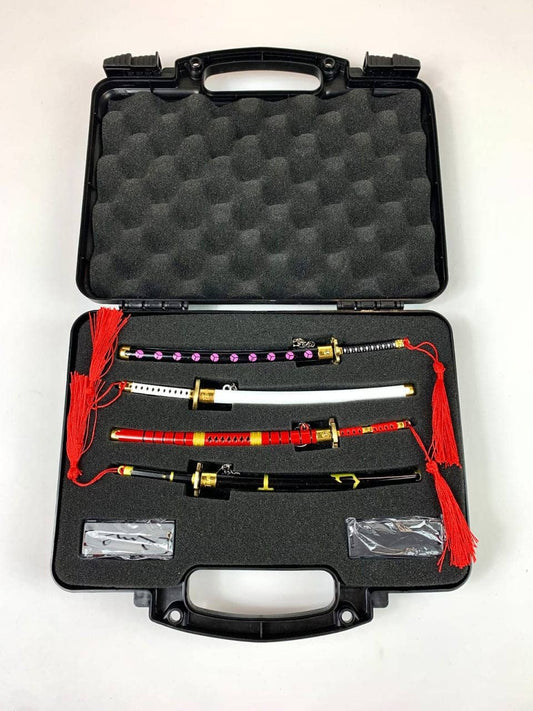
From the first swords forged by ancient smiths to modern high-precision knives, steel has played a fundamental role in human history. Its combination of strength, hardness, and versatility has made it one of the most widely used materials in the world. Tools, buildings, vehicles, bladed weapons, and industrial machinery depend on it, but not all steels are created equal. Over the centuries, certain regions and countries have gained fame for the quality of their blades, while others excel at producing gigantic quantities of this essential material. What is steel and why is it so important? Steel is an alloy composed mainly of iron and carbon. Its great advantage is that it can be modified through different manufacturing processes and heat treatments to obtain specific properties. Some steels stand out for their hardness, others for their flexibility, and others for their resistance to wear or corrosion. Thanks to these characteristics, steel is used in almost all industrial sectors. However, one of the fields where it has historically stood out the most is that of bladed weapons. Swords, knives, daggers, and razors depend on the quality of the steel to offer a good edge, strength, and durability. For this reason, certain cities and countries gained worldwide fame thanks to the excellence of their blades. Steel in the World When it comes to production, the undisputed leader is China. For years, it has manufactured more steel than any other country, producing a quantity that far exceeds that of other industrial powers. It is followed by other nations such as Spain, India, Japan, the United States, Russia, and Sweden. However, producing more steel does not necessarily mean producing the best. Quality depends on the type of steel and its final use. Japan is famous for its steels used in cutlery and traditional swords. Germany has a solid reputation for its precision tools and knives. Sweden is also internationally recognized for the purity and quality of its special steels. Spain, for its part, occupies a relevant place in the European metallurgical tradition, a heritage that dates back centuries, especially in the historical manufacture of bladed weapons. Therefore, answering the question "where is the best steel in the world?" is not simple. It all depends on whether we are talking about construction, industrial tools, cutlery, or bladed weapons. Steel in Spain Currently, much of Spain's steel production is concentrated in industrial regions such as Asturias and the Basque Country, where some of the country's main steel mills are located. From there, sectors such as construction, automotive, and heavy industry are supplied. The main steel production areas in Spain are located in Asturias and the Basque Country, regions that house some of the most important steel mills in the country and supply numerous industrial sectors. However, when speaking of the most prestigious Spanish steel, the historical reference remains Toledo, famous for its swords, which were admired throughout Europe for the quality of their blades, their tempering techniques, and their excellent balance. Kings, nobles, and soldiers sought these weapons for their prestige and resistance, making Toledo a worldwide reference. In the field of cutlery, the city of Albacete occupies a privileged place. Its artisanal tradition dates back several centuries and has given rise to one of the most important cutlery industries in the country. Knives, kitchen knives, and cutting tools manufactured in Albacete are recognized both within and outside Spain for their quality and durability. Overall, the history of steel demonstrates that its value does not depend solely on industrial production or the volume manufactured, but on the knowledge accumulated over generations. Cities like Toledo and Albacete remain historical references in forging and cutlery, keeping alive a tradition that has shaped the reputation of Spanish steel.
Read more
The Mandalorian & Grogu will be one of the most important releases in the Star Wars universe. Releasing in theaters in 2026, the film, directed by Jon Favreau and produced...
Star Wars: The Mandalorian and Grogu is the upcoming Star Wars universe film produced by Lucasfilm, directed by Jon Favreau and set after the events of The Mandalorian series. Its theatrical release is scheduled for May 22, 2026, making it the first direct cinematic leap for this television story. The film continues the storyline of Din Djarin and Grogu in a period after the fall of the Galactic Empire, when the galaxy has not yet achieved political stability. The state of the galaxy after the fall of the Empire After the defeat of the Empire in Return of the Jedi, the galaxy enters a transitional phase known as the era of the New Republic. However, this new political structure fails to consolidate total control. Many star systems remain without effective governance, allowing former Imperial officers to maintain scattered armed forces. These Imperial remnants act independently, creating local conflicts and struggles for resources. The New Republic, still forming, relies on external allies to maintain security in critical areas. This power vacuum is the main context of the film and explains why characters like Din Djarin are once again needed. Din Djarin and Grogu in this new era Din Djarin, played by Pedro Pascal, has evolved from an independent bounty hunter to a protector linked to Grogu's destiny. In this film, his role evolves into larger-scale missions related to galactic stability. Grogu, for his part, continues his development as a Force-user. Although he does not yet fully master his abilities, his connection to the Jedi's past and to the Force makes him a strategic target for different groups within the galaxy. This places both characters at the center of conflicts that go beyond personal survival. Production, direction, and creative team The film is directed by Jon Favreau, who also developed the original series alongside Dave Filoni. The production is backed by Kathleen Kennedy and Ian Bryce, maintaining the creative continuity of recent Star Wars series. The soundtrack is once again by Ludwig Göransson, the composer who defined the modern sound of The Mandalorian. The cast also includes Sigourney Weaver, whose participation has been confirmed but whose role in the story has not yet been officially revealed. The New Republic's role in the story The New Republic appears in the film as a still unstable government. Although it controls part of the galaxy, it does not have enough resources to intervene in all active conflicts. This forces it to resort to independent agents like Din Djarin for specific missions. This system reflects a period similar to a "galactic post-Cold War," where power is not concentrated and threats do not come from a single central enemy, but from multiple scattered foci. Grogu and the legacy of the Force One of the central elements of the film is Grogu's evolution within the Force universe. His training, though incomplete, links him to an ancient tradition that remains relevant even after the fall of the Jedi. This makes him a key character not only for Din Djarin but also for the political and spiritual balance of the galaxy, as different factions seek to control or protect his potential. Release and relevance within Star Wars The release of Star Wars: The Mandalorian and Grogu on May 22, 2026, marks an important point in the expansion of the Star Wars universe into cinema from Disney+ series. It is the first time within the Star Wars saga that a story that began as a television series makes the leap to the big screen without a narrative reboot, maintaining the same protagonists and the same storyline. This reinforces Lucasfilm's strategy of unifying series and films within the same coherent timeline.
Read more
Anime premieres in May 2026 bring highly anticipated offerings that combine action, fantasy, and major franchises.Series such as Karna the Guardian, the second season of Devil May Cry, and the...
May 2026 brings a powerful selection of anime premieres, combining new stories, video game adaptations, and the evolution of established franchises. Platforms like Crunchyroll and Netflix continue to lead the global growth of the sector with highly anticipated releases. These are 3 of the month's most anticipated premieres. Karna the Guardian: Premiere and Plot of the New Anime On May 7, 2026, Karna the Guardian, an Indian series with Japanese collaboration, premieres worldwide, seeking to position itself as one of the new benchmarks in fantasy anime. The story introduces Karna, a seemingly normal young man whose life is disrupted by the release of the demon Kalimba, an ancient entity that begins to spread corruption across the planet. This starting point introduces a classic conflict between light and darkness, but with a modern approach focused on the protagonist's emotional development. When his mother is affected by this darkness, Karna awakens a hidden power that reveals his identity as the Balancer, a figure destined to restore the world's harmony. From that moment, the series explores his training, his internal doubts, and the weight of responsibility. The production, developed with YAY! Animation, Zomia, and Ascension, opts for a global narrative with dubs in several languages, including Spanish, which expands its international reach. Devil May Cry Season 2: Premiere, Story, and News The second season of Devil May Cry arrives on May 12, 2026, solidifying its place as one of the most outstanding video game adaptations in animated format. The series continues to follow Dante, the demon hunter, in a world where dark forces threaten to break the barrier between dimensions. In this new installment, the conflict intensifies with the presence of Vergil, his brother, which adds a deeper emotional dimension to the narrative. The confrontation between the two characters not only provides action but also a more complex exploration of their motivations, rivalry, and shared past. The production, led by Studio Mir and with the vision of Adi Shankar, maintains a high visual level and dynamic pacing. The original franchise, created by Hideki Kamiya in 2001, remains a benchmark in the genre, and this adaptation expands its universe with a more accessible narrative for new viewers without losing its essence. Pokémon Horizons: The Series: Wonder Voyage Arc, Premiere, and News May 22, 2026, marks the beginning of the "Wonder Voyage" arc within Pokémon Horizons, a series that has revitalized the franchise by introducing new protagonists and a more serialized narrative. This stage continues to develop the Pokémon universe with a more modern approach, without abandoning the classic elements that have defined the saga for decades. The presence of new characters and creatures maintains the interest of both veteran fans and new audiences. The recent preview highlights Ditto and a new protagonist, as well as including references to titles such as Pokémon GO and Pokémon UNITE, reinforcing the connection between the anime and the rest of the franchise. Directed by Saori Den and produced by OLM, the series has managed to establish itself internationally since its premiere in 2023, arriving on platforms such as BBC iPlayer and Netflix. May 2026 Anime: Premieres and News The May 2026 premieres reflect the diversity of current anime, with proposals covering different genres and audiences. From new stories to anticipated continuations, this month is positioned as one of the most outstanding of the year.
Read more
Mortal Kombat II hits theaters in May 2026 as one of the most anticipated action movie sequels. The film continues the story begun in Mortal Kombat, expanding its universe with...
The highly anticipated return of the saga is here with a bang. Mortal Kombat II will premiere in cinemas on May 7, 2026, in Spain and some Latin American countries, while its release in the United States is scheduled for May 8, following the usual international release calendar. Following the impact of Mortal Kombat, this new installment promises to raise the bar in all aspects: more fights, greater narrative development, and a clear commitment to spectacle. Directed once again by Simon McQuoid, the film continues to explore the universe based on the video games created by Ed Boon and John Tobias, maintaining its violent, fantastic, and epic essence. Relationship between Mortal Kombat II and Mortal Kombat The new film acts as a direct continuation of Mortal Kombat, picking up the events where the first installment left off. That film introduced Cole Young, a fighter marked by a hidden lineage linked to Scorpion, and presented Earthrealm's chosen champions to defend Earth. Although the Mortal Kombat tournament had barely begun, the conflict with Outworld and the threat of its warriors were established. Furthermore, the ending left the door open for the incorporation of Johnny Cage, something that now materializes in this sequel. Mortal Kombat II expands that universe, develops the main confrontation, and brings the characters closer to the anticipated definitive tournament, directly connecting both films at a narrative level. Mortal Kombat II Cast: Confirmed Actors and Characters One of the great attractions of this sequel is its cast, which combines classic characters with highly anticipated new faces for fans. The addition of Karl Urban as Johnny Cage, one of the franchise's most iconic fighters, stands out. Alongside him, we find Adeline Rudolph as Kitana and Martyn Ford bringing the fearsome Shao Kahn to life. Familiar faces also return, such as Jessica McNamee (Sonya Blade), Lewis Tan (Cole Young), Hiroyuki Sanada (Scorpion), and Ludi Lin (Liu Kang), consolidating continuity with the first film. Mortal Kombat II Plot: The Battle for Earth and the Tournament The story focuses on the definitive confrontation against the forces of Outworld. The main antagonist will be Shao Kahn, whose objective is to invade Earthrealm and subjugate humanity. In this context, Earth's champions must unite to wage a decisive war. The arrival of Johnny Cage will bring not only charisma but also a new approach to the team of fighters. The film delves into the concept of the Mortal Kombat tournament, raising the scale of the conflict and offering more elaborate battles faithful to the video games. Everything points to a more structured narrative, where the fate of the realms will be at stake as never before. When does Mortal Kombat II premiere and what is its box office strategy? Initially scheduled for 2025, the film was delayed by Warner Bros Pictures until May 2026. This change is not coincidental, as it responds to a common strategy in the film industry: avoiding the saturation of big premieres and maximizing box office impact. The early release on May 7 in Spain allows the film to position itself advantageously in the national box office, capturing public attention before the arrival of other major releases. The future of Mortal Kombat in cinema after Mortal Kombat II Following the success of the previous installment, Mortal Kombat II arrives with the goal of consolidating a new cinematic franchise. The first film managed to revitalize interest in the saga, and this sequel aims to go a step further in terms of action, fidelity, and narrative. Fan expectations are particularly high, as a more complete representation of the Mortal Kombat tournament, the appearance of new classic characters, and more spectacular battles faithful to the video games are expected. The incorporation of Johnny Cage and the presence of Shao Kahn as the main villain have increased interest, anticipating a more ambitious, epic story focused on the global conflict between realms. Furthermore, the studio has already hinted at the possibility of continuing the story in future installments, which reinforces the idea of an expanded universe within action and fantasy cinema.
Read more
May 4th marks International Star Wars Day, a date that has evolved from a simple pun into a global cultural phenomenon. From its origins among fans to its recognition by...
The Origin of Star Wars Day: A Pun That Made HistoryIt didn't begin a long time ago in a galaxy far, far away, but every May 4th, social media, digital platforms, and fan conversations are filled with Star Wars references, generating a genuine cultural "force" impossible to ignore.What started as a fan joke has become International Star Wars Day, a global celebration that pays homage to one of the most influential film sagas. The origin of this date lies in the clever English pun where “May the Force be with you” transforms into “May the 4th be with you”.This linguistic coincidence was adopted by fans shortly after the release of the first film in 1977, directed by George Lucas, solidifying over time as an annual tradition.The Curious Connection with Margaret ThatcherOne of the most striking moments in the history of Star Wars Day occurred in 1979, when the British Conservative Party congratulated Margaret Thatcher on her newly acquired position as prime minister, with the message “May the 4th be with you, Maggie” after her electoral victory on May 4th.The phrase, published in the London Evening News, used a clever pun based on the already popular expression “May the Force be with you”. This gesture shows how, just two years after the premiere of the first film, the saga had already transcended cinema to settle into popular culture.Although it was not the origin of Star Wars Day, it did reinforce the association between May 4th and the universe of the saga, contributing to its global expansion. From Fan Phenomenon to Global CelebrationAlthough not an official holiday, May 4th has been recognized by public figures like Joe Biden, who symbolically participated on this date by receiving Mark Hamill, the saga's protagonist, at the White House. This gesture, accompanied by the usual nod to “May the 4th”, reflected how Star Wars has transcended entertainment to become a global cultural phenomenon capable of connecting with different generations. For his part, Mark Hamill, who plays Luke Skywalker, has been very active every May 4th, participating in the celebration through social media messages, commemorative publications, and public appearances related to the saga.His involvement is relevant because he maintains a direct link with fans, recalling his role in the original trilogy and reinforcing the meaning of “May the 4th” as a date shared between those who grew up with Star Wars and new generations. Even unexpected venues join in: in western Germany, a Protestant congregation organized a Star Wars-themed Sunday service, where pastor Samuel Dörr and several parishioners wore costumes and decorated the church in Bensberg. The growth of Star Wars Day is directly linked to the evolution of the franchise since The Walt Disney Company acquired Lucasfilm in 2012. From that moment on, the saga returned to the center of global conversation with the release of new films, series, and content, advancements or messages related to the saga, which reactivated the interest of both old fans and new audiences, regardless of the reception some of its releases received.The True Meaning of Star Wars DayGlobally, followers celebrate this day with movie marathons, gatherings, debates, and events centered on the narrative universe, at conventions and meetings, where fans also pay homage to iconic characters like Yoda, Darth Vader, or Leia Organa.The true value of May 4th lies in its ability to unite people from all over the world. Star Wars is not just entertainment, but a story laden with universal values such as the struggle between good and evil, hope, sacrifice, and redemption. In short, International Star Wars Day demonstrates how a simple phrase can transcend time and become a global cultural phenomenon that continues to grow generation after generation.
Read more