América
Astronomical Knowledge of the Mayans: Predictions, Calculations, and Meanings
Systematic Sky ObservationThe Mayan civilization, which flourished from approximately 2000 BCE to the 16th century, d...




Kyudo is the Japanese martial art of traditional archery, where precision is not the only goal. This article explains the hassetsu system, a sequence of eight phases that defines the...
Kyūdō, the Japanese martial art of archery, is distinguished by a profound combination of technique, mental discipline, and cultural tradition. Unlike modern sport archery, in kyūdō, the shot is not solely focused on hitting the target. The essential aspect is to correctly execute a technical sequence known as hassetsu (八節), which refers to the eight regulated phases of shooting. This method has been passed down for centuries within traditional Japanese schools and is currently standardized by organizations such as the All Nippon Kyudo Federation, which regulates kyūdō instruction in Japan and numerous international dojos. Hassetsu forms the technical basis of the discipline and is taught uniformly to all practitioners. The origin of the hassetsu technique Modern kyūdō originated from ancient kyūjutsu, the martial art of archery used by samurai warriors in feudal Japan. During the Japanese medieval periods, especially between the 12th and 16th centuries, the Japanese longbow or yumi was one of the most important weapons on the battlefield. With the passage of time and the decline of the military use of the bow after the introduction of firearms in the 16th century, archery evolved into a more ceremonial, philosophical, and educational practice. In this context, the technical structure of hassetsu was consolidated, organizing the shot into a precise sequence aimed at achieving bodily balance, mental control, and harmony in movement. The eight phases of hassetsu The shooting technique in kyūdō consists of eight clearly defined stages. Each has a specific function within the shooting process. 1. Ashibumi (足踏み) – Foot Placement The shot begins with foot placement. The archer stands facing the target and places their feet forming a line perpendicular to the target. The distance between them usually approximately equals shoulder width. This base provides stability and balance for all subsequent movement. 2. Dozukuri (胴造り) – Body Alignment In this phase, the complete body posture is adjusted. The archer straightens their back, stabilizes their pelvis, and relaxes their shoulders. The goal is to create a firm and balanced body structure that allows the bow to be drawn without unnecessary tension. 3. Yugamae (弓構え) – Bow Preparation Here, technical preparation is carried out before raising the bow. It includes three actions: correctly placing the arrow on the string, adjusting the hand position on the bow, and adopting the appropriate grip posture. This phase ensures that the shot can be executed with precision. 4. Uchiokoshi (打起こし) – Raising the Bow The archer raises the bow above their head with a fluid and controlled movement. This elevation marks the transition between preparation and the start of drawing the bow. 5. Hikiwake (引分け) – Drawing the Bow In this stage, the bow is progressively drawn, separating the arms to opposite sides as the string approaches the face. The movement must be uniform, balanced, and smooth. 6. Kai (会) – Full Draw Kai represents the moment of maximum bow tension. The archer maintains a complete and stable posture for a few moments. This phase is fundamental because it symbolizes the union between body, breath, and mind before release. 7. Hanare (離れ) – Release The string is released naturally, allowing the arrow to shoot out. In kyūdō, release is not considered a forced gesture, but rather a natural expansion of accumulated tension. 8. Zanshin (残心) – Lingering Spirit After the shot, the archer maintains their posture and concentration. Zanshin reflects the mental continuity of the shot, even after the arrow has left the bow. It is an expression of mindfulness and self-control. The true goal of shooting in kyūdō Unlike other forms of sport archery, in traditional kyūdō, hitting the center of the target is not the main objective. The essential aspect is to correctly execute hassetsu, maintaining harmony between technique, breath, and mental state. When the process is performed correctly, the outcome—whether hitting or missing—is considered a natural consequence of the balance achieved during the shot. Therefore, hassetsu is not just a technique, but a method of physical and spiritual discipline that defines the essence of kyūdō.
Read more
The second season of Daredevil: Born Again continues Matt Murdock's story within the Marvel Cinematic Universe, picking up his confrontation with Wilson Fisk in a more political and complex context....
Daredevil: Born Again Season 2 directly continues the events of its first installment, released in 2025 within the Marvel Cinematic Universe. In that first season, Matt Murdock resumed his double life as a lawyer and vigilante after the events of the Netflix series, confronting the return of Wilson Fisk, now with greater political power. The story solidified a darker, more realistic tone, connecting the character's past with a new stage within the MCU and leaving the conflict with Fisk as the central axis. This new season delves into that confrontation, elevating the scale of the conflict towards a more political and structural environment, where control of the city plays a central role. Furthermore, the series reinforces its focus on the psychological development of the characters, showing Matt Murdock's evolution against an adversary who no longer operates solely from the shadows. With a more mature and ambitious narrative, the production is positioned as one of the most relevant proposals within Marvel Studios' recent catalog. Release date and where to watch the series in Spain Season 2 will premiere on March 24, 2026, on the Disney+ platform, as part of Phase Six of the MCU. However, due to the time difference, it will be available in Spain starting at 3 a.m. on the morning of March 25, 2026. In Spain, the premiere will be available directly via streaming, following the platform's usual model of simultaneous international releases. Number of episodes and weekly schedule This new season will have 8 episodes, one less than the previous one, and will maintain the weekly release format. The first chapter will arrive at the end of March and the following ones will be published weekly until May, consolidating a continuous schedule that seeks to maintain public attention for several weeks. Cast and character continuity The series maintains the main characters played by Charlie Cox as Matt Murdock and Vincent D’Onofrio as Wilson Fisk. Key figures such as Karen Page and Bullseye also return, consolidating continuity with the first season. In addition, relevant characters within the Marvel universe are incorporated, expanding the narrative scope without breaking the previously established storyline. Plot: political conflict and the fight for control of the city The story unfolds in a New York marked by Wilson Fisk's control, now a dominant political figure. Matt Murdock faces a more complex scenario, where the fight is no longer just against organized crime, but against a consolidated power system. The season introduces resistance against Fisk's regime, with the city as the setting for a broader conflict between vigilantes and authority. Continuity with the original series and universe expansion Season 2 is not independent, but a direct continuation of both the first season and the arc initiated in the original Daredevil series on Netflix. The main narrative elements are maintained, but the context is expanded towards a more global and political conflict, integrating new plotlines within the MCU without losing the character's urban focus. Expectations and fan reception The announcement of this new season has generated high expectations among fans of the character, especially due to the continuity of the original cast and the evolution of the conflict with Fisk. The incorporation of new characters and the focus on a broader narrative have been key elements in anticipating the premiere, positioning the series as one of Marvel's most relevant releases in 2026.
Read more
The universe of The Seven Deadly Sins, created by Nakaba Suzuki, is making the leap to the open world with The Seven Deadly Sins: Origin, a video game developed by...
The universe of Nanatsu no Taizai, created by Nakaba Suzuki, made the definitive leap into the interactive realm with The Seven Deadly Sins: Origin, a video game developed by Netmarble. Unlike previous titles in the franchise, this game does not directly adapt the anime or manga, but instead presents an original story set in Britannia. The goal is to offer a broader experience, focused on exploration, dynamic combat, and its own narrative within the same universe. Launch and confirmed platforms The Seven Deadly Sins: Origin was released on March 16, 2026, on PC and PlayStation 5, while its mobile version (iOS and Android) arrives on March 23, completing its global launch after an official delay from the initial scheduled date in January. In Spain, it has been available digitally since day one, without regional restrictions, guaranteeing immediate access to players interested in the title. Gameplay and open-world combat system The game introduces an open-world action RPG system, allowing players to freely explore Britannia. Combat takes place in real-time, combining physical attacks, magical abilities, and character switching during battle. This system improves the gameplay depth compared to previous titles, integrating exploration and combat in the same environment without interruptions. Characters and protagonists of the game The protagonist of The Seven Deadly Sins: Origin is Tristan Liones, son of Meliodas and Elizabeth Liones. The game's story is set chronologically after the events narrated in the original manga of The Seven Deadly Sins and before the advanced development of The Four Knights of the Apocalypse, serving as a narrative bridge within the same universe. In addition to Tristan, the game incorporates iconic characters from the franchise such as Meliodas, Ban, King, and Diane, and even Escanor, along with new playable versions and variants. This combination allows for diverse team formations and the exploration of different strategies within the combat system. Story mode and original narrative approach The plot is based on an alteration of time and space that affects the world of Britannia. This phenomenon causes the appearance of characters from different eras, generating an unprecedented story within the franchise. The story mode unfolds through main missions integrated into exploration, avoiding a traditional linear structure. Game modes and online features In addition to the main campaign, The Seven Deadly Sins: Origin incorporates additional content based on exploration, side activities, and online systems. The game includes multiplayer features that allow user interaction, either through cooperation in certain activities or through other connected systems. This approach extends the game's duration and differentiates it from other installments in the franchise, traditionally focused on more individual experiences. Technical section and graphic quality Technically, the game presents a significant leap compared to previous titles in the saga. It uses a visual style faithful to the anime with vast and detailed environments, representing Britannia as a continuous world. Animations, combat effects, and character design reflect a development oriented towards current standards. Initial reception and reactions after launch After its launch on March 16, 2026, on PC and PlayStation 5, The Seven Deadly Sins: Origin has generated a positive initial reception from the community. Players especially highlight its open-world approach and the ambition of the project within The Seven Deadly Sins universe. Initial impressions also value the game's scale, freedom of exploration, and fidelity to the world created by Nakaba Suzuki. However, part of the community remains somewhat cautious regarding monetization systems and long-term development, a common aspect in titles of this type.
Read more
Father's Day in Spain, celebrated every March 19th, is the perfect occasion for a special gift. If you're looking for something different from traditional presents, in this selection you'll find...
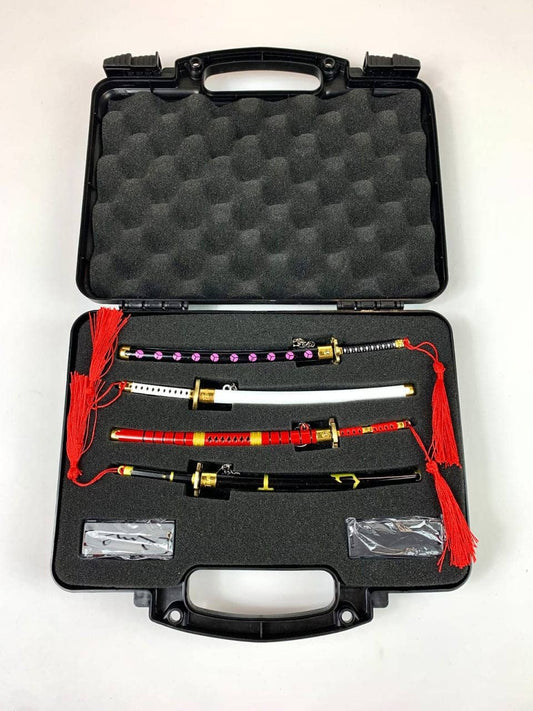
As we know that Father's Day is approaching in Spain, and we are sure that many of you are thinking of the perfect gift for your fathers, at Swords and more we want to give you a hand with some original ideas. Father's Day is celebrated in Spain on March 19th, coinciding with the feast of Saint Joseph, a figure traditionally associated with the model father in Christian culture. The modern celebration began to spread in 1948 when the Madrid teacher Manuela Vicente Ferrero promoted a day dedicated to honoring fathers in her school, an initiative that later spread throughout the country, and which today has become, for many, the perfect excuse to surprise your fathers in different ways. So, these are some gifts we suggest for that day. World of Warcraft Frostmourne or Frost Agony Sword Letter Opener An original gift, this Frostmourne or Frost Agony sword letter opener from Warcraft, ideal for a father who is a fan of the fantastic world of Azeroth. Inspired by the legendary sword of the Lich King from the World of Warcraft universe, it reproduces its iconic design in miniature with meticulous details and a decorative blade, making it a practical accessory for dad's desk. Decorative Templar Sword A special gift for fathers who love medieval history, and in particular the legendary Knights Templar, is this decorative replica of a Templar sword. Inspired by the weapons associated with the order during the Crusades, it stands out for its historical aesthetic and is perfect for a Father's Day surprise. Roronoa Zoro's Wado Ichimonji Katana Umbrella, One Piece A perfect and practical gift for fathers who are anime fans, and particularly One Piece, is this katana-style umbrella. Inspired by the iconic sword of swordsman Roronoa Zoro, it reproduces its elegant white design, one of the character's most emblematic weapons in the series. Besides being useful for rain, it is an original and fun accessory that any collector father or anime fan will love. And the best part is that Zoro's Katana is not the only design you can find! 10th Century Norse Bronze Amulet Pendant, with Leather Cord and Antique Finish An ideal gift for fathers passionate about history and Viking culture is the 10th Century Norse Bronze Amulet Pendant with Leather Cord. Inspired by Scandinavian amulets from the Viking era, it features an aged finish and a symbolic design that evokes strength and protection, values associated with these historical talismans. A perfect piece for those who admire the mythology and legacy of the Nordic world to wear. Ornamental Set of Katana, Wakizashi, and Tanto A gift specially designed for fathers who are fans of Japanese culture and traditional weapons is this ornamental set, consisting of a katana, wakizashi, and tanto. Inspired by the classic samurai set, it stands out for its elegant and decorative aesthetic, ideal for those who admire the history, symbolism, and tradition of feudal Japan. The Mandalorian Lamp, Star Wars An original gift for fathers who are fans of The Mandalorian and Star Wars universe is this decorative lamp inspired by the series, perfect for illuminating a desk or shelf while adding a touch of the Star Wars galaxy to the home. Assortment of 5 Valhalla Mead Bottles A foolproof gift for fathers who are fans of Viking culture and historical beverages is the Assortment of 5 Valhalla Mead Bottles. This pack brings together different varieties of artisan mead, an ancient drink made from the fermentation of honey and water, widely consumed by peoples like the Greeks, Celts, and Vikings. It's perfect for enjoying a tasting experience with traditional flavors that evoke the Nordic world. Medieval Drinking Horn, made of Ox Horn And just like mead, another original gift for fathers passionate about medieval history and Nordic traditions is this medieval drinking horn to accompany drinks with that traditional touch that harks back to the magic of ancient times. Made from genuine ox horn and with an approximate capacity of 400-500 ml, it evokes the banquets and celebrations of the Middle Ages. Its artisanal finish makes each piece unique, ideal for collectors and for setting the mood at gatherings with a historical touch. Lord of the Rings, One Ring Lamp An ideal gift to illuminate the space of a father who is a fan of Middle-earth and medieval fantasy is the Lamp inspired by the legendary One Ring, which projects a warm light that highlights its mythical inscription. Made of PVC and powered by AAA batteries or a USB-C cable, it is a perfect decorative piece for any fan of the saga. Game of Thrones Longclaw Sword This decorative replica of Longclaw, the famous sword associated with the character Jon Snow in the Game of Thrones series, is a gift that every epic fantasy enthusiast would be delighted to receive. Its distinctive pommel with a wolf's head and its design inspired by the saga make it an ideal piece for a fan of the universe created by George R. R. Martin. One-Handed Jian Sword, with Swallow Motif A perfect gift for fathers passionate about history and traditional Chinese culture is the elegant One-Handed Jian Sword with a swallow motif. Inspired by the classic jian, the double-edged straight sword used for centuries in China, its swallow decoration evokes good fortune and renewal in traditional Chinese symbolism. Roronoa Zoro's Enma Katana Keychain, One Piece An ideal detail for anime-fan fathers is the keychain inspired by one of the most emblematic swords of swordsman Roronoa Zoro from the anime One Piece. This small accessory reproduces the legendary Enma katana in miniature, making it an original and practical gift to always carry a symbol of their favorite pirate universe. However, it is far from being the only weapon whose keychain version you can find, so you will surely be able to find the perfect katana or weapon keychain for your fathers, even within other anime and even video game universes. Solo Leveling Daggers, in Stainless Steel, with Display Stand Another ideal gift for fathers who are fans of anime, donghua, and manhwa, is the Stainless Steel Daggers with Display Stand set, inspired by the popular Solo Leveling universe. These decorative replicas recreate the iconic weapons of hunter Sung Jinwoo and come with a display stand for their exhibition, making them a perfect piece for collectors and fans of the series. Decorative Blades of Chaos, God of War For fathers who are fans of epic video games, the set of decorative Blades of Chaos from God of War, inspired by the iconic weapons of the warrior Kratos, is an unmissable item. These decorative replicas recreate the aggressive and mythological design of the saga and are made with a steel blade and metal hilt, including a display stand. Atlantean Sword, from Conan the Barbarian An ideal gift for fathers who are fans of epic fantasy cinema is the decorative replica of the Atlantean sword from Conan the Barbarian, inspired by the weapon wielded by the protagonist. Its robust and ornate design reproduces the characteristic details of the original sword, with a steel blade and the legendary aesthetic typical of Conan's universe. It is a call to nostalgia and a vivid representation of strength, power, and determination. Special limited-time discounts Even if you haven't found the perfect gift in this list to make up your mind, you don't need to worry, as in our store you will also find a special section created exclusively for these dates, with discounts on a wide variety of products, among which you will surely find the ideal one for your fathers. You just have to visit our Father's Day Discounts Section, and you will be able to see everything we have for you.
Read more
March in Japan is a key month in the cultural and traditional calendar. The beginning of spring, the blossoming of cherry trees, and festivities such as Hinamatsuri, International Women's Day,...
In Japan, the month of March marks the end of the cold winter and the beginning of spring, with natural phenomena and celebrations that symbolize renewal, life, and connection with nature. Traditionally, this period was related to the ancient lunisolar calendar and was known as yayoi ("new life"), when plum blossoms bloomed and the first sakura, i.e., the first cherry blossoms, began to appear. March is not only attractive for its milder climate, which invites people to enjoy landscapes and outdoor activities, but also because it is unofficially considered women's month in Japan, full of festivities that focus on girls, women, and close social relationships. Below, we present the most prominent celebrations. Hinamatsuri: The Girls' Festival (March 3) Hinamatsuri or the Doll Festival (Momo no Sekku) is celebrated every March 3 and is one of the main festivities dedicated to girls in Japan. This tradition has deep historical roots in the Japanese calendar and is part of the five great seasonal celebrations (gosekku), adopted by the imperial court with influences from Taoist thought. During Hinamatsuri, families with daughters display a set of decorative dolls called hina ningyō in their homes, arranged on tiered platforms with red cloths, representing the traditional imperial court. The goal is to pray for the health, happiness, and balanced development of girls, reinforcing family and social values that have endured for centuries. The symbolism of the dolls and the objects that accompany them—such as miniature furniture and utensils—are carefully organized and reflect both hierarchy and classical Japanese aesthetics. In Kyoto, the Hiina Matsuri is celebrated at Ichihime Shrine, where women gather to pray for issues such as fertility, beauty, or a safe pregnancy. International Women's Day (March 8) In addition to Hinamatsuri, March 8 is commemorated in Japan as International Women's Day, although this celebration does not have the same social impact or deeply rooted tradition as in other countries. This global date recalls the historical struggle of women for equal rights, full participation in society, and the recognition of their contributions in all areas. In Japan, although there is increasing discussion about gender equality, social awareness of this date is still consolidating in cultural and political terms. White Day (March 14): A Day of Reciprocity in Japan Another holiday related to social and emotional relationships is White Day, celebrated on March 14. Originating in 1978, this event is a rather commercial custom: men who received chocolate on Valentine's Day (February 14) typically reciprocate with gifts, often sweets, to the women who gave them chocolate. Although not directly linked to the celebration of women's roles, White Day is a significant social celebration in Japan that highlights emotional relationships and cultural reciprocity within modern customs. A Month of Female Symbolism In addition to Hanami, the famous festival characteristic of early spring, where people gather under the first cherry blossoms to admire their flowers, Sakura, the March celebrations analyzed show how tradition and contemporary customs coexist in Japan around the female figure. Together, they offer a cultural perspective that connects seasonality, symbolism, and social life within the same temporal framework.
Read more
March 2026 arrives packed with cinema in Spain, with national and international premieres. Titles like Peaky Blinders: The Immortal Man, Torrente President, Bitter Christmas, and High Abilities offer genres ranging...
Movie Premieres in March 2026 March 2026 is shaping up to be an interesting month for cinema in Spain, with Spanish and international film premieres spanning genres such as thriller, comedy, drama, and political satire. Below, we review the movies in theaters, confirmed in cinemas with release dates, synopses, cast, and cinematic context. Peaky Blinders: The Immortal Man — March 6, 2026 The highly anticipated cinematic adaptation of the hit series Peaky Blinders brings the criminal intrigues of interwar Birmingham to the big screen. In this film, Tommy Shelby, played by Cillian Murphy, emerges from his self-imposed exile in the midst of World War II to confront his demons and a reckoning that will jeopardize the future of his family and his legacy. This film combines crime drama, history, and espionage and will first be released in selected cinemas before its streaming premiere, establishing itself as one of the most anticipated titles of the season. Torrente President — March 13, 2026 Spain's highest-grossing satirical franchise returns with a new installment featuring the anti-hero José Luis Torrente, played by Santiago Segura, who also directs and stars. This time, Torrente abandons his usual misdeeds to try to become president of the Spanish Government, in a political parody full of grotesque humor, stereotypes, and social criticism. The film maintains the irreverent essence of the Torrente saga and promises to provoke laughter and controversy in equal measure in Spanish cinemas. Bitter Christmas — March 20, 2026 Filmmaker Pedro Almodóvar returns with a dramatic comedy that mixes tragedy, friendship, and personal search. After her mother's death, protagonist Elsa, played by Bárbara Lennie, takes refuge in her work until a panic attack prompts her to embark on a trip to Lanzarote with her friend Patricia. There, she must confront her fears, relationships, and life priorities in a story marked by grief, the search for meaning, and Almodóvar's characteristic humor. High Abilities — March 27, 2026 This Spanish dramatic comedy directed by Víctor García León explores family life, aspirations, and social tensions through the story of Alicia and Gonzalo, a middle-class couple struggling to provide the best possible future for their son Fer. The possibility of enrolling him in an elite secular school triggers a reflection on parental fears, social expectations, and family identity, presenting a relatable and emotional human drama. March in Spanish Cinema: A Mix of Genres and Approaches The month of March 2026 in Spanish cinemas offers a varied combination of cinematic styles. This range of titles solidifies March as a month of diverse cinematic experiences for viewers, with premieres that aim for both entertainment and reflection, confirming that the first quarter's lineup can offer solid and culturally significant proposals.
Read more
Pokémon Day is celebrated every February 27th to commemorate the release of Pokémon Red and Green in 1996. This date marks the origin of one of the most influential video...
Pokémon DayPokémon Day is an official celebration created by The Pokémon Company to commemorate the birth of the Pokémon franchise.It is celebrated every February 27th because on that day, in 1996, the first video games in the saga, Pokémon Red and Green for Game Boy, were released in Japan. This date marks the beginning of a phenomenon that, over the years, transformed into an annual celebration followed by millions of fans worldwide.Unlike other promotional dates, Pokémon Day has a specific historical origin officially recognized by the company itself. On February 27, 1996, Nintendo released Pokémon Red and Green in Japan, developed by Game Freak under the creative direction of Satoshi Tajiri, introducing an innovative concept based on catching, training, and trading creatures.For years, the date was informally remembered by fans, until in 2016, coinciding with the 20th anniversary, The Pokémon Company officially established it as Pokémon Day.Since then, it has been celebrated every year with announcements, events, and news that shape the future of the franchise. How will it be celebrated this year, on its 30th anniversary?Pokémon Presents: the central event of Pokémon DayPokémon Presents is the main event of Pokémon Day and the official way The Pokémon Company communicates the most important news of the franchise.It is an online video presentation, usually broadcast on February 27, through official Pokémon channels on YouTube and other digital platforms.During this event, confirmed projects, not rumors, are announced and usually include:• Presentation of new video games or previews of already announced titles.• Details about expansions, updates, or downloadable content.• Information about animated series, movies, or audiovisual projects.• Special announcements linked to anniversaries or important celebrations.For fans, Pokémon Presents is the key moment of the year, as it concentrates all the official information about the future of the saga in a few minutes. Special events in Pokémon video gamesIn addition to announcements, Pokémon Day is celebrated practically within the active video games of the franchise.These events allow direct participation in the celebration, without the need to travel or attend in-person events.In the case of Pokémon GO, it is common to find:• Temporary events with featured Pokémon.• Special bonuses, such as more experience or specific appearances.• Community-related activities during the days leading up to February 27.In console games, the celebration usually translates into:• In-game gifts.• Special appearances or limited-time events.• Commemorative content related to the anniversary.This approach turns Pokémon Day into an interactive, not just informative, experience. Pokémon Trading Card Game products and promotionsThe Pokémon Trading Card Game is another fundamental pillar of the celebration. Every year, Pokémon Day usually comes with special releases or promotions, designed for both collectors and regular players.Among the most common products are:• Exclusive promotional cards.• Products with commemorative designs.• Special material available for a limited time.These initiatives reinforce the collectible nature of Pokémon Day and give the date tangible value for fans of the franchise. How can any fan celebrate Pokémon Day?Celebrating Pokémon Day does not require special preparation. Any fan can participate simply by following a few basic steps:• Watch Pokémon Presents on February 27.• Participate in active events within official games.• Take advantage of special promotions or releases.• Share the experience in communities and social networks. Pokémon Day is not just a symbolic anniversary, but a day designed to interact, play, and discover new things, keeping the connection between the franchise and its followers alive.
Read more
Hellboy: The Crooked Man marks a new film adaptation of the character created by Mike Mignola, with an independent and darker approach than previous versions. Set in the 1950s and...
Hellboy: The Crooked Man Hellboy: The Crooked Man is the latest film adaptation of the iconic character created by Mike Mignola. Its release in Spanish cinemas is scheduled for February 6, 2026, distributed by Vértice 360, after a previous limited run outside the traditional commercial circuit. The film is not a direct sequel to the versions directed by Guillermo del Toro nor the 2019 reboot, but an independent reinterpretation based on a specific story from the original comics. Plot and Narrative Atmosphere Set in the 1950s in rural Appalachia, the story follows Hellboy and a rookie agent from the Bureau for Paranormal Research and Defense (BPRD) on a mission that turns dangerous. They face a community haunted by supernatural forces and witchcraft, especially a demonic entity known as the Crooked Man, who seems to have ties to the protagonist's past. The plot blends elements of horror, fantasy, and action, with a dark, folk-inspired tone, integrating the aesthetics of Mignola's original comics and the influence of North American folklore. Main Cast and Creative Team The film is directed by Brian Taylor, known for his work in action cinema, and the screenplay is a collaboration between Christopher Golden, Mike Mignola, and Taylor himself. The cast includes: Jack Kesy as Hellboy, the protagonist half-demon. Adeline Rudolph as Bobbie Jo Song, a BPRD agent. Jefferson White playing Tom Ferrell, a key ally. Leah McNamara and Joseph Marcell complete the main cast. This approach opts for relatively new faces instead of big-name stars, reinforcing a more contained proposal less oriented towards commercial spectacle. Where was it filmed? The film was shot between March and May 2023, a period during which most of the scenes were filmed. Later, additional recordings were made to correct details or add new takes. Although the story is set in the rural Appalachian forests of the United States in the 1950s, its locations were recreated in interiors, studio exteriors, and natural environments in Bulgaria. The staging opts for a more intimate style, prioritizing atmosphere and mystery over the grand action sequences present in previous adaptations. Critical and Audience Reception The reception of Hellboy: The Crooked Man has been mixed, with no clear consensus among critics and viewers. The diversity of opinions is due, in part, to limited previous screenings, which allowed a small audience to issue evaluations before the general release in Spanish cinemas. Positive Reviews Among the favorable opinions, the following stand out: fidelity to the dark and demonological tone of the original comics; a commitment to a more intimate approach, moving away from conventional superhero cinema; an atmosphere consistent with the adapted story. Negative Reviews The most critical evaluations point to: an irregular pace, with sections that reduce narrative tension; execution problems, understood as a poorly cohesive integration between script, direction, and staging; a narrative development that does not exploit its full potential. In the visual section, especially when compared to the versions directed by Guillermo del Toro, the following are mentioned: correct but limited special effects and photography; a sober production design. An interesting return of the red demon Hellboy: The Crooked Man is not just another superhero movie. It is a version that prioritizes the sinister tone of the original comics and offers a different interpretation of the character, which may be attractive to those looking for a less conventional adaptation.
Read more
Anime (Japanese animation), with figures like Hayao Miyazaki and Osamu Tezuka, has influenced Hollywood more than is recognized. Films such as The Lion King and Snow White and the Huntsman...
Hidden inspirations? Invisible plagiarism? Parallels in HollywoodJapanese animated cinema, and anime itself, has had a profound and lasting influence on contemporary audiovisual narrative.Works such as Princess Mononoke (1997), directed by Hayao Miyazaki, for example, redefined the environmentalist and anti-war message, establishing a unique visual, symbolic, and narrative language. Over time, several Hollywood productions have notably replicated certain elements of anime, reusing narrative structures, images, and concepts without explicit acknowledgment.Thus, the reuse of ideas proposed by these oriental animations without such acknowledgment is known as "invisible plagiarism," and it manifests itself with particular force in several emblematic cases that continue to generate debate. This article analyzes two representative cases in which the parallels, for many, go beyond simple inspiration, showing the depth of the influence of artists like Miyazaki and Tezuka on global animation. Snow White and the Huntsman vs. Princess MononokeSnow White and the Huntsman (2012) was presented as a dark reinterpretation of the European fairy tale but shows clear parallels with Princess Mononoke. In both works, the forest is not a passive setting but a living, conscious, and morally active entity.When Snow White enters alone, the trees and roots seem to react to her presence, just as in Mononoke, where the forest responds to armed humans through unnatural movements and oppressive lights, reinforcing the narrative tension. The Kodama, small luminous creatures from Mononoke, find their parallel in the light beings that accompany Snow White, indicating nature's acceptance and reinforcing the protagonist's spiritual connection with the environment. The scene in which Snow White is "blessed" by the forest reproduces almost shot by shot the sequence in which Princess Mononoke moves among deer under the Shishigami, reflecting a deep and symbolic interaction between character and ecosystem. The huntsman plays a similar role to Ashitaka, mediating between the human and natural worlds, visually reinforced by shots that show reflection and isolation. Nature's response to human corruption is presented almost identically: organic hostility to environmental imbalance, where the forest acts as a living organism that protects its balance, conveying an ecological and moral message that goes beyond traditional narrative. The Lion King vs. Kimba, the White LionKimba, the White Lion (Jungle Taitei), created by Osamu Tezuka in 1965, is one of the foundational works of modern anime.The series and its subsequent films feature a young lion who must assume leadership after his father's death, facing moral conflicts, internal betrayals, and the tension between tradition and human progress. The Lion King (1994) develops a surprisingly similar premise.Simba, like Kimba, is a cub destined to reign, marked by his father's death and forced into exile before returning to reclaim his place. Although Disney has repeatedly denied any direct influence, the coincidences go beyond the basic narrative outline. There are widely documented visual parallels: scenes where the protagonist observes the kingdom from a high rock, the spiritual appearance of the father in the sky, the antagonist with dark features and a facial scar, and even almost identical shots of animals running across the savanna.In Kimba, these images appeared decades earlier, with a visual language already consolidated. The symbolism also coincides.Both works present leadership as an ethical responsibility rather than a hereditary right. The king is not one who dominates, but one who maintains the balance between species, a recurring concept in Tezuka's work and central to Simba's narrative arc. The controversy intensified in Japan, where the similarity was perceived as evident.There, Disney's lack of official recognition was interpreted as cultural appropriation, especially considering Tezuka's historical relevance as "the father of manga and anime." Coincidence or plagiarism?Had you noticed these parallels? What do you think? Coincidence or plagiarism?And if it was inspired, do you think it is appropriate to keep the original inspiring story hidden just because it is aimed at a different target audience, or would it at least deserve a mention?
Read more