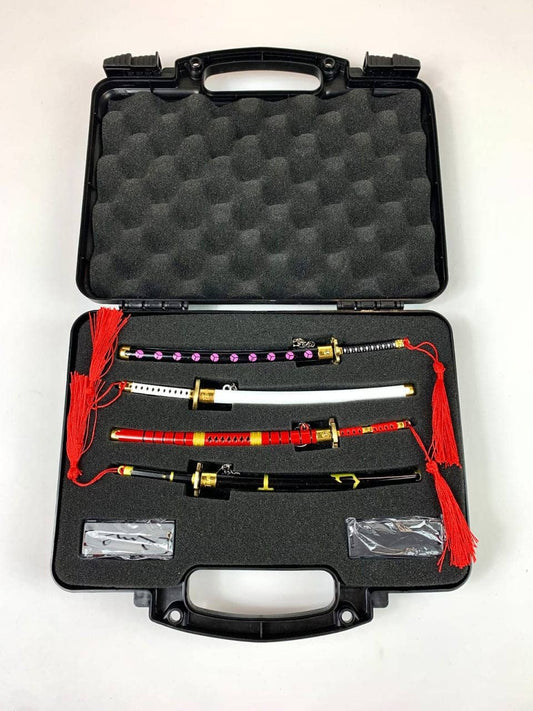


There are 8 main types of Japanese katanas classified by blade length and historical function: the standard katana (60–80 cm), the wakizashi (30–60 cm), the tanto (less than 30 cm), the tachi (more than 70 cm, for cavalry), the nodachi (more than 90 cm, for open-field infantry), the kodachi (45–60 cm, versatile), the naginata (30–60 cm blade on a 120–150 cm shaft), and the odachi (more than 90 cm, ceremonial and elite weapon).

The katana is much more than a sword: it is the symbol of the samurai's soul, a work of metallurgical engineering that took centuries to reach its definitive form. But what popular imagination calls a "katana" is actually a family of Japanese swords with very distinct names, proportions, and purposes. A wakizashi is not the same as a nodachi; a naginata is not a type of katana in the strict sense, but it shares the same forging lineage and martial philosophy. In this guide, you will find the history, exact measurements, historical use, and current relevance of each of the 8 essential types.
The 8 types of Japanese katanas at a glance
This table is the most complete quick reference in Spanish on the types of Japanese swords. Use it to identify any piece at a glance:
| Type | Blade length | Main period | Historical bearer | Main use | Modern use |
|---|---|---|---|---|---|
| Katana | 60–80 cm | Muromachi Period (14th–16th c.) onwards | Samurai | Foot combat, cutting | Collection, kenjutsu, iaido |
| Wakizashi | 30–60 cm | Edo Period (17th–19th c.) | Samurai (secondary weapon) | Indoor combat, seppuku | Collection, daishō pair |
| Tanto | Less than 30 cm | Heian Period (9th–12th c.) onwards | Samurai, nobles, women | Close combat, self-defense | Collection, artistic cutlery |
| Tachi | More than 70 cm (more curved blade) | Heian–Kamakura Period (9th–14th c.) | Mounted samurai | Mounted combat, cutting from horseback | Collection, museums |
| Nodachi | 90–120 cm | Nanbokuchō Period (14th c.) | Elite foot infantry | Breaking formations, anti-cavalry | Collection, cosplay, exhibition |
| Kodachi | 45–60 cm | Kamakura Period (12th–14th c.) | Samurai, civilians | Versatile: thrusts and cuts | Collection, kenjutsu |
| Naginata | Blade 30–60 cm + shaft 120–150 cm | Heian Period (9th–12th c.) onwards | Warrior monks, samurai, women | Anti-cavalry, distance control | Martial art (naginatajutsu) |
| Odachi | More than 90 cm (up to 160–180 cm) | Nanbokuchō–Muromachi Period (14th–16th c.) | Exceptional warriors, ceremonies | Ceremonial, intimidation, open field | Collection, display pieces |
Looking to add some of these types to your collection? At Espadas y Más you will find more than 200 Japanese katanas of all types: from decorative anime replicas to functional katanas forged from carbon steel. Shipping in 24-48h to all of Spain.
1. Katana — the quintessential samurai sword
History and origin
The katana in its definitive form emerged during the Muromachi Period (1336–1573), although its roots go back to the tachi of the previous period. Unlike the tachi, which was worn suspended from the belt with the edge facing down for use from horseback, the katana was worn tucked into the obi (sash) with the edge facing up, allowing for drawing and cutting in a single fluid motion — the philosophical and technical principle of iaido. Its manufacture in tamahagane, a high-carbon steel obtained through the tatara smelting process, gives it a combination of extreme sharpness and flexibility that European metallurgy took centuries to match.
Technical characteristics
- Blade length: 60–80 cm (between 2 and 2.5 shaku)
- Curvature: moderate, designed for cutting in motion
- Edge: single, on the convex side of the blade
- Handle (tsuka): 25–30 cm, for two-handed grip
- Carried: edge up, tucked into the obi
What it is used for — then and now
Historically: foot combat, ritual executions, and symbol of samurai status. The Tokugawa Shogunate (1603–1868) reserved the right to carry a katana exclusively for the warrior class. Today: practice of kenjutsu and iaido, collecting, anime replicas, and popular culture.
At Espadas y Más: See full katana collection →
2. Wakizashi — the inseparable companion
History and origin
The wakizashi consolidated as a weapon during the Edo Period (1603–1868) as the samurai's short sword, forming together with the katana the famous daishō — the pair of swords that defined an elite warrior. Unlike the katana, the wakizashi could be carried indoors: it was common for samurai to leave their katana at the entrance of a castle but keep their wakizashi with them at all times. Its best-known use outside of combat is seppuku, the ritual of honorable suicide practiced as an alternative to capture or dishonor.
Technical characteristics
- Blade length: 30–60 cm (between 1 and 2 shaku)
- Curvature: similar to the katana but more pronounced in proportion
- Edge: single
- Carried: edge up, next to the katana in the obi
What it is used for — then and now
Historically: combat in confined spaces where the katana was too long to wield, backup weapon, and ritual seppuku. Today: collecting, complementary piece in the daishō pair, and single-handed kenjutsu practice.
3. Tanto — the samurai's dagger
History and origin
The tanto is the oldest short Japanese sword in the formal sense, with documented examples dating back to the Heian Period (794–1185). Originally it had no curvature — it was practically straight, a direct heir to Chinese influence — and evolved into more elaborate forms over the following centuries. It was the first samurai weapon to acquire artistic status: smiths competed for the elegance of the blade, the finish of the habaki, and the engravings on the tsuba. Noblewomen and samurai wives carried a tanto as a self-defense weapon and ritual tool.
Technical characteristics
- Blade length: less than 30 cm (less than 1 shaku)
- Curvature: minimal or none in older models
- Edge: single or double depending on the period
- Use: single-handed
What it is used for — then and now
Historically: close combat in maximum proximity situations, penetration of armor at joint gaps, self-defense for civilians, and rituals. Today: high-end collecting and artistic Japanese cutlery.
At Espadas y Más: See tantō and Japanese knives →
4. Tachi — the precursor to the katana
History and origin
The tachi is the mother sword of the katana. It preceded it during the Heian and Kamakura Periods (9th to 14th centuries), when Japanese combat was dominated by cavalry. Unlike the katana, the tachi was worn suspended from the belt with the edge facing down, which facilitated drawing upwards to cut the enemy from a moving horse. Its blade is longer and more curved than that of the standard katana, specifically designed to maximize the effectiveness of a downward arcing cut from horseback. When cavalry lost prominence to foot combat during the Muromachi Period, the tachi was gradually replaced by the katana, which was more practical for foot samurai.
Technical characteristics
- Blade length: generally more than 70 cm, with greater curvature than the katana
- Curvature: high (koshizori — curvature concentrated at the base of the blade)
- Edge: single
- Carried: suspended from the belt, edge down — opposite to the katana
What it is used for — then and now
Historically: equestrian combat, major battles of feudal Japan between the 10th and 14th centuries. Today: museum pieces and high-value collectibles. Reproductions frequently appear in historical video games and anime.
5. Nodachi — the sword of the strongest warriors
History and origin
The nodachi — also called ōdachi in some classifications — is the quintessential field sword, designed for combat in open formations. It reached its peak during the turbulent Nanbokuchō Period (1336–1392), when large open-field battles between the Northern and Southern clans demanded weapons capable of breaking spear formations and stopping cavalry. Its imposing size had an additional psychological effect: seeing it in the hands of the enemy was enough to demoralize entire formations. Only the largest and most trained warriors could wield it effectively, which made the nodachi a symbol of exceptional strength. The Tokugawa Shogunate eventually banned them for being incompatible with civil order.
Technical characteristics
- Blade length: 90–120 cm (more than 3 shaku)
- Overall length: can exceed 150 cm
- Curvature: moderate, similar to the katana but on a larger scale
- Carried: on the back or carried by an assistant due to its size
What it is used for — then and now
Historically: open-field battles, breaking spear formations, and anti-cavalry combat. Today: collection pieces with great visual impact, cosplay, and exhibition. It is one of the most sought-after types by collectors looking for imposing pieces.
At Espadas y Más: See large-format katanas and collection pieces →
6. Kodachi — the versatile sword of the adaptable warrior
History and origin
The kodachi holds an ambiguous and fascinating position within the classification of Japanese swords: its length (45–60 cm) places it between the wakizashi and the katana, sharing characteristics with both. Unlike the wakizashi, which was the ritual companion to the katana in the daishō, the kodachi had its own identity as a primary weapon for fighters who preferred speed and maneuverability over reach. The master swordsman Miyamoto Musashi, the most famous Japanese warrior in history, made the Niten Ichi-ryū style famous, which combined katana and kodachi — although many historians debate whether the secondary weapon was actually a wakizashi.
Technical characteristics
- Blade length: 45–60 cm (area of ambiguity with the wakizashi)
- Curvature: moderate
- Use: can be used with one or two hands
- Key difference from wakizashi: more elaborate tsuba and greater independence as a primary weapon
What it is used for — then and now
Historically: versatile one-handed combat, pairing with a second sword in two-sword styles, civilian self-defense use. Today: collecting and kenjutsu practice for those who prefer one-handed styles.
7. Naginata — the weapon of monks, samurai, and warrior women
History and origin
The naginata is technically a polearm — a katana blade mounted on a long wooden shaft — but it shares the same forging process, the same single-edge philosophy, and the same martial tradition as Japanese swords. It reached its peak use during the Heian and Kamakura Periods as an anti-cavalry weapon: the combination of reach and curved edge allowed for unhorsing riders and cutting the legs of horses without entering their range of action. Over time, it became the quintessential weapon of the sōhei (Buddhist warrior monks) and, notably, of samurai women (known as onna-bugeisha), who preferred it because it allowed them to maintain distance from physically stronger opponents. Tomoe Gozen, the most famous onna-bugeisha in Japanese history, is always depicted with a naginata.
Technical characteristics
- Blade length: 30–60 cm, curved and single-edged like a katana
- Shaft length (ebu): 120–150 cm, made of lacquered wood
- Overall length: 150–210 cm
- Weight: 1–2 kg depending on the model
What it is used for — then and now
Historically: anti-cavalry control, defense of castles and homes, weapon of onna-bugeisha. Today: naginatajutsu is one of the few Japanese martial arts where women compete predominantly and with their own internationally recognized category.
8. Odachi — the sword of gods and heroes
History and origin
The odachi is the largest sword in the Japanese pantheon, and its history oscillates between the martial and the sacred. With blades that can exceed 150 cm — some ceremonial examples reach 3 meters — the odachi was physically impossible for most warriors to wield: it required years of specific training and an exceptional physical constitution. Many odachi were never used in combat: they were offerings to Shinto temples, symbols of divine power, and ritual objects of spiritual importance equivalent to that of the deadliest weapon. The Nanbokuchō period was its military zenith; after the restrictions of the Tokugawa Shogunate, its function was exclusively ceremonial. Today, the most important Japanese temples preserve original odachi from the 14th and 15th centuries as national treasures.
Technical characteristics
- Blade length: more than 90 cm in military models; up to 3 meters in ceremonial pieces
- Curvature: moderate to low
- Carried: on the back with an assistant for drawing, or directly over the shoulder
- Weight: 2–4 kg in functional models
What it is used for — then and now
Historically: 14th-century open-field battles, ritual offerings, symbol of supernatural power. Today: odachi replicas are the most visually impactful pieces in any collection, and appear in role-playing video games like Elden Ring and Dark Souls as legendary, high-tier weapons.
At Espadas y Más: See large-format katanas and Japanese swords →
What is the difference between katana, tachi, and nodachi?
This is the most frequent question when studying the types of Japanese swords. The answer in three points:
- Length: katana (60–80 cm) → tachi (more than 70 cm, with greater curvature) → nodachi/odachi (more than 90 cm, up to 180 cm). The odachi surpasses the nodachi in size although both terms are often used synonymously.
- Way of carrying: the katana is worn with the edge facing up in the obi; the tachi hangs with the edge facing down; the nodachi and odachi are carried on the back.
- Context of use: the katana is the weapon for foot combat; the tachi is the weapon for cavalry; the nodachi and odachi are open-field and ceremonial weapons respectively.
How to choose the type of katana for your collection?
It depends on three factors:
- If you are looking for historical authenticity: a standard katana or a tachi are the pieces with the greatest cultural value and the easiest to find in collection quality.
- If you practice martial arts: the functional katana (for kenjutsu and iaido) or the bokken and iaito (for training). See practice katanas →
- If you are looking for visual impact: the nodachi or the odachi are the most imposing pieces in a display case or exhibition. The tanto and wakizashi are ideal for compact collections or to complete a daishō.
At Espadas y Más, we have all types in different finishes, materials, and price ranges. Explore the complete collection of Japanese swords →
Frequently Asked Questions About Katana Types
How many types of katanas are there?
In the classic Japanese classification, there are 8 main types according to blade length and function: katana, wakizashi, tanto, tachi, nodachi, kodachi, naginata, and odachi. There are also specialized variants such as the iaito (for practice), the shirasaya (without guard), the chokutō (straight blade predating the katana), and the ninjato (popularly associated with ninjas, although its historical existence is debated).
What is the difference between a katana and a wakizashi?
The main difference is length: the katana has a blade between 60 and 80 cm, while the wakizashi measures between 30 and 60 cm. Both form the daishō, the samurai's pair of swords. The wakizashi was used in indoor combat where the katana was too long to handle and as a backup weapon when the katana was lost or broken.
What type of katana is most suitable for collecting?
For beginner collectors, a standard decorative or anime katana offers the best balance of price, aesthetics, and availability. For advanced collectors, the most valued pieces are the tachi with historical fittings, the artisan-forged tanto, and the display odachi. In all cases, the key factor is the quality of the steel and fittings (tsuba, fuchi, kashira) rather than the length.
Is it legal to own a katana in Spain?
Yes, katanas and Japanese swords are legal in Spain for adults as collectibles and ornamental items for use in a private home or authorized spaces. It is forbidden to carry them in public or sell them to minors. Decorative katanas without an edge or untempered do not have additional restrictions; functional sharp ones are subject to general regulations for bladed weapons.
What type of katana do anime characters use?
It varies by character and series: Tanjiro Kamado (Demon Slayer) uses a standard adapted Nichirin katana; Roronoa Zoro (One Piece) uses a three-katana style that combines a standard katana with swords of different lengths; Naruto characters use kunai and tanto. The nodachi appears in historically themed series like Rurouni Kenshin and in video games like Elden Ring and Ghost of Tsushima.