América
Astronomical Knowledge of the Mayans: Predictions, Calculations, and Meanings
Systematic Sky ObservationThe Mayan civilization, which flourished from approximately 2000 BCE to the 16th century, d...


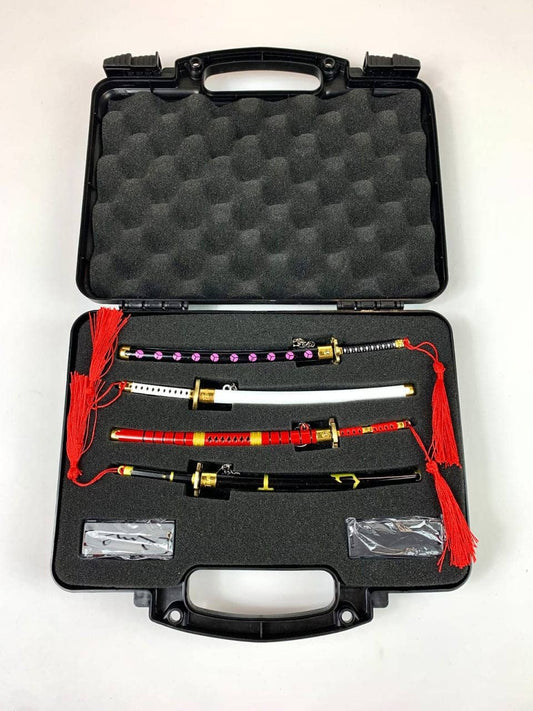


In Spain, the regulations on weapons are clear: carrying or using a sword for self-defense is not usually legal, although it could give rise to some debate. This article explains...
The idea of using a sword for self-defense might seem like something out of a movie, but in real life, Spanish firearms regulations are clear and restrictive. Good intentions alone are not enough: the possession, carrying, and use of weapons (including bladed weapons like swords) are regulated by the Firearms Regulations and the Penal Code, which distinguish between possession at home, public display, legal carrying, and prohibited weapons. Which self-defense weapons are legal? In Spain there are approved products for personal defense (for example, approved sprays) whose sale and use are regulated by ministerial orders and health requirements. However, beyond these, any readily available object can be legally used to repel an attack, provided it can be justified under the self-defense provision of the Penal Code. In such cases, the decisive factor is not the object itself, but the circumstances: the existence of an unlawful attack, its immediacy, necessity, the absence of a less harmful alternative, and proportionality between the force used and the attack suffered. The minimum force necessary to neutralize the threat and stop the attack should be used. However, if, for example, brass knuckles or other objects designed to injure, whose possession and use are prohibited, are used, there is a risk of criminal penalties even if self-defense is claimed. Is it illegal to use a sword for self-defense? Using a sword in public as a means of self-defense is, in practice, highly problematic and usually illegal. Many swords, knives, or machetes may be considered "prohibited weapons" or bladed weapons whose possession and carrying in public places are limited or prohibited by the Weapons Regulations. Carrying or displaying a sword in the street may lead to police intervention, confiscation of the object, and administrative or criminal penalties if it is considered a threat or illegal possession. The legal concept that justifies defensive violence is self-defense (Art. 20.4 Penal Code and its interpretation by jurisprudence). For the exemption to apply, certain factors must be present, including the proportionality between the means employed and the aggression. The use of a sword raises the bar: in such a case, it would be examined whether there were less harmful means and whether the response was proportionate. Using a sword—a potentially lethal weapon—will hardly be considered proportionate except in extreme and demonstrably proven situations. What are the permitted uses in self-defense? The law allows the right to self-defense, but always in accordance with the principle of proportionality: the reaction must be necessary and proportionate to the attack. Furthermore, self-defense does not exempt one from liability if the object used is prohibited or its possession is not authorized. The Penal Code punishes the illegal possession of weapons and establishes penalties that may include imprisonment or disqualification. Which self-defense weapons are legal? For self-defense there are legal and regulated solutions: approved sprays (according to health regulations), personal alarms, tactical flashlights and other non-lethal or low-damage devices. Authorized sprays are listed in official catalogs and their marketing and use are subject to homologation and age requirements. Bladed weapons purchased as collector's items or for domestic use are generally only permitted within the home and with restrictions on their transport. They may be used for self-defense if readily available and in compliance with the standards of legitimate self-defense, but this right may not apply if the response was disproportionate, for example, if the weapon causes serious injury or death to the aggressor. It is important to note that the illegal possession or carrying of a firearm, in itself, can lead to liability. Case law is highly nuanced, and each case depends on evidence, witnesses, injuries, and context. What is permitted to carry for self-defense? In practice, the recommended and legal thing to do is to carry only approved non-lethal weapons and avoid any object that could be considered a prohibited weapon. Carrying a sword, a sharp machete, automatic knives, or any other type of weapon on the street can lead to police intervention and possible charges. Security forces are conducting checks to reduce the presence of bladed weapons in public spaces; in some regions, operations and sanctions have been intensified. It is recommended to primarily and exclusively carry approved Pepper Spray. In summary... No, using or carrying a sword in the street for self-defense is not a legally recommended option in Spain: regulations and jurisprudence prioritize proportionality, public safety and the prohibition of dangerous weapons in public. If you're looking to protect yourself, opt for approved, non-lethal means. Check with the Civil Guard or local police to find out which products are authorized and avoid exposing yourself to fines or criminal charges. While prioritizing the use of approved pepper spray is recommended, in cases of imminent threat or other specific circumstances, a special permit may be obtained for other types of defensive weapons. For specific issues, always consult official sources and, if necessary, legal advice. Self-defense courses, classes, and workshops are always a practical and very useful long-term option, as is prevention. In case of an attack, it is recommended to: Prioritize fleeing and asking for help if possible; avoiding confrontation is the safest and legal option. When it becomes necessary to defend yourself, try to use the minimum force necessary to neutralize the threat and stop the aggression. Do not display or carry prohibited weapons (brass knuckles, certain knives, tasers, etc.). It is also recommended to always check that pepper sprays are approved before purchasing them. After the incident: report/notify the police , look for witnesses, take photos of injuries and save any evidence (clothing or objects) and go to a medical service; all this helps to justify the self-defense version. If there are legal consequences, consult a criminal lawyer as soon as possible (jurisprudence is very nuanced and each case is decided by its evidence and context).
Read more
Is it legal to walk around with a sword in Spain? The legislation distinguishes between possession, transport and carrying. Carrying a sword, katana, or dagger in public is prohibited without...
The presence of bladed weapons in the street—swords, katanas, daggers, or knives—frequently raises questions. In Spain, firearms regulations are extensive and distinguish between possession (having something at home), transport (carrying it from one place to another), and carrying (carrying it in public for use). Below we will answer some of your most frequently asked questions. Is it legal to carry a sword? Generally speaking, it is not permitted to carry a sword in public unless there is a legitimate reason (transport from the place of purchase to the home, use in exhibitions, sports practices or accredited collecting). The Weapons Regulations (Royal Decree 137/1993) and the guidelines of the Ministry of the Interior prohibit the carrying and display of bladed weapons when they may generate public alarm or danger; transport must be carried out in a justified and safe manner. Practical advice: If you buy a katana or other sword, keep it sheathed and in the trunk or packaging, and also keep documentation that justifies its use (purchase certificate, proof of registration in club or event). Avoid carrying it in your hand on the street: it may result in fines or police intervention. What weapons can I have at home without a license? The regulations allow the possession at home of many bladed weapons (blunted collectible swords, replicas, decorative sabers), provided they are not expressly prohibited. The Regulation sets exceptions: certain objects (for example, automatic knives or bladed weapons listed as prohibited) cannot be marketed or possessed. The Civil Guard and the Ministry of the Interior distinguish between weapons that require authorization and objects permitted for collecting or home decoration. Recommendation: Keep the pieces at home, out of public view, preferably in display cases or boxes, and avoid sharpening replicas that were sold without an edge (sharpening can turn the piece into a problematic object). Is it illegal to have a sword at home? No, owning a sword at home is not automatically illegal , as long as it is not prohibited by law and is not used to intimidate or commit crimes. Yes, it can be illegal if it involves weapons expressly prohibited by the regulations (for example, certain types of automatic knives or listed models). If in doubt, consult the list of prohibited weapons from the Ministry of the Interior and the weapons classification of the Civil Guard . What non-lethal weapons can I use for self-defense? In Spain there are approved and limited options: self-defense sprays (pepper) approved, approved batons and other non-lethal devices approved by health authorities and the Weapons Regulations. Not all aerosols or devices are permitted: only those approved by health authorities appear on official lists. Use should be limited to proportionate self-defense; misuse may constitute a crime. Examples and precautions: Approved pepper spray : permitted to carry and use for self-defense (provided it is one of the authorized models). Consult the official list from the Ministry of Health. Batons or defensive items : their civilian use is regulated; they will function as a defensive tool only if the action respects proportionality. In summary Owning a sword at home is legal, unless it is of a prohibited type, but Carrying it in public is prohibited except for justified reasons (transport, sport, exhibition or accredited collecting). For self-defense, the accepted and safe option is approved devices (authorized sprays, approved batons) and, above all, training in self-protection and prevention measures. If you have any doubts about a specific model (katana, decorative sword, knife), it is advisable to check its classification in the Weapons Regulations and consult with the Civil Guard or the Ministry of the Interior, and their list of prohibited weapons.
Read more
You probably have many questions about our products. From the differences between functional and decorative katanas to our shipping options and the possibility of customizing a product, you'll find the...
At Espadas y Más, we're eager to answer your questions, so here are some answers to some of the most frequently asked questions about us and our products. Differences between a functional and a decorative katana At first glance, all katanas may look the same. Shiny, with an elegantly curved blade and a meticulously crafted hilt. However, not all are made for the same purpose. There's a big difference between a functional katana and a decorative one, and understanding it is key if you're thinking about buying one. A functional katana is designed to be used. It's forged from durable materials and designed for real cutting, training, or martial arts. Its construction follows traditional techniques, and every element—from the blade to the handle—is designed to offer balance, safety, and durability. A decorative katana, on the other hand, is merely a visual object. Its purpose is to embellish, not to cut. While it may look very detailed and striking, it isn't designed for practical use. The materials are often lighter or less durable, and in most cases, the blade isn't even sharp. If you're looking for a piece of art to decorate your home, a decorative katana will be perfect. But if you want to train or have a sword that feels like the real thing, a functional katana is ideal. Differences between a katana and a sword Although sometimes used synonymously, katana and sword are not the same. A katana is a Japanese sword, but not every sword is a katana. Each one has its own history, manufacturing method, and particular combat style. Their characteristics can give them names, and knowing the differences is like opening a window to completely different worlds. The katana is a traditional Japanese weapon, famous for its curved blade, unique edge, and design conceived for precise cuts. Its use is closely linked to martial arts disciplines such as kenjutsu and iaido, where fluid movement and precision are essential. The way it is held, drawn, and cut is part of a broader philosophy that goes beyond combat and is strongly associated with the samurai. The sword, on the other hand, encompasses a vast array of bladed weapons originating from Europe, Asia, and other regions. From straight and double-edged medieval swords to lighter ones like the saber or rapier, their design is more oriented toward thrusting, blocking, and direct engagement with armor. Every sword, regardless of its origin or style, including the katana, has a long history behind it and is a reflection of the changes, traditions, and cultures that have made them what they are today. Katanas are legal in Spain. Yes, katanas are legal in Spain for adults, but their use is restricted, as with any bladed weapon. Items considered bladed weapons are legal for domestic use or as ornaments or collections in one's own home, or for controlled spaces with proper authorization. It's completely legal to buy and keep them at home if you're of legal age, but selling them to minors or using them in public is prohibited. If I sharpen a decorative katana, does it become functional? This is a fairly common question, especially among those purchasing their first katana and curious about its true potential. At first glance, a decorative katana can look very similar to a functional one: it has the blade, the hilt, and even visual details reminiscent of authentic samurai swords. But the difference goes beyond the edge. Decorative katanas are made from materials not designed to withstand impacts. Their steel is often of low quality or even an alloy unsuitable for combat. Furthermore, the assembly of the parts is often weak: the blade may not be properly secured to the hilt, making it dangerous to use in actual practice. Sharpening them doesn't make them functional. In fact, it can be even more risky: a sharp but structurally fragile blade is more likely to break, bend, or cause accidents. Functional katanas, on the other hand, are made from heat-treated steel, have a solid construction, and have undergone processes that ensure their durability and safety in real cuts. In short: sharpening a decorative katana doesn't make it functional. If you want a sword that's actually usable, it's best to invest in one designed and forged for that purpose. Can I customize my katana? Yes, you can customize your katana, both decoratively and functionally. This is one of the things that collectors and martial arts practitioners enjoy the most, because the katana is not just a weapon, but also a work of art, and customizing it allows you to reflect your style, history, or even your values. The possibilities are endless: you can choose the type of steel and blade size, as well as the design, material, and color of the tsuba, tsuka-ito, and saya. Symbols or inscriptions can also be engraved, making each piece unique. Customizing your katana is a way to connect with tradition, but also to express something very personal. Whether you use it for display, training, or cutting, having a custom-made katana makes it more than just a sword: it's an extension of you. At Espadas y Más , we give you the opportunity to design a katana tailored to your needs: choose every detail of your samurai sword and turn it into a unique piece that reflects your style and personality, whether decorative or functional. Once customization is complete, our artisans will forge your katana using traditional Japanese techniques, ensuring a high-quality result, depending on your desires. The average time to make your katana is 15 to 30 business days. We leave you here the link with more details about our custom katanas . Do you ship katanas to other countries? Yes. We ship all items we carry at Espadas y Más, including katanas, anywhere in the world. However, this only applies to countries where they are legal and can be imported from abroad. As we strive to address all of our customers' concerns, for your peace of mind, there's a special section dedicated to shipping, as tariffs and delivery times depend on the country you live in. We've provided a link so you can keep all the details in mind when purchasing and calculate how much the final price may vary depending on your location, here .
Read more
We're bringing you more answers to some of the questions you've been asking us lately, both about katanas and Kimetsu no Yaiba (Demon Slayer). We hope you'll be able to...
Today we continue answering your most frequently asked questions about Katanas, with the addition of a couple of questions about the swords of the Night Guardians, Kimetsu no Yaiba. How to make a paper katana? There are many ways to create a paper katana, including origami. You can find an example tutorial for creating a cardboard katana here , although it is far from the only one. You can also create it with thin cardboard, cutting out its shape and using metal or wooden rods between the two layers of cardboard to make it more durable. Preferably, place it at the height of the hamon, and then use paper to give it more strength, always sanding it for a better finish. This way, the blade and the katana itself could be thinner, achieving a slightly more natural look. Additionally, if you're looking for a different craft style, you can download a papercraft template here . It can be opened with Pepakura, a program that can be installed for free. How are katanas made? The traditional katana is forged from a type of Japanese steel, tamahagane , obtained by melting carbon-rich iron sand with charcoal in a traditional furnace, the tatara . The result is two types of steel: one harder and more brittle, used for the edge, as it holds its sharpness better, and another softer and more flexible, used for the core of the blade, providing flexibility to prevent the sword from breaking in combat. Both steels are combined through a folding and forging process, creating an exceptionally strong and functional material. In the process, the blacksmith heats it red-hot and hammers it repeatedly, folding it back on itself, removing impurities and evenly distributing the carbon, strengthening the blade's structure. Once the blade is formed, it is tempered by applying a clay mixture to it, with a thinner layer on the edge. It is then heated and rapidly cooled in water. The thermal shock creates the tempering line, the hamon . A master polisher, a togishi , then uses a series of whetstones of varying coarseness to remove imperfections and hone the edge, as well as reveal the hamon and other unique details such as the steel's internal textures, hada . A long and detailed process that can take weeks, enhancing the sword's functionality and beauty. This step is considered an art in itself, as each katana has unique characteristics and requires a personalized approach. Finally, the kissaki , the tip of the katana, is precisely sharpened during polishing and should be particularly sharp; it is worked to give a highly detailed finish. Finally, the Kashira and tsuka are placed, which are generally made of wood covered with another material, and its scabbard, saya, is created. If you would like to take a more detailed look at the forging and parts of the katanas you can do so here . How to make a katana? If you want to make a homemade katana with more accessible materials and without using steel, you can opt for several alternative materials depending on the purpose you want to give it (decoration, cosplay, display, etc.) One of the best options is aluminum, as it would be light and decorative with a more realistic appearance. To do this, the first thing to do is draw the shape of the katana on the aluminum sheet and cut it out with a handsaw or a Dremel-type tool. Sand the edges until you get the shape of a blade, without needing to sharpen it. Cut and carve the handle from wood, drill a hole in the center to insert the blade, and glue the blade and handle together. Then, wrap the handle with string or ribbon to give it a more realistic look. Whether you choose to decorate or paint it is your personal choice. Another option would be acrylic or clear plastic. The process is similar to the previous one: draw the shape of the katana on the acrylic, cut it out with a saw or Dremel. Sand the edges until they are smooth and leaf-shaped. Polish the acrylic with fine sandpaper and apply heat with a hairdryer to smooth it out. Cut and attach the handle using strong glue. Decorate by wrapping the handle with ribbon or string. Wooden katanas can also be made by cutting, shaping, and sanding the wood to achieve the desired finish. For cosplay, there are a wide variety of materials and alternatives that can be found in detailed tutorials. (Here's an example .) And if you want something realistic, you can always resort to making a mold, for example, in compressed sand, and melting metal to make it in said material at home, or through a process closer to the traditional one, as you can see in this video . How to make a wooden katana? Wooden swords are usually well-crafted, lightweight, and perfect for training, as they are used to experience the feel of a professional katana while practicing or learning martial arts with them. To make a katana, or bokken, the most commonly used wood is oak, so they become durable and resistant enough for children to play outdoors or for adults to train intensively for many years, although bamboo katanas are more common for training. For people under 165 cm tall, the ideal size is 90 cm in total length and a 25 cm handle. It is recommended that the handle be covered with plastic, leather, or similar to ensure the safety of the hand. The tips are rounded to avoid causing serious damage to the opponent. Its oak weight is approximately 350 g. If it is not going to be used for training, it can be made of pine, fir, or another soft wood to work with. The outline of the blade is drawn on paper or wood, with the typical dimensions of a katana. Using a saw, the wood is cut into this basic shape, following the design, taking into account the subsequent carving of the curve with extreme care. Using sandpaper, smooth the edges and surface, taking care to remove any splinters and leaving a smooth surface to the touch. Finally, the tsuka is created. It can be carved directly into the part of the wood where it would otherwise be, so that it fits comfortably in the hand. If desired, holes can be made to attach string or ribbon to the handle. To give it an aesthetic finish and protect the wood, varnish or paint is applied. If you would like to see the procedure, you can find one of many videos about it at this link . Who uses katanas? Nowadays, katanas are used in different martial arts, for example: Batto-do, Iaido, Kenjutsu, Kendo, Iaijutsu, Tameshigiri, Toyama-Ryu , and Battojutsu, so they are used by some martial artists who practice them. Who used katanas? In addition to the legendary samurai, other warriors and groups have used this magnificent sword throughout history. Some used it for combat or duels, while for others it was simply a representation of an honorable position in society. We could mention among them the Shinsengumi (a group made up of samurai), Ninjas, Riflemen and Soldiers of Japan, Feudal Lords, Politicians and representatives of noble families, and even Yakuzas, in addition to some martial artists who still use them today. Who makes the katanas in Kimetsu no Yaiba? Nichirin swords are forged from Scarlet Crimson Ore by the master craftsmen of the Blacksmith Village, whose location is known to few people and where ancient secrets of the art of forging are kept. Its material is extracted from the crimson iron sand of a mountain bathed in sunlight year-round, as it absorbs said energy, making demons vulnerable to it as well as sunlight. Who makes Tanjiro's katanas? Hotaru Haganezuka is the eccentric and antisocial blacksmith who forges Tanjiro Kamado's katana. He is extremely meticulous and passionate about creating Nichirin swords, focusing completely on the work with complete seriousness and spending long periods of time crafting them, which is why it bothers him if they are disregarded or broken. Who created the katanas? Katanas, traditional Japanese swords, were developed in Japan during the Heian period (794-1185) and refined in subsequent periods. Their creation is not historically attributed to a single individual, but is the result of centuries of evolution in sword forging and design by Japanese artisans and blacksmiths. Masamune's contribution stands out among them. Yet, a legend exists that tells of Amakuni Yasutsuna and his son, Amakura, who were the chief swordsmiths employed by the Emperor to craft swords for his armies. After a battle in which the Emperor and the survivors returned with their swords broken, this blacksmith prayed to the gods for help and in a dream received divine inspiration, leading a group of swordsmiths with whom he created the first katanas.
Read more
Today we bring you answers to some questions you've been asking us lately, and we also invite you to ask us your own questions. Perhaps you'll see them answered in...
Curiosity is undoubtedly a good thing; whether it's about a topic you're passionate about or a simple question that comes to mind randomly and for no apparent reason, it's a sign of a thirst for knowledge. So here we bring you answers to some of the questions you've asked us most frequently. We hope this section is of interest to you. · What is the history of the katana? The katana was not just a weapon; it was a symbol of status and honor, an inseparable companion of the samurai in life and death. During the Heian period (794-1185), the need for a more effective weapon led to the creation of this curved-bladed, lightweight sword, perfectly designed for fast, close combat , known as the katana; the most famous Japanese sword, the definitive evolution of the long swords. Their story is a reflection of Japan's historical journey, from battles for supremacy to peace and introspection, through the value placed on them by their own country and the perspective others had on them, mercilessly destroying them. Although its use as a weapon has been left behind, its essence lives on in martial arts and Japanese culture, evolving from a symbol of war to an art form appreciated for its beauty and meaning. If you want to know more, you can read " Katanas through the history of Japan " and " Katanas: Lethal Elegance ." · What types of katanas are there? There are many ways to classify katanas, for example according to… …the forging process: EITHER Traditional: Handmade using traditional Japanese techniques, such as the use of tamahagane. EITHER Modern: Made with industrial steel and contemporary methods. EITHER Stainless steel: Not suitable for combat. EITHER “ Non-Forged ”: Made of wood or bamboo, basically designed for practice. …its uses: EITHER Bokken: made of wood/bamboo, used in training, lacking cutting or piercing power. EITHER Iaito: blunt, used for practicing Iaido and other martial arts. EITHER Shinken: with a functional edge, used in combat and advanced training. EITHER Decorative: Designed for aesthetic purposes only, used solely as decoration, they are not functional for combat. EITHER Originals: with a steel blade that has cutting and piercing power, used for real combat. EITHER Ceremonial: Used in ceremonies and formal events. EITHER Odachi : Considered sacred, they were offered at shrines or used in rituals before going to war. ...their size and design (swords belonging to the “katana family”): EITHER Katana: The classic samurai sword with a sharp, curved blade. EITHER Nodachi: Longer swords than katanas used in mounted combat. Some don't consider them katanas because of their size. EITHER Odachi: Presented in temples or used in rituals, they are longer than the common ones. EITHER Chiisagatana: A shorter version of the katana. EITHER O-katana: A longer version of the standard katana, but with the same basic design, curvature, and blade profile. The o-katana typically measures between 110 and 140 cm. EITHER Shinobigatana: Sword used by ninjas, shorter and with less curvature than the traditional katana. EITHER Double-edged Katana: It is not common, it is inspired by the first Japanese swords, Ken (inspired by Chinese swords), only that, unlike these, they adopt a certain curve. · How do you carry katanas? The Samurai always carried it at his waist, fastened with his obi. In a cordial and friendly attitude, always with the edge facing down, held in the right hand. In times of war or hostile attitude, on the left side and with the edge facing upwards, being the correct way to easily unsheathe the saber as long as you are right-handed. The side, therefore, depends on the user's dominant hand; being generally right-handed, the most common would be the left side for combat, since it is drawn with the right hand after making the opening movement with the left thumb. · What is special about samurai swords (katanas)? They are special for their impeccable functionality, their artistic beauty, and their connection to the samurai values of honor, discipline, and loyalty. They are a masterpiece that connects centuries of history. · Why are Japanese swords expensive? Their cost may be due to several reasons: on the one hand, their great popularity and level of perfection, and the growing interest in Japanese culture and the art of forging have led to today's katanas being considered collectibles and art objects, reflecting history and culture, with unique designs that convey the rich Japanese tradition. On the other hand, because they are hand-forged using traditional techniques, making each katana unique, and their manufacture requires time and skill. Finally, because they are made with excellent quality materials and carefully crafted details, often personalized. · Why are or were katanas so polished? Originally, they had that mirror-like shine to conceal them from the enemy during combat. The samurai would turn the sword's hilt a few degrees until the blade reflected the ground, making it difficult for the enemy to truly perceive its length and position. It also contributes to its sharpness. · Why do samurai carry their swords upside down? They carried them with the blade pointing upwards so they could draw and attack the enemy more quickly. This offered more protection to their body and reduced the time of vulnerability, but it cannot be said that they "used them backwards." · What type of steel are samurai swords made of? The steel used by ancient blacksmiths had unique characteristics and required a painstaking process lasting days and months to purify. Nowadays, advanced techniques and materials are available that can surpass the purity of traditional steel, although katanas were forged with the finest steel available. Some of the steels used for manufacturing are: EITHER 1060HC , with high carbon content (around 0.60%) which gives the blade hardness and good wear resistance. EITHER Damascus , its main characteristic is its exceptional hardness due to its high carbon content (around 1.4%), allowing impact cuts to be made without fear of the blade bending or breaking. EITHER Carbon 1566 alloy has a good proportion of iron and carbon in its structure. This gives the blade a level of hardness that allows it to be used even for impact cuts. EITHER T10 . The T stands for tungsten, one of the properties that distinguishes this steel. The 10 represents the amount of carbon present in the composition, which in this case would be around 1.0%. · How Dangerous Are Katanas? Like any knife, they are dangerous. The samurai were highly trained warriors, trained to be swift and precise in using them as lethal weapons. Their two-handed grip can generate great power. The cutting and edge power are also significant; after all, they were designed for warfare, so caution is required. But as with any weapon, with the necessary precautions and the ability to handle it responsibly, the risk is reduced. Therefore, if you don't know how to handle it carefully or there's a risk of it being mishandled, it might be advisable to consider purchasing one that isn't functional or isn't suitable for the intended purpose, such as, for example, one specifically designed for training. It is also appropriate to keep them out of reach of children and pets, like virtually any other weapon.
Read more