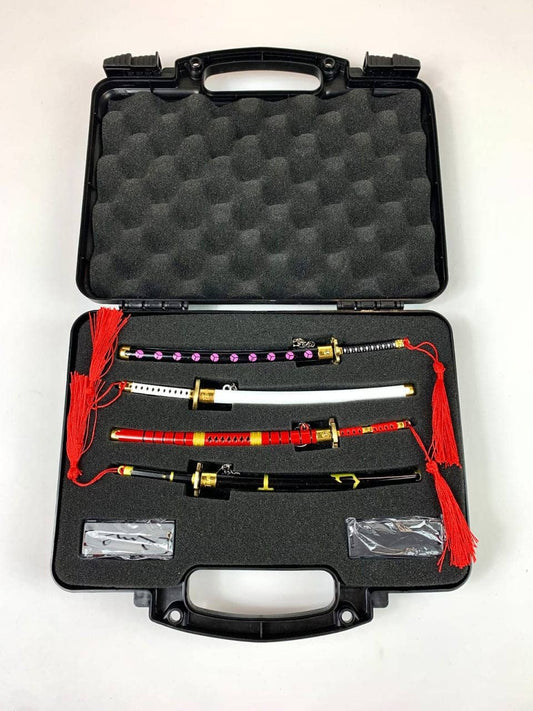


Swords and self-defense
The idea of using a sword for self-defense might seem like something out of a movie, but in real life, Spanish weapons regulations are clear and restrictive. Good intentions are not enough: the possession, carrying, and use of weapons (including bladed weapons like swords) are regulated by the Weapons Regulation and the Penal Code, which distinguish between possession at home, public display, legitimate carrying, and prohibited weapons.

What self-defense weapons are legal?
In Spain, there are approved self-defense products (for example, approved sprays) whose sale and use are regulated by ministerial orders and health requirements.
However, beyond these, any object at hand can be used to legally repel an aggression, provided that the exemption of legitimate self-defense under the Penal Code can be invoked. In such a case, what is decisive is not the object but the circumstances: the existence of unlawful aggression, immediacy, necessity, absence of a less harmful option, and proportionality between the force used and the aggression suffered. The minimum necessary force should be used to neutralize the threat and stop the aggression.
But, if, for example, brass knuckles or other objects designed to cause injury, whose possession and use are prohibited, are used, there is a risk of criminal sanctions even if defense is alleged.
Is it illegal to use a sword for self-defense?
Using a sword in public as a means of defense is, in practice, highly problematic and usually illegal.
Many swords, knives, or machetes can be considered "prohibited weapons" or bladed weapons whose possession and carrying in public places are limited or prohibited by the Weapons Regulation.
Carrying or displaying a sword in the street can lead to police intervention, confiscation of the object, and administrative or criminal sanctions if it is considered a threat or illicit possession.
The figure that allows defensive violence to be justified is legitimate self-defense (Article 20.4 of the Penal Code and its interpretation by jurisprudence).
For the exemption to apply, certain factors must be present, among them, proportionality between the means used and the aggression.
The use of a sword raises the standard: in such a case, it would be examined whether there were no less harmful means and whether the response was proportionate. Using a sword—which is a potentially lethal weapon—will hardly be considered proportionate except in extreme and duly proven situations.

What uses are permitted in self-defense?
The law permits the right to legitimate self-defense, but always adhering to the principle of proportionality: the reaction must be necessary and proportionate to the attack.
Furthermore, legitimate self-defense does not exempt from responsibility if the object used is prohibited or its carrying is not authorized.
The Penal Code punishes the illegal possession of weapons and establishes penalties that may include imprisonment or disqualification.
What self-defense weapons are legal?
For self-defense, there are legal and regulated solutions: approved sprays (according to health regulations), personal alarms, tactical flashlights, and other non-lethal or low-lethality devices.
Authorized sprays are included in official lists, and their marketing and use are subject to homologation and age requirements.
Bladed weapons purchased as collector's items or for domestic use are usually only permitted at home and with limitations on their transport. These can be used for self-defense if they are within reach while meeting legitimate self-defense standards, but this may not apply if the response was disproportionate, for example, if the weapons caused serious injuries or the death of the aggressor.
It should be noted that the illegal possession or carrying of a weapon, by itself, can lead to liability. Jurisprudence is very nuanced, and each case depends on evidence, witnesses, injuries, and context.
What is allowed to carry for self-defense?
In practice, it is advisable and legal to carry only approved non-lethal means and avoid any object that could be considered a prohibited weapon.
Carrying a sword, a sharp machete, automatic knives, or any other type of weapon on the street can lead to police intervention and potential charges.
Security forces carry out controls to reduce the presence of bladed weapons in public spaces; in some regions, operations and sanctions have been intensified.
It is primarily and solely recommended to carry approved Pepper Spray.

In summary...
No, using or carrying a sword in the street for self-defense is not a legally advisable option in Spain: regulations and jurisprudence prioritize proportionality, public safety, and the prohibition of dangerous weapons in public spaces.
If you seek to protect yourself, opt for approved and non-lethal means, inquire at the Civil Guard or local police about what products are authorized, and avoid exposing yourself to sanctions or criminal consequences. Although it is recommended to prioritize the use of approved pepper sprays, in cases of imminent threat or other particular circumstances, a special permit for other types of self-defense weapons could be obtained...
For specific questions, always consult official sources and, if necessary, legal advice.
Self-defense courses, classes, and workshops are always a practical and very useful long-term option, as is prevention.
In case of an attack, it is recommended to:
- Prioritize fleeing and calling for help if possible; avoiding confrontation is the safest and most legal option.
- If you need to defend yourself, try to use the minimum necessary force to neutralize the threat and stop the aggression.
- Do not display or carry prohibited weapons (brass knuckles, certain knives, tasers, etc.). It is also recommended to always check that sprays are approved before buying them.
- After the incident: report/notify the police, find witnesses, take photos of injuries and save any evidence (clothing or objects), and go to a medical service; all of this helps to justify the self-defense version.
- If there are legal consequences, consult a criminal lawyer as soon as possible (jurisprudence is very nuanced, and each case is decided by its evidence and context).