América
Astronomical Knowledge of the Mayans: Predictions, Calculations, and Meanings
Systematic Sky ObservationThe Mayan civilization, which flourished from approximately 2000 BCE to the 16th century, d...




Japanese saddles and stirrups were essential to the military and ceremonial life of feudal Japan.From their origins in the Heian period to their maximum sophistication in the Sengoku and Edo...
Saddles and stirrups were key elements in the military and cultural life of feudal Japan. Beyond their practical function for horsemanship, these objects reflected the identity, social standing, and lifestyle of samurai and other mounted warriors. This article addresses the origin, evolution, characteristics, and artistic importance of saddles and stirrups, as well as notable pieces preserved in Japanese museums. Origin and evolution of saddles in Japan In Japan, horsemanship was introduced around the 5th-6th century, influenced by the nomadic cultures of the Asian continent. However, saddles truly began to develop in the Heian period (794-1185) and reached their greatest sophistication during the 12th to 16th centuries, especially during the turbulent Sengoku period. The first saddles were quite simple, consisting of a padded base secured with straps for greater stability on the horse's back. Over time, Japanese saddles became more elaborate, with wooden and leather structures decorated with ornamental details that reflected the social class and clan to which the rider belonged. During the Edo period (1603-1868), when feudal Japan experienced more peaceful times, saddles acquired a strong ceremonial value, with luxurious finishes and adornments symbolizing power and status. Characteristics and design of Japanese saddles and stirrups Japanese saddles, known as kura, had several essential parts: Hon-kura: the main saddle, usually made of wood and covered with leather or fabric, designed to provide comfort and stability to the rider during long journeys. Aka-ori: the frame, often decorated with lacquered varnishes and paintings with traditional motifs. Shita-kura: the lower base of the saddle that rests on the horse's back. Stirrups, called abumi, had a particular design and a very important function in samurai horsemanship. Unlike European stirrups, abumi were open, generally horseshoe-shaped or with a wide frame to ensure the rider's foot did not slip, allowing quick and agile maneuvers during combat. In addition to their functionality, abumi were also adorned with engravings, lacquer, and sometimes metal inlays that reflected the warrior's rank and wealth. The cultural and symbolic importance The saddles and stirrups of feudal Japan had significant symbolic value. Beyond facilitating warfare, they were a reflection of the samurai's dignity and their connection to tradition. Decorations could include family symbols, clan emblems, or elements inspired by nature and Japanese mythology. During the Edo period, the use of horsemanship transitioned to a ceremonial role in parades and military exhibitions, where saddles and stirrups were displayed as symbols of authority and refinement. Today, many of these pieces are preserved as cultural and artistic treasures. Saddles and stirrups in museums Several original pieces of Japanese saddles and stirrups are found in prominent museums, such as the Tokyo National Museum or the Nagoya Sword Museum. In these spaces, visitors can admire everything from functional examples to the most luxurious ceremonial saddles with lacquer finishes and gilded details. The exhibited abumi stirrups show a great variety of shapes and decorations, allowing one to understand how these tools combined utility and art. Some abumi bear engravings with battle scenes or religious motifs, adding a unique cultural dimension to these objects. Their relevance from Feudal Japan to the present day Saddles and stirrups in feudal Japan were much more than mere riding instruments. They represented the power, skill, and status of the samurai, merging functionality and aesthetics into pieces that are now valuable historical relics. Visiting museums where these pieces are displayed is to immerse oneself in Japan's rich warrior and artistic culture, better understanding how war and art intertwined in the era of feudal lords.
Read more
The Shinsengumi were a samurai unit that defended the Tokugawa shogunate during the turbulent end of feudal Japan. Known for their discipline, loyalty, and mastery of the katana, they acted...
When we talk about katanas and samurai, we inevitably think of feudal Japan, of warriors who bravely defended their honor. Among them, the Shinsengumi stand out, an emblematic unit that embodied discipline, loyalty, and swordsmanship during the turbulent Bakumatsu era. This article explains who they were, their relationship with katanas, and their historical legacy in the Meiji era. Who were the Shinsengumi? The term “Shinsengumi” means “new unit” and refers to a group of samurai and rōnin who organized to protect order during the end of the Tokugawa shogunate. Founded in 1863, the Shinsengumi emerged as a samurai police force, tasked with maintaining political stability in Kyoto and controlling radical groups seeking to overthrow the shogunate. Among their most famous members are Isami Kondo, Toshizo Hijikata, and Soji Okita, who became legendary figures. Their structure, discipline, and codes reflected the traditional ideals of the samurai, although their methods were sometimes brutal, showing the contrast between honor and efficiency in times of chaos. The Shinsengumi's role in the Bakumatsu During the Bakumatsu, Japan faced strong internal instability and increasing pressure from foreign powers. The Shinsengumi acted as a containment force, defending the shogunate and protecting peace in the city. Their goal was to eliminate threats to the authority of the Tokugawa shogun and control revolutionary movements by clans such as Chōshū or Satsuma. Although they were not an official army, their semi-official role and loyalty to the shogunate gave them a unique position in history. Their reputation combined katana skill, military strategy, and an ethical commitment based on loyalty and honor. The Ikedaya Incident: the defense of Kyoto On July 8, 1864, the Shinsengumi participated in the Ikedaya Incident, confronting a group of radicals who planned to set Kyoto on fire and assassinate key figures of the shogunate. Led by Kondo and Hijikata, the Shinsengumi acted quickly and precisely, repelling the attack and protecting the city. This event solidified their fame as guardians of order and showed the importance of samurai discipline, combat strategy, and expert use of katanas in defense of their cause. The Battle of Toba-Fushimi: the end of the shogunate In 1868, during the Boshin War, the Shinsengumi participated in the Battle of Toba-Fushimi, defending the shogunate against the imperial forces of Emperor Meiji, but despite their valor and combat skills, they were defeated by a larger and better-equipped army. Figures like Isami Kondo and Toshizō Hijikata demonstrated courage and strategy, maintaining the cohesion of the unit until its dissolution. This battle marked the end of the Tokugawa shogunate and the transition to the Meiji era, leaving the Shinsengumi as a symbol of samurai loyalty and honor. The katana and the samurai honor of the Shinsengumi For the Shinsengumi, the katana was not just a weapon, but a symbol of ethics, discipline, and responsibility. Their mastery of the sword reflected their commitment to the shogunate's cause and the protection of order. Every blow and maneuver was an act of honor, reminding that true power lies in the skill and nobility of the one who wields the sword. Their relationship with the katana reinforces the idea that samurai defended not only their lives, but higher principles, such as justice, loyalty, and integrity. Therefore, the names of several katanas wielded by Shinsengumi members still resonate today, such as Isami Kondō's Nagasone Kotetsu, Toshizō Hijikata's Izumi no Kami Kanesada, or the Kiku-ichimonji Norimune associated with Sōji Okita. Historical and cultural legacy Despite their defeat, the Shinsengumi left a lasting legacy in Japanese history. They are remembered in literature, cinema, and popular culture as examples of samurai bravery, discipline, and commitment. Their story teaches how loyalty, honor, and mastery of the katana defined a group that fought to maintain order in a transforming Japan.
Read more
The samurai of feudal Japan were not only warriors, but also bearers of a code of honor called bushido, where the katana was their soul and symbol of identity. This...
The samurai , warriors of feudal Japan, have fascinated for centuries with their ironclad code of conduct and their inseparable companion: the katana . This sword, forged with artistry and precision, was not simply a combat weapon, but , above all, a symbol of honor, spirituality, and lineage. In the life of the samurai, the katana represented his soul, his duty and his place in the world. (Photo of the Decorative Katana, white dragon sw1356 ) The path of bushido and the forging of character The philosophy of bushido , or "way of the warrior," was the central axis of samurai life. More than a set of rules, it was a moral guide based on loyalty , self-control , honesty , and personal sacrifice . These ideals weren't just learned in the dojo; they were instilled in them from childhood and manifested in every decision the warrior made. From a very young age, samurai trained in multiple disciplines: fencing, horsemanship, archery, and war strategies. Although they mastered several weapons, such as the naginata , the yari (spear) or the yumi (longbow), it was the katana that defined their status and spirituality. (Photo of the functional Japanese Katana S2220 ) The katana: a masterpiece with its own soul Each katana was unique. The forging process involved repeatedly folding the steel to give it flexibility and hardness, a technique that reflected not only skill but also devotion. Traditional blacksmiths were seen as almost mystical figures: their work required concentration, spiritual purity and respect for tradition. The result was a curved, lethal-edged blade designed for quick, accurate cuts. The decorated handles , in many cases, with ray skin, the lacquered scabbards , the personalized engravings and the tsuba (hand guard) , specially designed for each katana and its bearer, They made each sword an artistic object, full of symbolism. (Photo of Sharp Functional Katana - Blue Damascus Steel ) The daisho: katana and wakizashi, the inseparable pair Every samurai carried the daisho , the set formed by the katana and the wakizashi , a shorter sword. While the katana was used in open combat, the wakizashi served for defense in closed spaces and to execute seppuku , the ritual suicide that sealed the warrior's honor in case of dishonor. This pair of swords not only distinguished the samurai from other social classes, but also represented their responsibility and commitment to the bushido code. (Photo of the Katana-Wakizashi-Tanto Ornamental Set (JL029 SET BLU) ) The Ronin: Honor Without a Master Not all samurai remained in the service of a feudal lord. Some became ronin , wandering warriors, after losing their master. Although marginalized, many ronin maintained their values intact and continued to venerate their katana as a symbol of their noble past. Famous examples such as the 47 Ronin , who avenged their lord's death before committing seppuku, embody the depth of the bond between the warrior, honor, and his sword. Being a ronin did not mean renouncing bushido, but rather living it in solitude, with the katana as the only witness to his legacy. (Photo of decorative Katana in a wooden box of different colors ) The eternal symbolism of the katana Today, the katana remains a revered object. Beyond its beauty and technique, it represents timeless values : courage, sacrifice, integrity, precision, and the constant pursuit of perfection. Its presence in cinema, martial arts, and private collections is no coincidence. Owning a katana is like inheriting a piece of history. It is not a simple sword, but the echo of a civilization that elevated the use of the sword to an art form and discipline to a spiritual path. The katana doesn't just cut through the air; it cuts through time and connects us to an era where honor was more important than life.
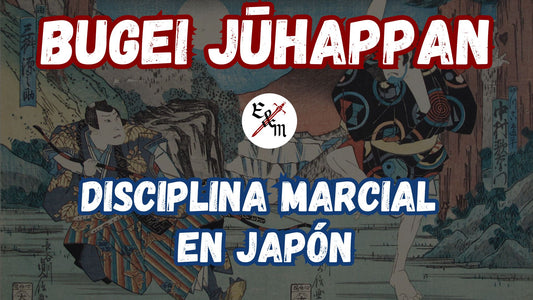
Read moreWelcome to a new article from Espadas Y Más. Today will be a very direct but also very informative post. We want to talk to you about Bugei Jūhappan, the traditional 18 martial disciplines of the Japanese arts. Check out this spectacular Yainohanzo katana! Bugei Jūhappan This selection of techniques was used by the samurai of the Tokugawa era in Japan. This concept was established by Hirayama Gyozo, and is based on previous Chinese concepts such as the 18 weapons of wushu. This Naginata is spectacular! In each Ryu-Ha the techniques and even disciplines may vary, at the discretion of each school, for this reason, the list may vary, but it is common to find the following disciplines in Bugei Jūhappan: - Kenjutsu (Swordsmanship) - Battojutsu (Unsheathed) - Sojutsu (Spear fighting) - Naginatajutsu (Fight with Naginata) - Kyujutsu (Archery) - Kyuba (Horse Archery) - Suijutsu , specifically To-suijutsu (Swimming) - Bōjutsu (stick fighting) - Nagamono (Polearm Fighting) - Torimono Dougu (Arrest Weapons) Weapons used by the Feudal Police of Japan to restrain or arrest someone without harming them. - Kakushi Buki Jutsu (Concealed Weapons) Small, easily concealed hand weapons used for emergency self-protection, such as brass knuckles, etc. - Jujutsu (Unarmed combat) - Shurikenjutsu (Blade Throwing) - Hojutsu (Musketeery) - Jouhou Kaishuu (Information gathering) - Chikujou (Fortifications) - Angou (signaling) - Jinei/Heihou (Strategy and Tactics) As you can see, the list is extensive and interesting, but there is also something less known but equally relevant, the Ninja Jūhakkei , more typical of the Shinobi, which consists of the previous techniques, added to the following: - Seishin teki kyōyō (Mental development and spiritual refinement) - Taijutsu (Unarmed Combat: Jutaijutsu, Daken Taijutsu, Koppo Jutsu, Kosshijutsu) - Bikenjutsu (Sword: Tantōjutsu, Kodachijutsu, Ōdachijutsu, Ninja tōjutsu, Ittojutsu, Nitojutsu) - Sōjutsu (Spear) - Naginatajutsu (Swordlance) - Bisentōjutsu (Halberd) - Kusarigamajutsu , Kyoketsu shoge (Sickle and chain, rope) - Roku shaku bōjutsu , Bōjutsu (Staff) - San shaku bō jutsu , jojutsu (Staff) - Shurikenjutsu , Senbannagejutsu (Throwing blades, usually to distract) - Kishajutsu (Mounted Archery) - Inton jutsu (Shinobi escape techniques) - Hokojutsu (Walking techniques) - Hensō jutsu (Shinobi clothing and disguise techniques) - Kakushi Bukijutsu (Hidden Weapons) - Ninyakujutsu (Use of medicine and poisons) - Gunryaku Heiho (Strategy) - Tenmon, Chimon (Strategies of Heaven and Earth, meteorology) If you notice, some disciplines are repeated, or are similar, and what changes is a greater imprint of the disciplines of concealment, espionage, infiltration, and related elements. This is due to the fact that in certain periods of Japanese history, part of the Shinobi, belonged in turn to the samurai caste, so the study of Bugei is intertwined with the needs of the study of the arts of concealment, so necessary for the Shinobi. We hope you enjoyed it, and that you are diligent in your training! If you want a good katana, check out our store!
Read moreWelcome to a new blog from Espadas Y Más! Today we will talk about the mythological and interesting figure of the TENGU and their relationship with the samurai. THE TENGU. JAPANESE FOLKLORE The tengu, a mysterious and captivating figure from Japanese folklore, has captured the imagination of generations with its appearance and supernatural powers. This being has left an indelible mark on Japanese culture and beliefs. From ancient legends to their depiction in modern art, tengu continue to be an object of interest for lovers of Japanese mythology. Check out our Katana Shop! Tengu are usually depicted with a long, sharp, bird-like beak , resembling that of a crow, extending from their mouth. They are also associated with enormous black wings, which allow them to fly at great speed and control the wind . They are said to be able to take the appearance of humans or animals in order to remain unnoticed. A unique feature of tengu is their long, sharp nose, one of the most recognizable symbols of the entity. The tengu's nose is believed to represent their wisdom and cunning, granting them knowledge and supernatural powers. Buy this spectacular Top Range katana! Legends of the tengu date back centuries in Japan. According to these legends, these entities are descendants of the Shinto gods and have existed since ancient times. There are countless stories and tales that narrate the exploits of the tengu, which has contributed to their fame and mystery to this day. One of the most famous stories about tengu takes place on Mount Takao , a sacred site located near Tokyo. According to legend, tengu reside deep within the forests of Takao and are watchful protectors of the mountain. It is said that if anyone ventures too close to their territory without permission, the tengu will punish them with strong gusts of wind and may temporarily paralyze them. Katana from The Last Samurai at your disposal In this legend, tengu are portrayed as powerful beings and protectors of their territory. Their ability to control the wind is believed to grant them mystical powers over nature and humans. This story has endured through the centuries and has contributed to the widespread belief that tengu are able to influence the weather. Another famous story related to the tengu involves the brave samurai warriors of Japan . According to legend, tengu are drawn to the spirit of the samurai and often appear to them in the form of birds or creatures with animal features. They are believed to be able to teach martial arts techniques and grant supernatural powers to those who demonstrate bravery and skill in battle. This Mushashi Functional Katana is amazing! This relationship between tengu and samurai has led to the belief that these creatures are associated with war and destruction. Some even believe that tengu are responsible for inciting conflict and disputes between humans, contributing to the fascination and fear surrounding tengu, as they are seen as powerful but potentially dangerous beings. The exact nature of tengu has been a matter of debate for centuries. Some interpretations see them as lesser divinities or protective spirits in Shinto, the ancient indigenous religion of Japan. They are thought to possess the ability to protect people from evil spirits and harmful deities. High quality Tanjiro Kamado Katana! However, there are those who perceive tengu as demonic and hellish entities. They are credited with malicious and deceitful acts, and are said to cause trouble for humans. Many narratives have depicted tengu as playful beings who enjoy creating chaos and confusion. Katana Ghost of Tsushima! In Japanese culture , they have featured in countless stories, plays, paintings and sculptures, becoming a recurring theme in Japanese art and literature. Exceptional YariNoHanzo Katana! In addition to their influence on art, tengu have also left their mark on the Japanese language. The word “tengu” has been used to describe people or things that are playful, mischievous, or cunning. This association with tengu has led to the creation of a rich terminology that reflects the influence of these creatures on the Japanese language. Today, tengu remain prominent figures in Japanese popular culture. They are frequently depicted in manga, anime, and video games, capturing the attention of audiences around the world. Their iconic image and role in Japanese legends have made them an enduring symbol of Japanese mythology.
Read more
The history of Japan. That magical country that calls to many of us, whether we are martial artists, fans of anime, Asian culture or simply travelers everywhere. There are few...
The history of Japan. That magical country that calls to many of us, whether we are martial artists, fans of anime, Asian culture or simply inveterate travelers. There are few things in Japanese history that fascinate us more than the word "Ninja." We tend to imagine mysterious warriors dressed in black leaping across rooftops on a military mission that usually involves assassination or the assault of a castle. On this subject, several things need to be clarified: -The Ninjas, whom we will call shinobis (or shinobi no mono) from now on (since it is a more historically correct term than the word ninja) existed , they are a real and relevant part of the history of Japan, however, their image has come to us distorted from Japanese cinema (heir to the image of the Kabuki theater). Check out our katanas: https://espadasymas.com/collections/katanas - Being a Shinobi was a job , the job of someone who was dedicated to espionage in the historical context of feudal Japan. There were also female Shinobi. -On many occasions, the Samurai was the same person who acted as a Shinobi. -They had a predilection for the art of disguise, camouflage and were highly effective. So what was a Shinobi really? Shinobi were the specialists in covert tactics in feudal Japan (In another article we will talk about Iga and Koga (Koka) ). Although their origins can be traced back to the 12th century or earlier, shinobi were active during territorial conflicts in Japan. There was a historical period in Japan where war was of special prominence and shinobi no mono were used with great alacrity, we are talking about the Sengoku Period (Special mention deserves the Oda Nobunaga incident in Iga , but we will also tell about that in another article ;) ) And where are martial arts? The role of the Shinobi was mostly focused on stealth, espionage, infiltration etc, however throughout the history of Japan martial arts techniques and schools have been developed, which are called Bujutsu , and more recently, Budo . During the training of the Shinobi, in addition to the rest of the skills, those with greater resources, also due to their training as samurai, were trained in martial arts, and within them, in some "special" techniques when using, for example, weapons. Check out our practice katanas: https://espadasymas.com/collections/katanas-de-practicas Can I learn Ninjutsu nowadays? The role of the Shinobi and therefore of ninjutsu as a bona fide profession has long since disappeared. The last records of Japan using such skills date back to World War II. However... In the last 50 years , different schools of Ninjutsu have proliferated, such as those related to the legacy of Takamatsu Sensei (DEP) and Hatsumi Sensei such as Bujinkan, Genbukan or Jinenkan and those that emerged from these. In addition, schools of other lineages such as those of Kawakami Sensei or Shunichiro Yunoki Sensei (DEP) have also amazed their students with their knowledge and training capabilities. All of these schools have developed their own teaching methods, which may vary from one to another, of course, modern life has changed and the context is not the same as that of Feudal Japan, but if you are interested in arts of Samurai and Shinobi origin, it would be a good place to look. Some of these schools give more importance to traditional ninjutsu, others focus on martial arts at first and then move on to details of historical ninjutsu disciplines, and of course, within each organization it also depends a lot on the teacher you meet. At Espadas Y Más we recommend taking this into account and looking for a school that prioritizes your evolution as a martial artist, that teaches those ninjutsu disciplines that you are looking for, and of course that respects your physical integrity and your freedom as a person and practitioner, in short, a school that is both good and healthy. Check out our naginata: https://espadasymas.com/products/uc3101-lanza-naginata-m48-united-cutlery-video
Read more