América
Astronomical Knowledge of the Mayans: Predictions, Calculations, and Meanings
Systematic Sky ObservationThe Mayan civilization, which flourished from approximately 2000 BCE to the 16th century, d...


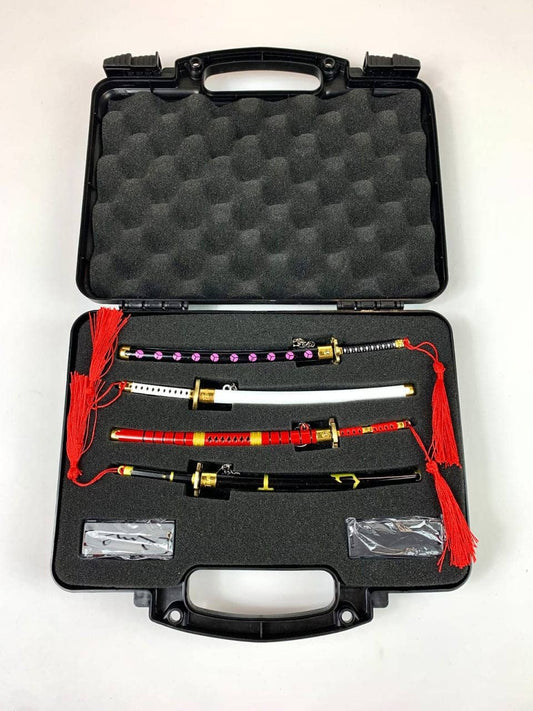


Within the Bleach universe, Byakuya Kuchiki's katana Senbonzakura stands out as one of the most elegant and iconic weapons in anime.More than just a sword, it represents control, precision, and...
Within the universe of Bleach, the katana associated with Byakuya Kuchiki is not merely a weapon: it is a direct extension of his character, a visible manifestation of his understanding of combat, honor, and control. Among all the Zanpakutō, Senbonzakura stands out not for its brute force, but for something much harder to convey: an elegance that doesn't need to impose itself, a beauty that simultaneously becomes a threat. Senbonzakura: When Beauty Becomes a Weapon Senbonzakura is one of the most recognizable swords in anime for a very specific reason: it completely redefines the idea of combat. Upon its release, its blade disappears and fragments into thousands of tiny blades that, reflecting light, take on the appearance of cherry blossom petals floating in the air. At first glance, the battlefield transforms into an almost poetic, delicate, and silent scene. But that beauty is deceptive. Each of those fragments is a blade. Every movement, however subtle it may seem, is controlled with absolute precision. There is no chaos, no excessive violence: only perfect execution where aesthetics and lethality coexist in balance. That duality—the beautiful and the deadly—is what makes Senbonzakura unique in the anime world. The Aesthetics of Senbonzakura: Harmony, Light, and Control To talk about Senbonzakura is to talk about how a sword is perceived beyond its physical form. It is not a katana that imposes itself through size or visual aggressiveness. Its presence is built from subtlety: the fluid movement of the fragments, the way they capture light, the feeling of lightness that contrasts with its destructive capacity. Everything about it conveys order. The “petals” do not scatter aimlessly; they move as if following an invisible choreography, guided by Byakuya's will. The result is not just an attack, but a carefully composed scene, where each element occupies its place. This aesthetic is no accident. It reflects a very specific idea: absolute mastery. Not only of the weapon, but of the environment, the rhythm of combat, and oneself. Therefore, more than a sword, Senbonzakura is perceived as an extension of control and discipline taken to the extreme. The Reflection of Byakuya Kuchiki Like every Zanpakutō, Senbonzakura is inseparable from its wielder. Byakuya Kuchiki represents the balance between nobility, responsibility, and technical perfection. His fighting style avoids the unnecessary; he does not seek to impress, but to execute with precision. That philosophy is directly reflected in his sword. Where other fighters resort to force or explosiveness, Senbonzakura responds with serenity. Where there is chaos, she imposes structure. Where there is noise, she introduces silence. This coherence between character and weapon is what has made this katana a benchmark within the imagery of Bleach. One of the Most Iconic Swords in Anime Within the vast universe of swords in anime, few have managed to build such a recognizable identity. It is imposing in its own sobriety. Senbonzakura doesn't need exaggeration or visual complexity to stand out. Its strength lies in how it transforms the perception of combat and in how it combines seemingly opposing elements: lightness and danger, beauty and precision. That's why it holds such a special place among fans of the series. It is not just a tool within the story, but an image that endures. When Aesthetics Transcends Fiction This distinct identity is what has made Senbonzakura continue to pique interest outside of anime. Pieces inspired by this Zanpakutō seek to convey, as much as possible, that same sense of balance, sobriety, and aesthetic fidelity. It's not just about reproducing a shape, but about capturing an idea: that of a katana where every element responds to an intention. In this sense, its design naturally connects with the tradition of Japanese swords, where harmony between parts and purity of lines are fundamental. When observing a piece based on Senbonzakura, what is recognized is not only its origin in anime, but also that visual coherence that defines it. More Than a Katana: A Way of Understanding Power Senbonzakura does not stand out by imposing itself, but by how it transforms everything around it. Its presence is not strident, but it is unmistakable. It needs no explanations: one only needs to see it in motion to understand that it responds to something more than the simple idea of a weapon. It represents a different way of conceiving power. One in which precision, discipline, and aesthetics are not separate elements, but part of a single whole. And it is precisely this unity that has made it one of the most memorable swords in the universe of Bleach.
Read more
Sweeney Todd's razor is much more than a decorative object: it's a piece that captures the essence of gothic cinema and the intensity of one of its most emblematic characters....
The razor inspired by Sweeney Todd: The Demon Barber of Fleet Street has become a collector's item valued by fans of Gothic cinema and the dark universes created by Tim Burton, as well as by those who were captivated by Johnny Depp's portrayal of the role. This replica is not just a decorative object, but a piece that represents one of modern cinema's most iconic performances and a tangible way to connect with the character's unsettling elegance. It is not a simple razor, but rather conveys history, aesthetics, and personality. An iconic object linked to an unforgettable character Sweeney Todd is a character who combines tragedy, revenge, and a unique aesthetic that has made him a reference in cinema. The barber's razor he uses is not just a tool, but a symbol of his story and the silent ritual that defines each of his actions, representing his obsession with revenge, the thin line between justice and madness, and the pain of the past that drags him into darkness. This replica is a real-world approximation of the dark and elegant universe that has so captivated viewers and lovers of Gothic cinema, allowing them not only to observe it but to feel it. For Johnny Depp fans, this piece gains added value, as it not only represents the character but also evokes the intensity of his screen presence. It is part of one of his most intense and recognized performances, as the Sweeney Todd razor is much more than an object: it is a direct connection to the character and his story that evokes an attraction difficult to ignore. Detailed design and aesthetic faithful to the original The Sweeney Todd razor stands out for its meticulous design and its fidelity to the style seen in the film, respecting every detail that makes it instantly recognizable to any fan. It features an elongated, slightly curved blade with a shiny, cold metallic finish that reflects light with that elegant and unsettling tone so characteristic of the character. It is a piece that attracts attention from the first moment and adds real presence wherever it is placed, making a difference in a space. Its aesthetic combines classic barbershop elements with a dark and elegant touch, creating a piece with character, capable of conveying the essence of the character and his unmistakable style. The handle, generally in dark tones such as deep black or aged wood effect, presents a sober and refined design, with clean lines and a traditional folding system that reinforces its authenticity. It is one of those objects that, when seen, do not go unnoticed for what they evoke and how they transform the environment. It is a piece that connects directly with the universe of Sweeney Todd: The Demon Barber of Fleet Street and with Johnny Depp's performance, designed not to be merely visual, but to have its own presence and personality. The proportion between blade and handle, the polished finish of the steel, and the sharp and stylized aesthetic make it instantly recognizable, even for those seeing it for the first time. Among its main attractions are its faithful design, its value as a decorative object, and its connection to a cult film. A piece that adds character to any collection This razor is a piece that does not go unnoticed. Its design, its history, and its relationship with the iconic character of Sweeney Todd make it a distinctive element. Beyond its link to any characteristic style associated with this film, it is the character who uses it—with his dark history, tragedy, and symbolism—who gives true weight and meaning to this piece. Whether for display, decoration, or as part of a film collection, this razor is an object with character and presence. It is a piece that conveys history, aesthetics, and personality, connecting directly with the deep and disturbing universe of Sweeney Todd. Furthermore, it brings a unique atmosphere to its surroundings, evoking the essence of the character and his world, becoming that detail that transforms any space into something more special, with its own identity.
Read more
For collectors of functional swords, choosing a renowned brand makes the difference between a simple decorative replica and an authentic, well-balanced piece suitable for actual practice. From Japanese katanas forged...
For collectors of functional swords, knowing the most recognized brands is essential. From Japanese katanas to medieval European swords, each sword combines history, design, balance, and durability. This guide brings together the most prominent brands, explaining the type of sword they produce and why they are considered leaders in quality and functionality. Marto Based in Toledo, Spain, they manufacture functional swords, especially within their line of medieval swords. Although famous for their decorative pieces, they offer "fully functional" swords, with carbon steel blades and full tang on specific models. They are handcrafted in Toledo, maintaining the traditional tempering of the area and are recognized for their solid construction and quality, surpassing typical decorative replicas. Windlass Steelcrafts They manufacture European medieval, Viking, Renaissance swords, and historical replicas. They also produce African swords. Their weapons are distinguished by robust carbon steel blades, functional edges, high durability, with a professional finish and historical authenticity, ideal for training and collections. Cold Steel Famous for their European battle sabers and swords. Recognized for steel resistance, functional edge, and real combat balance, useful for both practice and collection. Hanwei / Paul Chen They manufacture Japanese katanas and Chinese swords (jian and dao). Their weapons are characterized by balance, durable edge, traditional aesthetics, and resistance, ideal for tameshigiri and functional sword collectors. Armory Marek Marek's pieces are valued for their durability in steel-on-steel contact; he specializes in handcrafted forged weapons. Arms & Armor Known for longswords, sabers, and Renaissance models. They are valued for their resistance, historical authenticity, and professional finish, perfect for demanding collectors, highly appreciated in HEMA and reenactments. APOC Survival Tools Tactical line working in collaboration with renowned designers and under the supervision of master craftsmen. Their weapons are functional, durable, and low-maintenance for survival scenarios or intense training. Kuro Kami A brand specializing in high-performance functional katanas. It is mainly sold through specialized stores like Espadas y más. Red Dragon Armoury Offers functional swords, notable for their resistance, balance, and accessibility, suitable for HEMA training and collectors. Also specializes in functional European swords. Albion Swords Specializing in medieval and Renaissance swords, Albion Swords stands out for its handcrafted finish, perfect balance, and historical fidelity. Their replicas are functional for practice, historical reenactment, and collection. Ensifer Specializing in functional European swords, it stands out for high-quality carbon steel, handcrafted finish, and durability, suitable for collection and training. Hanwei They manufacture European, Japanese, and Chinese swords. They stand out for versatility, steel quality, durable edge, and traditional aesthetics, highly valued by collectors of various traditions. SIGI Forge Produces functional swords with excellent balance, safe edge, and aesthetic finish, highly valued by collectors. Kvetun Armoury Is a Russian manufacturer specialized primarily in European HEMA carbon steel swords, recognized for their impeccable finish, historical fidelity, and durable edge, they are suitable for safe practice and collection. Seki Cutlery Katana, jian, and dao with precise finishes, functional edge, and elegant aesthetics, recognized by collectors seeking authenticity and durability. Black Fencer Offers European and Asian swords, with steel and synthetic versions. It is distinguished by the quality of materials, balance, and safety in practice, being perfect for collectors. We also remind you that in our store, Espadas y más, we have a large number of functional swords, decorative swords, and even original replicas of historical, fantasy, movie, anime swords, and more, perfect for your collections.
Read more
Chinese swords, whether real or legendary, symbolize power, justice, bravery, and wisdom in Chinese culture. From the historical Sword of Goujian to the mystical Heavenly Sword of Zhang Sanfeng, each...
Chinese swords have been symbols of power, justice, and virtue throughout history. More than mere weapons, they represent philosophy, spirituality, and courage. Some swords are historical and actually exist, while others are legends passed down through generations. Below, we explore nine famous Chinese swords, detailing their existence, history, legend, and significance in Chinese culture. The Sword of Goujian 越王勾践剑 (Yuèwáng Gōujiàn Jiàn) Literal meaning: “Sword of King Goujian of Yue”. The Sword of Goujian belonged to King Goujian of the Yue state during the 6th century BC. This sword was discovered intact after more than 2,000 years in a tomb, preserving its edge and ornamentation. Legend says it symbolizes Goujian's perseverance and cunning, who, after suffering defeats, secretly trained to reclaim his kingdom. It is an example of Chinese metallurgy mastery and the importance of strategy in military history. The Sword of Zhaoyang 昭阳剑 (Zhāoyáng Jiàn) Meaning: “Sword of the Bright Sun / of Justice”. Known as “The Sword of Justice,” it was said to be able to discern truth from lies. Heroes who wielded it always found the right path in difficult situations. The Sword of Zhaoyang symbolizes honor, integrity, and justice, and has been mentioned in historical texts and Chinese folk tales as a weapon of the righteous. The Sword of Wang Jian 王翦剑 (Wáng Jiǎn Jiàn) Meaning: “Sword of Wang Jian”. Wang Jian was a general of the Qin Dynasty, renowned for his military prowess. It is said that his sword was forged from rare metals and possessed a "spirit" that guided the wielder in battle. Although his historical existence is documented, legends about his sword endow it with supernatural powers. It represents courage, unification, and leadership. The Jianxin Sword 剑心 (Jiànxīn) Meaning: “Heart of sword”. The Jianxin was forged by a master craftsman inspired by divine visions. Used by valiant warriors, it is a symbol of sacrifice, bravery, and beauty. This sword represents the idea that true strength lies not only in the blade but in the wielder's determination and honor. The Sword of Night 夜影剑 (Yèyǐng Jiàn) Meaning: “Sword of the night shadow”. Delivered by the moon goddess according to legend, it could absorb light and move in shadows, allowing its wielder complete stealth. It is said to have been used in critical moments to fight oppression. It represents cunning, strategy, and freedom. The Sword of Wisdom 明心剑 (Míngxīn Jiàn) Meaning: “Sword of the clear mind”. This sword bestows knowledge and understanding upon whoever wields it. The one who uses it fights with intelligence and skill, not just with strength. It symbolizes the union of body and mind, and the importance of wisdom in victory. The Sword of Eternity 永恒剑 (Yǒnghéng Jiàn) Meaning: “Eternal sword”. After an epic battle, a warrior was blessed with this sword that never breaks or wears down. It represents resilience, perseverance, and courage in the face of adversity, inspiring generations to face challenges without giving up. The Sword of Hope 星愿剑 (Xīngyuàn Jiàn) Meaning: “Sword of the star's wish”. Forged from star metal, this sword symbolizes renewal and peace. According to tradition, only those with pure hearts can wield it to transform suffering into hope, reminding us that faith and justice can change the world. The Celestial Sword of Zhang Sanfeng 天剑 (Tiān Jiàn) or 三丰天剑 (Sānfēng Tiān Jiàn) Meaning: “Celestial Sword” or “Sanfeng's Celestial Sword”. Associated with the Tai Chi master Zhang Sanfeng, this sword is not only a weapon but also a tool for meditation and spiritual harmony. It is said to allow one to achieve immortality and connection with the universe, showcasing the fusion of combat, philosophy, and vital energy.
Read more
The Spartan sword, known as the xiphos, was a key piece of hoplite weaponry in ancient Greece.Short, effective, and designed for close combat, it stood out for its functionality within...
The Spartan Sword The image of the Spartan warrior has endured for centuries as a synonym for discipline, courage, and military effectiveness. In particular, their short sword, historically known as a xiphos, was a fundamental tool in their combat system. Although the film 300 (2006) popularized a stylized version of this weapon, the authentic xiphos has a deep history within the context of ancient Greek warfare. The Xiphos: Weapon of the Hoplite Warrior The xiphos was a short, double-edged sword used by hoplites, Greek heavy infantry soldiers, between the 8th and 4th centuries BC. With a length ranging from 40 to 60 cm, this straight or slightly curved blade was designed for close-quarters combat. Unlike other longer swords, its compact size allowed for effective maneuvering in tight formations such as the Spartan phalanx. The sword served as a secondary weapon: the hoplite's primary weapon was the spear (dory), complemented by the round shield (aspis) and bronze armor. When the spear broke or combat became too close, the xiphos was drawn to inflict quick and precise thrusts. Its main targets were the adversary's vulnerable points: the neck, armpits, and lower abdomen. Forging and Materials Although Greek mythology spoke of weapons forged by gods, in reality, xiphoi were primarily forged from iron during the classical period, and later from steel, using advanced forging techniques that ensured strength without compromising the edge. The hilts were simple, usually made of bronze or wood, and designed to provide a good grip. The xiphos was not an ornamental sword, but a functional, efficient tool of war, adapted to the demands of combat in formation. Sparta and the Doctrine of Close Combat For the Spartans, whose society was entirely oriented towards warfare from childhood, mastery of the xiphos was essential. Their training, known as agogé, began in childhood and included physical endurance, hand-to-hand combat, weapon use, and strict obedience. In this context, the xiphos was the ideal tool: short, lethal, easy to conceal, and effective in confined spaces. The sword also symbolized Spartan military minimalism: effectiveness above all else. For a Spartan, there was no greater dishonor than losing their shield (a symbol of mutual protection in the phalanx); however, properly carrying their sword was essential to fulfilling their offensive role after the first line of contact. Portrayal in the movie 300: Aesthetics vs. History The movie 300, directed by Zack Snyder, was loosely based on Frank Miller's graphic novel, and portrayed Spartan warriors as almost mythological figures. The sword they wield in the film, while inspired by the xiphos, presents notable differences: A more curved and wider blade A weathered and blackened appearance A more rustic and intimidating design These aesthetic decisions are not intended to be historically accurate, but rather to create visual impact and highlight the brutality of combat. In that sense, the sword in 300 is more a stylized symbol of the Spartan spirit than a faithful replica of the original weapon. The Legacy of the Xiphos Despite its modest size, the xiphos represents one of the most distinctive elements of classical Greek infantry. Its intelligent use in compact formations, its efficient manufacturing, and its integration into a military culture like that of Sparta make it an essential object of study for understanding warfare in Antiquity. The xiphos is, in short, a reflection of a society that valued duty, cohesion, and effectiveness. A simple sword, yes, but steeped in history and meaning.
Read more
Japanese officer swords represent the union between samurai tradition and Japan's military modernization between the 19th and 20th centuries. Known as guntō, these weapons were symbols of rank, honor, and...
Japanese Officer Swords Japanese swords have fascinated generations, not only for their beauty and craftsmanship but also for the rich history and symbolism they carry. If you have ever felt the call of these steel-forged masterpieces, I invite you to delve into the world of Japanese officer swords. These are not mere weapons; they are emblems of honor, tradition, and valor that have transcended time. In this article, we will explore the history, types, and significance of these swords, as well as their availability for those who wish to add them to their collection. Brief Historical Context Japan's military history is marked by clan conflicts and feudal wars until the Meiji Restoration in 1868, which brought about the modernization of the country. This change not only opened doors to trade and Western influence but also gave rise to a modern army that sought to emulate the military powers of the era. In this context, Japanese officer swords began to take shape, fusing tradition with modernity. Types of Japanese Officer Swords Japanese military swords, known as guntō or gendaitō, were produced between 1875 and 1945. During this period, the most common style was the shinguntō, which was characterized by its modern mounting and the mass production of its blades. Although many of these swords were manufactured using industrial methods, some retain the tradition of artisan forging, being classified as gendaitō or kindaitō. In physical terms, these swords typically measured between 90 and 100 centimeters in overall length, with blades between 65 and 70 centimeters. The weight usually ranged between 900 grams and 1.2 kilograms, depending on the blade type and mounting. The curvature was moderate, inspired by the classic katana, and they were designed for functional balance rather than prolonged hand-to-hand combat. The shinguntō, meaning "new military sword," was used by the Imperial Japanese Army from 1935 to 1945, symbolizing not only rank but also the samurai heritage that endures in Japanese culture. During World War II, officers were required to carry a sword, and although many were of non-traditional manufacture (known as shōwatō), these also have historical value and are prized in the collecting sphere. Shinguntō featured standardized mountings, with ray skin (samegawa) wrapped handles and cord bindings, simple metal guards, and lacquered or painted metal scabbards. Unlike traditional swords, many blades lacked visible differential hardening (hamon), reflecting their symbolic and regulatory function more than intensive use in combat. Uses, Meanings, and Rules of Officer Swords Officer swords were not just mere weapons; they were symbols of status and pride. Each sword told a story, connecting its bearer with the rich samurai tradition. Although many officers carried low-quality swords on the battlefield, traditional swords were often passed down through generations, creating an emotional link to the past. The use of these swords in combat was significant, though not always the norm. In battles such as those in Burma and New Guinea, soldiers used their swords in decisive moments, turning them into symbols of bravery and sacrifice. However, most of the specimens that have survived to this day remain intact, making them valuable pieces for collectors. Availability and Collectibility of the Japanese Officer's Sword Authentic Japanese officer swords, especially those pre-1945 and traditionally forged, are increasingly rare and valued, particularly those from before World War I. Their collectibility depends on their state of preservation, blade type, and historical documentation. However, regardless of this, they are highly valued by those who appreciate Eastern history and by collectors of historical items, especially those focusing on the history of Japan. Final Reflections The Japanese officer's sword was a symbol of continuity between samurai tradition and the modern army. Beyond its military use, it represents hierarchy, identity, and historical memory in Japan's modernization process.
Read more
Narsil and its transformation into Andúril represent one of the most powerful symbols in the universe of The Lord of the Rings. Forged in the Second Age and reforged in...
A Sword That Endures and Transforms Within the universe of Tolkien's The Lord of the Rings, few weapons hold as deep a meaning as Narsil, the sword that, centuries later, would become Andúril, the Flame of the West. More than a weapon, it represents the bond between past and future, between Númenor and the Dúnedain, and between the fall and rebirth of the kings of Gondor. Its history spans the Second Age and reaches its zenith in the Third Age, accompanying events that defined the destiny of Middle-earth. Narsil: The Sword of the Second Age Narsil was forged by Telchar. Its name, formed from the Elvish terms "fire" and "moonlight," already hints at its luminous nature and its character as a legendary sword. The design combined Elvish and Dwarven influences, with a straight, double-edged blade crafted to withstand the epic battles of the era. The Fall of Sauron and the Breaking of Narsil During the Last Alliance of Elves and Men, Narsil was wielded in the Battle of Dagorlad and in the final assault. Elendil fell before Sauron, and his sword broke beneath his weight. However, even shattered, it retained a gleam that evoked its ancient strength. It was then that Isildur took the fragments and, with the broken hilt, cut off Sauron's finger that held the One Ring. This act not only temporarily weakened the enemy but turned the fragments into a revered symbol for the Dúnedain, a silent reminder of a lost kingdom and the promise of a return. The Broken Sword: Symbol of a Lineage The remains of Narsil were guarded for centuries by the heirs of Arnor, awaiting the moment when a worthy descendant would reclaim its legacy. Each fragment evoked the fall of Númenor, the defeats suffered by Gondor, and the long vigil of the Dúnedain in the shadows. Reforging in Rivendell and the Birth of Andúril When the time came, and the Fellowship of the Ring was formed, the Elves of Rivendell took the fragments of Narsil and reforged them into a new blade: Andúril. This sword shone with white light and fire, and on its blade, Elvish runes were inscribed proclaiming the return of the king. The name Andúril means "Flame of the West," and symbolizes not only the rebirth of a sword but the restoration of a royal lineage and the unity of the free peoples of Middle-earth. Aragorn and the Sword of Kings From the moment it was forged, Aragorn never parted with it. He led men at Helm's Deep, marched through the Paths of the Dead, freed the condemned, and arrived at Minas Tirith as the heir of Elendil. His sword shone in battle, instilling hope in allies and fear in enemies. It was more than a sword; it was a banner. The people recognized it as the weapon that defeated Sauron in the past and would do so again. In Aragorn's hands, Narsil, reborn as Andúril, was confirmation that the time of men had come. Symbolism of Narsil and Andúril These swords are symbols of rebirth, legacy, hope, unity, and fulfilled destiny. Narsil was the sword of the fall, Andúril the sword of resurgence. They represent the eternal struggle between good and evil, the fall of great empires, and the rebuilding of the world through courage and justice.
Read more
Oathkeeper and Widow's Wail are two Valyrian swords with powerful histories in Game of Thrones.Forged from ancestral steel, both weapons passed through influential hands and symbolize loyalty, power, and betrayal....
Two legendary swords from Game of ThronesIn the universe of Game of Thrones, Valyrian steel swords are not only powerful weapons but also symbols of lineages, loyalties, and conflicts.Among them, Oathkeeper and Blackfyre stand out for their history, legendary design, and their role in the events that marked the Seven Kingdoms. This article explores their origin, characteristics, purpose, and who wielded them. Oathkeeper: the sword of loyaltyOrigin and Valyrian forgingOathkeeper is a sword forged from Ice, the ancestral greatsword of House Stark.After Eddard Stark's execution, Tywin Lannister orders Ice to be melted down and two new Valyrian steel swords to be forged.One of them is Oathkeeper, with an ornate hilt and a lighter blade, designed for agile combat. Wielders and legacyThe sword was given by Jaime Lannister to Brienne of Tarth as a symbol of trust.Despite its Lannister origin, Brienne transforms it into an emblem of loyalty to the Starks and her vow to protect Ned's daughters. Oathkeeper not only represents a powerful weapon but also the conflict between honor, redemption, and duty.Brienne wields it firmly, defending the innocent and keeping promises, which transforms the meaning of the sword.From a weapon forged in times of betrayal, it becomes an emblem of justice and protection. Narrative functionOathkeeper acts as a redemptive symbol for Jaime and Brienne.The act of gifting it implies a profound change in Jaime, and for Brienne, it is the reaffirmation of her worth and purpose.It is a sword that protects, not one that seeks revenge. Blackfyre: the banner of a rebellionOrigin and Targaryen heritageBlackfyre was forged in Valyria and belonged to Aegon the Conqueror, founder of the Targaryen dynasty in Westeros.Unlike his other sword, Dark Sister, Blackfyre was a straight Valyrian steel greatsword, with a black hilt and inlaid rubies.It was a symbol of legitimacy for generations of Targaryen kings. From royal emblem to rebel bannerBlackfyre's story takes a turn when Aegon IV the Unworthy gifts it to his bastard son Daemon, legitimized under the Blackfyre name.This turns the weapon into the standard of House Blackfyre, who led various rebellions against the legitimate Targaryen branch.From then on, the sword ceased to be a symbol of unity and came to embody division and dynastic conflict. Wielders and destinyDaemon Blackfyre was the first major wielder of the sword after Aegon.He fought with it in the First Blackfyre Rebellion, where he died in the Battle of the Redgrass Field. From then on, Blackfyre passed through the hands of other rebellious descendants, but its ultimate fate is uncertain.At the time of the books, the sword is missing, leading to speculation about its whereabouts. Two swords, same steel, two opposing pathsWhile Oathkeeper represents transformation and redeemed honor, Blackfyre reflects ambition and family division.Both share an ancestral origin, Valyrian steel, but their narrative paths oppose: one protects promises, the other provokes civil wars.They are two sides of power in Westeros, reminding us that a sword not only kills but also conveys a legacy.
Read more
Isildur's sword in The Rings of Power is not just a weapon, but a symbol of legacy, doubt, and responsibility in the Second Age of Middle-earth. Before becoming the hero...
Isildur in The Rings of Power In Middle-earth, a sword is never a mere instrument of war: it embodies lineage, memory, and responsibility. In The Rings of Power, the story of the Second Age is enriched by showing an Isildur still far from the hero who will cut the Ring from Sauron, but already burdened with doubts and expectations. His current sword, predating the mythical Narsil, reflects this moment of identity, growth, and vulnerability. The series uses this object as a narrative device that connects tradition, power, destiny, and legacy, essential elements in the unfolding of Númenor and the future war against the encroaching shadow that looms over humanity. Isildur before the hero: a young man trapped between expectations Isildur is remembered as a valiant king and, at the same time, the protagonist of a decisive tragedy in the history of Middle-earth. However, in the series, we see him before all that: a young man torn between his personal aspirations and his duty to his family. Drawn to the sea, pressured by his nobility, and frustrated by not finding his place, he lives in a state of constant tension. This inner conflict makes him one of the most interesting human characters in the adaptation. His sword, a relic from the house of Andúnië, symbolizes his roots and his promise. Although it doesn't have the renown of Narsil, it is a tangible link to his ancestors and a reminder of the responsibility that weighs upon him. At this point in his life, the weapon represents the balance he seeks between freedom and duty, between youth and maturity, between what he desires and what is expected of him. A human sword: sober, functional, and rooted in Númenor Unlike Elvish swords, marked by artistic delicacy and visual elegance, Isildur's sword is constructed with a more human and practical aesthetic. Its forging reflects the mentality of the men of Númenor, who value use over ornamentation: The polished steel blade stands out for its simplicity, with proportions designed for battle and not for ceremonial display. The dark leather-wrapped hilt provides a firm grip, reinforcing the idea of a weapon made to endure. The pommel, engraved with a Númenórean symbol, connects the design to its cultural heritage. This symbolism reinforces the narrative: Isildur is not yet destined to wield a legendary sword, but he is destined to understand its value and the emotional bond it implies to carry it. It is an object that anticipates both his rise and his future tragedy. A sword of meaning Isildur's sword in The Rings of Power does not stand out for its appearance, but for what it represents. It is a reflection of his personal growth and an early sign of the paths that will lead him to glory and, at the same time, to the mistake that will change the destiny of all. Through this humble weapon, the series illustrates how even the most discreet objects can contain the essence of a future hero marked by shadow, bravery, and the inevitable burden of destiny.
Read more