


América
Astronomical Knowledge of the Mayans: Predictions, Calculations, and Meanings
Systematic Sky ObservationThe Mayan civilization, which flourished from approximately 2000 BCE to the 16th century, d...


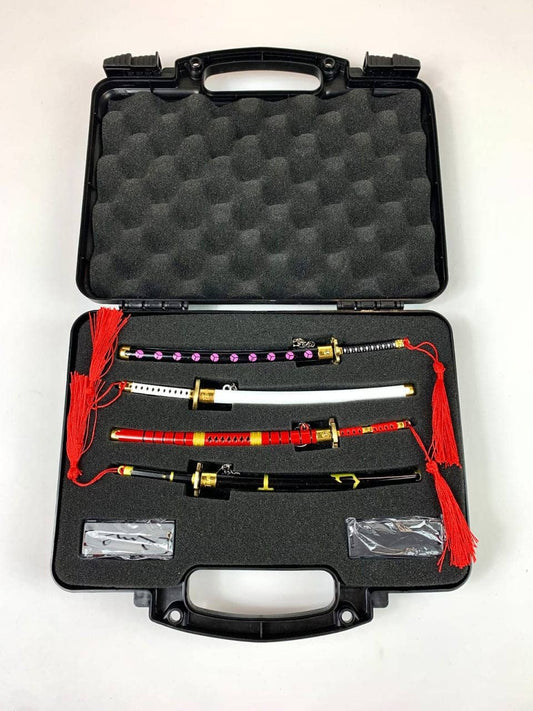


The work of a katana forger is a work of art destined to possess a spirit all its own. Here, we invite you to meet one of them, a renowned...
Imagine a time when steel came alive under the hands of a master, where each blow of the hammer resonated like a symphony, and every sword was more than a simple tool; it was a masterpiece, charged with meaning and mystique. Such is the fascinating world of Gorō Nyūdō Masamune, one of the greatest blacksmiths who ever lived, whose name resonates to this day throughout the centuries. The Birth of a Legend Gorō Nyūdō Masamune, a name that evokes both awe and mystery, was born in Sagami Province around 1264, during a turbulent period in Japanese history. The samurai, those warriors of honor, needed weapons that reflected their status and it was precisely in that context that Masamune emerged as an essential figure in katana forging. He learned his craft from another master, Shintogo Kunimitsu, and eventually became a pioneer of the steel refining method that has been the foundation of the Japanese sword. The process of creating katanas required not only skill but also a deep understanding of metals. Masamune mastered the art of combining layers of steel of varying hardness, allowing him to create swords that were both resilient and lethal. So impressive were his creations that Honjo Masamune, arguably his most celebrated work, became a symbol of national pride, held in reverence throughout the centuries and remaining in the minds and hearts of the Japanese even after his disappearance, his name being recognized today throughout the world. The Secret of His Success Masamune's forging wasn't simply a technique; it was an almost sacred ritual. With each sword, Masamune forged the history and identity of a nation. In a context where the threat of Mongol invaders loomed over Japan, his katanas became crucial tools for survival. Using intensively worked carbon steel, he employed innovative tempering methods to ensure each blade not only cut but also stood the test of time and war. Given the difficulty of their work, the results were astonishing. Each finished katana shone with a hamon line, a vivid pattern that reflected not only the beauty but also the mastery behind its design. Due to his methodical care, Masamune's blades were renowned for their sharpness, durability, and exceptional cutting ability, making his swords objects of admiration and respect. An Immortal Legacy The greatest of master blacksmiths, Masamune forged his legacy in the heart of Japan, and his influence lives on in modern artisans who follow his teachings. In honor of his skill, the Masamune Prize is now awarded to the most outstanding blacksmiths in a prestigious competition, underscoring the indelible mark he left on the history of Japanese craftsmanship. What makes Masamune's figure even more fascinating are the numerous stories and mythologies surrounding him. Although little is known about his personal life, his genius as a forger has given rise to a series of legends that have fueled the imagination of generations. His ability to use steel in an almost magical way suggests a mysticism that surrounds him, turning him into an icon not only of forging, but also of Japanese culture as a whole. The Mystery of His Work Today, many of the katanas he created have been lost to time, but the stories about them live on. His work has been catalogued in compendiums such as the Kyōho Meibutsu Chō, which praise the achievements of Masamune and his disciples. It is a reminder that, even as time erases the traces of the past, the essence of his art endures. The legacy of Gorō Nyūdō Masamune continues to fascinate those seeking to understand the complexity of samurai tradition and the beauty of katanas. Each sword tells a key story, a connection to a time when skill and honor were inseparable. And we can say that this curiosity about Masamune's history should not be left behind; his life and work deserve to be explored in depth. An Infinite Journey Gorō Nyūdō Masamune is remembered not only as a master blacksmith, but as a symbol of art and honor. His legacy invites us to immerse ourselves in the rich traditions of medieval Japan and discover the wonders that still resonate in the steel of his katanas. In his forging, we find not just a weapon, but a story that reminds us of the value of dedication and human ingenuity. Thus, Masamune's essence lives on, and each new discovery about his life and art captures our imagination, reminding us that some legends never die. If you like Katanas, don't forget to check out the ones in our Online Store here .
Read more
From the legendary Honjo Masamune to the evocative Kusanagi no Tsurugi, katanas are given names that resonate with the power of their history and the artistry of their makers, becoming...
In the vast and mysterious, millennia-old tradition of katanas, revered Japanese swords, each name is much more than a simple label, encapsulating stories of heroes, legends, and masterful craftsmanship, becoming tales woven with threads of honor, tradition, and power. Some are named after their forgers, a tribute to the mastery of the artisans who shaped each blade with pinpoint precision and unparalleled passion. Others evoke their unique characteristics, such as the curvature of a blade or a steel pattern that dazzles with its timeless beauty. These are names that bring to life the very essence of each sword, revealing its uniqueness and the skill behind it, inspiring respect and admiration, transmitting the legacy of bygone eras through sharpened steel. Like each name, each katana is unique; a fragment of Japan's rich culture, where tradition is intertwined with legend and skill. These swords are not just weapons, but symbols of a tradition that transcends time and space, keeping alive the flame of dedication and honor. It is their names that help to imprint them in the memories of thousands, leaving a lasting mark. In each story told through the centuries, we find a legacy of emotion, respect, and admiration, which continues to bear silent witness to a glorious past and a present of mystery and charm. Katanas, especially those of great historical or artistic value, often have specific names. Here you can discover their names and what some of them mean. However, it's important to note that these "categories" are not mutually exclusive, nor do they reflect the true complexity of these concepts. Named after Historical Figures Some are named after people, given to them for historical or cultural reasons, and are usually associated either with the blacksmiths who forged them, in recognition of their good work, or with important figures in Japanese history who owned or used them. Examples: Honjo Masamune is named after its creator, Masamune Goro, a renowned blacksmith in Japanese history, and one of its owners, Shigenaga Honjo, associating the mastery of the forger, recognized as one of his finest creations, with the history of its wearer. Tachiwaki , another famous katana renowned for its exceptional craftsmanship, named after its creator. Named by Features They can also be named based on some of their characteristics, from visual aesthetics to their qualities. Example: Kogarasu Maru , considered a masterpiece of Japanese forging, is characterized by its short blade and distinctive curvature. It is said that its name comes from Karasabi, which may be due to its similarity to a Korean sword, Kara being "Korea" and sabi , by its etymological origin, "sharp tool", or because akara-sami means "bright and shiny blade", becoming karasabi , abbreviated karasa , and karasu over time, adding the syllable ko to obtain kogarasa , "small shiny blade". Named for Historical Events and Legends Other katanas have names related to historical events or legends. For example, a sword used by a famous samurai or in a significant battle may bear the name of that person or event. Examples: Kusanagi noTsurugi . Originally known as Ama no Murakumo no Tsurugi, "Heavenly Sword of the Gathering Clouds", it was more commonly known as Kusanagi-no-Tsurugi, "Grass-Cuttering Sword" due to a legend where Prince Yamato Takeru, while on a hunting expedition, was trapped by a warlord who set fire to the grassland and killed his horse to prevent him from escaping. Takeru used the sword Ama no Murakumo no Tsurugi to cut the grass, reducing the fuel for the fire, and in doing so, discovered that the sword could control the wind, using it to direct the flames towards the warlord and his men, defeating them. In honor of this victory, Takeru renamed the sword. Dojigiri , forged by the famous blacksmith Hoki Yasutsuna, is now in the Tokyo National Museum after passing through several clans. Minamoto Yorimitsu is said to have slain the monster Shuten Doji with it; hence its name, which means Doji cutter. Juzumaru , forged by Aoe Tsunetsugu, is located at the Honkoji temple in Amagasaki, after belonging to the prophet monk Nichiren and the Kounji temple. It is said that Nichiren adorned the katana with a rosary to ward off evil spirits, hence its name, which means "rosary." Named by Tradition In Japanese culture, the act of naming a katana can be related to rituals or traditions. For example, it may be given an auspicious or meaningful name to symbolize hope for victory or protection. Of Eras or Schools There are different schools of forging in Japan, each with its own techniques and styles. Katanas can be named after or after the schools they belong to. Compound Nouns While we have mentioned some ways in which katana names can be superficially classified, many times these names can cover more than one category, or more than one motif. Example: Honjo Masamune , named after two different historical figures related to her. Mikazuki Munechika , created by Sanjo Munechika, a renowned blacksmith at the imperial court during the Heian period, famous for his ability to create katanas that were as efficient in combat as they were stunningly beautiful. He was so fond of the sword that he named it after himself, along with the term mikazuki , which means "crescent moon," because the marks left in the metal during the tempering process resembled crescent moons. Each name, each story, is a fragment of the rich Japanese culture, and while we have tried to simplify this tradition of naming them here, grouping the reasons why their respective names are selected in a broad and generic way, it is necessary to keep in mind that this choice always has a profound value and meaning, both for those who baptized them and for the sword itself, which was granted greater depth, comparable to granting it a spirit of its own in such an act. Would you like to know the katanas in our store ?
Read more
Throughout history, many valuable treasures have been lost, but their legacy lives on even today. Such is the case with Honjo Masamune. I invite you to discover this katana, whose...
Few objects hold as much symbolism and mystery as the Katana, one of the most emblematic weapons of Japanese culture, known for its sharpness and artistic beauty. But among them all, there is one that stands out above the rest, fascinating generations with its beauty and intricate history, and capturing the essence of the samurai spirit. Here I invite you to delve into its history and how its name has endured through the centuries, weaving legends and enveloping its destiny in an aura of mystery. Origin and Legend of Honjo Masamune Its forging is said to be a work of art, with over 30,000 layers of steel, the result of a delicate process known as shita-kitae . This technique not only gives the sword strength, but also gives it a wavy hamon, which distinguishes numerous katanas, and is attributed to the legendary master blacksmith Goro Masamune, one of the most celebrated blacksmiths in Japanese history, in the 13th century, although the first records of its existence did not emerge until three centuries later. After the Battle of Kawanakajima in 1561, General Honjo Shigenaga claimed the sword of the defeated enemy general in a duel to the death, during which his opponent split his samurai helmet in two. Hence its name, which merges the legacy of the general with that of its smith. Shigenaga kept the katana for years, selling it, due to financial difficulties, at the end of the 16th century for 13 pieces of gold to the Toyotomi clan, who ruled Japan at that time. After its fall, it was acquired by the new shogun, passing into the possession of Tokugawa Ieyasu, a formidable warlord who, wielding it, managed to unify Japan in 1603, beginning a period of peace that would last more than 250 years. Thus, the katana became not only a symbol of power, but also a fundamental piece of Japanese history. People believed it granted supernatural powers, and thus made it possible to unify the country. Honjo Masamune remained a prized dynastic heirloom, becoming a family treasure and symbol of the Tokugawa dynasty, passing from one shogun to another. Even after the shogunate gave way to the Meiji Restoration in 1868, the Tokugawa managed to preserve it. Declared a National Treasure in 1939, Honjo Masamune was venerated throughout the years of nobles and shoguns. With each generation, it was considered more than a weapon, but a family heirloom that resonated with the history of an entire country. The mystery of an uncertain destiny The war in the Pacific was bloody and fierce, but by 1945 Japan was facing defeat, and its surrender marked a turning point in Honjo Masamune's history. The US occupation decided to disarm the population. Soldiers collected all the remaining Japanese katanas, causing complaints from many citizens; some families even hid their most valuable katanas. The Tokugawa clan remained intact. Over the years, it had amassed a vast collection of nihonto (traditional Japanese swords), the most notable of which was the Honjo Masamune. Still, Tokugawa Iemasa decided that the honorable course of action would be to obey, something that was not well received by many, who saw the surrender of this katana as a betrayal of his legacy. They considered it not an act of American protection, but rather a way to demoralize Japan, aware of the katana's symbolism. The last mention of her whereabouts dates back to December of the same year she was handed over. There, the Japanese Ministry report suggests she was handed over to Sergeant Coldy Biamore (or Balsamore) of the US 7th Cavalry Regiment, but he does not appear in army records. This could be a phonetic transcription error, however, rendering the sergeant's identity a mystery. Without being able to trace him, there is even the possibility that it was a false name. Furthermore, General Douglas MacArthur, who was in charge of the occupation, implemented reforms that affected the preservation of the katanas. While some were saved and returned to Japan, many more were destroyed, taken to distant lands as trophies, or sold to collectors, increasing speculation about the fate of Honjo Masamune. Its trace faded into the shadows of history, but from that moment on, a mystery began to surround it: Was it destroyed? Is it in a private collection abroad? (Image of Katana with a Wavy Hamon) The story of Honjo Masamune is a powerful reminder that, despite the passage of time, the greatness of a masterpiece never fades with it. This katana, representative of the skill of a master blacksmith and feudal Japan, evokes a mixture of admiration and melancholy. His legend lives on in the hearts of those who know his name and story, reminding us of what has been lost and maintaining hope for what may yet be recovered. The most fascinating thing is that this isn't a story about a magical weapon from a mythical, distant time and place. It was a real katana, from a relatively recent past. One of the world's greatest lost treasures. Although its whereabouts remain a mystery, the story surrounding it continues to inspire generations of treasure hunters, historians, and culture lovers around the world. What would happen if the legendary sword were to one day turn up in a small attic in some village? The echo of her voice still resonates, a testament to Japan's indomitable spirit and its rich cultural heritage that demands to be preserved and celebrated. Ultimately, it's more than just an extraordinary katana; it's a symbol that tells the story of a people and their desire to keep their traditions alive. Its legend persists, showing that in the world of swords, it is sometimes the weapon itself that becomes the true pillar of the story, much more than its custodians or those who wielded it. And you, what do you think was Honjo Masamune's fate? Do you think it will ever reappear? If you like katanas, you can take a look at the store here .
Read more
