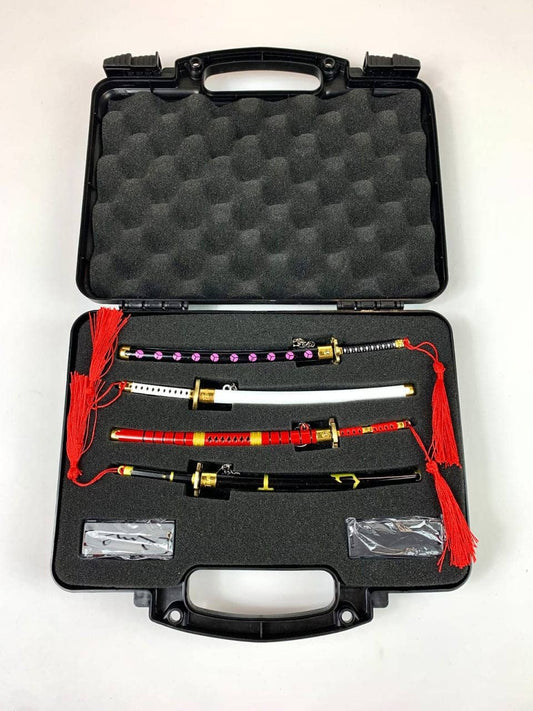


Answering Frequently Asked Questions About Swords in Spain Today
The presence of bladed weapons in the street—swords, katanas, daggers, or knives—often raises questions. In Spain, weapons regulations are extensive and distinguish between possession (having something at home), transport (carrying it from one place to another), and carrying (having it in public for use).
Below, we will answer some of your most frequent questions.

Is it legal to carry a sword?
Generally, carrying a sword in public is not allowed unless there is a legitimate reason (transport from purchase to home, use in exhibitions, sports practices, or accredited collecting).
The Weapons Regulation (Royal Decree 137/1993) and the Ministry of Interior's guidelines prohibit carrying and displaying bladed weapons when they may cause alarm or public danger; transport must be justified and safe.
Practical advice: if you buy a katana or another sword, keep it sheathed and in the trunk or packaging, and keep documentation justifying its use (purchase certificate, proof of club or event registration).
Avoid carrying it by hand on the street: this can lead to sanctions or police intervention.
What weapons can I own at home without a license?
The regulations allow possession of many bladed weapons at home (collection swords without a sharpened edge, replicas, decorative sabers), as long as they are not expressly prohibited.
The Regulation establishes exceptions: certain objects (for example, automatic knives or bladed weapons classified as prohibited) cannot be commercialized or possessed.
The Civil Guard and the Ministry of Interior distinguish between weapons that require authorization and objects permitted for collecting or home decoration.
Recommendation: keep the items at home, out of public view, preferably in display cases or boxes, and avoid sharpening replicas sold without an edge (sharpening can turn the item into a problematic object).

Is it illegal to have a sword at home?
No, having a sword at home is not automatically illegal, as long as it is a piece not prohibited by law and is not used to intimidate or commit crimes.
It can be illegal if it is a weapon expressly prohibited by regulations (for example, certain types of automatic knives or classified models).
If in doubt, consult the list of prohibited weapons from the Ministry of Interior and the Civil Guard's weapon classification.
What non-lethal weapons can I use for self-defense?
In Spain, there are approved and limited options: approved self-defense sprays (pepper spray), approved batons, and other non-lethal devices approved by health authorities and the Weapons Regulation.
Not all aerosols or devices are permitted: only those approved by health authorities appear on official lists.
Use must be limited to proportional defense; improper use may constitute a crime.
Examples and precautions:
- Approved pepper spray: permitted to carry and use for self-defense (provided it is one of the authorized models). Consult the official list of the Ministry of Health.
- Batons or defense elements: their civilian use is regulated; they will function as a defense tool only if the action respects proportionality.
In summary
Having a sword at home is legal, unless it is of a prohibited type, but carrying it in public is prohibited unless there is a justified reason (transport, sport, exhibition, or accredited collecting).
For self-defense, the accepted and safe option is approved devices (authorized sprays, approved batons) and, above all, training in self-protection and prevention measures.
If in doubt about a specific model (katana, decorative sword, knife), it is advisable to check its classification in the Weapons Regulation and consult with the Civil Guard or the Ministry of Interior, and their list of prohibited weapons.