América
Astronomical Knowledge of the Mayans: Predictions, Calculations, and Meanings
Systematic Sky ObservationThe Mayan civilization, which flourished from approximately 2000 BCE to the 16th century, d...




The Lower Ranks form the lowest tier of the Twelve Kizuki created by Muzan Kibutsuji in Demon Slayer, but even so, they pose a far greater threat than common demons....
The 3 Weakest Lower Moons Within the demon hierarchy created by Muzan Kibutsuji in Demon Slayer: Kimetsu no Yaiba, the Lower Moons represent the lowest rank among the Twelve Kizuki. These 6 Lower Moons can be divided into two groups: the three most powerful, ranked 1 to 3, and the weakest, ranked 4 to 6. These last three Moons share a common pattern: forced obedience, constant fear of Muzan, and a clear fragility against demon slayers, which explains their short tenure within the organization, despite possessing strength superior to ordinary demons. If you wish to learn more about them, you may continue reading, but at the risk of encountering significant spoilers about these characters. Kamanue: Lower Moon 6 Kamanue is the first demon shown during the Lower Moons' meeting after the group's reorganization. His appearance is brief but significant in understanding the dynamic of terror imposed by Muzan. Furthermore, he conveys fragility and insecurity: he has a pale and nervous appearance, with dark marks on his face, slanted eyes, and a constantly altered expression that reflects the permanent fear under which the Lower Moons live. During the meeting, Kamanue initially does not recognize Muzan due to his changed appearance. This error reflects the distance and true unfamiliarity many demons have with their creator. Subsequently, Kamanue mentally expresses his annoyance when Muzan calls the Lower Moons weak, unaware that Muzan has the ability to read minds. This act of implicit disobedience is enough for Muzan to eliminate him immediately. His death demonstrates that within the organization, there is no room for doubt or questioning, not even internal. In the manga and anime, no exclusive techniques or a unique Blood Demon Art of his own are ever shown. The work only confirms his rank as Lower Moon 6 within the Twelve Kizuki, which indicates he possessed physical and regenerative abilities far superior to those of a common demon. Rui: Lower Moon 5 Rui is one of the most developed cases among the Lower Moons. Before becoming a demon, he suffered from an illness that severely limited his mobility and quality of life. He was transformed by Muzan with the intention of granting him strength, but this change completely altered his psychology. After his transformation, Rui developed a distorted view of family. After a conflict with his human parents, he ended up killing them, although he initially believed they weren't his real parents. However, his mother's words before dying revealed that they did love him, which caused a deep emotional crisis in him. From that moment on, Rui attempted to rebuild a "perfect family" among demons, imposing strict roles of obedience and hierarchy. This structure was not based on love but on fear and submission, reflecting his inability to understand real human bonds. He has the appearance of a child with extremely pale skin and black hair with reddish tips. His face and part of his body are covered by red marks similar to threads or cobwebs, visually reinforcing the spider theme that dominates the entire Mount Natagumo arc, where he faces demon slayers in combat. His eyes show the kanji corresponding to his rank as Lower Moon 5 within the Twelve Kizuki. His childlike appearance contrasts with a cold, manipulative, and extremely violent personality, especially when he feels his "family" is not fulfilling the role he deems correct. In combat, Rui uses a Blood Demon Art based on almost invisible and extremely sharp threads. These threads can cut flesh, bone, and even Nichirin swords, and also serve to control other demons like puppets. Rui can also create threads reinforced with his own blood, greatly increasing their hardness and destructive capability. Thanks to this ability, he transforms Mount Natagumo into a massive web of cobwebs used both for attacking and controlling the battlefield. Additionally, he possesses advanced regeneration, great speed, and superior reflexes, characteristics that make him one of the most dangerous Lower Moons shown in the series. Rui is defeated in the Mount Natagumo arc by the Demon Slayer Corps, specifically by Giyu Tomioka, after previously confronting Tanjiro and Nezuko. Mukago: Lower Moon 4 Mukago appears during the same Lower Moons' meeting, displaying an extremely fearful and submissive demeanor from the start. She has the appearance of a young demon with pale skin, dark hair partially tied back, and pink eyes where her rank as Lower Moon 4 is engraved. Her expression is usually nervous and frightened, reinforcing the image of constant insecurity she conveys throughout the meeting with Muzan. Unlike other more aggressive or confident demons, Mukago stands out for an attitude clearly dominated by fear and anxiety. She doesn't recognize Muzan until he demands direct obedience. When Muzan eliminates Kamanue and declares the weakness of the Lower Moons, Mukago tries to justify her position, but her fear is evident. Muzan detects this fear of demon slayers, making her an immediate target. Despite her attempts to deny it, Mukago is unable to hide her insecurity. Muzan interprets her as a useless Moon and executes her without discussion, crushing her with his power. Her case clearly represents the psychological fragility within the group: they are not only physically weak but also lack emotional stability against the human threat. Due to her swift execution, no exclusive techniques or individual powers developed for the character are ever revealed. The work only confirms her position as Lower Moon 4 within the Twelve Kizuki before she is killed by Muzan.
Read more
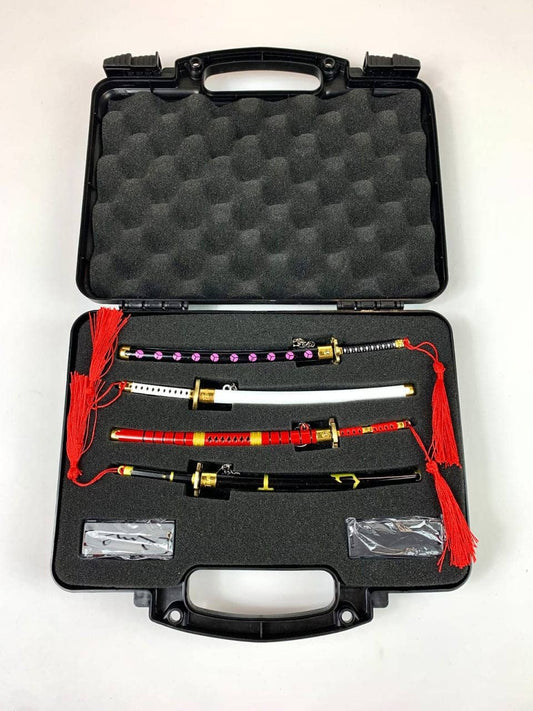
Jin Sakai is the protagonist of Ghost of Tsushima, a samurai who evolves into the Ghost and battles the Mongol invasion. His story reflects the conflict between traditional honor and...
Ghost of Tsushima Ghost of Tsushima is an action-adventure video game developed by Sucker Punch Productions and published by Sony Interactive Entertainment. Set in a fictional and stylized version of feudal Japan, the game tells the story of Jin Sakai, a samurai from the island of Tsushima who must abandon the traditions of honor to become the feared Ghost and save his people from the Mongol invasion. Origins of Jin Sakai and his samurai training Jin Sakai is the last heir of the Sakai clan, a samurai family tasked with protecting Tsushima. After his father's death, he is raised by his uncle Lord Shimura, the feudal lord of the island, who educates him under the strict principles of the samurai code, based on honor, discipline, and frontal combat. From a young age, Jin is trained in the use of the katana, the bow, and combat stances, becoming an expert warrior according to the traditions of his class. When the Mongol army led by Khotun Khan, a character inspired by historical Mongol leaders, invades Tsushima, the samurai are defeated in the initial battle. Jin survives but is marked by the failure of the traditional path, beginning a transformation that will define the entire story of the game. The birth of the Ghost and the change of style Faced with the enemy's tactical superiority, Jin realizes that honorable combat is no longer enough. Guided by allies such as Yuna, he adopts stealth tactics, sabotage, and assassination, becoming the Ghost of Tsushima. This evolution not only affects his way of fighting but also his identity, causing a direct conflict with Lord Shimura and with the values that shaped him. The game's combat system reflects this duality: Jin can confront enemies in direct katana duels or use Ghost techniques such as stealth, smoke bombs, kunai, and silent assassinations, more associated with ninja activity. Jin Sakai's katana: weapon and symbol Jin Sakai's katana, known by fans as the Sakai clan's katana, though without an official name, is one of the central elements of the game. This sword evolves throughout the story through upgrades, aesthetic customization, and special abilities. Through mythical tales, Jin learns techniques such as the Dance of Wrath, a powerful sequence of attacks that reinforces the legendary character of the weapon. The katana symbolizes the protagonist's internal struggle: each improvement represents his adaptation to a world at war, while its use as the Ghost's weapon reflects the definitive break with the traditional samurai path. Ending and legacy within the game At the end of Ghost of Tsushima, Jin manages to free the island, but at a high personal cost. His relationship with Lord Shimura is irrevocably broken, although the details depend on the player's decision, who can choose to kill him or spare him, solidifying his identity as the protector of the people, even if he is considered an outlaw. The katana, witness to all his decisions, becomes a symbol of sacrifice, change, and survival. Jin Sakai remains one of the most iconic figures in modern video games, representing the conflict between honor and necessity within the narrative universe of Ghost of Tsushima.
Read more
Anime has created some of the most memorable mother figures in fiction. This ranking compiles the 15 best mothers in anime, analyzing their emotional impact, their role in the story,...
Top 15 best anime mothers Mothers in anime are not just secondary characters; they don't just accompany the protagonists, but rather build their identity. In many stories, they represent emotional support, the origin of the protagonist's character, and the balance point between chaos and humanity. This ranking brings together the most important mothers in anime who are alive, present, and active in their series, highlighting their real role in their children's lives. However, many other anime mothers have left their mark without being able to make that same constant presence, such as Trisha Elric, mother of Edward and Alphonse Elric; Masaki Kurosaki, mother of Ichigo Kurosaki; Carla Yeager, mother of Eren Yeager; and Kyoko Honda, mother of Tohru Honda. 1. Misae Nohara (Shin Chan) Misae is not just an everyday mother; she is the realistic axis that supports the entire absurd world of the series. Her role functions as the balance between chaos and normalcy, setting Shinnosuke Nohara's limits in an environment where everything tends to be exaggerated. Through her scolding, her tiredness, and her humor, the series builds an extremely human motherhood, where love is not expressed with idealization but with daily coexistence. For Shinnosuke, she is the constant reference for what it means to grow within rules, even when he tries to break them all the time. 2. Inko Midoriya (My Hero Academia) Inko functions as Deku's emotional origin point. In a story focused on heroes, power, and sacrifice, she represents the opposite: the human fragility that supports the protagonist. Her initial fear is not narrative weakness but a reflection of the real cost of heroism. As Izuku Midoriya evolves, Inko also evolves, moving from excessive protection to accepting her son's destiny. Ultimately, she is the anchor that reminds him that being a hero doesn't mean ceasing to be human. 3. Yasuko Takasu (Toradora!) Yasuko represents silent sacrifice within the family structure. Her role is not to impose authority but to sustain daily life through constant effort. Although her personality may seem light or immature, it is precisely this duality that reinforces Ryuuji Takasu's growth, as he learns to mature by observing his mother's invisible work. She is an example of how maternal love is not always solemn but is constant and decisive in character formation. 4. Sanae Furukawa (Clannad) Sanae acts as an emotional pillar within a story focused on human fragility. Her presence not only supports Nagisa Furukawa but also builds a home where emotional stability is possible. In narrative terms, she represents a refuge from external difficulties, becoming a figure who allows her daughter to maintain hope even in moments of insecurity. She is a mother who emotionally structures the entire family environment. 5. Sachiko Fujinuma (Erased) Sachiko is one of the most decisive mothers in anime because her role is not only emotional but also functional within the story's mystery. Her intuition acts as a form of narrative intelligence that allows her to detect the invisible. In Satoru Fujinuma's life, she represents the figure who observes without needing explanations, being key in building trust and developing his sense of justice. 6. Chi-Chi (Dragon Ball) Chi-Chi represents the family structure within a world dominated by combat and chaos. Her narrative role is to maintain normalcy and discipline at home, ensuring that her children receive education and stability. In Gohan, her influence is more visible due to the emphasis on study and responsibility. However, with Goten, a clear evolution in her way of mothering is evident: she moves from a strict and overprotective attitude to a more flexible one, allowing him greater freedom without abandoning basic education or rules. This change reflects her learning as a mother, where she moderates her initial control—partially treated with a comedic tone in the series—to better adapt to her second son's personality and growth. In both cases, she functions as the domestic axis of the Son family. 7. Junko Kaname (Puella Magi Madoka Magica) Junko functions as a contemporary mother within a fantasy narrative. Her importance lies in the contrast: while her daughter's world is chaotic and supernatural, she represents adult rationality. Her parenting style is based on dialogue and experience, allowing Madoka Kaname to have her own space for reflection within a story of extreme decisions. 8. Delia Ketchum (Pokémon) Delia is the concept of home within a story of constant travel. Although Ash Ketchum is always on the move, she is the fixed emotional point that defines his identity. Her role does not depend on continuous physical presence but on representing the emotional origin that justifies the protagonist's journey. She is the foundation from which all growth begins. 9. Yor Forger (Spy x Family) Yor represents a form of motherhood that originates from an artificially created family but eventually becomes real. Her relationship with Anya Forger begins as a cohabitation born out of necessity within the Forger family, but it evolves into a genuine protective bond. Although she has no prior experience as a mother, she instinctively develops care, protection, and affection for Anya, trying to keep her safe even in dangerous situations. Her importance lies in showing how the maternal role can be built through daily action and not just by biology. 10. Hinata Uzumaki (Boruto) Hinata is a mother focused on the emotional balance of the Uzumaki household. In her relationship with Boruto Uzumaki, she acts as a constant support figure, trying to guide him patiently through his rebellion and the pressure of being the son of an important figure. With Himawari Uzumaki, she shows a more protective and affectionate side, strengthening the family bond through daily care. Her role is not authoritarian but stabilizing within a family where the father is often absent. 11. Mito Freecss (Hunter x Hunter) Mito, Gon's aunt and maternal figure, represents motherhood based on choice and genuine care. Although she is not his biological mother, she is the one who raised him and provided him with a stable home, becoming an example that motherhood does not depend solely on blood ties but on daily commitment. Her role is fundamental in Gon's emotional development, as she offers him a place he can always return to. 12. Bulma (Dragon Ball) Bulma, Trunks's mother, represents modern motherhood within a scientific and adventurous environment. Her parenting style combines intelligence, character, and autonomy, allowing her son to grow up in an environment where knowledge and personal initiative are key. Unlike Chi-Chi, her approach is less restrictive, offering another model of motherhood within the same universe. 13. Yukiko Kudo (Detective Conan) Shinichi Kudo's mother provides a distinct model of maternal presence. She allows her son to face his own challenges, trusting in his ability to solve them, but always remaining attentive from a distance. Her role shows a motherhood based on trust, observation, and timely support, intervening only when truly necessary or requested, and often without doing so directly, allowing her son to evolve, learn, and use her guidance to find answers for himself. 14. Eri Kisaki (Detective Conan) Eri Kisaki, Ran Mouri's mother, represents a form of motherhood marked by independence and distance, but not by emotional absence. Although she lives separately from her family, she maintains a strong bond with her daughter, based on respect, mutual admiration, and constant support. Her role shows that motherhood does not always imply daily cohabitation, but rather the ability to be present in key moments and serve as a moral and emotional reference. Eri combines her demanding professional career with her role as a mother, instilling values such as strength, justice, and autonomy in Ran. 15. Videl (Dragon Ball Z) Videl represents a form of motherhood that combines strength, independence, and emotional closeness. Mr. Satan's daughter and later Pan's mother, her evolution within the series takes her from being a determined fighter to becoming a stable pillar within the family. Her parenting style is based on a balance between discipline and affection, transmitting values such as courage, justice, and empathy without resorting to rigid authority. Unlike other stricter or more protective models, Videl offers a more flexible vision of motherhood, where emotional support and personal example carry more weight than imposition.
Read more
In Demon Slayer: Kimetsu no Yaiba, demons are at the heart of the conflict. This article analyzes their origin from Muzan Kibutsuji, their supernatural abilities, and the hierarchy that defines...
Muzan and the Demons In the universe of Demon Slayer (Kimetsu no Yaiba), demons are creatures that feed on humans and represent the dominant life form in the darkness of the night. They are beings created from ancient humans transformed through the blood of the original demon, which grants them supernatural strength, regeneration, and a practically immortal life. Their existence revolves around a single central figure: Muzan Kibutsuji. Muzan Kibutsuji: The First Demon Muzan Kibutsuji was originally a sick, weak human destined for an early death. During an experimental medical treatment, he received medicine intended to cure him, but the process had an unexpected effect: his body stopped deteriorating and began to change irreversibly. After this transformation, Muzan developed a new condition: his body became immortal at a cellular level, capable of constant regeneration and adaptation. However, this new nature came at a price: the need to consume humans to survive and maintain his stability. From this change, Muzan discovered a unique ability: he could transmit his own blood to other humans, causing a transformation in them that would give rise to what would be called Demons. This process allowed him to become the origin of the entire demonic species. Origin and Transformation of Demons Knowing a little about Muzan, we can understand that demons in Demon Slayer are not born as such. They are humans who have been transformed by his blood. This process causes profound changes: Partial loss of human memory Extreme increase in strength and regeneration Need to feed on humans Physical adaptation of the body to inhuman forms The transformation is not the same for everyone. Some retain fragments of their previous identity, while others almost completely lose their humanity. The more of Muzan's blood they receive, the more powerful they become, but also the more dependent on him. Abilities and Weaknesses of Demons Demons possess a series of common abilities that make them extremely dangerous beings: Accelerated regeneration: they can heal serious wounds in seconds Superhuman strength: they far exceed human physical capacity Partial immortality: they do not age normally Body manipulation: some can modify their shape or extend their body However, they also have clear weaknesses: Sunlight completely destroys them Wounds caused by special swords can eliminate them if decapitation is achieved These limitations define the balance of power within their world. The Twelve Demon Moons: The Demonic Elite The Twelve Demon Moons are the most powerful demons created directly by Muzan. They are divided into two groups: Upper Moons They are the strongest demons in the world. They have received a greater amount of Muzan's blood, which significantly increases their power. Their combat level places them at the top of the demonic hierarchy. Lower Moons They are lower-ranked demons than the Upper Moons within the organization. Although they possess superior abilities to common demons, they are weaker in comparison to the elite. The classification does not depend on seniority, but on strength. The lower the assigned number within the Moons, the greater their power. Hierarchy and Creation The demonic structure is completely controlled by Muzan. He decides who becomes a demon, who receives more power, and who belongs to the Demon Moons. This makes the entire system a direct extension of his will. The demons in Demon Slayer are the direct result of the transformation initiated by Muzan Kibutsuji, a human turned into the first demonic being. From him, an entire hierarchical species is created based on power, blood, and absolute control, where the Twelve Moons represent the pinnacle of his creation.
Read more
Wonder Woman's weapons combine Greek mythology, divine magic, and heroic symbolism within the DC universe.From the Lasso of Truth to the Godkiller Sword, each artifact reflects values such as justice,...
Wonder Woman's Weapons Wonder Woman is one of the most complex and symbolic figures in the DC universe. Diana of Themyscira is not only an Amazon warrior and immortal princess, but also the bearer of an arsenal deeply linked to Greek mythology, divine magic, and the concept of just war. Her weapons do not represent wanton destruction, but rather balance, truth, and the defense of the innocent, making her a bridge between the human and the divine. The Lasso of Truth: a symbol of justice and honesty The Lasso of Truth, also known as Hestia's Lasso, is Wonder Woman's most iconic weapon. Forged by Hephaestus with divine energy, it is unbreakable and forces anyone caught in it to tell the truth, in addition to breaking spells and illusions. This magical artifact symbolizes Diana's absolute commitment to truth, moral justice, and compassion, distinguishing her from other superheroes focused solely on strength. The Amazon Bracelets: defense and self-control Wonder Woman's bracelets, forged from Zeus's shield, are indestructible and capable of deflecting bullets, energy, and magical attacks. By clashing them together, Diana can unleash devastating shockwaves. Beyond their defensive function, they represent Amazon discipline, self-control of power, and the historical memory of the slavery overcome by the Amazons. The Royal Tiara: leadership turned into a weapon Wonder Woman's tiara is not just a symbol of royalty. Made of sacred metal, it can be used as a highly accurate throwing weapon. This object embodies her dual role as both a warrior and an ambassador of peace, uniting leadership, honor, and divine heritage. Divine Swords: slaying gods and fighting with wisdom Among the most powerful weapons is the Godkiller Sword, capable of wounding or destroying divine entities. It appears in both comics and films, especially in Batman v Superman and Wonder Woman. It represents defiance of destiny and courage in the face of the absolute. Alongside it, the Sword of Athena symbolizes strategic and ethical warfare. Associated with the goddess of wisdom, it reinforces the Amazon ideal of fighting with intelligence, honor, and moral purpose. Shield of Themyscira and Gaea's Belt Wonder Woman's shield, forged with Amazonian magic, offers almost absolute protection against physical and supernatural attacks. It is the emblem of the defense of the innocent and resistance against chaos. Gaea's Belt, on the other hand, increases Diana's strength and stamina, connecting her with the vital energy of the earth. It symbolizes balance, nature, and ancestral power. Asteria's Golden Armor and minor artifacts Asteria's golden armor, seen in Wonder Woman 1984, allows flight and withstands extreme damage. It is a tribute to the heroic Amazon sacrifice. Additionally, Diana has used other magical artifacts such as the Spear of Artemis, Circe's Mirror, and relics associated with Hermes and Gaea. An arsenal based on eternal values Wonder Woman's weapons are not mere combat tools. Each reflects values such as justice, truth, wisdom, honor, and compassion. Diana of Themyscira does not fight for conquest, but for balance, demonstrating that true power lies in ethics and an unwavering will.
Read more
The Stranger Things universe returns with Stranger Things: Tales from '85, a new animated series that expands the original story with a different approach. Its premiere is confirmed for April...
A New Chapter in the Hawkins Universe The Stranger Things universe continues to expand with Stranger Things: Tales from '85, an animated series that broadens the original story from a different perspective. Following the global success of the main production, this new project is a clear commitment to further developing the world of Hawkins with new storylines, while maintaining its essence. This launch marks the beginning of a new era for the franchise, offering more content without directly altering the main story arc. Release Date Confirmed The most important detail is its official launch. Stranger Things: Tales from '85 premieres on April 23, 2026 on Netflix, becoming one of the year's most significant events for fans of the series. On that day, the platform will make the first episodes of this new animated production available to the public, beginning its journey within the global catalog. A Story Set in 1985 Although its release is in 2026, the plot is set in the past. Specifically, in 1985, at an intermediate point between seasons 2 and 3 of the original series. This allows for a return to the classic atmosphere of Hawkins, with its characters at a specific stage of their lives, but introducing new situations and conflicts that have not been shown until now. The goal is to expand the context without breaking known continuity. Known Characters and New Additions One of the big draws of this series is the return of key characters. Figures like Eleven, Mike, Dustin, Lucas, Will, and Max are once again part of the story, strengthening the connection to the main series. At the same time, new characters are introduced, specifically designed for this period, bringing dynamism and new perspectives within the group. This combination seeks to maintain a balance between the familiar and the novel. A New Threat from the Upside Down The story presents a new conflict linked to the Upside Down, the central element of the series. Although Hawkins seems to have recovered some normality, a threat soon emerges that once again upsets the balance. This approach allows for exploring new situations without exactly repeating previous events, maintaining the tone of mystery, tension, and danger that characterizes the franchise. Visual Style and Animated Approach One of the most obvious changes is the format. Unlike the original series, Tales from '85 opts for animation, with a style inspired by the aesthetics of the 1980s. This approach allows for greater visual freedom, expanding narrative possibilities and offering scenes that would be more complex in live-action format. Even so, it maintains the recognizable visual identity of the Stranger Things universe. A Key Release for the Future of the Franchise April 23, 2026 not only represents a premiere but also an important test for the future of the saga. This project will serve to gauge public interest in new stories within the same universe. If the reception is positive, it could open the door to more spin-off productions, consolidating Stranger Things as a franchise that goes beyond its main series.
Read more
In this third part on insect-inspired Pokémon created by Satoshi Tajiri, we explore how these designs have evolved from simple references to nature to much more complex and symbolic concepts....
From Nature to Myth: The Most Complex Insects in the Pokémon Universe Over the generations, entomological inspiration in Pokémon has evolved. What began as an almost direct representation of real insects observed in Satoshi Tajiri's childhood transformed into more complex designs, where biology blends with symbolism, exaggeration, and almost spiritual or mythological concepts. In this third part, we analyze Pokémon that no longer just reflect real insects, but abstract ideas such as metamorphosis, loss, vital energy, or the scientific exaggeration of the natural world. Nincada, Ninjask, and Shedinja – The Molt and the Void Nincada is inspired by cicada nymphs, insects known for spending years underground before emerging. The evolution process reflects the molting of the exoskeleton typical of many insects. Ninjask represents extreme speed after metamorphosis, while Shedinja introduces a unique concept: an "empty body" that comes to life. Shedinja symbolizes the abandoned husk, taken to an almost spiritual plane, becoming one of the most conceptual Pokémon in the entire saga. Volcarona – The Solar Moth Volcarona is inspired by moths, but reinterpreted from a mythological approach. Its wings clearly resemble those of a moth, with symmetrical patterns and a delicate structure. However, Volcarona does not just represent an insect, but the sun itself. According to the Pokédex, its presence replaced sunlight when it was scarce, making it a symbol of rebirth, warmth, and survival. Here, entomology merges with mythology. Scolipede – The Giant Centipede Scolipede is based on centipedes, arthropods known for their speed and venom. The segmented body, multiple legs, and aggressive posture faithfully reflect these animals. Pokémon exaggerates its size and ferocity, transforming it into a nightmare creature. Its venomous attacks and speed symbolize the ancestral fear of fast, hard-to-control arthropods. Durant – The Strength of the Swarm Durant is inspired by ants, one of the most organized social insects on the planet. Its design reflects the segmented structure and jaws of worker ants. Durant represents collective power over individual power. Its resilience and capacity for work symbolize the strength of the group, a concept very present in both nature and Japanese culture. Buzzwole and Pheromosa – Scientific Exaggeration Buzzwole and Pheromosa, belonging to the Ultra Beasts, are based on insects like mosquitoes and cockroaches, taken to an almost experimental extreme. Despite their exaggerated design, they retain key features of real insects: segmented bodies, multiple limbs, and recognizable structures. Buzzwole represents muscle hypertrophy and uncontrolled energy, while Pheromosa embodies speed and extreme fragility. Both seem more the result of a scientific experiment than simple natural observation, marking a radical shift in the original approach. Metamorphosis, Void, and Transcendence in Pokémon Design In these later generations, Pokémon stops limiting itself to reproducing real insects and begins to explore deeper ideas: metamorphosis as destiny, the empty husk as a spiritual symbol, the insect as a deity or as an experiment. Satoshi Tajiri's inspiration doesn't disappear, but evolves. What began as a children's game of catching insects becomes a complex symbolic language, where nature serves as a basis for talking about life, transformation, and power. With this third part, it becomes clear that insects not only gave rise to Pokémon, but grew with the saga, transforming into some of its deepest and most memorable concepts.
Read more
The Spider-Man: Brand New Day trailer has sparked numerous theories among fans after breaking viewing records. Far from revealing the plot, the preview suggests key changes to the character: possible...
Spider-Man: Brand New Day. Collecting Speculations The trailer for Spider-Man: Brand New Day has become one of the most significant phenomena in recent cinema after reaching record-breaking viewership numbers in record time. However, beyond the media impact, what has truly caught attention is the kind of speculation it has generated. Unlike other trailers in the genre, this one does not feature villains, does not show clear confrontations, and avoids any scene that would allow for identifying the main plot. This forces the analysis to focus on the visible details. An Isolated Protagonist The trailer for Spider-Man: Brand New Day confirms that Peter Parker is still completely alone after the events of Spider-Man: No Way Home, where he accepts that the world forgets who he is through a spell that erases his identity from everyone's memory, thus losing all personal connections. From this, the most widespread theories suggest that this isolation could be the trigger for his deepest transformation. Part of the fandom proposes that solitude is accelerating Peter Parker's mutation. Other interpretations go further, suggesting that this process could lead to a darker version of the character, where the main conflict would not be external, but internal. Here we also have a letter written by Peter that a fan took the trouble to translate despite its fleeting appearance; it says: “Hi, my name is Peter Parker, and you don’t remember me, but I have something to tell you that’s going to sound crazy. It’s the truth, and I know you’re going to believe me, because you’re really good at knowing when I’m lying.We used to know each other. We were together. But something bad was going to happen to the world, and the only way to stop it was to make everyone forget me. Because I’m not just Peter Parker, I’m Spider-Man.And sometimes, Spider-Man has to do the hard thing, even if it breaks Peter Parker’s heart. Maybe you’ll never read this. Maybe I’m just writing this for myself. Maybe that’s my responsibility. To live with the truth alone.But the truth is, I love you. And I hope deep down, something inside you (remembers?) that you love me too.” This has led to speculation not only that the weight of being forgotten is beginning to fall on his shoulders, but that he might be debating whether or not to approach his ex-girlfriend, and that he might be tempted to reveal his identity. In this same vein, many fans have speculated that she might discover his identity as Spider-Man on her own again, or that he might reveal it, leading to two different stances: That she would believe him, as her instinct had told her before, and she might feel familiar with him; or that she would not believe him, as she does not remember him well enough to distinguish anything strange in his behavior, given that she would always remember him as Spider-Man already, so his actions would not feel different to her... Villains: The Visible Absence as the Main Clue Another key aspect of the Spider-Man: Brand New Day trailer is that no identifiable villain appears. There are no clear faces or silhouettes that allow for recognizing a specific enemy, although a combat scene is shown at the end of the preview without revealing the identity of those involved. However, in several sequences, a strange phenomenon is perceived: something invisible seems to move from one body to another, as if a presence passes between different people to escape. It is not shown directly, but the effect is there and has been noted by part of the fandom. Furthermore, there is a mention in the trailer itself of facing an enemy they cannot see. From what is visible, several interpretations arise. One of the most commented is that this “something” could be an entity linked to the multiverse, even interpreted by some as a kind of presence or consciousness that uses bodies to move undetected. For those who do not give relevance to that detail, the theories go in another direction: that Spider-Man himself could become the axis of the conflict, not necessarily as a traditional villain, but as an unstable figure, relying on Banner's comment that if he is mutating, he could be dangerous. Changes in Visual Approach The Spider-Man: Brand New Day trailer includes action and combat scenes, with visible confrontations at different points in the preview. However, it does not focus its promotion on large destructions or spectacular explosions. Based on this, theories focus on the possible tone of the story. Some fans suggest that a storyline related to the loss of control over Peter Parker's abilities might be explored, while others interpret that the approach could be darker, centered on the consequences of that possible mutation. Changes in the Character's Powers: The Most Important Speculation One of the most widespread debates surrounding Spider-Man revolves around the evolution of his powers and what that implies for his very nature. Throughout different stories, it has been suggested that his abilities are not static, but can develop over time, becoming more precise, more intense, and even closer to arachnid than human. This idea has led many to interpret that he is not just a hero who improves, but someone who could be progressively transforming into something different. On one hand, there are those who argue that this evolution is a logical extension of his origin: if his powers come from a biological alteration, it is consistent that this alteration continues to adapt. In this context, the trailer reinforces the idea of this possible change by showing the character hanging from a web outside a window, not wearing his suit. The scene suggests that the web was created by himself, in a state of sleepwalking or unconsciousness, and not through the technological devices he used, which suggests that this version of Spider-Man would not rely on technology, but would possess biological spider webs on his own. The presence of figures like Hulk in his human form is also shown, at a moment where he seems to explain to Peter Parker the transformation process and the phases related to a spider. This interaction directly points to the idea that the character might be undergoing an initial phase of change, linked to the origin or intensification of his powers. In this part, it is mentioned that a spider goes through three vulnerable phases of transformation, and if it survives, it could be considered a rebirth, which can be thought of as indirectly alluding to the movie's title. This is what leads many fans to consider that this Spider-Man could be Man-Spider, the “Spider-Man,” and that the mutation leads him to cross the border of humanity. Some fans interpret that, as Spider-Man and the X-Men have shared stories in the comics in which Parker is even a professor at the mutant school, Marvel is trying with this film to leave the door open for a future one that includes that connection, even speculating that this Spider-Man could be the one who goes to Charles Xavier for help.
Read more
Since its premiere in 1977, Star Wars has built a unique narrative universe through characters that have marked generations. Heroes like Luke Skywalker, iconic villains like Darth Vader, and new...
Star Wars and its Memorable Characters Since its premiere in 1977, Star Wars has brought to life an extensive gallery of unforgettable characters. These heroes, villains, and secondary figures have woven a complex narrative of redemption, sacrifice, and the struggle between good and evil. Below, we present the most emblematic characters of the saga. Heroes of the Rebellion and Resistance of the Saga Luke Skywalker Protagonist of the original trilogy, Luke is the archetype of the hero. His evolution from a Tatooine farmer to a powerful Jedi reflects the inner struggle between light and darkness, marked by his relationship with Darth Vader. He represents the hope of the galaxy. Princess Leia Organa A central figure of the Rebellion, Leia combines leadership, courage, and compassion. Her role challenged gender stereotypes and became a symbol of the fight for freedom and justice. Han Solo A charismatic smuggler who joins the Rebel cause. Accompanied by Chewbacca, his transition from mercenary to hero shows that even the most skeptical can change the destiny of a galaxy. Chewbacca Loyal Wookiee and Han Solo's companion. His strength and unwavering commitment make him an indispensable ally in the fight against the Empire. C-3PO and R2-D2 These droids represent humanity amidst the galactic conflict. C-3PO, nervous and formal; R2-D2, intrepid and resourceful. Together, they have been present at the key moments of the saga. Rey Protagonist of the sequel trilogy, Rey searches for her identity while discovering her connection to the Force. Her story of self-determination reflects the power of choice and the renewed Jedi spirit. Finn A former First Order stormtrooper, Finn abandons his training and chooses to fight for the Resistance. His bravery and humanity make him a symbol of redemption and free will. Poe Dameron A skilled pilot and natural leader, Poe represents audacity and commitment to the Rebel cause. His evolution as a commander demonstrates the weight of responsibility in the face of war. Anakin Skywalker A central figure in the prequels, his story as a Jedi and subsequent fall to the dark side is key to the entire saga. He represents the origin of the main conflict. Padmé Amidala Queen and senator, she provides an essential political and diplomatic vision in the Star Wars prequels, in addition to being key to Anakin Skywalker's destiny. Her role directly connects with the origin of the galactic conflict and with the legacy that will mark subsequent generations. Din Djarin The protagonist of The Mandalorian series, he represents a new kind of hero: more solitary, pragmatic, and tied to Mandalorian tradition. Grogu Popularly known as "Baby Yoda," he is a key character due to his connection to the Force and his emotional impact on the modern narrative. Jyn Erso The protagonist of the story of Rogue One: A Star Wars Story, Jyn Erso embodies sacrifice within the Rebellion. Her evolution from a distrustful survivor to a committed leader reflects a transformation marked by loss, loyalty, and the constant struggle for a greater cause. Cassian Andor A rebel spy with a complex past, Cassian Andor represents the ambiguous morality of war. Unlike other idealistic heroes, he makes difficult decisions for the Rebellion, showing the true cost of conflict and the burden of duty. K-2SO A reprogrammed Imperial droid, K-2SO stands out for his direct and sarcastic personality. Beyond the humor, his loyalty and capacity for sacrifice make him a key character, demonstrating that even a machine can develop its own identity. Chirrut Îmwe A blind warrior deeply connected to the Force, Chirrut Îmwe symbolizes faith without needing to be a Jedi. His discipline, serenity, and conviction make him a spiritual reference within the galactic conflict. Baze Malbus Chirrut Îmwe's inseparable companion, Baze Malbus is an experienced combatant who contrasts with his ally's spirituality. His practical approach and absolute loyalty reinforce one of the strongest bonds within Rogue One: A Star Wars Story. Villains Who Define Darkness Darth Vader From promising Jedi to Sith Lord, the tragedy of Anakin Skywalker symbolizes the internal struggle between good and evil. His final redemption closes one of the saga's most powerful arcs. Palpatine Architect of the Empire, Palpatine represents absolute power and manipulation. His presence transcends generations, embodying the constant threat of the dark side. Kylo Ren Heir to darkness and son of Leia and Han, Kylo represents the conflict between legacy and choice. His story reflects pain, ambition, and the struggle to redeem himself from his own decisions. Darth Maul Iconic villain of the prequels, symbol of Sith power and the persistent threat of the dark side. Count Dooku Former Jedi turned Sith, reflecting the ideological corruption within the Order. Moff Gideon Antagonist in the post-Empire era, showing how Imperial power persists after its fall. Secondary Characters Who Leave Their Mark Yoda Wise and enigmatic Jedi Master. His legacy of knowledge and his unique way of expressing himself have left an indelible mark on Jedi philosophy. Obi-Wan Kenobi Anakin and Luke's mentor, a symbol of honor and sacrifice. His fight to maintain peace gives him an essential place in the balance of the Force. Ahsoka Tano Introduced in The Clone Wars, Ahsoka has become a key figure in the expanded universe. Her evolution from apprentice to autonomous warrior positions her as a reference for the new generation. Lando Calrissian Former smuggler turned rebel general. His charisma, intelligence, and sense of duty make him a respected figure by both heroes and viewers. Clones Fundamental soldiers in the Clone Wars. Although genetically identical, many develop their own identity, making them relevant characters within the narrative. Stormtroopers Icons of Imperial power. They represent the Empire's military might, but also the dehumanization within the system. A Legacy of Immortal Characters Beyond the effects and space battles, the heart of Star Wars lies in its characters. Each figure has contributed to building a universe where courage, redemption, and hope continue to shine in a galaxy far, far away.
Read more