América
Astronomical Knowledge of the Mayans: Predictions, Calculations, and Meanings
Systematic Sky ObservationThe Mayan civilization, which flourished from approximately 2000 BCE to the 16th century, d...


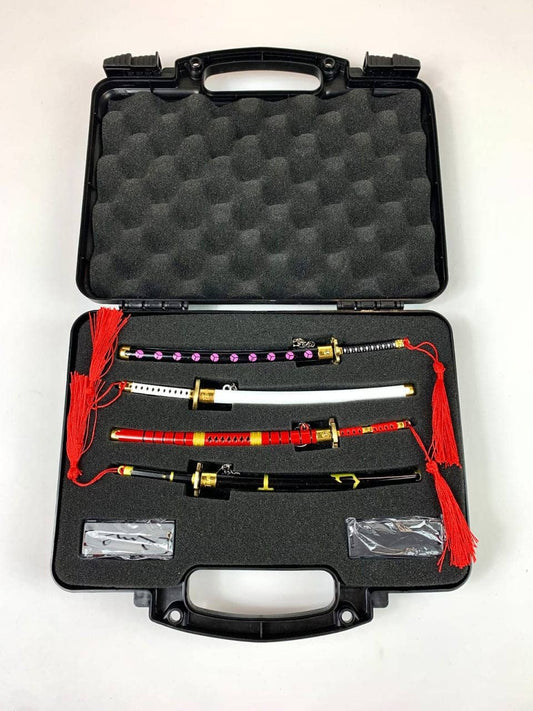


The Nagoya Touken World is a museum dedicated to the history of Japanese swords and samurai culture. It houses a remarkable collection of katanas, armor, and traditional weapons that reflect...
A Museum of Historic Swords in Nagoya The Nagoya Touken World, also known as the Nagoya Touken Museum (Meihaku), is a museum specializing in Japanese swords located in the Sakae district of Nagoya, Aichi Prefecture, Japan. Its mission is the conservation, exhibition, and dissemination of the history of traditional Japanese swords, their forging techniques, and their cultural role within Japanese society. The difference in names is due to their use in Japanese and English: in Japan, it is known as Nagoya Touken World, while internationally it also appears as Nagoya Sword Museum or Nagoya Touken Museum. It is not a permanent free museum, as general admission has a cost, although some associated venues may offer free exhibitions. The institution is managed by the Touken World Foundation, active since 2018, dedicated to preserving the Japanese sword as an artistic and historical heritage. Collection of Japanese Swords: More Than Katanas The museum houses a collection of approximately 200 historic Japanese swords, including pieces classified as National Treasures and Important Cultural Properties. These include katanas, tachi, wakizashi, and tantō, representing different historical periods of feudal Japan. Japanese swords, known as nihontō, were not merely weapons but also cultural, ritual, and status symbols. Tachi were used by samurai cavalry, while wakizashi accompanied katanas in the daishō, a set that defined the warrior's identity. Many pieces come from legendary schools such as Bizen and Sōshū, renowned for their excellence in forging. Other Historical Weapons: Naginatas, Yari, and Firearms The museum is not limited to swords. It also exhibits naginatas (polearms with curved blades) and yari (straight spears), which were fundamental in samurai combat and also used in ceremonies. Additionally, it includes ancient firearms such as hinawajū, matchlock guns introduced to Japan in the 16th century after contact with Europe. These weapons transformed warfare during the Sengoku period, progressively replacing the traditional bow and marking a shift in Japanese military strategy. Art Surrounding the Sword: Koshirae and Ornaments An essential part of the museum are the koshirae, the ornamental mountings of the swords. These include the tsuba (guard), tsuka (hilt), saya (scabbard), and fuchi-kashira (reinforcing elements), crafted from materials such as gold, silver, copper, and urushi lacquer. Beyond their practical function, these elements reflect the social status and aesthetic sensibility of the samurai world. Tsuba, in particular, stand out as artistic pieces with natural, mythological, or historical motifs, providing information about regional styles and artisanal techniques. Armor, Helmets, and Samurai Equipment The museum also exhibits complete samurai armor, ornate helmets (kabuto), and auxiliary elements such as saddles and stirrups. These pieces allow visitors to understand the complete context of the Japanese warrior and the evolution of warfare in Japan. From the Heian to the Edo period, military equipment adapted to new tactics, materials, and combat forms, reflecting the transformation of samurai society. Visiting Experience and Educational Value Nagoya Touken World offers a comprehensive educational experience with permanent and temporary exhibitions covering over 1,000 years of the Japanese sword's evolution. Its approach combines history, art, technique, and culture in one space. The museum also includes interactive activities and a restaurant with traditional Japanese cuisine, allowing visitors not only to observe historical pieces but also to immerse themselves directly and didactically in samurai culture and Japanese tradition.
Read more
There are episodes in history that don't appear in most books, but that left deep wounds in the identity of a people. This is one of those stories that deserve...
The history of war is replete with moments of glory and heroism, but it is also marked by suffering and the loss of countless lives and cultures; World War II was no exception. One of the most painful episodes for their country after the attacks on Hiroshima and Nagasaki, and least remembered or acknowledged abroad, is the katana massacre that took place in Japan during the American occupation. This event not only symbolizes the devastation of a people, but also underscores the profound pain of a cultural identity forced to yield to an imminent conquest. More than the loss of objects, the loss of everything the katana meant to them, although this has been repeated numerous times, in different forms, throughout history and cultures. Japanese cultural heritage under threat The Second World War left deep scars on the heart of humanity. When American troops occupied Japan, their actions not only marked political history but also represented a devastating attack on the cultural identity of the Japanese people. One of the most painful episodes of this process was the "Katana Massacre," where hundreds of thousands of swords, symbols of samurai honor and tradition, were destroyed in a cruel display of power intended to demoralize the Japanese people. When Allied troops began the occupation, soldiers tasked with disarming Japanese combatants and citizens encountered not only modern weapons, but also ancient katanas. The decision was devastating. With each katana collected, the Japanese were robbed of a part of their past, for each sword told a story, a legacy forged in steel and passed down from generation to generation. The pain of that moment remains fresh in the Japanese collective memory. The katanas were piled up, silent witnesses to an indescribable feeling. For many, it was as if they were being stripped of their very essence. The tears of a people who had lost not only those legendary samurai swords, but also their legacy, echoed in the silence of the deserted streets. The image of the katanas being destroyed became an event that remains in the minds of that generation. It was not simply a military act; for the Japanese, it was an attack on their identity, a call to resignation. Japanese resistance to the destruction of katanas and their samurai culture In a climate of desperation and desire to preserve what represented the essence of their culture, while some hid their katanas in an effort to prevent them from being taken away, a group of citizens gathered to prevent further destruction of these relics. On the one hand, there was great resistance to handing over these sacred objects. Many Japanese refused, aware of their profound significance. Consequently, the American authorities applied drastic measures. Some were imprisoned, and others faced even harsher reprisals. Those who clung to their swords became symbols of a people who refused to surrender, to allow desolation to take over their spirit. For many, these acts of rebellion represented the last thread of hope amidst overwhelming darkness. On the other hand, those who chose to make their culture understood by foreigners sought, through fervent negotiations, to explain to the general in charge of the occupation, Douglas MacArthur, who had given the order to destroy the katanas, their importance as the soul of a nation marked by history, respect, and spirituality. The talks, which lasted several weeks, were tense and emotional. It is estimated that approximately 400,000 katanas were destroyed, and another 20,000 to 30,000 were lost. However, thanks to the tireless efforts and courage of those patriots, some katanas were recovered. Resilience and memory: The katana as a symbol of the Japanese spirit The mourning for the destroyed katanas is still felt today in Japan and throughout the Japanese diaspora around the world. It wasn't just a sword; each traditional katana held the story of brave warriors and skilled smiths, of sacrifices, and a legacy that spanned the centuries. Yet, despite what was lost—both destroyed and unaccounted for, as is the case with the legendary Honjo Masamune katana —the Japanese spirit is unbreakable: its identity and strength continued to shine. Over time, although healing the wounds of that dark period may seem impossible, as is the case with the losses of so many other countries and their people involved in these conflicts, the preservation of those katanas that were saved has become a beacon of hope and resilience, many of them becoming part of Japanese cultural heritage. Today's generations remember and pay tribute to a legacy that cannot be destroyed: that of a people fighting to keep their history and essence alive. The loss of their cultural heritage and the struggle to maintain their identity in the face of adversity serve as a powerful testament to the strength of the human spirit. May their katanas, though mostly lost, remain a symbol of the greatness of a people who, despite adversity, never surrendered to oblivion. History must be evoked not only as a reminder of a culture shock that we should not allow to be repeated, but also as a celebration of resilience, honor, and dignity in the struggle to preserve the culture and legacy of the past, to not forget where we come from and who we are. If you like katanas, you can't miss the katana collection in our store.
Read moreNapoleon: Genius or Tyranny? History is full of characters who have left their mark, but few inspire as much fear as Napoleon Bonaparte. Amidst the shadows of history, this man stands as an enigma, a monster of ambition who aroused admiration and terror in equal measure. Was he a visionary leader with an intellect that inspired his troops to follow him to the ends of Europe? Or was he an unscrupulous despot who did not hesitate to plunge the continent into a nightmare of war and destruction? Join us on this journey through the life of a man who, like in the best horror stories, aroused fear wherever he went. Check out this cool Napoleon pistol! The rise of a fearsome genius Napoleon was not always the spectre that menaced Europe. His beginnings were humble, a young officer who rose to prominence in the French Revolution. But, as if he had made a pact with dark forces, his rise was dizzying. Before long, he crowned himself Emperor of France , a title he carried with an aura of mystery and power that unsettled his contemporaries. His military genius was unquestionable. No one could predict his moves on the battlefield, like a lurking predator . In battles like Austerlitz, it seemed that the very shadow of death accompanied him, leading his enemies to their inevitable doom . Every strategy he devised was a new blow of terror to the kingdoms facing his relentless advance. Check out this top quality Napoleon Sabre! A leader who aroused fear But Napoleon's genius was not limited to the battlefield. As a leader, he knew how to inspire respect and fear in his subordinates. His cold, calculating gaze could make even the bravest tremble. Some said there was something supernatural about the way he imposed his will, as if his presence were that of a being who did not entirely belong to this world. His control over his empire was absolute, and those who dared to defy him faced a dire fate . His ever-vigilant spy network was a constant shadow hanging over anyone who showed signs of disloyalty. In his empire, the slightest murmur against the Emperor could result in a mysterious disappearance . Under his rule, the freedom promised by the French Revolution was transformed into a suffocating oppression , making even the most faithful followers shudder at the thought of what the future held. The tyranny that sowed chaos But as Napoleon's power grew, so did his darker side . He was not content to be the ruler of France; he wanted to be the master of Europe, the lord of a continent that trembled under his shadow . To achieve this, he carried out a series of wars that became an endless nightmare for the people who suffered them. The Napoleonic Wars were like a dark tide that swept across Europe, leaving a trail of destruction in its wake. Millions of men were drawn into the war, as nations bled to death in a conflict that seemed to have no end. In each battle, French soldiers and their enemies lived in the constant horror of facing the Emperor's army, which advanced with the force of a destructive gale . And as Napoleon built his empire, the people of Europe lived in fear of being devoured by his ambition . Every victory Napoleon delivered was a blow to the heart of Europe , a reminder that no one was safe from his desire for conquest. To many, Napoleon was a demon of war , a figure who embodied the chaos and death that loomed over the continent. This cannon from the Napoleonic era is very cool! The end of the nightmare But, as in every horror story, Napoleon's power could not last forever. Following his defeat in Russia, where his army was lost in a frozen hell from which few returned, his influence began to fade. Nations that once trembled before him found the strength to rise. Finally, he was defeated at the Battle of Waterloo , a moment many described as the end of a curse that had plunged Europe into darkness. Exiled to the remote island of Saint Helena , Napoleon spent his final days in a place that seemed as ghostly as his own legend. Isolated from the world, his figure became a spectre of what he once was, a man caught between the greatness of his past and the nightmare of his defeat . In his final days, his mind is said to have been populated by the ghosts of lost battles and the cries of fallen soldiers that haunted him endlessly. Genius or tyrant: the legacy of a man who still inspires fear Today, more than two centuries after his death, Napoleon remains a figure of concern . To some, he was a military genius , a man who transformed Europe with his vision and determination. But to many others, he was a ruthless tyrant , a man whose ambition turned Europe into a stage of horror and endless war.
Read moreWelcome to a new article from Swords and More. Today we will talk about Excalibur, the legendary sword of King Arthur, and the legend that accompanies this story. Excalibur. The legend behind the sword Excalibur, the sword that made Arthur Pendragon King of England when it was dug out from the rock in which it was embedded. As in many other legends, Excalibur is said to be wielded only by its true owner. Thus, when Arthur is dying due to wounds inflicted by his son Mordred at the Battle of Camlann, Excalibur must be returned to the Lady of the Lake, its original owner, as no one else can use it. Check out this version of the Excalibur Sword! In the 13th century, monks at the French abbey of Cluny spread a legend about a knight named Galgano, who was later canonized by Pope Urban III. This knight may be related to Sir Gawain or Galvan. The story includes iconic elements of the Arthurian cycle, such as the sword stuck in the stone, which first appeared in the 12th-13th century French poet Robert de Boron's play "Merlin." In the Italian region of Tuscany, there is the Rotonda di Montesiepi, where tradition holds that the sword stuck in a stone there is that of Saint Galgano. Check out this version of the Excalibur Sword In the famous work Le Morte d'Arthur by the 15th century English writer Thomas Malory, it is mentioned that the sword may have been pulled from a rock or an anvil. Malory also presents another version, recorded in the Post-Vulgate Cycle or Roman du Graal of the 13th century, in which Excalibur comes into Arthur's hands thanks to Nimue, the Lady of the Lake. The origin of the name Excalibur has several theories. One of the most accepted is that it comes from the Latin "Ex Calce Liberatus", which would translate as "Freed from the stone". However, some believe that the name could derive from the Welsh tale "Culhwch and Olwen", part of the "Mabinogion", a collection of prose stories from medieval Welsh manuscripts. In that tale, Arthur's sword is called Caledvwich, derived from the Latin "chalybs" (steel or iron) and meaning "strong cleavage". Some scholars suggest that Caledvwich could have its origin in the Irish mythological sword Caladbolg, meaning "ravenous" and which was wielded by King Fergus mac Roich in the Ulster Cycle , a collection of prose and verse writings of Irish mythology. This King Arthur's Dagger is incredible Another story from the Arthurian cycle mentions a sword embedded in a stone or a tree trunk, depending on the version. This story features Galahad, the bastard son of Lancelot and Elaine de Corbenic, conceived under a spell that made Lancelot believe he was Queen Guinevere, Arthur's wife. Galahad is brought to court and, unwittingly, sits at the Round Table in the place reserved for the knight who must find the Holy Grail, a dangerous mission that has cost many lives. It was the 13th-century French poet Robert de Boron who related the myth of Arthur to the search for the Holy Grail, the chalice from which Christ drank at the Last Supper, giving it a more Christian dimension. Excalibur was also noted for its magical powers. This tradition of magical weapons comes from the early Middle Ages, where there is mention of Dyrnwyn, the sword of Rhydderch Hael, a ruler of the British kingdom of Alt Clut, which burned if wielded by someone unworthy. Arthur possessed several weapons with special names and powers, such as the spear Rhongomyniad, which glowed until the end of the world; the dagger Carnwennan, which rendered its wielder invisible; and two swords: Clarent, mentioned in the English poem "The Death of Arthur," and Seure, which Arthur gave to Lancelot. Check out this King Arthur Helmet Excalibur's magical powers were manifested in Arthur's first battle, blinding his enemies with a glow like that of "thirty torches," as Malory describes in her work. Excalibur's scabbard also had magical properties, as it could heal. In Malory's account, the scabbard is stolen by Arthur's half-sister Morgana and thrown into a lake to avenge the death of her beloved Accolon of Gaul. This act was crucial, as without the healing scabbard, Arthur died at the Battle of Camlann. His body was taken to the island of Avalon, where Excalibur had been forged, and then returned to its original owner, the Lady of the Lake. And you, what do you think of King Arthur and his legendary sword Excalibur?
Read moreWelcome to a new Swords and More article! Today we will tell you about the glorious Rome and its weaponry. Roma Aeterna! Roman military world and weapons When we think of Roman military capability, one of the most important empires in history comes to mind. Some of the relevant elements of Roman tactics are: Discipline and structure: The Roman army was noted for its discipline and organization, as well as for its advances in weapons and tactics. Citizens between seventeen and sixty years of age were subject to military service. Those with minimum incomes of four hundred drachmas joined the infantry or heavy cavalry. Check out this amazing Roman Gladius! Composition of the army: An army was usually made up of four legions, although this number could vary. Each legion, in the 1st century BC, was made up of 5,120 men and was divided into 10 cohorts. Combat tactics: The Roman army was organized in tight formations, with a wide but shallow front line. These formations included 500 infantrymen in front, 1,200 light infantrymen on the sides, and 300 cavalrymen for support. This Gladius is of great quality! Now, if we go to weapons, the main Roman weapons are the following: The pilum was a long, heavy spear of about 2.5 metres that Roman soldiers threw like a dart towards the enemy. When several units threw their pilums at the same time, they created a shower of devastating projectiles. In addition, the pilum was also used in hand-to-hand combat, being a short spear very effective at piercing armour. The gladius hispaniensis , known as the Roman short sword, was instrumental in the expansion of the Roman Empire. With its suitable length, it allowed legionaries to attack with penetrating and devastating blows in confined spaces. Check out this spectacular Roman Centurion Gladius! The plumbata, also called the "spikes of Mars", was a new weapon adopted by the Roman armies around 300 AD. It consisted of an iron-tipped, lead-weighted dart mounted on a feathered wooden rod. The pugio, a dagger used by Roman soldiers, was an auxiliary weapon whose exact purpose is still uncertain, but it is believed to have had a meaning beyond combat, indicating the soldier's status. Look at this Roman dagger from Marto! Furthermore, the scorpion was a rotating siege engine used by the Roman army as a field artillery piece. And what do you think of Roman swords and the history of the glorious empire? (With permission from the great Spanish empire) Tell us!
Read moreWelcome to a new article on Swords and More. Today we will tell you about a topic that we are sure will be of interest to you: The Celts and their swords! About the Celts We can understand the ancient Celts as a community of diverse tribal groups that spread and populated vast regions of central and western Europe during the Bronze Age, approximately from 700 BC to 400 AD. From the Iberian Peninsula to the lands of Germany, crossing all of Europe and even reaching areas of Anatolia in the east and Ireland in the west. The Celts, although never united under a single state banner, shared certain cultural, religious and linguistic ties (despite their many differences between tribes, there are common elements to take into account) although they did not form a complex and united civilization. We can talk about different cultures of the Bronze Age that have subsequently been related to the expansion of the so-called Celtic peoples such as Hallstat and La Tène. Check out this amazing Celtic Cormac Sword! Hallstatt culture The Hallstatt culture, an archaeological civilization that flourished in Europe during the late Bronze Age and early Iron Age. Its name evokes the mystique of the Hallstatt Necropolis in Austria, where some 2,000 tombs and more than 6,000 buried treasures lie. This culture, which inherited legacies from the Urnfields, was distinguished by its skill in salt production and its increasingly intense trade with neighboring peoples. As it grew, it established connections with regions as far away as the Mediterranean and the vast steppes of Eastern Europe. Over time, iron became the central axis of its development, thus marking the beginning of the First Iron Age. La Tene culture The La Tène culture dates back to the period between 450 and 50 BC, taking its name from the place where its first remains were discovered, on the shores of Lake Neuchâtel in Switzerland. This culture emerged as the successor to the previously predominant Hallstatt culture (ca. 1200 - 450 BC), and quickly became the dominant artistic force in Central Europe. The treasures of La Tène culture have been found across a wide geographical range, from the green lands of Ireland to the vast plains of Romania, painting a picture of cultural exchange and connectivity across Western and Central Europe. Check out this Cruachan Celtic Short Sword! The Celtic Swords The Celts were skilled in metal forging, a skill that left an indelible mark on Roman military technology. From Gallic helmets to the famous Celtiberian swords, their influence was undeniable. We can distinguish several Eras: Bronze Age: Forged in bronze, these swords were rather short, with a triangular shape that made them unique, adorned with complex Celtic spiral patterns. Iron Age (First Period): Celtic swords grew in size and weight during this period. In addition to long swords, short swords, horseshoe daggers and antennae swords were also used. Iron Age (Second and Third Period): Celtic swords continued to evolve, adapting to the changing needs of the battlefield, reflecting the constant transformation of their society and technology. I love this Historical Celtic Short Sword! And what do you think of the Celts and their swords? Are you passionate about the Bronze Age? Tell us!
Read moreWelcome to a new article from Espadas Y Más. Today, we will tell you about the parts of a sword. As you already know, weapons have varied greatly in potential and details throughout history, and the case of swords was not going to be any different, so in this article, we will talk specifically about the parts of a medieval sword, in general. We can't stop recommending our collection of Medieval Swords, we're sure you or your father will love them ;) PARTS OF A MEDIEVAL SWORD Pommel : The pommel is the part of the sword that is furthest from the tip. Its main function is to balance the sword, providing a counterweight to the blade. This allows for easier and more controlled handling of the sword. Additionally, in close combat situations, the pommel can be used as a blunt weapon to strike the opponent. Check out this medieval carbon steel sword Hilt : The hilt is the part of the sword that is held in the hand. It is designed to be comfortable and provide a good grip, allowing the user to handle the sword with precision and control. Often, the hilt is wrapped in leather or some other soft material to provide extra comfort and a better grip. Check out this one-handed medieval sword Guard or Crossguard : The guard, also known as the crossguard, is the part of the sword that is located between the hilt and the blade. Its main function is to protect the hand holding the sword from blows from the opponent. The guard can take many forms, from a simple crossbar to more complex and ornate designs. Check out this medieval German sword Blade : The blade is the long, straight part of the sword. It can be double-edged (sharpened on both sides) or single-edged. The blade ends in a point, which is used for stabbing. The length, width, and curvature of the blade can vary considerably depending on the type of sword and its purpose. Classic Medieval Sword Edge : The edge is the sharp edge of the blade. In a double-edged sword, both sides of the blade are sharpened. The cutting edge is the part of the sword that is used for cutting and slashing. Fluting : Fluting is a groove that runs the length of the blade. Its purpose is to reduce the weight of the sword without compromising its strength. This allows for easier and faster handling of the sword. Tip : The tip is the end of the blade, designed for stabbing or piercing. The shape of the tip can vary depending on the type of sword and its purpose. Check out this historic medieval sword Each of these parts has a specific purpose, and together they make the sword an effective tool for combat. Medieval swords were often customized for the knight who would use them, so they can vary in size, shape, and decoration. Although all swords share these basic characteristics, craftsmanship and innovation in their design have led to a wide variety of swords throughout history. We hope you enjoyed it! See you soon!
Read more
The Japanese katana is a symbol of skilled craftsmanship and Japan's deep spiritual connection to its history. The katana has been revered as a masterpiece of forging, an extension of...
The Japanese katana is much more than just a sword; it is a symbol of Japan's craftsmanship and deep spiritual connection to its history. Throughout the centuries, the katana has been revered as a masterpiece of forging, an extension of the samurai, and an emblem of the rich history of feudal Japan. Traditional Forging: The Art of Tatara The history of the katana dates back to the ancient Japanese art of forging, which employs the steelmaking method called Tatara. Originating in the 8th century, this process involves melting iron ore and charcoal in a special furnace. This steelmaking ritual is considered by many to be an almost mystical practice , where master forgers perform their work with reverence, believing they are infusing the metal with the virtues of the samurai. Here you can see our katanas: https://espadasymas.com/collections/katanas The Art of the Sword: Development of the Katana Although Japanese swords evolved over the centuries, the katana in its most recognizable form emerged during the Kamakura period (1185-1333). Designed to fit a new reality where not only large battles but also individual battles mattered, the katana was a sharp, elegant and highly functional sword. The Soul of the Katana: The Spirituality of Forging The katana is not simply a weapon; it is an extension of the samurai's soul. Each katana is believed to have a spirit, and master forgers have passed this belief down through the generations. Meticulous attention to every detail during forging, known as "tamahagane," is essential to infusing soul into the steel. Check out our functional katanas: https://espadasymas.com/collections/katanas-funccionales The Bushido Code: The Katana as a Symbol of Honor The katana is not only a physical artifact; it also represents the core values of bushido, the ethical code of the samurai. Loyalty, honor, and bravery are intrinsic to the katana, and the samurai saw their sword as an extension of their very being. (Concepts developed at least in written form primarily from the Edo Period onwards, due to the flowering of artistic and philosophical currents during that period and the peace that this period brought.)
Read more