América
Astronomical Knowledge of the Mayans: Predictions, Calculations, and Meanings
Systematic Sky ObservationThe Mayan civilization, which flourished from approximately 2000 BCE to the 16th century, d...




Looking for an authentic sword in Spain? At Espadas y Más ( www.espadasymas.com) ) you will find historical, decorative, functional and personalized swords with certificate, fast shipping and guarantee.
Why is Espadas y Más your best option? Buying a sword isn't just about "checking out the cart." It's about choosing history, craftsmanship, and trust. Here, we answer the most frequently asked questions before buying and explain—directly—why Espadas y Más is the smart answer if you live in Spain or are shopping from Europe. Where can I buy authentic collector's swords in Spain? If you're looking for official replicas, historical pieces, and limited editions with meticulous detailing , Espadas y Más offers a broad and varied catalog: historical swords, swords from Toledo, film/series, and functional/decorative katanas. Many pieces also come with certificates of authenticity and complete technical specifications. Espadas y Más Why choose us: real selection (not "smoke"), clear descriptions, prompt service, shipping throughout Spain, and a solid reputation backed by our customers. Espadas y Más Who are the top sellers of handmade swords online? More than just "individual stores," you're interested in artisanal brands and manufacturers that Espadas y Más already includes in its catalog: Windlass / Royal Armory (certified historical replicas). Swords and More Kingston Arms (HEMA and Training Line). Swords and More Condor Tool & Knife (carbon steel, functional/collectible). Swords and More Having these brands curated in one place saves you time and returns. Yes, sir: less wandering, more success . Which stores offer swords with fast shipping within Spain? At Espadas y Más, we work with express delivery companies and deliver within 24 hours when in stock. Shipping to the Iberian Peninsula is free for orders over €60 (current rates apply). Delivery times vary depending on whether the product is made to order or requires customization . Espadas y Más Tip: If you need it “right away,” filter by in-stock products and avoid “back-order” items. Where can I find high quality swords for decorative use? If you want visual impact and official licenses , check out the movie/series and Lord of the Rings collections at Swords and More (Andúril, Hadhafang, etc.). Many come with a display case/scabbard and decorative or functional options depending on the model. Swords and More Are there any shops specializing in historical swords to buy from? Yes: Swords and More has a specific section for historical swords (gladius, rapiers, Viking, bastard, etc.), with clear descriptions and pieces suitable for collection, reenactment, or props . Swords and More Where can I buy swords with a certificate of authenticity? At Espadas y Más, you'll find certified models (e.g., Royal Armories , United Cutlery/Andúril limited editions , or certain historical series). Always check the product information sheet: the certificate is indicated when applicable. Espadas y Más Which stores in Spain sell swords with a guarantee? Each Swords and More listing displays the Warranty/Shipping/Returns tabs , as well as a return policy (e.g., 14-day return policy on many items). Read them before purchasing: transparency first, epicness later. Swords and More 1 Where to buy swords with competitive prices and a good reputation? The Deals and "swords under 99" section at Espadas y Más is ideal for getting started without sacrificing quality. Add to this real in-house reviews and collections with a well-crafted quality/price ratio . Espadas y Más + 1 Which shops offer custom made swords? Espadas y Más offers katana customization : choose the blade, tsuba, saya, stringing, and more. The process includes handcrafting and a certificate of authenticity upon shipment (depending on the line). Estimated production time: 15–30 days . Espadas y Más Where can I buy swords for historical fencing practice (HEMA)? At Espadas y Más, you can find HEMA swords (feather, blunt) , polypropylene swords , and protection (gorgets, etc.). Check the functional category (Cat. C / training) and specific products for HEMA/Recreational . Espadas y Más + 3 Safety advice: Use approved protective gear and train in recognized clubs/fitness centers . (For institutional references on sports in Spain, consult the RFEE ; for historical/HEMA competitions, there are specialized associations and schools.) Quick FAQs from our customers Do you offer expedited shipping? Yes, express shipping and delivery times starting within 24 hours if in stock. Free shipping within the Iberian Peninsula for orders over €60. Do you issue certificates? Some models include a certificate of authenticity ; check the details. Functional versus decorative? Choose the one that best suits your needs. The sheet indicates whether it's sharp/functional or decorative/blunt . HEMA? There are feathers, polypropylene, and specific protections. Customization? Yes , "Customize your katana." Contact our sales team, and they'll be happy to assist you. (15–30 days)
Read moreThe Scimitar: The Most Famous Sword of the East From the desert sands to the rainforests, few weapons evoke as much fascination and mystery as the scimitar. A symbol of power, prowess, and bravery in numerous Eastern cultures, this iconic curved sabre has endured through the ages, captivating historians, collectors, and sword enthusiasts around the world. In this article, we will explore its history, characteristics, and why the scimitar is undoubtedly the most famous sword in the East. Check out our collection of Historical Swords! The scimitar, also known as a "shamshir" in Persian, has its roots in the Middle East region, where it appeared around the 9th century. Although its design was perfected in Persia, the curved sabre's influence is thought to have come from Asian cultures, such as the Turkic and Mongol tribes, who used similar swords for mounted combat. For centuries, the scimitar was the sword of choice in regions spanning North Africa to India. The curved, lightweight design made it an extremely effective weapon for mounted battles, where agility and speed were essential. Its use spread rapidly, and the scimitar became a symbol of the Islamic world, adopted by warriors, soldiers and nobles of different empires. Check out our fantasy swords! The most iconic feature of the scimitar is its curved blade. Unlike the straight swords that predominated in Europe, the curve of the scimitar was designed to maximize quick, accurate cuts, particularly in mobile combat. This curve facilitated the slashing strike, allowing the wielder to inflict damage while maintaining movement speed, ideal for mounted warriors. Other features include: Light weight: This made it easy to handle, allowing for quick and precise movements. Ergonomic Grip: Scimitar grips were often designed to provide a firm grip, with simple guards that protected the hand without impeding freedom of movement. Variable length: Although most scimitars range between 75 and 100 cm, the length could vary depending on the region and fighting style. Uses in battle The scimitar was especially popular among horsemen. Archers and mounted warriors depended on its ability to cut down the enemy quickly while maintaining the speed of their mount. This weapon was ideal for quick maneuvers and ambushes, due to the ease with which it could be wielded and its effectiveness at making deep cuts. Unlike other swords, the scimitar was not intended for thrusting or prolonged defensive and offensive combat. Its main advantage was its quick and lethal strike, which made it a key weapon in the conquests of Muslim peoples in Asia, Europe and Africa. Check out our famous swords, you'll love it! In the modern world, the scimitar has also gained popularity among historical fencing enthusiasts and reenactors, who value not only its aesthetic beauty, but also its functionality in combat. In addition, many modern craftsmen continue to make high-quality scimitars, respecting traditional techniques and fusing them with modern advances in metallurgy. At Espadas y Más, we offer a selection of high-quality replicas that capture the essence of this legendary weapon. Discover our collection and bring home a piece of history!
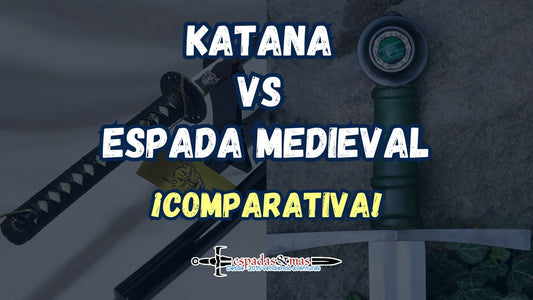
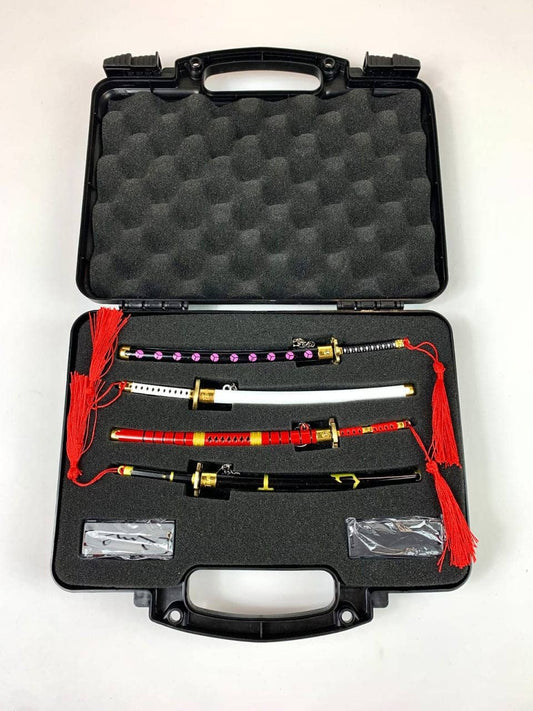
Read moreWelcome to an article about Swords and More. We hope you are all well. Today we want to tell you about a topic that we are sure you will find interesting, specifically, we are going to... Compare the Japanese katana with the medieval sword! KATANA VS MEDIEVAL SWORD Both the katana and the medieval sword are great weapons used in warfare throughout the history of the nations of the world. Below we will compare the most important technical aspects of both weapons. Balance and Maneuverability: -Katana: Its balance is delicate, allowing for quick and precise movements. Skilled blacksmiths achieve a distribution of mass that guarantees stability in each blow. -Medieval Sword: It can vary in balance depending on the specific design, but it is usually heavier and less agile than the katana. Check out this medieval carbon steel sword Percussion Center: -Katana: It has a “sweet spot” along the blade for powerful blows with minimal vibration and recoil. -Medieval Sword: The point of impact can vary depending on the design, but is rarely optimized in the same way as in the katana. Check out this Witch King's Sword from Lord of the Rings Blade Geometry: -Katana: The curvature of the blade (sori) concentrates the force along the edge, improving cutting ability and reducing resistance. -Medieval Sword: It can have a straight or slightly curved blade, but it does not focus as much on optimizing the geometry for cutting. I love this medieval German sword! Materials: -Katana: Traditionally forged with tamahagane, a steel cast from iron sand, known for its purity and strength. -Medieval Sword: Made with various types of steel, often less refined than tamahagane. Check out this cool Kill Bill Katana with display stand and accessories! Metallurgical Techniques: -Katana: Modern swordsmiths employ a wide range of high-quality steels and alloys, optimizing strength, durability and flexibility. -Medieval Sword : It depended largely on the techniques available at the time and region, which influenced the quality and characteristics of the steel used. This One Piece Wado Ichimonji Katana is amazing! Both weapons were important in their historical and cultural context, and for collectors and practitioners of Japanese or European martial arts (HEMA), we have the best products available, but what do you think is the best option, a katana or a medieval sword? Tell us!
Read moreWelcome to a new article from Swords and More. Today we bring you a very special article, We will compare Damascus Steel with Toledo Steel! Damascus Steel VS Toledo Steel Both types of steel are of exceptional quality and highly regarded for their track record and reliability. However, despite these common points, there are a number of differences that we cannot fail to mention: Check out our Damascus Steel collection Damascus Steel: -Damascus steel is easily recognizable by its unique pattern of bands and veins, evoking the fluidity of water. -It is thought that this steel art was born somewhere between India and the Middle East, although it is considered that its origin could also be in present-day North Macedonia. I love this functional Aragorn's Strider sword! -Hardness and wear resistance are the trademarks of Damascus steel. -The magic behind this steel lies in its manufacturing technique, which involves forging and folding multiple layers of steel over and over again, thus creating a blade that is not only strong, but also beautifully ornate. Check out our collection of Toledo Swords! Toledo Steel: -Originally from the historic city of Toledo in Spain, this steel is known for its unmatched hardness. Toledo has been a bastion of sword forging and metal craftsmanship since the days of the Roman Empire. -High quality alloy is the hallmark of Toledo steel. This sword stroke by James I is spectacular -The Toledo technique was unique: a steel blade surrounded by a wrought iron band, which added extra protection that prevented the steel from bending or cracking. -Weapons made from Toledo steel were renowned for their strength and durability, and were said to have a "soul of iron." And what steel do you like the most?
Read moreWelcome to a new article from Swords and More. We know that many of you are interested in the history of weapons from around the world, and today we will specifically talk about the different types of... Arabic swords! Types of Arabic swords Below we will tell you about the most important and historically notable types of Arab swords. Scimitar: This sword, known in the West as the Muslim curved sabre, is light, sharp, with a single edge and a protective metal hilt. Its long, curved blade was designed for thrusting and for stabbing deeply, making the blade cut but follow its trajectory. Its origins are in Persia, although it was also used in India during the 13th and 14th centuries. The peculiarity of its curve is that when attacking from horseback the blade does not embed itself in the opponent and cuts following the trajectory of the rider's blow. Check out this spectacular Scimitar made in Toledo! Kabila: The Kabila is a sword with a curved blade. It has the design of the hilt like the Jineta Nazarí sword and the blade like that of a scimitar sword. It is similar to a gumia but longer. The jineta sword was an innovative war weapon for the Muslim cavalry. It was very elaborate in its manufacture, so the nobles and Christian warriors of the Spanish reconquest adapted it and began to manufacture it in Toledo between the 14th and 15th centuries. This sword is amazing! Jineta : Well known as a Nasrid sword, introduced in Al-Andalus, it was a type of straight sword, double-edged with a channel up to the middle, with a bony hilt and a rounded pommel. It was one-handed, and its rounded hilts fell towards the blade leaving a minimum space between them. But without a doubt, its most important characteristic was the magnificent workmanship and quality of the materials with which the hilts were made. A quality Arab knife The scimitar: The scimitar is an important Arab weapon, single-edged and one-handed, short, curved in its last third, wider than the scimitar, sometimes grooved, and used for cutting. During the Middle Ages and until the Renaissance it was used in the Iberian Peninsula, much of the Mediterranean and especially in Italy. A stunning Arabian cutlass for your collection! And you, what do you think? Do you like these sword models?
Read moreWelcome to a new article from Swords and more. Today we will talk about the best and most famous Toledo Steel Swords! But first... What is Toledo Steel? Toledo steel, originally from the city of Toledo in Spain, is a variety of steel that was very popular during the Spanish Empire for the manufacture of weapons of war, especially swords. Look at this Sword of the Catholic Monarchs made of Toledo Steel! The manufacture of Toledo steel involved an alloy of iron and steel, resulting in a steel with uniform distribution. This alloy was more flexible than others, making it stronger and more manageable. Over the centuries, sword making in Toledo declined, until the Toledo Weapons Factory was created in 1761 with the intention of recovering the splendor of the city's weapon making. Short weapons were made only from steel, while long weapons were made with an iron core covered with two steel plates. What a great Robin Hood sword, don't miss it! Sounds interesting, right? Well, it's time to tell you which are the best Toledo Swords we have for you ;) The best swords of Toledo The best swords from Toledo are those that are handcrafted, maintaining the tradition and quality that have made Toledo steel famous. One of the best brands we can find is Marto. This brand offers you high-quality items in our store, such as this spectacular Templar sword. On the other hand, we also have within the same brand this sword that we talked about at the beginning , the one we mentioned from the Catholic Monarchs, and we are sure that it will be an incredible option for those of you looking for a Toledan option. You liked it, right? Of course you did. Both are very good options, and if you have any questions you can ask us or take a look at our collection of swords and products from Marto . But first we want to give you some advice before buying a Toledo sword. Tips for buying a Toledo Sword To buy the correct Toledo Sword you should take into account the following: Authenticity: Make sure the sword is authentic and has been made in Toledo, known for its long tradition of making high quality swords. Material: Toledo swords are famous for their steel. Check that the sword is made of this material. Craftsmanship: Toledo swords are known for their elaborate craftsmanship. If you can, look for swords that have been hand forged and tempered. History and Design : Toledo swords come in a variety of historical and cultural designs. You can choose from Roman, Oriental, Historical and Templar swords. Promotions: Some stores offer promotions that are worth taking into account, as is our case, don't miss them, they can be very useful to you. And what do you think about Toledo Steel? Tell us! ;)
Read more
Medieval combat reenactment is a fascinating journey into the past, where swordsmanship and knightly honour intertwine in an exciting and authentic spectacle. In this article, we will explore the key...
Medieval combat reenactment is a fascinating journey into the past, where swordsmanship and knightly honour intertwine in an exciting and authentic spectacle. In this article, we will explore the key elements that make this practice a unique and captivating experience. Reviving the Epic of the Middle Ages Medieval combat reenactment is not just a sport, it is a passion rooted in history and tradition. Participants study ancient manuals such as the Fiore de liberti , learn authentic combat techniques and immerse themselves in the culture of chivalry. Every swing of the sword and every swing of the shield transports us to an era of bravery and honour lost in time. Check out our medieval swords! Authenticity in Every Detail Authenticity is the cornerstone of medieval combat reenactment. From the making of armour to the choice of weapons, the aim is to faithfully recreate the atmosphere and spirit of the period. Participants strive to capture the essence of medieval chivalry, keeping alive the values of honour, respect and camaraderie . Check out our historical swords! Spectacle and Excitement in the Arena Medieval combat offers a thrilling and adrenaline-filled spectacle. Whether in individual duels or pitched battles, the clash of steel and the clatter of armour create an electrifying atmosphere that captivates audiences of all ages. Each encounter is a display of martial skill and courage, transporting us to a world of bravery and adventure. Check out our Viking swords! Preserving History for Future Generations Beyond entertainment, medieval combat reenactment plays a vital role in preserving history. Through research and teaching, participants become guardians of the past, passing on the legacy of chivalry to generations to come . In an ever-changing world, this practice connects us to our roots and reminds us of the importance of honoring the memory of those who came before us.
Read more
Did you know that there have been different types of katanas throughout Japanese history? Delve into the mists of samurai and shinobi history from the ancient clans to the Tokugawa...
Katanas are undoubtedly some of the most iconic and recognizable swords in the world. Their elegant design and rich history have made them objects of admiration for both weapon lovers and enthusiasts of Japanese culture. In this article, we will explore the different types of katanas that exist to help you better understand this iconic Japanese sword. Standard Katana (Daito): The standard katana, also known as "Daito", is the most common form of this Japanese sword. It has a sharp blade approximately 60–80 centimetres (24–31 in) in length and is primarily used for hand-to-hand combat. Its balanced design makes it versatile in both attack and defence. Find the best katanas at: https://espadasymas.com/collections/katanas Wakizashi: The Wakizashi is a Japanese sword that is shorter than the standard katana, with a blade that is usually between 30–60 centimetres (12–24 in). It was traditionally carried alongside the katana as part of a samurai's attire and was used in closer combat situations or indoors. It also served a ceremonial purpose and symbolised the status of its bearer. Tanto: The Tanto is the shortest version of all the katanas, with a blade less than 30 centimetres (12 inches). It is often used as a combat knife and as a self-defence weapon. The Tanto plays an important role in Japanese culture and is known for its beauty and precision in craftsmanship. Japanese knives, Tantos: https://espadasymas.com/collections/cuchillos-japoneses Ninjato: Although the historical existence of the Ninjato is debated, it is a sword that is often associated with ninjas. It is characterized by its straight blade rather than the typical curve of the katana. The short, straight blade of the Ninjato makes it ideal for stealth and close quarters combat. Historically, we should be talking about Shinobi, and a use of elements "similar" to the aforementioned ninjato, but in a circumstantial way, as a result of the needs of the moment and the ongoing mission of the shinobi themselves. Nodachi/Odachi: These are extremely long katanas, with blades that can measure over 90 centimetres (35 inches) in length. They were primarily used for mounted combat due to their length and power. The Nodachi was a feared sword on the battlefield. Shirasaya: Unlike traditional katanas, the Shirasaya is not intended for combat. It is a katana stripped of ornamentation, with the blade stored in a wooden scabbard. It is often used for display purposes or as a minimalist piece of art. Iaito: The Iaito is a katana designed specifically for the practice of Iaido, a martial art that focuses on drawing and cutting with precision. Although it has a sharp blade, it is usually made of untempered steel to prevent accidents during practice. Practice Katanas: https://espadasymas.com/collections/katanas-de-practicas Whether you are interested in history, art, or martial arts, katanas offer a fascinating world to explore. Choose the one that inspires you the most and immerse yourself in the tradition of Japanese swords!
Read more