


América
Astronomical Knowledge of the Mayans: Predictions, Calculations, and Meanings
Systematic Sky ObservationThe Mayan civilization, which flourished from approximately 2000 BCE to the 16th century, d...




Jin Sakai is the protagonist of Ghost of Tsushima, a samurai who evolves into the Ghost and battles the Mongol invasion. His story reflects the conflict between traditional honor and...
Ghost of Tsushima is an action-adventure video game developed by Sucker Punch Productions and published by Sony Interactive Entertainment. Set in a fictional and stylized version of feudal Japan, the game tells the story of Jin Sakai, a samurai from the island of Tsushima who must abandon the traditions of honor to become the dreaded Ghost and save his people from the Mongol invasion. Origins of Jin Sakai and his samurai training Jin Sakai is the last heir of the Sakai clan, a samurai family tasked with protecting Tsushima. After his father's death, he is raised by his uncle Lord Shimura, the feudal lord of the island, who educates him under the strict principles of the samurai code, based on honor, discipline, and frontal combat. From a young age, Jin is trained in the use of the katana, the bow, and combat stances, becoming an expert warrior according to the traditions of his class. When the Mongol army led by Khotun Khan, a character inspired by historical Mongol leaders, invades Tsushima, the samurai are defeated in the initial battle. Jin survives, but is marked by the failure of the traditional path, initiating a transformation that will define the entire story of the game. The birth of the Ghost and the change of style Faced with the enemy's tactical superiority, Jin understands that honorable combat is no longer enough. Guided by allies such as Yuna, he adopts stealth, sabotage, and assassination tactics, becoming the Ghost of Tsushima. This evolution not only affects his way of fighting but also his identity, leading to a direct conflict with Lord Shimura and the values that shaped him. The game's combat system reflects this duality: Jin can confront enemies in direct duels with a katana or employ Ghost techniques such as stealth, smoke bombs, kunai, and silent assassinations, more associated with ninja activity. Jin Sakai's katana: weapon and symbol Jin Sakai's katana, known by fans as the Sakai clan katana, though without an official name, is one of the central elements of the game. This sword evolves throughout the story through upgrades, aesthetic customization, and special abilities. Through mythical tales, Jin learns techniques such as the Dance of Wrath, a powerful sequence of attacks that reinforces the legendary character of the weapon. The katana symbolizes the protagonist's internal struggle: each upgrade represents his adaptation to a world at war, while its use as the Ghost's weapon reflects the definitive break with the traditional samurai path. Ending and legacy within the game At the end of Ghost of Tsushima, Jin manages to liberate the island, but at a high personal cost. His relationship with Lord Shimura is irreparably broken, although the details depend on the player's decision, who can choose between killing him or sparing him, consolidating his identity as a protector of the people, even if he is considered an outcast. The katana, witness to all his decisions, becomes a symbol of sacrifice, change, and survival. Jin Sakai remains one of the most iconic figures in modern video games, representing the conflict between honor and necessity within the narrative universe of Ghost of Tsushima.
Read more
In Star Wars, lightsabers are much more than weapons: they symbolize the bond with the Force and reflect the essence of the person who wields them. From the blue of...
In a universe filled with magic, adventure, and epic battles, one element stands out for its beauty and power: the lightsaber. These legendary weapons have been the symbol of many heroes and villains in the Star Wars saga, and each one has a unique story and meaning. From the moment Star Wars fans saw Obi-Wan Kenobi draw his lightsaber for the first time in "The Empire Strikes Back," they knew they were witnessing something special. It was more than just a weapon; it was a symbol of connection to the Force, the source of energy that flows through all living things in the Star Wars universe. It also symbolizes the struggle between good and evil, balance and strength. Lightsabers, or swords, have captured the imagination of millions of fans around the world. Each lightsaber color carries a profound meaning, making these objects true icons in pop culture. Whether you consider yourself a Jedi, a Sith, or just a fan of the saga, there's a world of symbolism behind each of these bright flashes. What is the meaning of the colors on lightsabers? You've probably wondered how many lightsaber colors there are in the Star Wars universe, or what those colors symbolize. Below, we've provided a short list to help guide you. Blue: The Jedi Warrior's Saber The blue lightsaber is perhaps the most iconic, associated primarily with Jedi warriors such as Anakin Skywalker and Obi-Wan Kenobi. This color symbolizes courage, justice and combat. Blue lightsaber wielders are warriors who fight for peace and justice in the galaxy, confronting the forces of the dark side. ( RGB Lightsaber with Gray Metal Handle 77cm - Star Wars ) Green: The Wisdom of the Jedi Green is the color of Jedi who focus more on connection with the Force and meditation. Characters like Yoda and Luke Skywalker on their path to enlightenment have wielded green lightsabers. This color represents wisdom, growth, and harmony, reflecting the search for knowledge and balance in the universe. ( Replica of Sabine Wren's Lightsaber from Star Wars ) Red: The Sith Saber Red is the most feared color, associated with the Sith and those who have fallen into darkness. Darth Vader and Emperor Palpatine are iconic examples of red lightsaber wielders. This color symbolizes anger, hatred and the desire for power. The Sith use red as a representation of their passion and their rejection of light. ( RGB Lightsaber Heavy Dueling 12 Colors, 16 Sound Sets, Black Metal Handle - Star Wars ) Purple: The Duality of Force The purple lightsaber, like Mace Windu's, is a symbol of duality in the Force. It represents a balance between the light and dark sides, making its wielder a complex character, capable of utilizing both aspects of the Force. This color is a reminder that sometimes the line between good and evil isn't so clear. ( RGB Lightsaber with Gold Metal Handle 77cm - Star Wars ) Yellow: The Wisdom Guard The yellow lightsaber has been wielded by Guardians of Jedi Temples, such as Ahsoka Tano. This color symbolizes knowledge and protection, and its wearer is dedicated to preserving the wisdom of the Jedi Order. Yellow represents the light of hope and the search for balance. (Replica of ForceFX Rey Skywalker Elite Lightsaber from Star Wars ) White: The Neutrality of Force The White Lightsaber, seen on characters such as Ahsoka Tano, symbolizes the neutrality and independence of a Jedi Order. These bearers stand apart from the struggles between Jedi and Sith, representing a unique and personal path in the Force. ( Ahsoka Tano Ahsoka Star Wars Lightsaber Replica ) The Bond with Lightsabers As we explore the colors and meanings of lightsabers, it's impossible not to feel a deeper connection to these iconic objects. Each lightsaber is not only a combat tool, but also a reflection of the personality and history of the character who wields it. So, dear readers, whether you feel more aligned with the blue of justice, the green of wisdom, or even the red of power, there is a lightsaber that can resonate with you. May the Force be with you on your journey of discovery! Don't miss our Star Wars Collection , which offers a wide variety of products waiting for you.
Read more
Since 1977, Star Wars has captivated the world with its epic stories. At the center of these stories are the Jedi, warriors of light and justice, whose connection to the...
Since its debut on the big screen in 1977, Star Wars has become a cultural phenomenon that has captured the imagination of millions. At the heart of this epic saga are the Jedi, mystical warriors who fight for peace and justice in the galaxy, empowered by the Force and armed with their iconic lightsabers. But what makes these characters so fascinating? Where do they come from, and what powers define them? Rise of the Jedi: Guardians of Peace The Jedi have their roots in an ancient order of guardians dedicated to protecting wisdom and balance in the Force. The story of the Jedi begins centuries before the events of the films, where they settled in the Jedi Temple on Coruscant, a hub of knowledge and training. Since its inception, the order has been a bastion of virtues such as courage, compassion, and dedication to peace, dedicating itself to training those who demonstrate Force sensitivity. The training of a Jedi begins at a young age, educated in the principles of the Force and combat. Their training involves not only learning fighting skills, but also a deep understanding of morals and ethics, ensuring that the strength they possess is never used for selfishness or revenge. These ideals, imbued in Jedi culture, grant them a wisdom that transcends the mighty powers they can manifest. (Photo of Lightsabers, Heavy Dueling RGB 12 Colors, 10 Sound Sets, Gray Handle with Oscillations - Star Wars ) Lightsabers : Symbol of Hope and Power One of the most iconic features of the Jedi is their lightsaber, a weapon that is both a tool of combat and a symbol of hope. These magnificent weapons are not only visually stunning, but they represent the Jedi's commitment to fighting for justice. The making of a lightsaber is a significant ceremony: each Jedi must construct their own using a kyber crystal, which not only powers the blade but also deeply connects the Jedi to the Force. Each color of the leaf – white, blue, green, red – is full of meaning, reflecting the nature and state of the bearer. While blue and green are the colors most commonly associated with the Jedi, red is symbolic of the Sith, their ancient enemies. Regardless of the color, however, each lightsaber is unique and carries the history and essence of the Jedi who wields it. (Photo of RGB Heavy Dueling Lightsabers 12 colors, 16 Sound Sets, Black Metal Handle - Star Wars ) The Infinite Power of the Jedi The true power of the Jedi lies in their connection to the Force, a mystical energy that permeates everything in the universe. This connection allows them to perform incredible feats: moving objects with their minds, reading the thoughts of others, and even influencing people's perceptions. But beyond these abilities, the power of the Jedi lies in their ability to remain calm and balanced in times of uncertainty. The Jedi are, in essence, beacons of light in times of darkness. Their fight is not only against tangible enemies, but also against the corruption and fear that threaten to consume the galaxy. Through their self-discipline, compassion, and desire to protect, Jedi inspire others to find their own strength and fight for a better future. (Photo of ForceFX Rey Skywalker Elite Lightsaber Star Wars Replica ) The Legacy of the Jedi Lightsabers and the power of the Jedi are more than elements of a science fiction story; they are symbols of struggle and hope that resonate in the hearts of those who have followed their adventures. In a world filled with challenges and adversity, the story of the Jedi reminds us of the value of choosing light over darkness; of not turning our backs on injustice or betraying our principles. As the echoes of this saga continue, the legacy of the Jedi lives on, reminding us all that, though the path may be difficult, each of us has the ability to make a difference, to be a guardian of peace in our own personal galaxies. At our core, we can all be Jedi. Don't miss all the Star Wars products we have in our store.
Read more
In Highlander, Connor and Duncan MacLeod are the only confirmed immortals of the MacLeod clan, each with their own master. Master Ramirez, an Egyptian immortal, is Connor's mentor and the...
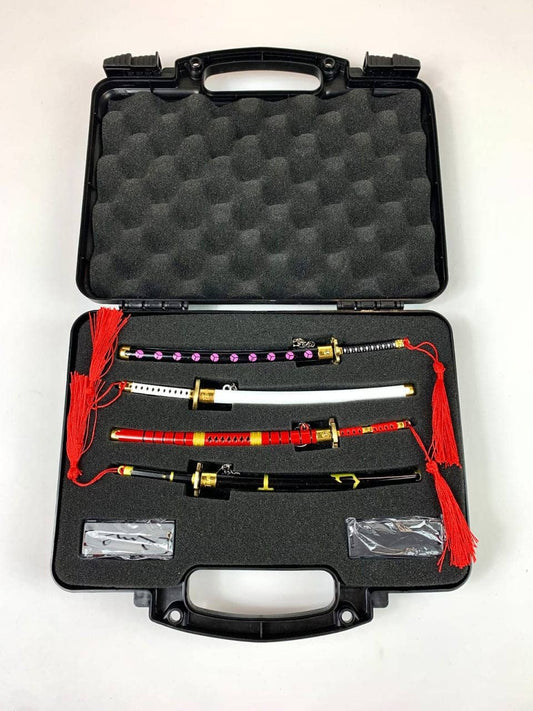
The Highlander saga has captivated generations with its blend of action, fantasy, and philosophy about immortality. While fans most recognize Connor MacLeod, played by Christopher Lambert, and Duncan MacLeod, played by Adrian Paul, one question remains among die-hard fans: is there another immortal MacLeod in the universe? This article not only answers that question, but also explores the essential figure of Connor's master, Juan Sánchez Villa-Lobos Ramírez, his iconic sword, his training and the legacy he left on the original Highlander, his importance in Connor's life, and why he considers him to be part of his clan. (Both Ramirez and Connor, as well as Duncan have a strong relationship with katanas and their meaning. Here is an image illustrating the difference between the handle of Ramirez's Katana, and Duncan's Katana , which we have previously discussed) Are there other MacLeods besides Connor and Duncan? Within the Immortals universe, the only officially confirmed immortal MacLeods are Connor and Duncan. Both belong to the Scottish MacLeod clan, although they were born in different years. Connor was born in 1518 in the Scottish Highlands, while Duncan was born in 1592, also in Scotland. Despite sharing a similar surname and origins, they are not directly related by blood, which is consistent given the nature of immortality. However, there are rumors among fans and some mentions in comics and novels of characters who could be part of the MacLeod lineage, but none have been canonized in the films or the series. Therefore, officially, only Connor and Duncan represent that clan among the immortals. Connor MacLeod's teacher: Ramírez, the eternal mentor Connor's story changes radically when, after surviving a mortal wound in battle, he discovers that he cannot die. Rejected by his clan and considered a demon, his life is turned upside down by the arrival of Juan Sánchez Villa-Lobos Ramírez, an enigmatic immortal who becomes his mentor. Ramírez, masterfully played by Sean Connery, is an experienced swordsman born in ancient Egypt, who has lived more than 2,000 years. He teaches Connor not only how to fight, but also how to understand what it means to be immortal. He explains the rules of the "Game," the eternal struggle between immortals where only one can remain and claim "The Prize," and warns him about the Kurgan, a powerful, evil immortal who seeks to eliminate all others in order to seize absolute power. (Photo of Connor Macleod's Damascus Steel Katana, functional and sharp replica, from Highlander 41493 ) Ramírez's sword: a Japanese jewel One of Ramírez's most iconic pieces is his sword: an exceptional Japanese katana, forged in 593 AD by legendary master swordsmith Masamune. This katana is unique not only because of its origin, but also because of its design and symbolism. Ramírez's sword, like all katanas, has a curved and extremely sharp blade; with an ornate golden tsuba (hand guard), its hilt is wrapped in leather and red silk, with decorative details that reveal the refined art of ancient Japan. The black scabbard with gold details contrasts with the shiny silver blade, forged from the highest quality steel. Symbolism and power The katana represents more than just a combat tool. In Highlander, the swords reflect the souls of their wielders. Ramírez, although Egyptian by birth, adopted samurai traditions during his centuries of travel and apprenticeship. His choice of katana represents his philosophy of balance, honor, and precision in combat. By bequeathing it to Connor, he also transfers his legacy and wisdom. (Photo of the Immortals Katana Set 11034 ) Connor's training Ramirez teaches Connor to fight with a sword, perceive the energy of other immortals, connect with nature, and control his emotions. He instills in him that immortality is not a blessing without consequences. He speaks to him about the pain of watching loved ones die, and the loneliness that comes with the gift of never aging. Through grueling training sessions, Connor learns advanced swordsmanship, meditation, and philosophy. This knowledge prepares him to face the Kurgan, the most feared enemy of all immortals.
Read more5 interesting facts about Andúril, Aragorn's sword If you're a fan of The Lord of the Rings , you know that Andúril isn't just a sword: it's a symbol of lineage, destiny, and power. Forged from the shards of Narsil, the sword that defeated Sauron, Andúril accompanies Aragorn on his journey to becoming king. But behind its legendary edge lies some curious facts that many fans don't know. Today we bring you five interesting facts that will make you see this sword in a new light. Its name means “Flame of the West” The name Andúril comes from Sindarin, one of the Elvish languages created by JRR Tolkien. It translates as "Flame of the West," a reference to its new brilliance after being forged anew. It is a name that reflects hope and the rebirth of the power of the West in the face of the darkness of Mordor. Don't miss this incredible PACK with Anduril! It is forged from the fragments of Narsil Andúril is born from Narsil, King Elendil's sword, which was broken in battle against Sauron. It was with a fragment of Narsil that Isildur cut the One Ring from Sauron's finger. Reforging it symbolizes the union of past and future, and Aragorn's acceptance of his heritage as Isildur's heir. It is only forged when Aragorn accepts his destiny For much of his life, Aragorn avoided the throne of Gondor. But when he accepted his role in the fight against Sauron, the elves of Rivendell forged Andúril as a sign that the time had come to reunite the free peoples. The sword was not just a weapon: it was the confirmation of a legacy. Check out this Anduril with Display and sheath! In the film, its design has unique elven details. Weta Workshop, the studio tasked with creating the sword for Peter Jackson's films, included Elvish inscriptions along the blade that don't appear in the books. These include: "Andúril, flame of the west, forged from the shards of Narsil." The design is elegant, with a silver hilt, a stylized crossguard, and a long, slender blade. It is one of the most popular swords among collectors Thanks to its historical significance and striking design, Andúril has become one of the most sought-after swords among fans and collectors. Official replicas exist, each detailed, from the Elvish engraving to the exact length, and many are displayed as authentic works of art. You'll Love This Anduril Top Range!
Read more
These are some of the best Solo Leveling weapons that protagonist Jin-Woo has used on his journey to become the best hunter, given a second chance through a "system." The...
Solo Leveling is one of the most popular webtoon light novels and manhwa webtoons out there right now. Written by Chu-Gong, it inspired a recent anime adaptation that has been well-received by its fans. It stands out in the fantasy and transmigration genre with a 《》 system , due to its intense action and the evolution of its protagonist, Sung Jin-Woo, who, throughout his journey as a hunter, obtains various legendary weapons, improving his power and allowing him to face stronger enemies. Here we will explore the best and most powerful weapons in Solo Leveling , including their abilities, history, and impact on Sung Jin-Woo's evolution. Kamish's Wrath One of the legendary weapons in Solo Leveling, Kamish's Wrath was created from the fang of the Kamish Dragon, one of the most fearsome Monarchs in the series' universe. In the webtoon, it consists of a pair of large, light orange daggers with gray handles and bright blood-red edges. One dagger is thicker than the other, with a gold blade guard, while the smaller one has a black one. However, in the novel, it has a different design. During his battle with Kamish, Thomas Andre managed to get hold of one of his fangs when he was bitten by him, keeping it as a souvenir. He attempted to make a weapon out of it. It was too short for a longsword, so he transformed it into two daggers. Since he wasn't a hunter, he decided not to use them, nor did he allow his guild members to do so. After eight years of storage in the basement of the Scavengers Guild headquarters, he decided to give them to Jinwoo as thanks for sparing his and his guild's lives. Due to their amazing attack power, Jin-Woo used the daggers in various combat strategies alongside his own strength, managing to cut and eliminate the minor Monarchs with fast and precise attacks . Skills: · Massive attack power increase (+1500). · Mana affinity, allowing for devastating attacks. · Ability to adjust its weight and adapt to the user's needs. The Sword of Authority (The Heavenly Judgment) Obtained by Sung Jin-Woo after evolving into the Shadow Monarch, it becomes one of his most powerful weapons. Not only does it boast a stunning design, it also became a key piece in one of the most intense battles in Solo Leveling, playing a crucial role in the confrontation against Antares, the Monarch of Destruction, as it was the only one capable of damaging him. This makes it a symbol of Jin-Woo's rise as the Monarch of Shadows. He used it until he regained Kamish's Wrath, so it's reasonable to say they are on par in power. Skills: · Ability to cut dimensions, allowing you to attack enemies on different planes of existence. · It strengthens itself by absorbing the energy of the shadow. · Can summon extremely destructive dark energy attacks. Arakh, The End of Calamity Arakh , also known as Calamity's End , is the signature weapon of the Monarch of Destruction, Antares. This sword is synonymous with destructive power and chaos. Created and wielded by Antares, it is one of the most powerful weapons in the Solo Leveling universe, and only those with a special affinity for the power of the Monarchs can wield it. Jin-Woo becomes the wielder of this fearsome sword after the defeat of its creator. Skills: · Allows you to manipulate fire and perform destructive energy attacks. Demon King's Daggers These daggers were obtained by Sung Jin-Woo after his epic confrontation against Baran, the Demon King. They are their preferred weapons due to their speed and ability to quickly carry out lethal attacks. These are the symbol of the confrontation against the Demon King. Their incredible speed and precision make Jin-Woo practically unstoppable with them. They are large black daggers with brown handles and red guards that resemble the mouth of a demon. When Baran used them, their edges glowed blood red, however when Jinwoo uses them, their edges glow light purple. While they can generally cut through anything, they were ineffective against the Statue of God, only leaving scratches on its face, and completely useless against Thomas Andre, as they failed to even cut its skin. Skills: · Attack power increased (+220). · Increased damage against enemies using dark magic. · They boost critical attacks, multiplying explosive damage. · The "Two as One" effect grants additional power based on the user's Strength stat. The Armor of the Sovereign of Destruction Although it is not a conventional weapon, it is one of the most powerful artifacts that Jin-Woo obtains in his fight against the Monarchs. This was acquired after the fierce battle against the Monarchs. Its extreme durability and capabilities give Jin-Woo a considerable advantage during his battles. Skills: · Provides extreme protection against physical and magical attacks. · Improves user's endurance and speed. · Allows you to absorb energy from the environment to enhance attacks. Rasaka's Fang (Image of a steel replica ) A dagger obtained after defeating Rasaka, a high-ranking reptilian. Although not the most powerful, it was key in Jin-Woo's early days as a hunter and allowed him to overcome several trials before obtaining more powerful weapons. Skills: · Moderate increase in attack power. · Increases attack speed. · Vitality regeneration on impact. Killer of Knights (Image of a steel replica ) Another significant dagger in Jin-Woo's early battles. Its sharpness and balance allowed him to improve his agile and lethal fighting style, facilitating his growth as a hunter. Skills: · Increased damage against armored enemies. · Increased accuracy in quick attacks. · Powers critical hits against armored opponents. Weapons in Solo Leveling are crucial to Jin-Woo's development. From the deadly Demon King's Daggers to the powerful Kamish's Wrath , each one plays a crucial role in his rise. These weapons not only increase their power, but are symbols of their growth and evolution throughout history. Which is your favorite? Which do you think is the best? Have you found any here? Which would you include or remove? (More Solo Leveling products here )
Read more
Have you ever wondered what each color corresponds to on the Demon Slayer's Katanas and Nichirin weapons? What breath is associated with them, and who wields them? I invite you...
The Demon Slayer universe is filled with fascinating elements, and one of the most iconic is the Nichirin swords. Each sword is more than just a weapon: it's a manifestation of the wielder's personality, the technique they've mastered, and often a symbol of their destiny. In this article, we explore the different colors of Nichirin weapons, from the intense and powerful Crimson Red sword to the enigmatic Black sword, each with its own meaning and the weapons that feature that color. Red Linked to the Breath of Flames, a sword of this color is wielded by Kyojuro Rengoku, the Pillar of Flames. Its color reflects a charismatic and energetic personality, symbolizing the fury of fire unleashed in battle. In keeping with this, Kyojuro is able to summon flames around him, which devour his enemies just like his own burning passion for fighting. (Image of Kyojuro Rengoku's katana ) Pink A pink weapon is a reflection of the Breath of Love, created by Mitsuri Kanroji. This color not only represents love in its purest form, but also reflects Mitsuri's characteristically intense and emotional personality. Her combat style, which combines passion and bravery, shines through in every confrontation with demons, showing that love can be a powerful force. (Image of Mitsuri Kanroji's katana, in bamboo ) Light Pink Linked to the Flower Breath, swords of this color are wielded by Kanao Tsuyuri and her sister Kanae Kocho. It symbolizes the beauty and subtlety of flowers, as well as the elusive nature of their combat techniques, which focus on speed and precision. Its wearer takes a more neutral approach, allowing its abilities to shine without drawing too much attention. White It represents the Breath of Mist, the color that Muichiro Tokito wields being the Pillar of Mist. The color white symbolizes peace and tranquility, reflecting the serene personality of its wearer. Through his stealth-based combat style, Muichiro becomes a difficult opponent to anticipate. (Image of Muichiro Tokito's katana ) Grey Connected to the Breath of Rock. This color is a unique weapon due to its peculiar design, combining an axe and a spiked mace, ideal for its wielder, the Stone Pillar, Gyomei Himejima. The combination of strength and sentimentality in personality translates into a robust and resilient fighting style, which challenges the conventions of traditional combat. Indigo Grey The indigo gray color represents the Beast Breath, and corresponds to the color of the weapon used by Inosuke Hashibara, creator of such breath. His erratic and combative nature is reflected, in his case, in a fighting style that includes using two swords at the same time. This unique approach highlights his wild nature and his desire to be the strongest. (Image of Inosuke Hashibara's decorative katana ) Yellow It represents the Breath of Lightning. It is the color of Zenitsu Agatsuma's weapon. It resembles a lightning bolt, symbolizing both the speed and lethality that the character can achieve in combat. In his case, his personality changes radically when faced with enemies, showing both the vulnerability and determination that defines his character. (Image of Agatsuma Zenitsu's katana ) Blue The color blue is associated with Water Breathing and is the color wielded by Giyu Tomioka, the Water Pillar. A calm and empathetic personality resonates with the flow of water, allowing you to be a master of defense and subtle attack, enhancing fluid and precise movements. (Image of Giyu Tomioka's katana, in bamboo with LED light ) Lavender Blue It represents the Insect Breath, created by Shinobu Kocho, who carries a weapon of that color. It reflects his agile and lethal approach to combat, characterized by speed and precision, demonstrating the desire to defeat demons in the most elegant and efficient way possible. (Image of Shinobu Kocho's katana ) Light purple The light purple sword belongs to Michikatsu Tsugikuni, the only known user of Moon Breathing, who, after becoming a demon, perfected this style, combining Moon Breathing with his Blood Demon Art. (Image of Michikatsu Tsugikuni's katana, replica with steel blade and LED light ) Green It symbolizes the Breath of the Wind, and is the color of Sanemi Shinazugawa's sword. A firm and direct personality that manifests itself in a fighting style that prioritizes an aggressive and frontal approach, worthy of a formidable opponent. (Image of Sanemi Shinazugawa's katana, in bamboo with LED light ) Black Often associated with bad luck and tragic endings for their wielders, black swords are a mystery. However, they represent hidden power and enormous potential, as only those who master the Breath of the Sun can wield them. Tanjiro Kamado is one of the few who wear this color, symbolizing his connection to the heritage of the Sun and his ability to use all the breaths. (Image of Kamado Tanjiro's katana, replica ) Crimson Red Crimson red is the pinnacle of power among Nichirin swords. It's a transformation that hunters achieve by pushing their skills to the limit during combat. This special color is a forced change that almost completely nullifies the regenerative abilities of demons, granting an overwhelming advantage. Although not everyone can achieve it, those who manage to awaken this ability become some of the most formidable hunters in the Demon Slayer universe. Nichirin weapons are much more than simple weapons; each one is an extension of the wielder's spirit and abilities. Each color represents not only a combat technique, but also the deep personalities and stories of those who wield them. In the Demon Slayer universe, these elements intertwine to tell a rich and exciting narrative, elevating each battle into a dance of colors and feelings. Without a doubt, Nichirin swords are an enduring symbol of the eternal struggle between good and evil in the confrontation against demons, reflecting the perseverance and bravery of their bearers.
Read more
Everything you need to know about the Nichirin swords in Kimetsu no Yaiba. Their origins, powers, processing, and a quick look at the meaning behind their colors (as this will...
In the fascinating world of Kimetsu no Yaiba, Nichirin swords are lethal and essential tools in the fight against demonic forces. These are not mere weapons; they are an extension of the slayer, reflecting their character, skills, and determination. Here we will explore the origin of these swords, their forging process, their ability to change color, and the meaning of the different shades they can take on. Origin and Materials Nichirin swords are forged by the master craftsmen of the Swordsmith Village, whose location is known only to a few to prevent demons from attacking it. Ancient secrets about the art of forging exist there. These swords are made from a unique material, Scarlet Crimson Ore, which is extracted from the crimson iron sand of a mountain bathed in sunlight all year round.The brightest ore is always collected, as it has absorbed more solar energy, which is crucial because it gives power to the swords, allowing them to inflict permanent damage on demons, making them lethal due to their vulnerability to sunlight. Forging Process Once in the village, a master craftsman places the sand in a large clay furnace (tatara), burning it with charcoal for three days and three nights at very high temperatures. This process combines the iron from the scarlet crimson sand with carbon and removes impurities, obtaining a steel core known as tamahagane (jewel steel).By tradition, this is presented to new slayers who pass the final selection, who will choose which one will be used to forge their weapon. Only then will it be worked by a blacksmith from the secret village. The general forging process is similar to that of traditional katanas. First, the steel is fragmented into pieces. The softer ore is used to create the blade's core, so it can absorb blows without breaking; the harder ore will be used for its outer coating, making it extremely hard and sharp. The metal is hammered and folded again and again until it forms two plates, which are joined into a single blade. This uninterrupted process lasts at least 15 days; at the end, the blade is submerged in cold water, if the work has any errors it will break and the process must start again.After passing this test, the final details are added, and it is ready to be delivered. Just as in the art of creating katanas, each blacksmith has their secrets and techniques, and there are also incredibly powerful legendary swords, forged by ancient masters. Each weapon is customized according to the slayer's preferences and abilities, which makes each blade unique, and while katanas and swords are usually forged, at least one slayer, the Stone Hashira, specifically requested a chain with an axe on one end and a spiked flail on the other, to locate and attack demons from a distance.In addition, each sword includes a handguard (tsuba), hilt (tsuka) and scabbard (saya), with distinctive designs and colors. Once the weapon is finished, the blacksmith does not allow anyone to touch it, personally delivering it to the slayer for whom it was created. Color Change One of the most fascinating features of Nichirin swords is their ability to change color when first drawn, affected by the slayer's life energy, responding to their nature and making the change permanent. This is due to the material with which it was forged, as its main property is the absorption of energy, both from the sun and the vital energy of living beings.Humans are born with different vital energies, often inherited from their parents. Interestingly, the slayer's hair color often reveals the nature or element of their energy. This phenomenon highlights the uniqueness of each sword and provides deep insight into its wielder. In addition, there is another subsequent and temporary color change, which consists of turning them crimson red, which has been observed to occur through three distinct methods: using Nezuko's demonic blood, increasing the blade's temperature by a strong grip, or by striking two weapons together. Meaning of Colors The colors of the swords are not merely decorative; each one conveys a message and has properties associated with the Breathing Techniques. Below are some of the most prominent among those that naturally appear when drawn by the slayer, and their possible associated breathing style: · Black: Sun Breathing. Considered a bad omen by some.· White: Mist Breathing.· Light Purple: Moon Breathing.· Blue: Water Breathing.· Lavender Blue: Insect Breathing.· Red: Flame Breathing.· Yellow: Thunder Breathing.· Green: Wind Breathing.· Pink: Love Breathing.· Light Pink: Flower Breathing.· Grey: Stone Breathing.· Indigo Grey: Beast Breathing. Colors can also reflect the swordsman's abilities, as in Zenitsu's sword, which has a lightning pattern instead of a solid color, indicating an exceptional skill level of its wielder.In addition to the aforementioned Crimson Red achieved temporarily in them to grant greater strength. Nichirin swords in "Demon Slayer" are more than just weapons; they are symbols of power, skill, and destiny. Each one is a masterpiece created from unique materials and customized for each slayer.With the ability to change color, each blade becomes a reflection of the wielder, offering an intrinsic connection to them and their destiny in the fight against demons. These weapons become a vision of the slayer's soul and, in turn, an extension of it...As the characters advance, so do their swords, showing that strength comes not only from the steel but also from the effort and spirit of those who wield such weapons. Would you like to see the variety of Kimetsu no Yaiba weapons we have to offer? You can do so here.
Read more
A brief overview of the Hashira's skills and techniques. What makes them special, why they're considered elite among hunters, and what sets them apart.
After telling you about the Pillars, now we'll tell you about the skills that make them stand out from the rest. Water Pillar - Giyu Tomioka His extraordinary swordsmanship was recognized even by the Upper Third Moon. His combat style is based on "Water Breathing." Years of training allowed him to develop superhuman strength, capable of generating powerful gusts of wind when wielding his sword. He can transform his Nichirin sword into crimson red by clashing his weapon with another Pillar's, weakening the demons' enhanced regeneration ability. His speed is outstanding, becoming imperceptible to both humans and demons. He awakened his Hunter's Mark, which manifests as streams of water on the left side of his face. This mark greatly enhances his physical abilities. (Image of Giyuu's Katana; bamboo blade with LED light ) Pillar of Love - Mitsuri Kanroji Although he appears fragile, he possesses a muscle density eight times greater than that of an average human, giving him exceptional strength and endurance. His superhuman flexibility allows him to perform sweeping movements, integrating this ability into his "Breath of Love" to effectively counter enemy techniques. Her Nichirin sword, known as the "Sword of Love," has a whip-like blade designed to harness her extraordinary abilities. Only she can wield it without risk of injury. Her speed, dexterity, and precision allow her to even slice through sonic attacks. He awakened his Hunter's Mark, shaped like inverted hearts and angel wings. (Image of Mitsuri's Katana, collectible ) Snake Pillar - Obanai Iguro Renowned for his superhuman speed and reflexes, he is also noted for his resilience, capable of fighting through severe injuries and inflicting significant damage on Muzan. His snake, Kaburamaru, complements his fighting style by anticipating enemy movements and transmitting them to him, compensating for his partial or even total blindness. He is a master swordsman, with a fluid style that allows him to attack from impossible angles and move deftly in tight spaces. He managed to dye his Nichirin sword crimson red with just the strength of his grip. His Hunter's Mark features patterns resembling three snakes, extending from his left arm to his chest. (Image of Obanai's Sword, replica ) Pillar of the Wind - Sanemi Shinazugawa Thanks to his mastery of "Complete Focus Breathing," he is able to manipulate his muscles and clot his blood to avoid fatal injuries, which, combined with his high pain tolerance, allows him to fight under extreme conditions. He possesses formidable speed and reflexes, as well as great physical strength. His Hunter's Mark is shaped like a green windmill with two dots on either side, located on his right cheek. In combat, he demonstrates great improvisational skills, utilizing a variety of weapons and techniques. On one occasion, he used oil to set his opponent on fire. He is also capable of turning his own and a teammate's weapons red when they clash. (Image of Sanemi's bamboo Katana ) Pillar of Sound - Tengen Uzui Known as the fastest Pilar in history, he can move so fast he appears to teleport. He possesses superhuman physical strength, considered the second greatest of his generation. He has a keen sense of hearing, allowing him to detect underground movements, locate demons, and analyze sounds reflected in the environment to calculate the location of enemies. His "Sound Breathing" allows him to deconstruct enemy attacks into musical scores, giving him a strategic advantage once completed. As a former shinobi, he has exceptional resistance to poison and is a master of stealth, even capable of decapitating someone without them noticing. (Image of Tengen's Swords ) Rock Pillar - Gyomei Himejima The physically strongest Pilar. Despite carrying a flail, he handles his weapon (an axe and a ball connected by a chain) with precision and speed. He is a master of kusarigamajutsu, an unconventional art among demon slayers. Due to his blindness, he developed superhuman hearing, capable of detecting even the sounds produced by demonic regeneration. He awakened his Hunter's Mark with crack patterns on his forearms and managed to dye his weapons crimson red by clashing them together. (Image of Gyomei's Ichibansho Figure, with his weapon ) Pillar of Mist - Muichiro Tokito He stands out for his incredible speed and extraordinary senses, capable of distinguishing the energy of demons and humans. Although his appearance is frail, his physical strength is above average. His will, fueled by rage at his brother's death, keeps him fighting even with mortal wounds. He awakened his Hunter's Mark, which resembles a red mist running through his body, and is able to activate it voluntarily in combat. His skill with the sword allowed him to achieve the rank of Pillar after only two months of training. He also managed to dye his Nichirin sword crimson with the strength of his grip. (Image of Muichiro's Katana, Bamboo replica ) Insect Pillar - Shinobu Kocho An expert in medicine and pharmacology, she creates both antidotes and poisons capable of weakening powerful demons. He makes up for his lack of physical strength with intelligence and strategy, using a customized needle-shaped katana to inject deadly poisons. (Image of Kocho's Katana, bamboo replica ) Pillar of Flame - Kyojuro Rengoku He possesses extraordinary physical strength, endurance and speed, causing tremors in his fights. He is a master swordsman, known for his mastery of the "Flame Breathing." He has perfected five different attack styles and can execute "Purgatory," a devastating attack that causes a massive area of impact. (Image of Rengoku's Katana, bamboo replica )
Read more

