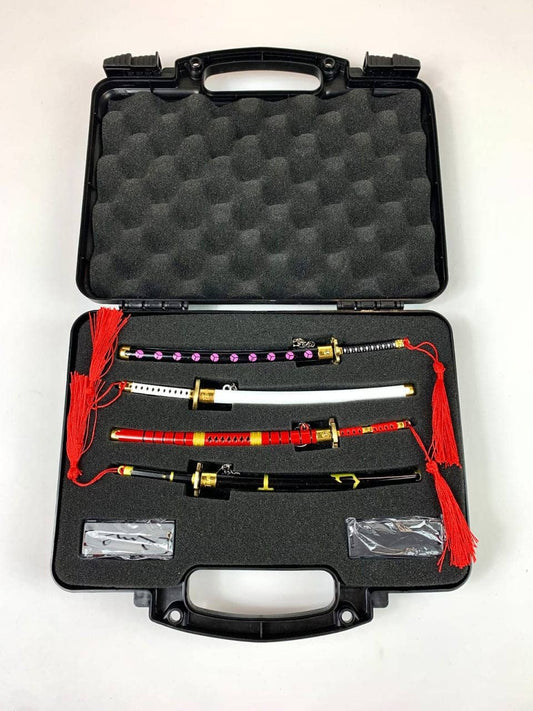


A Guide to Caring for Carbon Steel Swords
Caring for and maintaining carbon steel swords is essential to preserve both their functionality and aesthetic value. This type of steel, widely used in the manufacture of traditional weapons, is known for its hardness and excellent cutting ability, but it also requires constant attention due to its sensitivity to moisture and oxidation.

Why is Carbon Steel Maintenance Important?
Carbon steel, unlike stainless steel, contains a lower proportion of chromium, which makes it more prone to corrosion. For this reason, maintaining swords made with it is not optional, but a necessity.
Proper steel preservation ensures not only the durability of the blade but also its performance and safety.
Furthermore, caring for swords allows for the preservation of their historical and artisanal value, especially for decorative or collectible pieces.
Cleaning Swords: The Essential First Step
Swords should be cleaned after each use or handling to remove traces of dirt, moisture, or dust.
Fingerprints contain grease and moisture, two factors that promote rust on carbon steel.
For proper cleaning, it is recommended to use a soft, dry cloth, although for more persistent dirt, a specific steel cleaner can be used. It is important to avoid abrasive products that could damage the blade's surface.
Maintaining a regular cleaning routine is key to bladed weapon maintenance.
Handling and Additional Care
Sword handling is also part of maintenance. Avoiding prolonged contact with bare hands helps prevent corrosion, as sweat can affect the steel.
Using gloves or immediate cleaning after contact are recommended practices in carbon steel care. These small details contribute significantly to long-term preservation.

Protection Against Rust and Corrosion
One of the biggest enemies of carbon steel is oxidation. To prevent it, it is essential to apply a protective oil that acts as a barrier against moisture.
The use of mineral oil or specialized oils is a common practice in sword preservation. Simply apply a thin layer over the blade to ensure effective protection.
This step is especially important in humid climates or if the sword is not used frequently.
Proper Sword Storage
Sword storage directly influences their state of preservation. Storing them in a dry place, with stable temperature and away from sources of humidity, is fundamental.
Although sheaths can protect against dust, they are not always recommended for long periods, as they can retain moisture.
Within carbon steel maintenance, it is advisable to periodically inspect the blade even when stored.
Sword Sharpening and Edge Maintenance
Sharpening swords is a delicate task that must be done with care. Maintaining a sharp edge allows for the functionality of the blade to be preserved without aggressive interventions.
Using appropriate sharpening stones is the best option for correct sharpening. This process must be done with technique, as poor sharpening can damage the steel and reduce the sword's lifespan.
Consistency and Care for Greater Durability
Maintaining carbon steel swords is not complicated, but it does require consistency. Cleaning, oil protection, proper storage, and edge care are fundamental aspects that should not be neglected.
Applying these sword preservation techniques ensures that the blade maintains its quality, strength, and beauty over time. In this way, not only is a functional object preserved, but also a piece with historical and artisanal value that can endure for generations.