América
Astronomical Knowledge of the Mayans: Predictions, Calculations, and Meanings
Systematic Sky ObservationThe Mayan civilization, which flourished from approximately 2000 BCE to the 16th century, d...


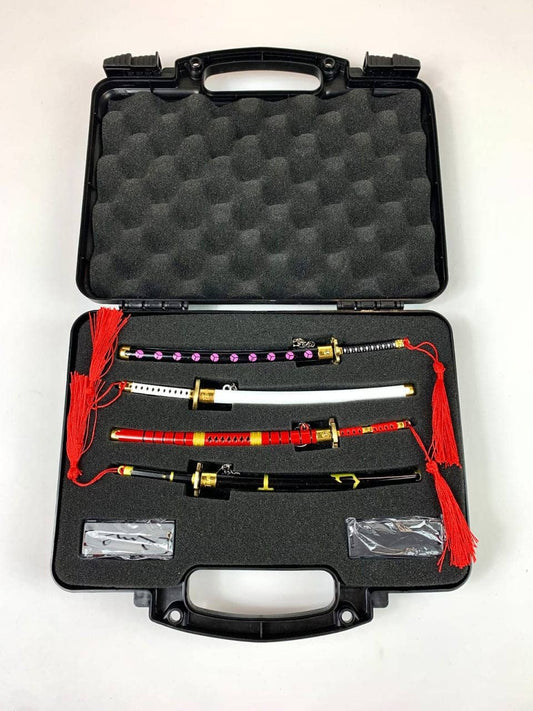


From the legendary Honjo Masamune to the evocative Kusanagi no Tsurugi, katanas are given names that resonate with the power of their history and the artistry of their makers, becoming...
The Art of Naming What is Cherished In the vast and mysterious millennia-old tradition of katanas, revered Japanese swords, each name is much more than a simple label, embodying stories of heroes, legends, and masterful craftsmanship, becoming narratives woven with threads of honor, tradition, and power. Some bear the names of their forgers, in tribute to the mastery of those artisans who shaped each blade with millimeter precision and unparalleled passion. Others evoke their unique characteristics, such as the curvature of a blade or a steel pattern that dazzles in its timeless beauty.These names bring to life the very essence of each sword, revealing its uniqueness and the skill behind them, inspiring respect and admiration, transmitting the legacy of past eras through sharpened steel. Just as each name, each katana is unique; a fragment of rich Japanese culture, where tradition intertwines with legend and skill. These swords are not just weapons, but symbols of a tradition that transcends time and space, keeping alive the flame of dedication and honor.It is their names that help engrave them in the memory of thousands, leaving an enduring mark, for in every story told throughout the centuries, we find a legacy of emotion, respect, and admiration, which continues to be a silent witness to a glorious past and a present of mystery and charm. Katanas, especially those of great historical or artistic value, often have specific names.Here you can discover how they are named and what some of them mean; however, it is necessary to warn you that these “categories” are not mutually exclusive nor do they reflect their true complexity. Named After Historical Figures Some have personal names given for historical or cultural reasons, usually associated either with the smiths who forged them, in recognition of their excellent work, or with important figures in Japanese history who owned or used them. Examples:Honjo Masamune is named after its creator, Masamune Goro, a renowned smith in Japanese history, and one of its owners, Shigenaga Honjo, associating the smith's mastery, recognized as one of his best creations, with the history of its bearer.Tachiwaki, another famous katana recognized for its exceptional craftsmanship, which bears the name of its creator. Named by Characteristics They can also receive names based on some of their characteristics, from visual aesthetics to their qualities. Example:Kogarasu Maru, considered a masterpiece of Japanese forging, is characterized by its short blade and distinctive curvature. It is said that its name comes from Karasabi, which could be due to its similarity to a Korean sword, with Kara meaning “Korea” and sabi, due to its etymological origin, “sharp tool,” or it could mean akara-sami, “bright and shining blade,” becoming karasabi, abbreviated karasa, and karasu over time, with the syllable ko added to obtain kogarasa, “small shining blade.” Named After Historical Events and Legends Other katanas have names related to historical events or legends. For example, a sword that was used by a famous samurai or in a significant battle might be named after that person or event. Examples:Kusanagi no Tsurugi. Initially Ama no Murakumo no Tsurugi, "Heavenly Sword of Gathering Clouds," it is more commonly known as Kusanagi-no-Tsurugi, "Grass-Cutting Sword," due to a legend where Prince Yamato Takeru, during a hunting expedition, was trapped by a warlord who set the prairie on fire and killed his horse to prevent his escape. Takeru used the Ame-no-Murakumo-no-Tsurugi sword to cut the grass, reducing the fire's fuel, and in doing so, discovered that the sword could control the wind, using it to direct the flames toward the warlord and his men, defeating them. In honor of this victory, Takeru changed the sword's name.Dojigiri, forged by the famous smith Hoki Yasutsuna, is housed in the Tokyo National Museum after passing through several clans. It is said that Minamoto Yorimitsu killed the monster Shuten Doji with it; hence its name, which means Doji cutter.Juzumaru, forged by Aoe Tsunetsugu, is housed in the Honkoji temple in Amagasaki, after belonging to the prophet monk Nichiren and the Kounji temple. It is said that Nichiren adorned the katana with a rosary to ward off evil spirits, which is why its name precisely means “rosary.” Named by Tradition In Japanese culture, the act of naming a katana can be related to rituals or traditions. For example, it can be given an auspicious or significant name to symbolize the hope of victory or protection. By Eras or Schools There are different forging schools in Japan, each with its own techniques and styles. Katanas can be named according to the school to which they belong, or by the schools themselves. Compound Names While we have mentioned some ways in which katana names can be superficially classified, often these names can encompass more than one category or reason. Example:Honjo Masamune, named after two different historical figures associated with it.Mikazuki Munechika, created by Sanjo Munechika, a renowned smith in the imperial court during the Heian period, and famous for his ability to create katanas that were as efficient in combat as they were possessed of impressive beauty. He was so fond of this one that he named it after himself, in addition to the term mikazuki, meaning “crescent moon,” because, during the tempering process, the marks left on the metal resembled crescent moons. Each name, each story, is a fragment of the rich Japanese culture, and while we have tried to simplify this tradition of naming them, grouping the reasons for their respective names in a broad and generic way, it is necessary to bear in mind that such a choice always possesses deep value and meaning, both for those who named them and for the sword itself, which was granted greater depth, comparable to granting it its own spirit in such an act. Would you like to know about the katanas in our store?
Read more
Throughout history, many valuable treasures have been lost, but their legacy lives on even today. Such is the case with Honjo Masamune. I invite you to discover this katana, whose...
A Katana whose name transcended time Few objects hold as much symbolism and mystery as the Katana, one of the most emblematic weapons of Japanese culture, known for its sharpness and artistic beauty.But among them all, there is one that stands out above the rest, fascinating generations with its beauty and intricate history, and capturing the essence of the samurai spirit. Here I invite you to delve into the history of this katana and how its name has endured through the centuries, weaving legends and shrouding its destiny in an aura of mystery. Origin and Legend of Honjo Masamune Its forging is said to be a work of art with more than 30,000 layers of steel, the result of a delicate process known as shita-kitae. This technique not only gives the sword strength but also endows it with a wavy hamon, which distinguishes many katanas, and is attributed to the legendary master smith Goro Masamune, one of the most celebrated smiths in Japanese history, in the 13th century, although the first records of its existence did not emerge until three centuries later. After the Battle of Kawanakajima in 1561, General Honjo Shigenaga claimed the sword from the defeated enemy general in a duel to the death, in which his opponent split his samurai helmet in two with it. Hence its name, which merges the general's legacy with that of its forger. Shigenaga kept the katana for years, selling it due to financial difficulties at the end of the 16th century for 13 pieces of gold to the Toyotomi clan, who ruled Japan at the time. After their fall, it was acquired by the new shogun, coming into the possession of Tokugawa Ieyasu, a formidable warlord who, wielding it, succeeded in unifying Japan in 1603, ushering in a period of peace that would last more than 250 years.Thus, the katana not only became a symbol of power but also a fundamental piece of Japanese history. People believed it granted supernatural powers, which made the unification of the country possible. Honjo Masamune remained a prized dynastic relic, becoming a family treasure and symbol of the Tokugawa dynasty, passing from one shogun to another. Even after the shogunate gave way to the Meiji Restoration in 1868, the Tokugawa managed to retain it. Declared a National Treasure in 1939, during the years of nobles and shoguns, Honjo Masamune was revered. With each generation, it was considered more than a weapon, a family legacy that resonated with the history of an entire country. The mystery of an uncertain fate The war in the Pacific was bloody and fierce, but in 1945 Japan faced defeat, and its surrender marked a turning point in the history of Honjo Masamune. The American occupation decided to disarm the population. Soldiers collected all remaining Japanese katanas, causing many citizens to complain; some families even hid their most valuable katanas. The Tokugawa clan remained intact. Over the years, they had accumulated an enormous collection of nihonto (traditional Japanese swords), with Honjo Masamune being the most important in their collection. Even so, Tokugawa Iemasa decided that it would be honorable to obey, something that was not well received by many, who saw the surrender of this katana as a betrayal of their legacy, as they considered it not an act of American protection, but a way to demoralize Japan, aware of the symbolism the katana possessed. The last mention of its whereabouts dates back to December of the same year it was surrendered. There, the report from the Japanese Ministry suggests that it was handed over to Sergeant Coldy Biamore (or Balsamore) of the 7th US Cavalry Regiment, but he does not appear in army records. This could be a transcription error, however, it makes the sergeant's identity a mystery, and without being able to find him, there is even the possibility that it was a false name... Furthermore, General Douglas MacArthur, in charge of the occupation, implemented reforms that affected the preservation of katanas. While some were saved and returned to Japan, many more were destroyed, taken to distant lands as trophies, or sold to collectors, increasing speculation about the fate of Honjo Masamune. Its trace vanished into the shadows of history; however, from that moment on, mystery began to envelop it: Was it destroyed? Is it in a private collection abroad? (Image of a Katana with a Wavy Hamon) The story of Honjo Masamune is a strong reminder that, despite time, the greatness of a masterpiece does not disappear with it. This katana, representative of the skill of a master smith and of feudal Japan, evokes a mixture of admiration and melancholy. Its legend lives on in the hearts of those who know its name and history, reminding us of what has been lost and maintaining hope for what can still be recovered. The most fascinating thing is that this is not the story of a magical weapon from a mythical and distant time and place. It was a real katana, in the relatively recent past. One of the world's greatest lost treasures. Although its whereabouts remain an enigma, the history surrounding it continues to inspire generations of treasure hunters, historians, and culture lovers around the world. What would happen if the legendary sword appeared one day in a small attic in some village?The echo of its voice still resonates, a testament to the indomitable spirit of Japan and its rich cultural heritage that needs to be preserved and celebrated. Ultimately, it is more than an extraordinary katana; it is a symbol that tells the story of a people and their will to keep their traditions alive. Its legend persists, showing that, in the world of swords, sometimes it is the weapon itself that becomes the true pillar of history, much more than its custodians or those who wielded it. And you, what do you think was the fate of Honjo Masamune?Do you believe it will reappear someday? If you like katanas, you can take a look at the shop, here.
Read more
How much do you know about katanas? Here's a first look at them, their origins, and their current use.
From a Weapon to a Symbol Delicate, deadly, and with an incomparable mystique, katanas have transcended their origin as mere weapons to become universal symbols of Japanese culture. They not only embody the mastery of ancient smiths but also the values of honor, discipline, and perfection. We invite you to discover the fascinating world of katanas, exploring their historical origin and the swords that preceded them. The Historical Origin of the Katana: Mastery and Purpose Before the advent of the katana, Japan already boasted a rich tradition of swords.Among its most notable predecessors, we find:· Chokutō: (4th to 9th centuries). Influenced by Chinese and Korean designs, chokutō were primarily used for close-quarters combat.· Tachi: precursors to the katana, these were long, curved swords designed for use on horseback.· Uchigatana: A shorter and more economical version of the tachi, intended for combat in confined spaces. These influenced the form and functionality of katanas. The katana, as we know it, began to be forged during the Kamakura period (1185–1333) in Japan. An era when the constant need of samurai for more effective and faster weapons led smiths to create these swords with a curved blade, a single edge, and perfect balance. Ideal weapons for rapid combat, allowing for drawing and cutting in a single fluid motion, known as iai. Its manufacturing process was a work of art in itself. Smiths used advanced steel-folding techniques to create a flexible yet strong blade. This process not only enhanced its functionality but also gave the sword a unique aesthetic design, with wavy line patterns on the blade known as hamon, resulting from the heat treatment it underwent, and its characteristic curvature, which emerges during its creation process as a consequence of being heated to high temperatures and rapidly cooled repeatedly. During the Muromachi period (1336–1573), katanas reached their peak as a symbol of power and status. Each sword represented not only the skill of the smith who forged it but also the character of its wielder. It was said that the katana was "the soul of the samurai," and many warriors considered it their most prized possession, treating it with almost religious reverence. The Great Master Smiths The creation of a katana is much more than a technical process; it is an art imbued with spirituality and tradition, transmitted over centuries by great Japanese smiths. These masters dedicated their lives to perfecting not only the technique but also the philosophical understanding of what it means to forge them. The master smith was more than a craftsman; he was an alchemist of steel and a meditator who had to be in perfect harmony with himself during the creation process. Many of them followed Shinto rituals before starting their work, purifying their minds and surroundings, as they believed that the smith's spiritual state was transferred to the sword they forged. Gotoba and the Immortality of the Katana Emperor Gotoba not only governed a Japan in transition but also played a fundamental role in the evolution of the katana as a cultural and spiritual symbol.His passion for these swords led him to forge them with his own hands, as well as to gather the best smiths in the country, and transformed them into much more than a weapon; he made them an emblem of Japanese skill, honor, and spirituality.Thanks to Gotoba, the katana reached its perfect form and its place in history as one of Japan's most iconic symbols.His legacy endures not only in the swords preserved as national treasures but also in the inspiration it continues to awaken in those who admire the art, technique, and spirit that these unique weapons embody.Delving into their history means understanding how a simple tool can become a reflection of an entire culture and the values that define it. The Katana Today: Beyond the Weapon Today, it is much more than a combat tool; it has become a collector's item, a cultural symbol, and an expression of art.Modern smiths continue to use traditional techniques to craft katanas, preserving a legacy of centuries of perfection. Their entirely personalized and artisanal production, along with the time and effort required for their creation, makes original katanas so expensive. These have transcended Japan's borders, captivating people worldwide thanks to their presence in movies, series, and video games. From classic Japanese cinema to contemporary works like Kill Bill or Ghost of Tsushima, the katana remains an emblem of power, honor, beauty, and spirituality. Between Reality and Spirituality The history of the katana is a journey between the tangible and the spiritual, between art and war. The evolution of swords, from chokutō to becoming the soul of the samurai known as Katana, reflects not only the technical skill of smiths but also the values of a society that saw in steel, and the work imposed on materials and tools, an extension of its spirit. Their place in Japanese history and spirituality makes them fascinating elements; they not only tell tales of the past but also invite reflection on the relationship between humans, their tools, and the spiritual. Whether for their history or the legends surrounding them, katanas remain an inexhaustible source of fascination, and both they and their predecessors continue to inspire, whether for their technical prowess, aesthetic elegance, or the profound meaning in the stories that have shaped Japanese culture. Delving into their history is to discover not only the art of steel but also the soul of a people and their relationship with the sacred. If you like katanas, you should check here.
Read more
To understand the country's military and cultural legacy, it is essential to analyze the weapons that accompanied kings, conquerors, and folk heroes. This ranking presents the top 10 most famous...
Which are the most legendary swords that forged the destiny of the Iberian Peninsula? The history of Spain is intrinsically linked to the art of blacksmithing and metallurgy, disciplines that reached their peak worldwide through the forges of Toledo. From Roman antiquity to the great empires of the Modern Age, Spanish steel has been synonymous with resistance, flexibility, and military prestige on battlefields around the world. To understand the country's military and cultural legacy, it is essential to analyze the weapons that accompanied kings, conquerors, and folkloric heroes. This ranking of the top 10 most famous swords in Spanish history reviews the most iconic blades of Hispanic heritage, evaluating both their impact on conflicts and their transcendence in chronicles, epic poems, and current museum collections. For enthusiasts of military history, traditional weapon collecting, and historical reenactment, these pieces represent the pinnacle of artisanal design. Legendary models such as El Cid Campeador's Tizona and Colada, the ceremonial sword of the Catholic Monarchs, or the iconic rapier used by the Spanish Tercios are not just relics of the past; today, they have become the most desired collector's items on the market. If you want to know the history behind each blade or are interested in acquiring faithful reproductions made with legendary Toledan steel, this detailed guide will reveal the secrets and design of the weapons that marked an era. Top 10 most famous swords in Spanish history 1. Tizona of El Cid Campeador We couldn't start this list without talking about Tizona, the sword that accompanied Rodrigo Díaz de Vivar, better known as El Cid Campeador. This hero of the Reconquista used his field weapon to confront the Muslim invaders and etch his name in history. The Tizona stands out for its elegant and functional design, with a steel blade that inspired respect (and fear) on battlefields. If you've ever dreamed of owning a piece that combines history and legend, a replica of this jewel is indispensable for any collector. Find it here 2. Lobera of Ferdinand III the Saint This sword is not only a weapon but also a religious and political symbol. Ferdinand III, King of Castile and León, used it during the reconquest of Seville in 1248. Preserved in the Seville Cathedral, the Lobera has an imposing aesthetic, with engravings that reflect the monarch's spirituality. If you are looking for a gift with historical and symbolic meaning, this is one of the best options. 3. Sword of Hernán Cortés Attention, conquest lovers! Hernán Cortés's sword is a unique piece that marked the beginning of the end of the Aztec Empire. With its blade over a meter long, this weapon witnessed the bravery (and controversial ambition) of the Spanish conquistador. It is currently housed in the Royal Armory of Madrid, but you can find impressive replicas that accurately reproduce every detail. 4. Jineta Sword of Boabdil Boabdil, the last king of Granada, carried one of the most beautiful swords in history: the Jineta. With craftsmanship characteristic of the Nasrid tradition, this sword is a perfect example of how functionality and beauty can go hand in hand. Its design is so exquisite that it is not only a weapon but also a work of art. For lovers of Andalusian history, this is an unmissable jewel. 5. Mandoble of the Catholic Monarchs This majestic two-handed sword is a clear example of the power of the Catholic Monarchs during the unification of Spain. With golden details and engravings that reflect their authority, the mandoble is among the most emblematic weapons of the Royal Armory. Its large size makes it perfect for display in a collection, demonstrating the strength and elegance of that era. Available now 6. Sword of James I the Conqueror James I, the King of Aragon, carried this sword in his conquests across the Mediterranean. Its simple yet imposing design reflects the monarch's personality, known for his strategy and determination. If you are drawn to weapons that tell stories of conquests and navigation, this sword is for you. 7. Sword of Elcano This sword is linked to the explorer Juan Sebastián Elcano, the first man to circumnavigate the world. Although not as well-known as others on the list, it is a historical piece that symbolizes exploration and bravery. Perfect for collectors interested in the period of the great discoveries. 8. Sword of Pelayo Pelayo, the first king of Asturias, is a key figure in Spanish history. His sword is a symbol of Christian resistance against the Muslim invasion. Although the original weapon is not preserved, the available replicas stand out for their simplicity and great historical significance. 9. Sword of Charles V Emperor Charles V, one of the most powerful figures in Spanish history, possessed a sword befitting his rank. Its design, with intricate details and high-quality materials, reflects the wealth and power of the Spanish Empire. A piece that cannot be missing from a collection of historical weapons. Available in our store 10. Sword of Don Quixote Although fictional, Don Quixote's sword is an icon of Spanish literature. Its symbolism transcends functionality, representing dreams and the struggle for impossible ideals. If you are a fan of Cervantes, this replica is a perfect gift. Find all the historical swords of Spain at Espadas y Más! These swords are not just weapons, but true works of art that narrate the history of Spain in each blade, hilt, and detail. At Espadas y Más, you can find faithful replicas of many of these historical jewels, ideal for collectors, enthusiasts, or as gifts that will leave any history lover speechless. Dare to explore our collection and bring a piece of history into your home!
Read more
Christmas gifts to fall in love with: The best Victorinox knives for adventurers and collectors Are you looking for a gift that combines style, functionality and tradition? Victorinox pocket knives...
Christmas gifts to fall in love with: The best Victorinox knives for adventurers and collectors Are you looking for a gift that combines style, functionality and tradition? Victorinox pocket knives are the perfect answer! Whether for the nature lover, the tool collector or simply for someone who appreciates quality, a Swiss Army knife is a gift that never goes out of style. Types of knives There is a wide variety of types in our store espadasymas.com . Our main categories and products are: • Sports knives • Butterfly knives • Tactical or military knives • Damascus knives • Classic knives • Swiss Army knife . Other similar weapons that you can buy in our online store are the famous Japanese katanas or survival machetes . Why choose a Victorinox? Victorinox knives are synonymous with quality, durability and versatility. Made in Switzerland to the highest standards, these tools will accompany you on any adventure. From the highest mountain to your backyard, a Victorinox will always be ready to help you. Top 3 Victorinox knives to give as a gift this Christmas 1. Victorinox Huntsman : The Hunter's Knife. If you're looking for a gift for a nature lover, the Huntsman is a great choice. With its wood saw, can opener and screwdriver, this knife is perfect for any outdoor activity. Plus, its classic and elegant design makes it a collector's item. 2. Victorinox SwissChamp: A true all-rounder, the SwissChamp is a versatile pocket knife that features 33 functions, including scissors, tweezers and a corkscrew. Ideal for those looking for a multi-purpose tool to carry with them at all times. 3. Victorinox Pioneer X: For the most demanding. If you are looking for a truly special gift, the Swiss Tool Spirit X Plus is the perfect choice. With its 9 functions, this multi-tool is able to handle any task. What else can you give besides a Victorinox knife? A personalized sheath: To protect your knife and give it a personal touch. A knife sharpener: To keep your knife always sharp. A cleaning kit: To keep the knife in perfect condition. Check out our most complete collection of Swiss Army Knives! Tips for choosing the perfect pocket knife Consider the recipient's needs: What types of activities do they perform? What tools do they need? Size and weight: Choose a knife that is comfortable to carry and use. Design and materials: Victorinox knives are available in a wide variety of colors and materials. Personalization: Add a personalized engraving to make the gift even more special. Giving a Victorinox pocket knife is much more than just an object, it is about conveying a passion for quality, adventure and tradition. With a wide range of models and functions, you will find the perfect knife for everyone. Surprise your loved ones with a gift that will last a lifetime!
Read moreKatana vs Toledo Sword When it comes to legendary weapons, few objects evoke as much respect as the Japanese katana. Its razor-sharp edge, the elegance of its design and the skill associated with the samurai arts have fuelled its myth as one of the best melee weapons ever created. But is the katana really superior to all other swords, including European ones? This debate, popularised by cinema and some urban myths, deserves a more detailed and contextualised analysis. Check out this cool Katana Wado Ichimonji The context of katana and swords It is crucial to understand that an absolute comparison between weapons ignores fundamental factors such as historical context, fighting styles, and armor. Sengoku period samurai wore light armor composed of sheets of leather and metal that protected their torso, arms, forearms, and upper thighs. This armor, while effective against slashes and thrusts from Japanese weapons, had weak points in vital areas and amplified impacts by lacking significant internal padding. While it allowed good mobility in the torso and arms, it limited leg movement, which could be crucial in combat. On the other hand, the Spanish rodelero wore more complete and thicker armour, with a breastplate, backplate, shoulder pads and greaves that offered greater protection. In addition, he had a padded vest that absorbed impacts and a rodela, a shield that not only served to defend himself, but could also be used as an offensive weapon to strike or charge against the enemy. This Jin Sakai katana is incredible! Comparison of weapons The katana Advantages : The curved blade and long handle of the katana make it an exceptional cutting tool. Kenjutsu movements, focused on precise and fast cuts, are ideal for fast combats and at medium distances. Its design allows for agile maneuvers, such as the use of the tsuba (handguard) or grip changes to adapt to short distances. Disadvantages : Its focus on slashing reduces its effectiveness against strong armor. The lack of a shield leaves the samurai at a tactical disadvantage against an opponent with additional protection. Additionally, the thrusting technique, less prominent in kenjutsu, limits its ability to penetrate strong armor. The Toledo sword Advantages : Similar in length to the katana, but with a straight edge and optimized design for thrusts. This, combined with the use of only one hand, allows the rodelero to maintain greater reach and flexibility in his attacks. The sword can execute both cuts and stabs with great effectiveness. Disadvantages : Although versatile, the weight of the armor and shield can slightly reduce attack speed compared to the samurai. However, this is offset by the defensive capabilities and tactical design of the equipment. Check out our best Toledo Swords! Combat style: The key is in the technique The samurai bases his style on fluid movements, with quick and precise cuts, favouring dynamic combat. However, against a heavily armoured swordsman, the usual kenjutsu techniques are limited. The katana, although powerful, cannot easily penetrate the Spaniard's armour. The rodelero , on the other hand, uses a tactical approach that combines simultaneous defense and attack. The rodelero allows him to protect himself while launching precise counterattacks with his sword. The estocada, difficult to detect due to its linear speed, is especially dangerous in combat. Conclusion: Who has the advantage? In a confrontation between a samurai and a rodelero, both with similar technical skills, the Spanish rodelero would have the advantage due to his superior weaponry. The more complete armor and the use of the rodela allow him to compensate for the samurai's agility and skill with the katana. However, as in any combat, individual skill and strategy are determining factors. This Tizona sword is so cool! An expert samurai could take advantage of the unprotected areas of the rodelero, such as the limbs or face, to execute lethal cuts. On the other hand, a well-trained rodelero would have a greater chance of dominating the situation thanks to his defensive equipment and the versatility of his Toledo sword. This analysis, rather than settling the debate, seeks to highlight the importance of context and specific conditions in any comparison of historical weapons. What do you think? Leave us your comments!
Read moreElden Ring Katanas: A Cut Above the Rest Hey, Tarnished! How's your journey through the Lands Between going? If you're a fan of long, elegant swords, you've probably already tried some of the katanas Elden Ring has to offer. Today, we're going to take a deep cut through this lethal arsenal and discover which katana best suits your playstyle. If you're an Elden Ring fan, at Espadas y Más you'll find Elden Ring katana replicas. Shipping in 24-48h to Spain. Why Are Katanas So Cool? Before we dive into the ranking, let's talk a little about why katanas are so popular in Elden Ring. Besides looking super cool, these Japanese swords offer a unique combination of speed, reach, and damage that makes them versatile in any situation. Plus, many of them have special abilities that make them true works of art in combat. Discover the complete collection of Elden Ring weapons How to Choose Your Ideal Katana? With so many options, choosing the perfect katana can be a headache. Here are some factors to consider: Playstyle: Do you prefer fast attacks and combos, or powerful and precise strikes? Stats: Which attributes have you developed most in your character? Some katanas scale better with strength, others with dexterity, and some even with arcane. Skills: What kind of skills would you like to have? Do you prefer ranged attacks, critical hits, or status effects like poison? Visit our exclusive Espadas y Más VIDEO GAME store The Top 8 Most Impressive Katanas in Elden Ring Prepare for an epic duel! Here's our ranking of the best katanas in the game, from the simplest to the most lethal: 1. Rivers of Blood: This demonic katana is a true beast. Its skill, "Corpse Piler," can unleash a rain of slashes that will leave your enemies bathed in blood. If you like to play aggressively and sanguinarily, this is your weapon. 2. Moonveil: For sorcerers and mages, the Moonveil is an excellent choice. Its speed and magic damage make it a lethal ranged tool. Additionally, its skill, "Transient Moonlight," is perfect for dispatching groups of enemies. 3. Meteorite Ore Blade: With a design inspired by meteorites, this katana inflicts devastating physical and magical damage. Its area-of-effect skill makes it ideal for encounters against multiple enemies. 4. Malenia's Hand: Obtained in one of the game's toughest fights, this katana is a symbol of power and skill. Its special attack, "Waterfowl Dance," is one of the most impressive and lethal in the game. 5. Uchigatana: A classic that never fails. The Uchigatana is an excellent choice for players looking for a versatile and easy-to-use katana. Its bleeding ability makes it very effective against high-health enemies. 6. Nagakiba: If you're looking for a katana with great reach, the Nagakiba is your best bet. Its size and weight make it ideal for cutting down enemies before they can get close. 7. Serpentbone Blade: This katana inflicts poison on your enemies, making it an excellent choice for those who prefer a more strategic playstyle. 8. Dragonscale Blade: Despite being last on the list, the Dragonscale Blade doesn't fall behind. Its elegant design and ability to inflict lightning damage make it an interesting option for players looking for something different. And that concludes our analysis of Elden Ring's best katanas. Remember that the best katana is the one that best suits your playstyle and your character. Experiment with different weapons and discover which one makes you feel invincible! Want to carry a piece of this universe with you? Discover our collection of anime and fantasy swords or directly search for the katanas inspired by Elden Ring that we have available with express shipping. What's your favorite katana? Leave us a comment and share your experiences with us!
Read moreThe sword that defines a king If there is one legendary sword in Middle-earth that represents strength, honour and the promise of a new beginning, it is Andúril. Wielded by Aragorn himself, Andúril is not only an imposing weapon, but a symbol of royalty and hope in the epic fight against Sauron. In this article, we will take you on a deep journey into the history, symbolism and secrets of this much revered sword in the work of JRR Tolkien. The Origin of Andúril: From the remains of Narsil to a new forge The legend of Narsil and the coup against Sauron Before it was Andúril, this mythical sword was known as Narsil, the weapon that King Elendil carried in the War of the Last Alliance between Men and Elves against the Dark Lord, Sauron. During this epic battle, Sauron was defeated by Isildur, son of Elendil, who used the shards of Narsil to cut off his finger and take the One Ring from him. From then on, the shards of Narsil were treated as a symbol of hope for a unified realm. The Shards of Narsil in Rivendell: A Legacy in Waiting After Sauron's fall, Narsil's shards were taken to Rivendell by Ohtar, Isildur's squire, where they were carefully preserved for generations. Valandil, Isildur's son, chose not to claim the weapon, and so Narsil's remains remained in the keeping of Elrond in Rivendell as a symbol of the heritage of the Dúnedain of the North. Learn in detail: The Anduril sword: Official replica of The Lord of the Rings Andúril, the Sword of Kings: Its Forging and Aragorn's Legacy The transformation of Narsil into Anduril With the coming of Aragorn, descendant of Isildur, a new era was forged. In the year 3019 of the Third Age, in Rivendell, the elven smiths restored the fragments of Narsil, giving it the name "Andúril", meaning "Flame of the West". This sword became an emblem of Aragorn's identity and right to claim the throne, uniting the kingdoms of Gondor and Arnor once again. Andúril registration and details In Tolkien's books, there is no detailed description of Andúril's appearance, but there is mention of an inscription on the blade, written in Quenya, the language of the Elves: “Anar. Andúril and Narsil and Elendilo. The gods and the gods of Mordórëo. Isil” This inscription is translated into the Common Language as: "Sun. I am Andúril, who was Narsil, the sword of Elendil. Let the minions of Mordor flee from me. Moon.” Each word is a reminder of Elendil's greatness and a threat against the forces of darkness, giving Andúril a personality and symbolic power unique in Middle-earth. Andúril's role in the War of the Ring The sword that reveals Aragorn's true identity. Since leaving Rivendell as a member of the Fellowship of the Ring, Andúril accompanied Aragorn in all his battles. The sword played a fundamental role, not only as a weapon, but as a symbol of his lineage and right to the throne. On more than one occasion, Andúril was used by Aragorn to assert his identity and demand respect, both from allies and enemies, as in his encounter with Éomer of Rohan. Epic battles in which Andúril shined During the War of the Ring, Andúril was present at some of the most decisive moments in history. From the battles at Helm's Deep to the Battle of the Pelennor Fields, this sword shone in Aragorn's hands, inspiring the human and elven armies in their fight against Sauron's forces. With Andúril, Aragorn became the leader Middle-earth needed, leading his companions and allies to victory. Anduril Sword With Display Stand And Leather Sheath The Lord Of The Rings Andúril Curiosities: The Sword in the Books and Movies Galadriel's Sheath Upon arriving in Lothlórien, the Lady Galadriel gave Aragorn a special scabbard for Andúril, decorated with gold details and endowed with powers that prevented the sword from rusting or breaking. This gift was a gesture of trust and hope on Galadriel's part, and further elevated Andúril's already imposing presence. Differences in the representation of Andúril between the book and the film For fans of Peter Jackson's films, Andúril is presented as a large and majestic sword, with an imposing design that highlights Aragorn's role as a leader. However, in the books, Tolkien gives us few details about Andúril's physical appearance, which has led to a wide variety of interpretations of the sword's artwork and design over the years. Andúril's Legacy: The Reunited Kingdom and the Future of the Sword Andúril as a symbol of the United Kingdom After Sauron was defeated and Aragorn was proclaimed king, Andúril became a relic of the United Kingdom of Gondor and Arnor. This sword represented not only victory over darkness, but also the hope for an era of peace in Middle-earth. Eldarion and the descendants of Aragorn The sword was passed down to Aragorn's son Eldarion and his descendants, and has remained a symbol of authority and strength throughout the Fourth Age. With Andúril, each new king connects to the legacy of his ancestors, remembering the struggle of Aragorn and his companions for a world free from the shadow of Sauron. Andúril, an eternal legacy in Middle Earth Andúril is much more than a sword in The Lord of the Rings . It represents the strength, lineage, and hope of those who fought against the darkness to usher in a new age. For Tolkien fans, this sword is a symbol of bravery, determination, and loyalty—a heritage that goes far beyond the Third Age. Andúril’s story reminds us that even from the most broken fragments an unbreakable light can be born, and that the power of true fulfillment lies not in strength, but in courage and hope. At Espadas y Más we have the best Swords from The Lord of the Rings, Tolkien's work, to emulate the characters from his films and series, enjoy his cast and remember such emblematic films as The Fellowship of the Ring.
Read moreThe best Japanese Katanas. In our store, we have items of all kinds, but if there is something that defines us and that we love to offer to our esteemed customers, it is our precious Japanese katanas. We know that among our customers there are practitioners of Iaido, kenjutsu, and of course many just want a katana for display and to have at home, it may or may not be functional, simply decorative (and many times they are great anime katanas!). That's why we bring you some of the best products in our store. Don't miss out! We're sure you'll love them! You'll love this functional katana from Jin Sakai! The use and types of katanas: Our online store is the most complete on the market, offering a wide range of models for all tastes and at the best prices. At Espadas y Más, we are specialists in original Japanese katanas. We have an exceptional selection of high-quality katanas, handcrafted by the best craftsmen in Japan. Our katanas are made from premium materials such as carbon steel, stainless steel and Damascus steel. Each one is forged using traditional Japanese techniques to ensure authenticity and excellence. This Enma display Katana is great! We have katanas for different purposes, including: Martial arts : Perfect for practicing disciplines such as kendo, iaido and battojutsu. Collection : True works of art, ideal for lovers of Japanese swords. Decoration : Elegant pieces that add a distinctive touch to any space. Find the katana you are looking for and experience having an authentic Japanese piece. But we still have a big surprise for you! Are you an anime fan looking for a special piece for your collection? Our LED katanas will immerse you in the world of your favorite series. Let yourself be enveloped in a spectacle of light and colour with the most authentic replicas of your favourite characters' swords! Explore our exclusive collection of LED katanas, created for true collectors: Kimetsu no Yaiba : Unleash your inner demon hunter with the katanas of Tanjiro Kamado, Nezuko Kamado, Giyu Tomioka, and many more. One Piece : Wield the swords of Roronoa Zoro and feel the strength of a true swordsman. Naruto : Unleash the power of chakra with the katanas of Naruto Uzumaki, Sasuke Uchiha and Kakashi Hatake. Demon Slayer : Face demons with the most iconic swords in the series. Other series : We have LED katanas inspired by your favorite anime. Why choose our LED katanas? Unmatched Quality : Made from high quality materials, our LED katanas are detailed and faithful replicas. LED Lighting : Each blade incorporates color-changing LED lights for mesmerizing visual effects. Artistic design : Each katana perfectly captures the essence of the character and his universe. Collectibles : Ideal for displaying in your room or showcase. Light up your collection and make your LED katanas the center of attention for all anime fans! We hope you liked our katanas, and remember that at Espadas y más we are always here to help you. Don't hesitate to tell us your doubts and questions!
Read more