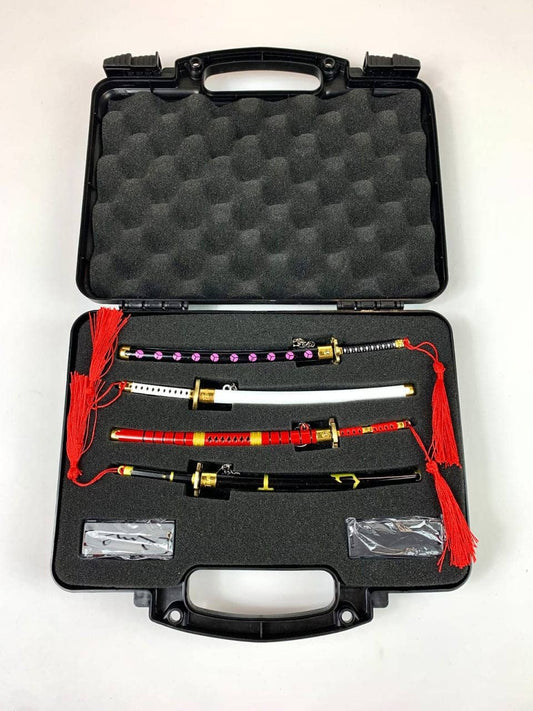


From a Weapon to a Symbol
Delicate, deadly, and with an incomparable mystique, katanas have transcended their origin as mere weapons to become universal symbols of Japanese culture. They not only embody the mastery of ancient smiths but also the values of honor, discipline, and perfection.
We invite you to discover the fascinating world of katanas, exploring their historical origin and the swords that preceded them.
The Historical Origin of the Katana: Mastery and Purpose
Before the advent of the katana, Japan already boasted a rich tradition of swords.
Among its most notable predecessors, we find:
· Chokutō: (4th to 9th centuries). Influenced by Chinese and Korean designs, chokutō were primarily used for close-quarters combat.
· Tachi: precursors to the katana, these were long, curved swords designed for use on horseback.
· Uchigatana: A shorter and more economical version of the tachi, intended for combat in confined spaces. These influenced the form and functionality of katanas.
The katana, as we know it, began to be forged during the Kamakura period (1185–1333) in Japan. An era when the constant need of samurai for more effective and faster weapons led smiths to create these swords with a curved blade, a single edge, and perfect balance. Ideal weapons for rapid combat, allowing for drawing and cutting in a single fluid motion, known as iai.

Its manufacturing process was a work of art in itself. Smiths used advanced steel-folding techniques to create a flexible yet strong blade. This process not only enhanced its functionality but also gave the sword a unique aesthetic design, with wavy line patterns on the blade known as hamon, resulting from the heat treatment it underwent, and its characteristic curvature, which emerges during its creation process as a consequence of being heated to high temperatures and rapidly cooled repeatedly.
During the Muromachi period (1336–1573), katanas reached their peak as a symbol of power and status. Each sword represented not only the skill of the smith who forged it but also the character of its wielder. It was said that the katana was "the soul of the samurai," and many warriors considered it their most prized possession, treating it with almost religious reverence.
The Great Master Smiths
The creation of a katana is much more than a technical process; it is an art imbued with spirituality and tradition, transmitted over centuries by great Japanese smiths. These masters dedicated their lives to perfecting not only the technique but also the philosophical understanding of what it means to forge them.
The master smith was more than a craftsman; he was an alchemist of steel and a meditator who had to be in perfect harmony with himself during the creation process. Many of them followed Shinto rituals before starting their work, purifying their minds and surroundings, as they believed that the smith's spiritual state was transferred to the sword they forged.
Gotoba and the Immortality of the Katana
Emperor Gotoba not only governed a Japan in transition but also played a fundamental role in the evolution of the katana as a cultural and spiritual symbol.
His passion for these swords led him to forge them with his own hands, as well as to gather the best smiths in the country, and transformed them into much more than a weapon; he made them an emblem of Japanese skill, honor, and spirituality.
Thanks to Gotoba, the katana reached its perfect form and its place in history as one of Japan's most iconic symbols.
His legacy endures not only in the swords preserved as national treasures but also in the inspiration it continues to awaken in those who admire the art, technique, and spirit that these unique weapons embody.
Delving into their history means understanding how a simple tool can become a reflection of an entire culture and the values that define it.

The Katana Today: Beyond the Weapon
Today, it is much more than a combat tool; it has become a collector's item, a cultural symbol, and an expression of art.
Modern smiths continue to use traditional techniques to craft katanas, preserving a legacy of centuries of perfection. Their entirely personalized and artisanal production, along with the time and effort required for their creation, makes original katanas so expensive.
These have transcended Japan's borders, captivating people worldwide thanks to their presence in movies, series, and video games. From classic Japanese cinema to contemporary works like Kill Bill or Ghost of Tsushima, the katana remains an emblem of power, honor, beauty, and spirituality.

Between Reality and Spirituality
The history of the katana is a journey between the tangible and the spiritual, between art and war. The evolution of swords, from chokutō to becoming the soul of the samurai known as Katana, reflects not only the technical skill of smiths but also the values of a society that saw in steel, and the work imposed on materials and tools, an extension of its spirit.
Their place in Japanese history and spirituality makes them fascinating elements; they not only tell tales of the past but also invite reflection on the relationship between humans, their tools, and the spiritual.
Whether for their history or the legends surrounding them, katanas remain an inexhaustible source of fascination, and both they and their predecessors continue to inspire, whether for their technical prowess, aesthetic elegance, or the profound meaning in the stories that have shaped Japanese culture. Delving into their history is to discover not only the art of steel but also the soul of a people and their relationship with the sacred.
If you like katanas, you should check here.