América
Astronomical Knowledge of the Mayans: Predictions, Calculations, and Meanings
Systematic Sky ObservationThe Mayan civilization, which flourished from approximately 2000 BCE to the 16th century, d...


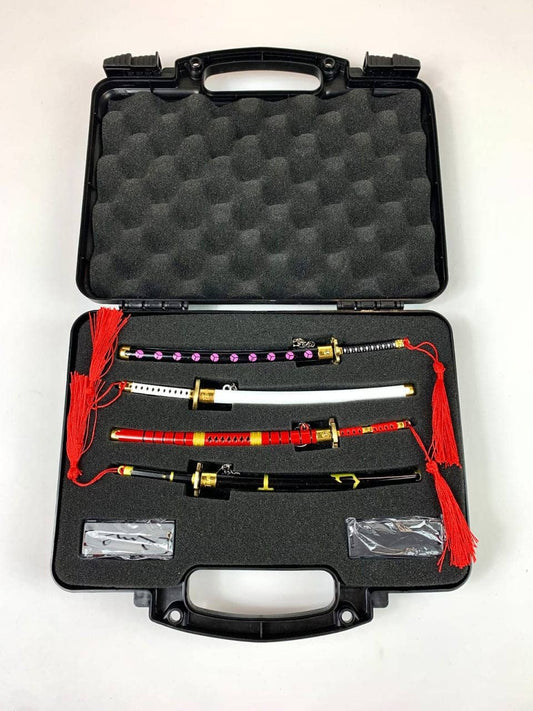


The deadliest swords in history have marked wars, empires, and legends. From the Roman gladius to the Japanese katana or the Iberian falcata, each weapon stands out for its design,...
Many sword lovers have surely asked themselves questions like: What type of swords are the deadliest in the world? What were the most dangerous swords in history? What type of swords has killed the most people? At first glance, these seem like simple questions, but the reality is more complex. Swords are not killer weapons on their own; lethality depends on a combination of factors such as blade design, steel quality, historical context, and, above all, the skill and intention of the wielder. An exceptional sword in untrained hands, no matter what it is, can be less effective than a simple weapon used by an experienced warrior. Therefore, to answer these questions as fairly as possible, we must start from the same premise: imagine that all swords are used by expert combatants of similar skill levels in their respective styles, depending on the type of sword. Under that condition, it is possible to compare some of the most impressive weapons in history. In expert hands, what type of sword is the most lethal? In a hypothetical combat between masters of similar skill, several swords stand out for their versatility. European Longsword Many specialists consider it one of the most complete bladed weapons ever created. It allows cutting, thrusting, blocking, and controlling distance with great effectiveness. Japanese Katana Its extraordinary cutting ability and balance make it one of the most admired swords in the world. In expert hands, it can execute fast and precise attacks with great effectiveness. Rapier Designed primarily for thrusting, it stood out for its reach and speed. For centuries, it was one of the most dangerous weapons in individual duels. What were the most lethal swords in Antiquity? If we talk about proven effectiveness in combat, several swords stand out above the rest. Gladius It was the primary weapon of the Roman legions for centuries. Its compact design allowed for quick thrusts from shield formations, making it one of the most effective weapons in military history. Iberian Falcata Feared even by the Romans, it concentrated much of its weight towards the tip, generating blows of enormous power. Its ability to cause devastating wounds made it one of the most respected weapons of antiquity. Jian Known as the "Chinese straight sword," it stood out for its balance between cutting, thrusting, and maneuverability. It was used for centuries and considered one of the most refined weapons in Asia. What are the most dangerous swords in the world? Some weapons were specially designed to cause devastating damage. Iberian Falcata Its curved shape increased the force of impact and made it particularly destructive. Khopesh This characteristic curved sword could hook shields, weapons, or limbs, making it difficult to defend against its attacks. Greek Machaira Used by various Mediterranean peoples, it was optimized for deep and extremely dangerous cuts. Thanks to modern metallurgy, some current swords achieve extraordinary levels of performance. High-end modern Katanas Crafted by master artisans and using advanced steels, they possess impressive cutting ability. Functional modern Longswords The best historical reproductions combine designs proven over centuries with high-quality modern materials. Contemporary greatswords Some functional reproductions of montantes and zweihänders offer extraordinary impact power in trained hands. What were the strongest swords in human history? Resistance and durability from antiquity were fundamental in combat. Viking Swords The best Viking blades achieved extraordinary quality thanks to advanced forging techniques for their time. Roman Spatha Longer than the gladius, it combined strength, reach, and effectiveness in combat. High-quality Jian Some Chinese blades achieved an exceptional balance between hardness and flexibility, essential characteristics for a durable sword. On the other hand, modern technology allows for the manufacture of vastly superior blades from a metallurgical point of view, making the material an elemental point when talking about their strength. L6 Bainite steel swords They are famous for their combination of hardness and flexibility. Swords made with CPM 3V steel They stand out for their enormous resistance to impact and wear. Maraging steel swords Used even in high-level sports fencing, they offer exceptional resistance to metal fatigue. Which swords killed the most people throughout history? There is no definitive answer, as there are no exact statistics of deaths in wars, much less considering their use in duels and individual confrontations, but some candidates clearly stand out. Roman Gladius It participated in centuries of military campaigns that expanded the Roman Empire across three continents. Dao The different variants of this sword were present in countless wars involving millions of combatants over more than two thousand years. European and Asian military sabers Used by armies of numerous countries for centuries, they were present in conflicts that marked the history of entire continents. The Perfect Sword The search for the perfect sword throughout the centuries has led to a great variety of adaptations and creations around the world, however, it will probably never have a definitive answer. Some swords stood out for their destructive capacity, others for their resistance, others for their versatility, and others for the enormous historical impact they had. What they all show is that a legendary sword is not forged solely with steel. It is also forged with the warriors who wielded it, the battles they fought, and the stories that survived the passage of time.
Read more
The ninjatō is the iconic sword associated with the ninjas of feudal Japan. This article explores its origin, design, and the role that popular culture has attributed to it as...
Few historical figures have sparked as much fascination as the ninjas of feudal Japan. Shrouded in shadows and secrets, the shinobi became a symbol of espionage, infiltration, and missions that demanded more than brute force. While samurai fought on battlefields and represented the honor of their lords, ninjas moved silently, scaled walls, gathered information, and vanished before anyone noticed their presence. Over the centuries, their image became surrounded by legends. Stories of agents capable of infiltrating enemy fortresses, traversing forests at night, and using tools designed to overcome seemingly impossible obstacles fueled the mystery that still surrounds the shinobi today. Among all the weapons associated with these clandestine warriors, none is as recognizable as the ninjatō, the sword that popular culture presents as the ninja's characteristic weapon. The weapon for missions in the shadows When one imagines a ninja moving under the cover of night, slipping through a forest, or silently crossing an enemy fortress, it's easy to picture the ninjatō as part of their equipment. Unlike the large weapons of war intended for battlefields, this sword is associated with mobility, stealth, and the ability to operate in confined spaces. Modern accounts and depictions portray the ninja as an infiltration specialist, capable of adapting to any situation. In that context, the ninjatō perfectly fits the image of a warrior who had to rely more on intelligence, observation, and speed than on brute force. More than just a weapon, it became the inseparable companion for missions carried out away from the gaze of enemies and sentinels. A design conceived for speed and adaptation The ninjatō is a straight-bladed sword, with simple lines and a practical appearance. Its design conveys a sense of immediate functionality, without excessive adornments or elements that distract from its primary purpose. The most striking feature is precisely that straight silhouette that visually differentiates it from the traditional katana. Within the ninja imagery, this shape is associated with speed of use and ease of maneuvering in changing environments. The sword had to be a versatile tool, capable of accompanying its bearer in constant movements, climbing obstacles, and unexpected situations. That combination of simplicity and effectiveness is one of the reasons why the ninjatō continues to be so attractive to collectors, fans of Japanese culture, and lovers of historical weapons. Why does the ninjatō continue to fascinate the world? Few weapons have maintained such a constant presence in popular culture. Films, novels, video games, comics, and series have contributed to making the ninjatō a universally recognizable image. Even those who know little about Japanese history often identify this sword as part of the classic ninja equipment. Its popularity is largely due to everything it represents. The ninjatō evokes mystery, adventure, and the idea of overcoming obstacles through skill and cunning. It does not symbolize large armies or massive battles; it symbolizes the individual acting in silence, relying on their preparation and their ability to adapt to any challenge. The eternal symbol of ninja warriors Over time, the ninjatō has ceased to be simply a sword associated with the shinobi to become an authentic cultural symbol. Its silhouette appears in countless illustrations, collections, and representations dedicated to the ninja world, keeping alive a fascination that spans generations. It is a symbol of agility, skill, and silent stealth, just like those who wielded it.
Read more
The Blades of Chaos are one of the most iconic elements of the God of War saga and Kratos' most recognizable weapon.Forged within the game's universe as a symbol of...
Few weapons in video game history are as recognizable as the Blades of Chaos. The sound of their chains, the gleam of their blades, and the image of Kratos wielding them have become inseparable from the God of War saga, created by Santa Monica Studio and published by Sony since 2005. Within the game's narrative universe, these chained weapons represent Kratos's bond with the Greek god Ares and the dark past of a warrior subjugated to divine will. Although they belong to the fictional world of God of War, their design, their function in combat, and the powerful symbolic charge they carry have made the Blades of Chaos one of the most memorable and recognizable icons in video game culture in general. Narrative Origin within the Game Universe Within the history of God of War, the Blades of Chaos are born as both a gift and a curse. Before becoming the feared warrior depicted in the video games, Kratos was a Spartan general who, on the verge of defeat in battle, sought help from Ares, the Greek god of war. In exchange for saving his life and granting him extraordinary strength, Kratos swore to serve the god. As a symbol of that pact, Ares gave him the Blades of Chaos, two blades forged for combat and magically bound to his new champion's arms by long chains. These chains not only allowed the weapons to be used in a spectacular way but also represented Kratos's loss of freedom, as he became bound to the god's will. Over time, the Blades of Chaos became much more than just a weapon. For Kratos, they symbolize the decisions that shaped his life, the mistakes made under Ares's influence, and the weight of a past he can never forget. Therefore, each time they appear in the saga, they remind the player of the complex relationship between the warrior and the god who changed his destiny forever. Visual Design and Combat Mechanics The Blades of Chaos consist of two large curved blades, attached to long chains fixed to Kratos's forearms. Their appearance combines aggressive edges, ornamental engravings, and a characteristic fiery glow that distinguishes them from other weapons in the saga. The chains are the most recognizable element of their design, allowing the blades to extend several meters during attacks and immediately return to the wielder's hands. In combat, these weapons offer great versatility. Kratos can use them in close-quarters combat with rapid slashes and spinning movements, but he can also attack enemies at a distance thanks to the reach provided by the chains. This feature allows for chaining consecutive blows, hitting multiple targets simultaneously, and maintaining pressure on large groups of adversaries. Another of their most well-known characteristics is the ability to channel fire through the blades. In different games in the saga, the Blades of Chaos can unleash flame-engulfed attacks, energy explosions, and special techniques that increase their destructive power. The combination of reach, speed, and area attacks has made these weapons one of the most distinctive combat systems in God of War. The Immortal Legacy of the Blades of Chaos The Blades of Chaos are much more than Kratos's main weapon. Each chain, each scar etched into their blades, and each burst of fire recalls the pact that forever changed the Spartan warrior's life. Wherever they appear, they evoke impossible battles, fallen gods, and the weight of a past that never fully disappears. Over the years, these swords have transcended the video game itself to become one of the most recognizable symbols of gamer culture. Their silhouette is identifiable even to many people who have never played God of War, and replicas, collectibles, and cosplays demonstrate the impact they have had on several generations of fans. Few fictional weapons achieve something as difficult as being remembered decades after their creation. The Blades of Chaos have succeeded because they combine an unmistakable appearance, a story full of meaning, and some of the most memorable moments in the saga. More than just combat equipment, they represent the very essence of Kratos: strength, fury, sacrifice, and the constant struggle against his own destiny.
Read more
What led someone to copy the shape of a claw and turn it into a steel blade? The history of claw knives begins with the observation of nature and continues...
Imagine holding a knife that doesn't seem designed by a blacksmith, but by nature. A curved, aggressive, almost animal blade, inspired by the shape of a claw poised to strike. Once upon a time, someone gazed at nature and imagined the same... And decided to make it a reality... For centuries, these types of knives have sparked curiosity because they don't resemble traditional straight-bladed weapons. And that's precisely the secret to their survival. Long before appearing in tactical showcases or modern collections, claw knives already existed in Southeast Asia. The most well-known example is the karambit, originating from Indonesia and Malaysia, whose silhouette mimicked the claws of big cats and birds of prey. It was not born as a military weapon, but as an agricultural tool used for cutting roots, harvesting, and working the land. What they saw in the claws of predators By observing felines and birds of prey, people began to understand why nature had given their claws that characteristic curved shape. It was no coincidence: that curvature allowed them to hook, grasp, and tear with great effectiveness, controlling the cut much better than a straight trajectory. Claws were not designed to cut in a straight line, but to take advantage of the natural pulling motion of the prey. It was precisely this functionality that probably led someone, somewhere, to take inspiration from that fascinating creation of nature and give rise to the first claw knives. The curved blade followed the natural movement of the hand and kept the edge in constant contact with the material. It was efficient, fast, and required less effort than straight blades, which is why it was so useful for cutting roots, harvesting, and performing daily tasks. The idea was born by observing nature, but its advantages became evident with daily use, leading the karambit to evolve far beyond the field. In different regions, it also began to be used as a defensive tool and, later, as a weapon linked to traditional martial arts of Southeast Asia. Its compact design facilitated control in confined spaces and reduced the risk of the knife slipping during use. From traditional iron to modern steels Today, modern claw knives still retain that ancestral essence, though manufactured with much more advanced materials. Over the centuries, that idea inspired by the claws of predators gave rise to numerous designs. Some remained very close to the ancient karambits of Southeast Asia, that is, the first ones we know with that shape, while others evolved into completely new models, adapted to different uses and needs. Many current models use high-strength steels such as 1095, D2, or heat-treated stainless steel, materials capable of withstanding wear, humidity, and intensive use. Handles have also evolved. Materials like micarta, G10, or reinforced polymers offer a firm grip even with water or mud. Some maintain the famous retention ring directly inherited from the traditional karambit. This detail is not just aesthetic: it allows for a better grip on the knife and prevents accidental loss during rapid movements. The animal inspiration never completely disappeared. Some cultures associated these blades with the claws of tigers or birds of prey, while modern designs even evoke ravens and dark creatures present in European symbology. The idea was always the same: to turn the aggression and precision of a claw into steel. Why they continue to fascinate today The most striking thing is that these blades never really disappeared. Today they are used as utility tools, collector's items, training knives, and elements linked to survival or martial arts. Their design continues to attract because it blends something hard to ignore: modern functionality and a primitive appearance. And perhaps that's why they continue to generate so much fascination. Because when someone observes a claw knife, they don't just see a tool. They see a shape created centuries ago, inspired by nature's predators, perfected generation after generation, until it reached our days. A blade that started by cutting roots and ended up becoming one of the most recognizable designs in modern cutlery.
Read more
The Scottish basket-hilted sword was one of the most representative weapons of Scotland's military tradition between the 16th and 18th centuries. Associated with the Highland clans and the Jacobite rebellions,...
The Scottish basket-hilted sword is one of the most recognizable symbols of Scotland's military identity. Beyond its distinctive design, this weapon represents centuries of warrior tradition, cultural resilience, and transformations in European weaponry. One of the best-known historical examples preserved today belongs to the Royal Armouries collection and is dated to around 1760, although its blade may have been manufactured in Germany a century earlier. This example shows how the Scottish basket-hilted sword incorporated foreign influences, especially through the use of blades manufactured in continental Europe. The combination of German blades with Scottish hilts reflects the cultural and military exchange present in some of the weaponry used by the Highland clans. Origins of the Basket-Hilted Sword in Scotland Basket-hilted swords began to spread in Scotland between the 16th and 17th centuries. This type of weapon quickly became the preferred choice of the Highlanders, who sought additional hand protection during close combat. Its appearance marked an advance over simple-hilted swords, as it offered a perfect balance between defense, power, and control. The design consolidated during a period of intense conflicts, such as the Wars of the Three Kingdoms and subsequent clashes between the clans and the British crown. The basket-hilted sword became so associated with Scottish identity that, during the Jacobite Rebellions, it became an emblem of pride and resistance. Scottish Basket-Hilted Swords in the 18th Century During the 18th century, these swords continued to be part of the equipment of Scottish officers and soldiers, even after Scotland's integration into the Kingdom of Great Britain. In Highland regiments, the basket-hilted sword continued to be used as part of Scottish military tradition and as a secondary weapon in close combat, despite the growing importance of firearms in European armies. Many of these swords, which have been found today, incorporated blades manufactured in Germany or other regions of continental Europe, often produced even a century earlier and later mounted with Scottish basket-style hilts. This reuse was common, as Germanic blades enjoyed great prestige for their quality and strength, being reused for generations, adapting them to new fashions and military needs. The blades of these swords could feature one or two fullers, longitudinal grooves, a typical characteristic in various historical weapons designed to lighten the weight without losing structural strength, and their basket hilts usually had decorative engravings inspired by geometric or floral patterns, clovers, hearts, and similar, often perforated. The sword hilt in the Royal Armouries collection mentioned above is particularly noteworthy for its unique engraving, a horned beast, which is a typical motif of late Celtic art and Scottish heraldic symbolism. This sword, which passed from hand to hand through private collections and family armories in the United Kingdom, until it reached the Royal Armouries in England, the United Kingdom's national museum of arms and armour located in Leeds, has inspired numerous replicas for collectors and enthusiasts, proving attractive for its peculiarities... The Function of the Scottish Basket-Hilted Sword in Combat Although visually imposing, it was designed for practical use. It was worn on the belt or in a suspension system, and used in both open combat and duels. Its protected hilt allowed for a firm grip even in chaotic, muddy, or rainy conditions, something very common in Highland battles. Its role was particularly prominent in 18th-century Scottish infantry regiments, where it was combined with a buckler or small shield to create a highly effective offensive and defensive system. The Scottish Basket-Hilted Sword is more than a weapon: it is a cultural symbol, a testament to Scottish craftsmanship, and a reflection of the identity of the Highland clans. Its history, marked by the reuse of German blades and the evolution of the basket hilt, demonstrates how tradition and innovation coexisted in Scottish weaponry. With its rich iconography and strong historical presence, it remains one of Europe's most emblematic weapons.
Read more
Within the universe created by J. R. R. Tolkien, Aranrúth stands out as one of the most symbolic swords in Middle-earth due to its connection with the royal lineage of...
A sword with historical significance within Middle-earth In J. R. R. Tolkien's legendarium, swords possess a value that goes beyond military use. They are historical objects, symbols of legitimacy, and bearers of memory. Aranrúth, whose name in Sindarin means King's Wrath, is one of the most significant weapons in the Middle-earth universe, not for its battle deeds, but for its function as an emblem of continuity between the elven world and the royal lineage of the men of Númenor. This sword represents the direct link between the First and Second Ages, as well as the spiritual heritage of Beleriand. In the imagination of Middle-earth, its presence is not only related to power but to the idea of a living legacy passed down through generations. Elven Origin: From Thingol, King of Doriath, to Men Aranrúth was originally the personal sword of King Thingol of Doriath, one of the most powerful elven monarchs of the First Age. Thingol ruled from Menegroth, the Thousand Caves, an underground kingdom renowned for its artistic and cultural wealth. The sword was forged by elven artisans with advanced techniques that combined metallurgy, symbolism, and ancestral knowledge, characteristic features of elven smithing in Tolkien. After the fall of Doriath and the destruction of much of Beleriand, Aranrúth passed into the hands of Elros, son of Eärendil and Elwing, and brother of Elrond. Elros chose the fate of men and became the first king of Númenor, initiating the line of the Dúnedain. With him, the sword ceased to be merely an elven weapon to become a foundational symbol of Númenórean royalty. This transfer not only represents a change of hands but a continuity between two worlds that share destiny and memory. Ceremonial Function and Royal Legitimacy in Númenor Unlike other legendary swords in Middle-earth, there are no records of Aranrúth being used in combat. Its function was essentially ceremonial. It was the visible emblem of the authority of the King of Númenor and a constant reminder of his mixed origin: human blood united with elven heritage. The sword represented the blessing of the Valar, the memory of Valinor, and the connection with the immortal elves. In this sense, Aranrúth functioned as a political and spiritual object, legitimizing the power of the Númenórean kings and recalling the ideal of balance between wisdom, longevity, and moral responsibility. Its value lies in what it represents more than in what it does: an authority that is not imposed solely by force, but by the weight of history. Design and Aesthetics of an Elven Relic Although Tolkien does not provide a detailed description of Aranrúth, its origin allows us to infer an aesthetic consistent with great elven swords. The blade would be long, stylized, and elegant in appearance, with refined steel finish and an ancient look, characteristic of legendary elven smithing. Inscriptions in Tengwar or Sindarin could run across its surface, not as superficial decoration, but as part of its symbolic and ancestral character. The hilt, without a concrete form defined in the texts, can be understood within the elven style as a balanced, sober, and functional design, where beauty does not depend on ornamental excess but on the harmony between form and purpose, always maintaining the sense of a ceremonial object rather than a common weapon. More than a practical weapon, Aranrúth must have been perceived as a sacred relic, destined to be contemplated and passed down as a dynastic legacy. Its design does not seek to impress by excess, but by the sense of antiquity, harmony, and natural authority it conveys. The Disappearance of Aranrúth after the Fall of Númenor With the fall of Númenor, caused by the arrogance of Ar-Pharazôn and the breaking of the order imposed by the Valar, much of the material heritage of the kingdom was destroyed. The canonical texts do not mention the final fate of Aranrúth. Some scholars of Tolkien's work have raised the possibility that it was saved by Elendil or his sons, Isildur and Anárion, but there is no textual confirmation. The most accepted hypothesis is that the sword was lost with the island, sunk along with centuries of history and power. This disappearance reinforces its legendary character. Its ultimate absence contributes to its myth: a presence that exists fully only in memory and legend. Aranrúth as an Eternal Symbol of Tolkienian Mythology Aranrúth is not just a sword, but a symbol of a civilization that aspired to greatness and fell due to its pride. It represents the union between elves and men, the legitimacy of the kings of Númenor, and the memory of a lost era. In Tolkien's mythology, few relics concentrate as much historical and symbolic weight as this vanished sword, a reflection of the splendor and fragility of the Dúnedain. Its importance lies not in existing in someone's hands, but in having left a mark that remains alive in the tale of Middle-earth.
Read more
The "navaja capaora" is a traditional Extremaduran knife with origins in the 18th century, linked to rural life and the dehesa.Used by shepherds and hunters, it stands out for its...
The capaora knife is a traditional blade from Extremadura, a region in southwestern Spain, particularly associated with the Sierra de Gata and La Vera. This historic tool, used by shepherds, hunters, and rural workers, is characterized by its resilience, functionality, and strong cultural connection to the Extremaduran dehesa environment. Over time, the capaora has transitioned from a daily-use tool to an item of ethnographic and collectible value, reflecting the evolution of traditional Spanish cutlery. Rural origin and historical evolution The capaora knife originated in the 18th century, when rural inhabitants of the Sierra de Gata and La Vera needed a versatile tool for agricultural, livestock, and survival tasks. It was used for skinning animals, cutting ropes, and making repairs in the field. It was crafted by local artisans in towns such as Gata, Hoyos, or Valverde del Fresno, using iron from nearby mines and woods like walnut and chestnut. The name "capaora" is associated with the concept of cutting and covering hides in rural tasks, reflecting its main function in daily life. The influence of local blacksmiths and techniques brought by artisans from different regions helped to consolidate a robust blade with a strong edge for intensive use. Design, materials, and artisan craftsmanship The capaora knife features a blade between 15 and 20 centimeters long, made of tempered carbon steel to maintain its edge. Its slightly curved shape facilitates cutting on uneven surfaces, while its thickness provides resistance for demanding tasks. This functional design is characteristic of Extremaduran cutlery. The handle is usually made of walnut or chestnut wood, ergonomically crafted to improve grip. In some cases, materials like deer antler or bone are incorporated, following traditional handicraft techniques. The sheath, made of goat or deer leather, is tanned with natural tannins and may include embossed decorations or metallic reinforcements. Use in rural and cultural life During the 19th and 20th centuries, the capaora was an essential tool in the lives of transhumant shepherds, accompanying the movement of livestock between different regions of Spain. It was also common in hunting, animal butchering, and agricultural tasks. In the domestic and festive spheres, the capaora knife acquired symbolic value. It was often given as a gift at weddings, baptisms, and rural celebrations, representing protection, identity, and belonging to the peasant world. Its presence in Extremaduran popular culture made it a prestigious item within rural life. Dissemination and cultural presence With rural migration to cities like Cáceres and Plasencia, the capaora also reached urban environments, where it was used as a work tool and a keepsake. Its presence at fairs, markets, and festivities reinforced its identity within Extremaduran culture. Today, historical examples of capaora knives are preserved in museums such as the González Santana Extremaduran Ethnographic Museum and the Albacete Cutlery Museum, where pieces dating from the 19th and 20th centuries are studied. There are also private collections and artisan workshops that keep the tradition alive. Legacy and historical value The capaora knife represents the evolution of traditional Spanish cutlery, combining functionality, history, and rural culture. Its artisan craftsmanship, its use in the Extremaduran dehesa, and its presence in daily life make it a symbol of regional identity. Today, it continues to be valued by artisans, collectors, and scholars of ethnographic heritage alike.
Read more
Sephiroth and the Masamune form one of the most iconic images in Final Fantasy VII. This article analyzes the design, origin, and symbolism of the sword, an impossible ōdachi that...
In Final Fantasy VII, many characters stand out for different reasons. Some for their story, others for their role in the plot, or for specific moments. However, as time passes and only the clearest images remain in memory, one figure effortlessly appears: Sephiroth. It's not a matter of the number of scenes, but of impact. His silhouette is quickly recognized and stays with you. No context is needed to identify him, and that's what sets him apart from the rest. What is Sephiroth like? A clear and recognizable image Sephiroth has a design that is easy to identify even for those who don't know the story in depth. He is tall, slender, with long, silver hair falling straight down to his waist. His long, open black coat defines his figure and reinforces the contrast between simplicity and presence. The metallic details on his shoulders, dark gloves, and boots complete a clean, uncluttered look. There are no unnecessary elements or distracting colors. Everything is designed so that his form is quickly recognized, especially in conjunction with the long, sharp sword he carries, like a reflection of his own image and aesthetic. This visual clarity is what makes it work so well: you only need to see him once to remember him. The Masamune: a sword instantly distinguishable The Masamune is one of the keys to that image. It is an ōdachi, a Japanese sword of great length designed for open battlefield combat, with a thin, slightly curved, and shiny blade. It has no complex decorations or elaborate details. The handle is long, wrapped in dark fabric, and the guard is small, almost discreet. Everything in its design draws attention to the blade, to its length. This unusual proportion is what makes it different. However, its general image, imposing and sober, black and silver, reminds one of its wielder... Its origin adds another layer of interest to the sword: it is said to have been forged by a cursed blacksmith and sealed in an ancient temple, making it not just a weapon, but a piece directly linked to darkness. It is not a realistic sword, as its dimensions would make it difficult to use in battle with the fluidity that Sephiroth displays, but it is very easy to recognize. And therein lies its strength. The relationship between Sephiroth and the Masamune The sword does not work the same without the character, nor the character without the sword. Together they create a very specific silhouette: a stylized figure and a blade that extends far beyond what is expected. An image of threatening sobriety that fits perfectly into their corresponding context and story. Sephiroth holds it naturally, often with just one hand, letting its length create distance. This way of carrying it is not accidental; it reinforces the idea of control and dominance without needing to exaggerate movements. It's a simple, yet very effective visual combination. The story complements the perception By understanding who Sephiroth is within Final Fantasy VII, the image gains more weight. He is no longer just a striking design; he is a character with a specific past, with an evolution that makes him a central figure. The same applies to the Masamune. It's not just a long katana. It becomes a symbol directly associated with him, with his actions, and his role within the story. An image that is recognized and sought after Over time, this combination becomes automatic: silver hair like the shine of his ōdachi's blade, black coat like the scabbard and hilt, and his own long sword. Nothing more is needed. It's one of those images that are quickly identified and stand out even among many others. And that's where the important thing happens. There's no need to explain or insist. When something is recognized this easily, it simply grabs attention and makes you want to see it again.
Read more
The Seven Swords of the Lords of Narnia are key elements in The Voyage of the Dawn Treader, linked to a ritual that can restore the kingdom's balance.More than weapons,...
In the fantastical world of The Chronicles of Narnia, one of the most intriguing elements of The Voyage of the Dawn Treader is the quest for the Seven Swords of the Lords of Narnia. These relics are not mere weapons, but necessary pieces to complete a ritual at Aslan's table, whose function is to break the darkness spreading over the eastern seas and free the lords fallen into an enchanted sleep. King Caspian drives this mission with a clear purpose: to find the seven vanished lords and gather their swords at the sacred altar, as only by placing them together can balance be restored and the influence of evil corrupting those lands be dispelled. The Lords of Narnia were nobles loyal to the kingdom and Aslan, sent to explore distant territories, but ended up trapped by dark forces. Their swords were scattered, becoming the key to reversing that fate. Thus, the quest is not just a journey of exploration, but an essential task to awaken the fallen, restore light, and bring stability back to Narnia. The 7 Swords Lord Restimar's Sword This sword was the first found on the voyage. It represents the lords' loyalty and their commitment to Narnia's well-being. Carried by a sailor on the voyage, the sword stands out for its symbolism of leadership. Lord Rhoop's Sword It was one of the swords discovered along the way, a relic from Narnia's ancient times. This sword, wielded by the young protagonist, symbolizes the bond between generations and the continuity of the fight for justice. Lord Bern's Sword This powerful weapon has a history of sacrifice and heroism, qualities it represents, and its recovery is crucial to completing Narnia's mission. Lord Octesian's Sword Recovered on one of the distant islands, this sword has the ability to face Narnia's darkest creatures. It represents the fight against evil and the will to face the impossible. Lord Bism's Sword In the story, this sword is a symbol of hope. Linked to courage and resilience, its wielder demonstrates what it means to sacrifice for the common good. Lord Dare's Sword This sword has a history linked to destiny and sacrifice. Only those with a clear and just purpose can wield it effectively, representing justice and the courage to fight for a greater purpose. Lord Samis's Sword The last sword found during the voyage. It represents the union of all elements of the mission and is a symbol of victory and liberation. The Significance of the Seven Swords The number seven has a profound meaning in the story, associated with perfection and completeness. By gathering the swords, the characters will not only restore physical order in Narnia, but also spiritual balance. The act of bringing them together is not just a physical duty, but also an act of faith. Each sword is more than a tool for battle; it is a symbol of resistance against darkness, personal sacrifice, and loyalty to the cause of justice. The swords represent the legacy of the Lords of Narnia, who, though defeated, never stopped fighting for what they believed was right.
Read more