América
Astronomical Knowledge of the Mayans: Predictions, Calculations, and Meanings
Systematic Sky ObservationThe Mayan civilization, which flourished from approximately 2000 BCE to the 16th century, d...


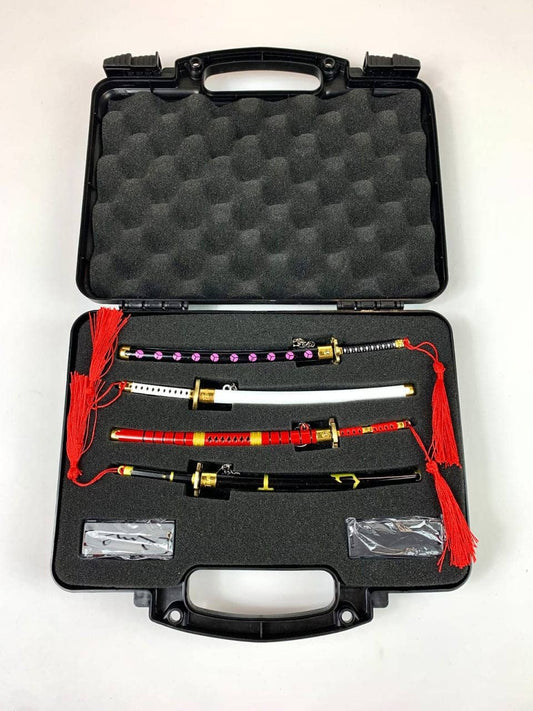


On October 10th we celebrate the birthday of Naruto Uzumaki, the protagonist of Naruto and Naruto: Shippuden, and to commemorate this date, we not only tell you who he is,...
A tribute to Naruto and the weapons that defined his battles Today, October 10, is the birthday of Naruto Uzumaki, the protagonist of Naruto and Naruto: Shippuden, and to commemorate it we have prepared this article, where we will tell you a brief biography of his story and mention, in his honor, the ninja weapons he has used and all those he has faced on his journey toward his dream of becoming Hokage, while learning and forging strong friendships. The story of Naruto Uzumaki: The beginnings of an unforgettable ninja If we look back at his birth, it took place in Konoha during the Nine-Tailed Fox's attack on the village, at which time his parents, Minato Namikaze, the Fourth Hokage, and Kushina Uzumaki, former jinchūriki of the Kyūbi, gave their lives to protect their son and keep Konoha safe. That was how Minato sealed the Nine-Tailed Fox inside little Naruto and trusted that one day he would find his own path as a ninja. The boy grew up in the village, under the gaze of its inhabitants, who judged and feared him; he began his training at the Ninja Academy with a dream that would define his entire life: to become Hokage and gain recognition from everyone. During his time at the Academy, Iruka Umino occupied an essential place in his learning and growth as a ninja, being his first father figure, although perhaps representing something closer to an older brother relationship for Naruto, for whom their bond became one of the first displays of trust and recognition the young shinobi received. Later, after becoming a genin, the first ninja rank, when he went from being a student to a true ninja, Naruto joined Team 7 along with Sasuke Uchiha and Sakura Haruno, with Kakashi Hatake as sensei (teacher). Kakashi brought to the group his experience as an elite shinobi and his past in the ranks of Konoha's ANBU, in addition to his knowledge of ninjutsu, strategy, and combat. Team 7's first missions took Naruto to different corners of the ninja world and marked the beginning of a decisive stage in his evolution. However, it was not limited to the academy and his formally assigned teachers; Naruto's training was also tied to great masters like Jiraiya, one of the legendary Sannin of Konoha under whose tutelage he perfected his skills, developed new techniques, and strengthened his control over chakra. Each master left a different lesson on his path, from Iruka's first bits of advice to Kakashi's demanding lessons and Jiraiya's training; with every mission and every battle, Naruto advanced toward his dream of becoming Hokage and taking his own place among the great ninjas of Konoha. All of Naruto's weapons Throughout his adventures, Naruto Uzumaki has used diverse ninja weapons and tools to face his enemies, complementing his skills and combat techniques; though his style is based primarily on chakra and jutsus, he also resorts to other tools. So, as we promised, we will list all those weapons he has used on his path as a ninja throughout each season, to commemorate his day. Shuriken The shuriken is a metallic throwing weapon, which Naruto uses during different battles and training sessions to attack from a distance or distract his adversaries. In reality, shuriken did exist in Japan, although their designs and uses were more varied than what is usually shown in fiction. Furthermore, there are several types of Shuriken, which he has made use of, beyond what we usually imagine when mentioning this weapon. Standard four-pointed shuriken It has a star shape with four sharp points and, usually, a hole in the center; it is light and designed to be thrown by hand. In the anime, it is one of the most recognizable models among ninja tools and also the most used, while in Japan they also existed, though they were not exclusive to shinobi and were used as auxiliary weapons, with a great variety of models, just like in the anime—though the versions we will mention below do not belong to those models, but are exclusively from the Naruto ninja universe. Giant Shuriken The giant shuriken is a large-scale version, with several straight points and a more voluminous metallic structure than the standard model; Naruto uses this weapon a few times throughout the anime, such as briefly in his confrontation against Zabuza, or during the Fourth Great Ninja War. Kunai It is a pointed metallic tool, with a blade and a handle that usually ends in a ring, which can be used both as a knife, for close-quarters attacking, and as a throwing weapon, which Naruto employs in different combat situations. Furthermore, the kunai is another weapon that has a Japanese historical equivalent, as a multi-purpose tool that ninjas also took advantage of, using its durability and metallic tip to pierce walls, open holes that would allow them to access buildings, and fit the tool between the stones of walls to help themselves climb. Likewise, they could stick it into the ground and attach a rope to the ring of its handle to keep it anchored, although it could also be used as a weapon in certain circumstances; however, its use as a throwing knife, so frequent in the anime, did not represent its primary function. Explosive tags or paper bombs Explosive tags are paper labels with inscriptions that can cause explosions when attached to surfaces or combined with other tools to prepare traps and attacks or simply, distractions, and whose operation is mostly associated with chakra. And although these specific tags did not exist among real ninjas, various explosives and incendiary resources did exist. Smoke bombs They are devices that, when activated, generate a cloud of smoke that reduces visibility and serves to hide movements, confuse adversaries, and facilitate a retreat or an ambush; and although they are not strictly a weapon, it is worth mentioning them due to the relevance of their use throughout the series. Furthermore, these are other tools that were used among real ninjas in their own infiltration missions, or at least, we can say they arise inspired by tools that were effectively used by them. Ninja scrolls Ninja scrolls are rolls that can contain information, instructions, or techniques, and some are even used to store and retrieve objects through sealing techniques, while others intervene in summoning techniques; and although they are not weapons per se, they function as tools worthy of being mentioned given the great relevance they have when Naruto uses them to perform summonings, such as the technique that allows him to call toads from Mount Myōboku to help him during combat. The main weapons Naruto faced Since we have decided to review all of Naruto's weapons to celebrate his birthday, this did not seem enough to us, so we also chose to add this list with some of the most recognizable weapons that our celebrated protagonist had to face throughout his battles with great and prominent opponents. From the most common to the most peculiar in the shinobi world, many of which have played an important role in the battles that marked the history of Naruto. Kunais and Shurikens It is evident that the most common weapons of the ninja world, such as kunai, used both in close attacks and for throwing, and shuriken, employed to carry out quick attacks from a distance, appear in numerous confrontations, and to them are added the explosive tags, known as Kibaku Fuda, which allow for preparing traps, reinforcing throwing weapons, and causing explosions from a distance. All of them already mentioned, as both Naruto and his enemies resorted to these tools during their missions. But throughout the series, much more peculiar weapons also appear that became protagonists of some of his most remembered battles and on which we will focus a little more in this section. Senbon During the Land of Waves arc, Naruto faces Haku, who uses, in addition to several special techniques, Senbon, small-sized needles with which he performs quick and highly precise attacks. Haku can use them to attack from a distance and also to immobilize his adversaries, as they are precision weapons that, in skillful hands like his, can strike precise points on both the body and the opponent's chakra network, making them one of the most characteristic weapons of this confrontation. Kubikiribōchō Both Zabuza and later Suigetsu used the Kubikiribōchō to fight against Naruto, a huge sword associated with the Seven Ninja Swordsmen of the Mist, whose most striking feature is its ability to recover part of its structure using the iron present in the blood of its victims. Zabuza wields it during the Land of Waves mission, while Suigetsu manages to get hold of the same sword later and uses it during his confrontations after the Five Kage Summit. This weapon in particular is one of the Seven Swords of the Ninja Swordsmen of the Mist, along with Samehada, Hiramekarei, Kiba, Nuibari, Kabutowari, and Shibuki. Kusanagi During his confrontations with Naruto, Sasuke also uses the Kusanagi sword, one of the most recognizable weapons in his arsenal, for although it does not seem to possess great particularities, Sasuke combines the handling of the sword with his speed, precision, and lightning techniques, taking advantage of his skills to make it an especially dangerous weapon during his battles. Needle umbrellas Another of the weapons that appears in Naruto's early confrontations is the needle umbrella, used by the Rain ninjas during the Chūnin Exams. These umbrellas allow for launching numerous needles against the adversary and serve as a long-distance attack tool, forming part of the arsenal used during the battles of that stage, although it could be said that the real weapons in them are the senbon, implemented in a different way. Scalpels Kabuto also resorts to physical weapons during his confrontations with Naruto and the other ninjas, although among them, those that stand out the most are not exactly ninja weapons, but scalpels, used to carry out quick and precise attacks in hand-to-hand combat. These tools, normally associated with his medical knowledge, can also become dangerous weapons when Kabuto enters combat. Chakra blades During the Twelve Guardian Ninja arc, Naruto faces Sora, who uses chakra metal blades incorporated into his clawed gauntlets. These weapons are part of his combat equipment and allow him to attack with quick and direct blows, adding a physical element to his confrontations. Samehada In Shippuden, one of the most prominent encounters is related to Kisame Hoshigaki and Samehada, one of the famous swords of the Seven Ninja Swordsmen of the Mist already mentioned (Hiramekarei, Kiba, Nuibari, Kabutowari, Shibuki, and Kubikiribōchō). It is a huge sword that has the peculiarity of absorbing chakra and feeding on the energy of its adversary. Kisame uses Samehada during his confrontations, making it one of the most recognizable weapons that Naruto encounters throughout the series. Chains, Gunbai Fan, and Scythe During the Fourth Great Ninja War, Obito Uchiha also uses physical weapons in his confrontations against Naruto and the Allied Shinobi Forces, among which the chains stand out, which he employs during the war battles, and also the Gunbai, a huge war fan used as a defensive and offensive weapon. Madara Uchiha also uses this latter one at that moment and, additionally, a scythe, a weapon that, without being the same one, another character already used previously, Hidan, a member of the Akatsuki who is usually associated with the image of a scythe more than anyone else.
Read more
Who is Trafalgar Law? We review the history of the Surgeon of Death, his main abilities and the powers of the Ope Ope no Mi, as well as getting to...
Who is Trafalgar Law? The captain of the Heart Pirates and his role in One Piece Trafalgar Law is one of the most important pirates of the generation that reached the New World during the events of One Piece.Captain of the Heart Pirates and known as the Surgeon of Death, he stands out for his strategic ability, his mastery of medicine, and the powers of the Ope Ope no Mi, along with his signature sword Kikoku, an enormous nodachi that he uses in combat and that completes the style of this character who has played a decisive role in some of the major conflicts in the second half of the series. The history of Trafalgar Law Trafalgar D. Water Law was born on October 6th in Flevance, a city in the North Blue whose population suffered the consequences of Amber Lead Syndrome.As a child, he lost his family and was scarred by the tragedy that destroyed his place of origin. Shortly thereafter, he ended up joining Donquixote Doflamingo's crew, where he met Corazon, whose real name was Donquixote Rosinante.The relationship between the two was defining for Law, especially when Corazon discovered that the boy was suffering from the illness associated with Amber Lead. He sought a way to save him and managed to have Law eat the Ope Ope no Mi, a Devil Fruit with extraordinary medical capabilities.From then on, medicine and combat became closely linked to the identity of the future captain of the Heart Pirates. Law's powers with the Ope Ope no Mi His powers are primarily based on an ability called ROOM, which allows him to create a zone in which he can control everything inside with the precision of a surgeon during an operation.Law can separate bodies, swap positions, move objects, and perform cuts without necessarily causing the damage typical of a sword.One of his best-known techniques is Shambles, which he uses to switch the positions of people or objects during combat.The fruit also provides him with long-range offensive abilities, and among his advanced techniques is K-Room, through which he extends the properties of the Ope Ope no Mi to his weapon. Kikoku, Trafalgar Law's sword Trafalgar Law's sword is called Kikoku, a large nodachi that the captain of the Heart Pirates usually carries on his back.The design of Kikoku fits the character's aesthetic, and its enormous length allows Law to combine swordsmanship with his surgical skills: when he uses ROOM together with his nodachi, he can perform attacks that leverage the properties of the Ope Ope no Mi and reach targets located at a great distance.Law's sword Kikoku has thus become one of the character's most recognizable elements and a fundamental piece of his combat style. The alliance between Law and Luffy Law enters a new stage in his history when he proposes an alliance to Monkey D. Luffy, with the main goal of confronting Doflamingo and changing the balance of power in the New World.The alliance takes both pirates to Dressrosa, where Law confronts his past related to Doflamingo and Corazon head-on, and later, events lead him to an even greater confrontation against Kaido. His collaboration with Luffy turns Law into a fundamental figure within the new generation of pirates and places him alongside some of the main protagonists of the series. A key character of the New World Trafalgar Law's evolution is closely related to the main events of the New World, although his past with Corazon, his knowledge of medicine, the powers of the Ope Ope no Mi, as well as his alliance with Luffy and the use of Kikoku have defined his journey within One Piece.The Surgeon of Death thus occupies a prominent place among the pirates of his generation and remains one of the most relevant figures in the story.
Read more
Get to know Black Panther through T’Challa, King of Wakanda and heir to a tradition passed down through generations, and discover the relationship between the suit, the mask, and vibranium,...
A symbol that belongs to generations The importance of this hero within Marvel stems from an identity built around a heritage, given that the title passes from one generation to the next, turning the protector into a figure who represents the continuity of a culture, a family, and a nation.Although there were other members of the Wakandan royal family who had assumed the mantle of Black Panther before T’Challa, he was the first to officially make an appearance, as the history of some of his predecessors was incorporated later. He stands out because, upon his arrival, the character consolidated a new era for the legacy of the protector of Wakanda, so we will focus on him below. The mask of a king turned into a legend In the heart of Africa lies Wakanda, a fictional nation born under the premise of having hidden its existence from the rest of the world for generations.Its ancestral culture coexists with advanced technology powered by vibranium, a resource that defines much of its development. There lives T’Challa, who inherits the throne and the legacy of the Black Panther, a figure destined to preserve the safety of his people. The feline-inspired black suit and the mask that covers his face turn the monarch into an imposing and mysterious presence, where the shapes resemble a panther, while its design establishes the identity of the Wakandan protector.This appearance incorporates into T’Challa the identity of Black Panther, the role he assumes when he must protect Wakanda and face those who threaten his people, while outside the suit he serves as king and represents his nation before others, as a ruler whose position demands defending the traditions of his nation and making decisions capable of shaping its future. The mask and suit of Black Panther The mask reproduces the features of a panther through sharp lines, defined eyes, and shapes that evoke its ears, giving a feline finish that adds mystery to T’Challa's figure and makes the covered face an essential part of the Black Panther's look.The suit is crafted with vibranium, a material characteristic of Wakanda, capable of absorbing impacts and harnessing that energy during combat, with a structure that favors mobility, allowing for rapid movement, jumps, and acrobatic maneuvers, as the fabric adapts to the action while the incorporated technology reinforces the wearer's defensive and offensive capabilities.The black finish enhances his stealthy nature and maintains an aesthetic inspired by the animal that gives the hero his name.While each element serves a specific function and makes the attire an advanced tool for facing any threat, its aesthetic maintains a tone of natural threat and ferocity, typical of a predator, while also retaining the qualities of a panther. The legacy of a king Being Black Panther means assuming a responsibility inherited along with the throne of Wakanda.T’Challa receives a title linked to the history of his people and a tradition that has accompanied the royal family for generations, for each new wearer must defend its inhabitants and preserve an identity built over centuries.However, in the history of this character, the monarch's position acquires a special difficulty when the nation stops remaining completely apart from the rest of the world, as its technological wealth and the existence of vibranium turn the territory into an enclave of enormous importance. Opening its borders means facing new threats, though it also raises the possibility of sharing knowledge and resources with other societies, and this decision occupies a central place in the story, for he must find a way to protect his own while determining what relationship to establish with the outside world, as isolation had preserved their resources and customs, though it had also created considerable distance regarding the problems affecting other peoples.Leadership is tested precisely at that point because, although battles require skill, governance demands weighing the consequences of each choice, and listening to different perspectives, accepting responsibilities, and choosing an appropriate path are part of the obligations associated with the crown. With all this, T’Challa's story acquires greater depth when he must decide what to do with what he has received, given that his position allows him to influence the future of his people, but each decision can also affect those living outside his borders, and that dimension turns the character into a leader whose value is measured by the consequences of his actions. The legacy of Black Panther The universe created around Wakanda further expands the legacy of Black Panther and the protectors who assumed this role over generations. Its traditions, scientific advances, and natural wealth form a society with its own identity within the Marvel Cinematic Universe, and the result is a setting where heritage and progress coexist under the same banner. The figure of the protector ends up representing a simple and powerful idea: receiving a legacy also means deciding what to do with it, taking us back to the famous phrase posed by another of its heroes: "With great power comes great responsibility."For Spider-Man, this meant defending justice and not just individuals; for T’Challa, it implies preserving what he inherited while finding his own way to lead it into the future, and there lies the strength of this character, for his story speaks of power, leadership, and responsibility from the perspective of someone whose name represents much more than an individual identity, but rather the legacy of the generations that came before him and those that will follow.When it comes to Black Panther, each generation receives a heritage; the true challenge consists in deciding which parts to keep, which path to transform, and what future to leave for those who will come after.
Read more
With the release getting closer, Avengers: Doomsday is entering a stage where information regarding listings, showtimes, formats, and advance ticket sales will change rapidly. The primary reference point for Disney...
Updated: October 02, 2026 The countdown to Avengers: Doomsday has already begun. The new Marvel Studios film will hit theaters in December 2026 and will bring together a huge number of characters linked to the Avengers, the Fantastic Four, and the X-Men. But for Spanish viewers, there is one especially important question: when exactly is Avengers: Doomsday released in Spain, and when can tickets be bought? The answer requires a small nuance. Official communications from Disney Spain published during the summer place the release on December 18, 2026, a date also used by the official Marvel Spain channel. However, the current film listing on Disney.es shows December 17, 2026. Therefore, as long as Disney does not unify both references, it is best to also check the listings of your chosen cinema before buying. As for tickets, several Spanish chains already have Avengers: Doomsday listed among their upcoming releases, but there is no single pre-sale date announced for all cinemas in Spain. Yelmo keeps it among its upcoming releases; Mooby currently indicates that they will be "on sale soon," while some mk2 listings already show the film but still without showtimes. When is Avengers: Doomsday released in Spain? Official communications from Disney Spain place the premiere of Avengers: Doomsday in Spain on December 18, 2026. Disney Spain communicated on July 20 that the film would reach theaters on December 18, and used that same date again in its August 15 communication regarding the new trailer. Marvel Spain also uses December 18, 2026 on its official channel. Why does Disney.es show December 17? This is one of the issues that can cause confusion on Google. The Spanish Disney listing for Avengers: Doomsday currently shows: Release date: December 17, 2026. At the same time, official press releases from Disney Spain and videos published by Marvel Spain indicate December 18, 2026. It is not advisable to present both dates as if they were equivalent, nor to hide the discrepancy. The reference the viewer should check While this difference between official pages remains, the safest thing to do is: 1. Check the Disney Spain page.2. Check the listings of the specific cinema.3. Verify the date of the session before making the payment. This avoids confusing the promotional date with the date finally applied by a specific exhibitor. When does the Avengers: Doomsday pre-sale start in Spain? As of September 28, 2026, there is no single pre-sale start date communicated by Disney Spain for all cinemas. This is an important difference compared to other markets. Advance sales for Avengers: Doomsday began in other territories well ahead of the premiere, and specialized media placed the international start of those sales on August 14, 2026. However, that data should not automatically be interpreted as the pre-sale opening date in Spain. In Spain, the situation currently observed is more fragmented. What are Spanish cinemas showing? Yelmo already includes Avengers: Doomsday among its upcoming releases with a date of December 18, but the page consulted does not yet show sessions for sale. Mooby has also created the film's listing and indicates that tickets will be on sale soon. mk2 also has a listing for Avengers: Doomsday, with an expected release on December 18, but currently, it appears with no available showtimes. So, can tickets already be bought in Spain? It cannot be stated that there is a national pre-sale open in all chains. The film is already integrated into the programming platforms of some exhibitors, but that does not necessarily mean that there are sessions available to buy at all of them. Where to buy tickets for Avengers: Doomsday in Spain? When sales are open at each chain, the safest route will be to go directly to the cinema or the exhibitor's official sales platform. The current situation can be summarized as follows: Chain / platform Observed status Published date Yelmo Film included in upcoming releases December 18, 2026 Mooby Active listing; “on sale soon” December 18, 2026 mk2 Active listing; no showtimes available December 18, 2026 Disney Spain Official listing with release date December 17, 2026 This table should be updated as soon as Spanish chains publish showtimes and enable purchasing. How to buy tickets when pre-sale opens It is not necessary to wait for Google to show an aggregator page to locate tickets. The most reliable process will be: 1. Search for your regular cinema Check the listing for Avengers: Doomsday on the chain's official website. 2. Check the date Especially while the discrepancy between December 17 and 18 continues across different Disney channels. 3. Review the format The film is also being promoted for premium formats, and Disney has introduced Infinity Vision as a certification for certain PLF (Premium Large Format) auditoriums with large screens, high-performance projection, and sound. 4. Choose language and session Before paying, check if it is a session dubbed into Spanish, VOSE (original version with Spanish subtitles), or another format available at the selected cinema. 5. Check the terms and conditions of purchase Review the cinema's policy on exchanges, returns, seat selection, and format surcharges. How much will Avengers: Doomsday tickets cost? There is not yet a single price for Spain. The amount will depend on the cinema, the city, the day, the session, and the chosen format. A conventional ticket does not necessarily cost the same as a session in a premium auditorium. That is why it would not be reliable to publish a specific price now as if it were applicable to all of Spain. The same film can have different prices between a standard session and a PLF experience or between different chains. And the Infinity Vision auditoriums? Disney has introduced Infinity Vision as a new certification for Premium Large Format auditoriums, with special attention to screen size, image quality, and sound. The studio has expressly noted that Avengers: Doomsday is designed to take advantage of this type of cinematic experience. This may translate into a surcharge compared to a standard session, but the specific price must be checked at each cinema. Will there be screenings before the premiere of Avengers: Doomsday? There have been reports of possible early screenings or advance previews, but currently they should not be treated as a confirmed date for Spain. Some chains have even shown references to possible early screenings in their systems, but specialized media have expressly warned that there was no official confirmation regarding those advance sessions. Therefore: Announced premiere: December 2026.Early screenings: pending official confirmation for Spain. This difference will be especially important as the premiere approaches and extraordinary schedules begin to appear. What is known about Avengers: Doomsday? Avengers: Doomsday is a new film from Marvel Studios directed by Anthony Russo and Joe Russo and written by Stephen McFeely. Disney includes Robert Downey Jr., Chris Evans, Chris Hemsworth, Pedro Pascal, Anthony Mackie, Florence Pugh, Vanessa Kirby, Ian McKellen, Patrick Stewart, Tom Hiddleston, and numerous other actors in a cast that connects different generations and Marvel franchises. The official promotional material describes a story in which heroes from three different universes are caught up in a confrontation against an unprecedented threat. Among the names generating the most interest is Robert Downey Jr. as Victor von Doom / Doctor Doom, one of the great novelties of the project. Disney expressly identifies him with that role in its communication about the new trailer. Who is Doctor Doom in Avengers: Doomsday? Doctor Doom, also known as Victor von Doom, is one of Marvel's fundamental characters and a historic rival of Reed Richards and the Fantastic Four. In Avengers: Doomsday, Robert Downey Jr. plays Victor von Doom, according to Disney's official communication. The project is not limited to bringing together well-known characters: it also connects different areas of the Marvel universe, including: The Avengers. The Fantastic Four. The X-Men. Characters related to the multiverse. Doctor Doom. The cast of Avengers: Doomsday Disney has published an especially wide cast for the film. Among the names officially communicated are: Actor Relation to the film Robert Downey Jr. Victor von Doom / Doctor Doom Chris Evans Steve Rogers Chris Hemsworth Thor Pedro Pascal Reed Richards Vanessa Kirby Sue Storm Joseph Quinn Johnny Storm Ebon Moss-Bachrach Ben Grimm Anthony Mackie Sam Wilson / Captain America Florence Pugh Yelena Belova Sebastian Stan Bucky Barnes Tom Hiddleston Loki Ian McKellen Linked to the X-Men cast Patrick Stewart Linked to the X-Men cast James Marsden Linked to the X-Men cast The Disney listing also includes Channing Tatum, Simu Liu, David Harbour, Letitia Wright, Wyatt Russell, Lewis Pullman, Kelsey Grammer, Kathryn Newton, Danny Ramirez, Winston Duke, Alan Cumming, Hannah John-Kamen, Rebecca Romijn, Mabel Cadena, and Tenoch Huerta Mejía, among others. Important: that an actor is listed in the cast does not allow for automatically deducing all the details of their character or their role in the plot. It is advisable to use only officially published attributions. Where to watch the Avengers: Doomsday trailer? The official trailer is available on the verified Marvel Spain channel on YouTube. (We leave it for you below) The preview published on August 15, 2026, is titled Avengers: Doomsday | New Official Trailer | December 18 only in theaters. It can also be consulted from the official Disney Spain listing, which brings together several videos related to the film. Is Avengers: Doomsday released only in theaters? Yes. Disney is promoting the film as an exclusive theatrical release for December 2026. For the moment, commercial interest revolves around movie theaters and the different exhibition formats. There is no release date on Disney+ in the information consulted that allows for stating when it will later arrive on streaming. What to do if you want to be among the first to get tickets? The best strategy is not to buy on any page that appears first on Google. It is advisable to follow the main exhibitors directly and check their listings when sales go live. What you should have ready The cinema: decide beforehand where you want to see it. The format: standard, premium, or another modality available. The language: Spanish or original version with subtitles, according to the offer of each session. The date: especially check if you are looking for the first session available. The conditions: confirm that you have correctly selected the city, cinema, day, time, and number of seats before paying. In this way, common mistakes of large pre-sales are reduced: choosing the wrong city, confusing a VOSE session with a dubbed one, or buying a show in a format different from the one desired. Is it worth waiting for the pre-sale to buy Avengers: Doomsday? That will depend on what each viewer is looking for. Those with a specific interest in a particular auditorium, format, or session may prefer to buy as soon as their cinema enables sales. Those with more flexible schedules have more alternatives and do not necessarily need to buy so far in advance. The important thing is not to confuse news about strong international demand with an identical situation in every Spanish cinema. The figures communicated about the pre-sale correspond fundamentally to specific markets and do not constitute data on ticket availability in Spain. The date you should save: December 2026 With the premiere getting closer, Avengers: Doomsday enters a stage where information about listings, sessions, formats, and advance sales will change rapidly. The main reference for Disney Spain communications is: December 18, 2026 But the Spanish Disney listing itself currently shows December 17, so this guide should be updated when Disney corrects or clarifies the difference. The pre-sale situation will also change progressively: several Spanish cinemas have already added the film to their upcoming releases, but not all currently have sessions available for purchase. Summary: Avengers: Doomsday release, pre-sale, and tickets Question Current answer When is it released? Disney Spain communicates December 18, 2026 Why does December 17 appear? The current Disney.es listing shows that date Is the pre-sale open throughout Spain? No homogeneous national opening exists Are there cinemas that have already announced the film? Yes Are sessions available in all of them? No Where to buy? On the official platforms of each exhibitor when sales are activated How much do tickets cost? Depends on the cinema, session, and format Will there be premium formats? Disney is specifically promoting PLF/Infinity Vision auditoriums Are there confirmed early screenings in Spain? Not generally; published reports should be treated as pending confirmation
Read more
If you're wondering what movies to watch before Avengers Doomsday, the key answer lies in following the trail of the three franchises confirmed in the official cast: The Avengers (and...
What to watch before Avengers: Doomsday: essential movies and series to arrive prepared Updated: September 28, 2026 You don't need to rewatch the entire Marvel Cinematic Universe to understand Avengers: Doomsday. However, there are several movies and series that help in understanding the characters, the multiverse, and the connections Marvel is preparing for this new gathering of Avengers, Fantastic Four, and X-Men. The good news is that there is a fairly manageable route. If you want to arrive at Avengers: Doomsday with the necessary context, the most useful journey includes Avengers: Infinity War, Avengers: Endgame, Loki, Doctor Strange in the Multiverse of Madness, Deadpool & Wolverine, Thunderbolts*, and The Fantastic Four: First Steps. Of all of them, there is one that deserves special attention: The Fantastic Four: First Steps, because Marvel has explicitly explained that this film leads directly into Avengers: Doomsday. Marvel Doctor Doom Mask What to watch before Avengers: Doomsday? The fast track For those who don't want to face an endless Marvel marathon, this is the selection that provides the most context: Order Title What it contributes to Doomsday Priority 1 Avengers: Infinity War The great conflict of the Avengers and Marvel's cosmic scale Essential 2 Avengers: Endgame Consequences of Infinity War and starting point for much of the new phase Essential 3 Loki – Seasons 1 & 2 TVA, timelines, and how the multiverse works Essential 4 Doctor Strange in the Multiverse of Madness Variants, alternate realities, and rules of the multiverse Highly recommended 5 Deadpool & Wolverine The connection to other realities and the return of X-Men-linked characters Highly recommended 6 Thunderbolts* Introduces and develops several characters who are part of the new Marvel generation Recommended 7 The Fantastic Four: First Steps Introduces the group Marvel has confirmed as a direct piece of Doomsday Essential The selection follows a specific logic: it's not about revisiting every story in the MCU, but about following Avengers + multiverse + X-Men + Fantastic Four, which are precisely the major axes that converge in Doomsday. 1. Avengers: Infinity War Why watch Infinity War before Doomsday? Avengers: Infinity War is one of the fundamental films for understanding the scale that the great threats of the Marvel universe can reach. The film brings together the Avengers and other heroes against Thanos, whose goal is to obtain the six Infinity Stones. Marvel presented the story as a conflict that affects not just Earth, but all of existence. Beyond remembering specific characters, Infinity War serves to recapture the feeling that in Marvel, a threat can simultaneously involve heroes from completely different backgrounds. This is important because Avengers: Doomsday once again proposes a story of extraordinary dimensions, this time with characters coming from different corners of the franchise. What is useful to remember: The relationship between the Avengers and cosmic-scale threats. The general functioning of the Infinity Stones. The evolution of Tony Stark, Steve Rogers, Thor, Bruce Banner, and company. The magnitude of the consequences that a conflict between different Marvel forces can cause. You don't need to study the plot scene by scene. What's important is to recapture the Avengers' context before entering the multiverse era. 2. Avengers: Endgame If Infinity War establishes the great conflict, Endgame shows its consequences. Marvel defines it as the culmination of the story developed over 22 films and puts the surviving Avengers before a final battle after the devastation caused by Thanos. To prepare for Doomsday, Endgame also has another value: it helps to understand why many of the subsequent stories no longer take place within a Marvel world exactly like the one that existed before. Endgame and the start of a new stage The film doesn't explain everything that is to come on its own, but it provides the reference point you need to understand characters like Loki and the subsequent evolution of the MCU. That is why Infinity War and Endgame continue to form a highly recommended block, even if Doomsday isn't simply a direct continuation of them. In a short marathon, watch both. 3. Loki: Seasons 1 and 2 This is where the truly important part for understanding the multiverse begins. The first season of Loki takes place after the events of Avengers: Endgame and places Loki within the Time Variance Authority, while the story introduces fundamental concepts related to timelines and the structure of the Marvel universe. The second season delves even deeper into that scenario and leads Loki to face an increasingly complex multiverse. Marvel officially describes this stage as a story in which the character navigates an expanding and increasingly dangerous multiverse. Do you have to watch both seasons? Yes, to understand the context of the multiverse well, it is worth watching both. The main advantage of Loki is that it doesn't limit itself to presenting alternate worlds as a simple narrative surprise. The series spends much more time explaining how timelines work and what happens when multiple possibilities exist. That makes it especially useful for a viewer who wants to arrive at Doomsday understanding the concept rather than just recognizing a few cameos. Is Loki essential to understand the plot of Doomsday? There is no official confirmation that every plot element of Loki will translate directly into Doomsday. Therefore, it is best to approach it as the best piece of context for the multiverse, not as a supposed secret explanation for the film. 4. Doctor Strange in the Multiverse of Madness If Loki explains the multiverse from a more conceptual perspective, Doctor Strange in the Multiverse of Madness makes it the center of a cinematic adventure. Marvel presents the film as a story directly related to the multiverse and starring Doctor Strange, Wanda Maximoff, and America Chavez. What does it contribute before Avengers: Doomsday? Mainly, three things: Alternate realities.It helps to understand that there is no single possible version of a character or a world. Variants.The film plays with different versions of characters and the consequences of crossing between realities. The visual and narrative logic of the multiverse.This is especially useful when a future film brings together characters historically associated with different continuities. You don't need to turn this movie into an independent guide to Wanda or Doctor Strange. For the preparation for Doomsday, its value is above all in understanding what it really means for Marvel to start crossing universes. 5. Deadpool & Wolverine This is one of the most interesting pieces of the entire preparation because it serves as a bridge between the MCU and the cinematic legacy of the X-Men. Marvel defines Deadpool & Wolverine as a story in which Wade Wilson puts on the Deadpool suit again to fight for the survival of his world alongside Wolverine. But its importance for Doomsday goes beyond Deadpool and Wolverine. Kevin Feige later explained that Deadpool & Wolverine was a first approach to the return of characters associated with the old X-Men films and that Doomsday would delve deeper into that interaction. Why is it so important? Because Deadpool & Wolverine helps to understand that Marvel is no longer treating the different cinematic generations as completely isolated compartments. Do you need to watch all the previous X-Men films? No. For a first preparation, Deadpool & Wolverine allows you to enter that conversation without having to watch the entire mutant saga at once. However, anyone who wants to better recognize the legacy of characters and performers associated with the X-Men can later expand the marathon with some of the franchise's classic films. 6. Thunderbolts* Another recommended title is Thunderbolts*, especially for those who want to arrive at Doomsday having located various characters from the current generation of Marvel. The film brings together Yelena Belova, Bucky Barnes, Red Guardian, Ghost, Taskmaster, and John Walker, among others, and poses a joint mission for a group very far from the classic Avengers lineup. Is it essential? Not at the same level as Infinity War, Endgame, Loki, or The Fantastic Four: First Steps. Its utility is different: it serves to refresh the situation of several contemporary characters who are part of the current Marvel stage and who appear related to the large cast announced for Doomsday. The official Disney file includes, among others, Florence Pugh, Sebastian Stan, David Harbour, Hannah John-Kamen, Wyatt Russell, and Lewis Pullman. It is, therefore, a film of character context, not an essential piece to understand the concept of the multiverse. 7. The Fantastic Four: First Steps The movie you shouldn't skip If there is one title that must be on any list of what to watch before Avengers: Doomsday, it is The Fantastic Four: First Steps. Marvel has presented this film as the official introduction of the First Family into the MCU and has confirmed that Pedro Pascal plays Reed Richards, Vanessa Kirby plays Sue Storm, Joseph Quinn plays Johnny Storm, and Ebon Moss-Bachrach plays Ben Grimm. But there is an even more important reason to watch it. Kevin Feige stated that the film leads directly to Avengers: Doomsday. He also explained that the Fantastic Four will return in Doomsday alongside the Avengers and the X-Men. What do you need to learn here? You don't need to memorize the entire history of the Fantastic Four from the comics. The important thing is to know: who Reed Richards is; who Sue Storm is; who Johnny Storm is; who Ben Grimm is; how their dynamic as a team works; what relationship they have with their universe; and what role Reed plays within Marvel's scientific and cosmic framework. In addition, First Steps takes place in a universe with its own retro-futuristic aesthetic, which allows one to understand that not all the characters we will see in Doomsday necessarily come from the same narrative environment. Why is it more important than many previous films? Because here we are not talking only about a connection suggested by fans. Marvel has publicly explained that The Fantastic Four: First Steps directly prepares for the arrival of the characters in Avengers: Doomsday. That is why it should occupy a priority place in any previous marathon. The recommended order to watch the movies before Avengers: Doomsday For those who want to follow a logical route without trying to reproduce the entire history of the MCU, this would be a good order: Essential route Avengers: Infinity War Avengers: Endgame Loki – Season 1 Loki – Season 2 Doctor Strange in the Multiverse of Madness Deadpool & Wolverine Thunderbolts* The Fantastic Four: First Steps This order does not pretend to be a complete chronology of the MCU. It is a thematic route designed to arrive at Doomsday with the necessary context. First, you recover the Avengers. Then, you understand the transition to the multiverse. Next, you enter the side of alternate realities and X-Men. Finally, you meet the Fantastic Four that Marvel has confirmed as a direct part of Doomsday. What to watch before Avengers: Doomsday if I have little time? Not everyone has seven free nights to do a Marvel marathon. In that case, this is the shortened route: If you can only watch 3 titles 1. The Fantastic Four: First StepsBecause Marvel has confirmed its direct connection to Doomsday. 2. Loki – Seasons 1 & 2Because it is the best way to regain context on the multiverse from a story focused specifically on timelines. 3. Deadpool & WolverineBecause it helps to understand the bridge between the MCU and the X-Men legacy. If you can add three more movies Complete the preparation with: Avengers: Infinity War → Avengers: Endgame → Doctor Strange in the Multiverse of Madness. With those six pieces, you will have a much more complete base without turning the preparation into a review of the entire saga. Do you have to watch all Marvel movies before Doomsday? No. There is no practical need to review the dozens of MCU films and series to arrive prepared for Avengers: Doomsday. In fact, trying to include absolutely everything can make the viewer lose sight of what is important. The route that deserves the most attention is the one formed by four large blocks: Block What to watch Why Avengers Infinity War + Endgame Regain the core of the Avengers Multiverse Loki + Doctor Strange in the Multiverse of Madness Understand variants, realities, and timelines X-Men Deadpool & Wolverine Connect with the mutant legacy Fantastic Four The Fantastic Four: First Steps Meet the group that links directly to Doomsday What about the classic X-Men movies? There is an important difference here between needing context and wanting to enjoy all the nods. It is not essential to do a full marathon of the X-Men movies to understand what happens in Doomsday. Deadpool & Wolverine functions as a sufficiently useful gateway to discover the return of that part of the Marvel universe. But there is a second route for the more completist fan. Additional mutant route You can add some of the classic X-Men films if you want to better recognize the mutants' cinematic history and the legacy of the performers who are once again linked to Doomsday. The selection makes sense, especially because the official cast of Doomsday includes names linked to that era of X-Men, among them Ian McKellen, Patrick Stewart, and James Marsden. Disney includes them in the film's announced cast. Mind you: the fact that a performer appears in the official cast does not allow for automatic assumptions about which version of the character they will play or what role they will have in the story, unless Marvel or Disney have confirmed it. Which movies are not necessary to prepare for Avengers: Doomsday? A good guide should also tell you what you can leave out. You do not need an indiscriminate marathon of every movie released after Endgame. For example, Ant-Man and the Wasp: Quantumania develops Kang and the Quantum Realm and was presented by Marvel as the beginning of Phase 5. That makes it a relevant movie within the overall MCU story, but it is not essential for the compact route we are proposing for Doomsday. The difference is important: a movie can be part of the general continuity and still not be necessary to answer the specific question of what to watch before a film. Doctor Doom: the other reason to do this marathon See Doctor Doom Premium Helmet The conversation surrounding Doomsday is not focused solely on the Avengers. One of the major focal points is Doctor Doom / Victor von Doom, played by Robert Downey Jr. according to promotional material gathered during the research. The report positions this relationship as one of the main interests of the film. And this is where The Fantastic Four: First Steps gains importance again. In Marvel, Doctor Doom maintains a historically significant relationship with Reed Richards and the Fantastic Four. That is why getting to know the First Family beforehand helps one understand why the appearance of Doom is so relevant within this story. There is no need to turn this preparation into a comic book class. It is enough to understand that Reed Richards and Victor von Doom belong to one of the classic rivalries of the Marvel universe, and that the Fantastic Four now occupy a central place in the movie. What is known about Avengers: Doomsday and what is still theory? This is one of the questions that is best clarified before getting into the theories. Confirmed Marvel and Disney have officially confirmed: the film; the directing of Anthony and Joe Russo; the screenplay by Stephen McFeely; the presence of a cast formed by characters from different areas of Marvel; the participation of the Fantastic Four; the presence of actors associated with the X-Men; and the return of Robert Downey Jr. to the project. Not confirmed It is not advisable to present as facts: the specific fate of certain characters; who will die; who will disappear; a specific theory about Franklin Richards; the complete plot of the incursions; details about Secret Wars that have not been officially released. Fan theory Marvel communities have proposed numerous hypotheses about the multiverse, Franklin Richards, the legacy of certain characters, and the relationship between Doomsday and Secret Wars. These are interesting topics to discuss, but they should be presented as theories, not as confirmed spoilers. Will Avengers: Doomsday be the gateway to Secret Wars? The connection with Avengers: Secret Wars is one of the biggest topics of conversation among fans. However, one must distinguish between what is officially announced and what is being interpreted from the comics, trailers, and community theories. So we can conclude: it makes sense to talk about the connection; it does not make sense to invent plot details that Marvel has not yet confirmed. The ultimate marathon before Avengers: Doomsday If you are a Marvel fan and want to reach the premiere having covered practically all the major pillars, this would be the expanded route: Level 1: essential Avengers: Infinity War Avengers: Endgame Loki – Seasons 1 and 2 Deadpool & Wolverine The Fantastic Four: First Steps Level 2: recommended Doctor Strange in the Multiverse of Madness Thunderbolts** Level 3: for completist fans Classic X-Men movies Other titles related to the characters you want to revisit before the premiere In this way, preparation stops being an endless list and becomes a meaningful journey. What to watch before Avengers: Doomsday: the definitive answer The most efficient route is Infinity War, Endgame, Loki (seasons 1 and 2), Doctor Strange in the Multiverse of Madness, Deadpool & Wolverine, Thunderbolts, and The Fantastic Four: First Steps. If you have to shorten the list even further, stick with Loki, Deadpool & Wolverine, and The Fantastic Four: First Steps to recover the concepts that help the most in understanding Marvel's current landscape. And among all of them, there is one especially clear priority: The Fantastic Four: First Steps, because Marvel has explained that this film leads directly into Avengers: Doomsday. The key is not to have watched absolutely everything Marvel has released, but to arrive at the movie understanding who the characters are, how the multiverse works, and why Avengers, Fantastic Four, and X-Men are now converging. Frequently asked questions What movies should I watch before Avengers: Doomsday? The most useful ones are Avengers: Infinity War, Avengers: Endgame, Doctor Strange in the Multiverse of Madness, Deadpool & Wolverine, Thunderbolts, and The Fantastic Four: First Steps. It is also highly recommended to watch Loki, seasons 1 and 2, to better understand the multiverse. Which is the most important movie to watch before Avengers: Doomsday? The Fantastic Four: First Steps occupies a special place because Marvel has confirmed that the movie leads directly into Avengers: Doomsday. Do I need to watch Loki before Avengers: Doomsday? It is highly recommended. Loki helps you understand the Time Variance Authority, timelines, and how the multiverse works, and the first season takes place after Avengers: Endgame. Do I need to watch Deadpool & Wolverine before Avengers: Doomsday? It is recommended, especially to understand the connection between the MCU and the cinematic legacy of the X-Men. Kevin Feige noted that Deadpool & Wolverine was a first approach to that return before delving deeper into it with Doomsday. Do I have to watch all the X-Men movies before Doomsday? It is not necessary for basic preparation. Deadpool & Wolverine offers a more direct entry point. The classic X-Men movies are a recommended expansion for those who want to know that legacy better. Do I have to watch Thunderbolts* before Doomsday? It is not essential, but it helps to position several characters from Marvel's current stage. In it, Marvel introduces Yelena Belova, Bucky Barnes, Red Guardian, Ghost, Taskmaster, and John Walker, among others. What is the relationship between The Fantastic Four: First Steps and Avengers: Doomsday? It is a direct relationship: Marvel has explained that First Steps leads into Avengers: Doomsday and that the Fantastic Four will appear alongside the Avengers and the X-Men. Will Avengers: Doomsday be connected to Secret Wars? The connection is part of the conversation and fan theories, but specific plot details should not be presented as confirmed as long as Marvel has not made them official.
Read more
Hermione Granger's Time-Turner is one of the most fascinating magical objects in Harry Potter and the Prisoner of Azkaban, but beyond allowing travel a few hours into the past, this...
One of Hermione's little secrets One of the most unique pieces in the wizarding world is Hermione Granger's Time-Turner, a pendant that might go unnoticed by any Muggle, for its appearance was simple: formed by a small hourglass situated in the center and several golden metal circles surrounding it, making up an elegant piece of jewelry that holds within it a power considered capable of changing destiny. Hermione received this object during her third year at Hogwarts, with authorization to use it in order to attend several subjects whose schedules coincided, so the artifact became tied to her demanding academic routine and remained one of the young witch's little secrets during the third book of the saga, Harry Potter and the Prisoner of Azkaban, serving as the explanation for her constant appearances and disappearances between classes. The power to go back a few hours The Time-Turner contains a spell capable of transporting a witch or wizard to a previous moment, although its operation is limited to brief periods and requires careful control of time.Within the magical world, these artifacts are extraordinarily rare and their use is subject to strict conditions, for whoever uses it must act with responsibility, avoid meeting their own past self, keep their presence hidden, and respect the events that must still come to pass. For Hermione, that faculty began linked to her studies, since the huge load of subjects she wanted to take made it necessary to find extra hours within a single day, turning time travel into an exceptional solution for an equally exceptional student; however, the true importance of the object appeared when the recovered hours acquired another meaning; then, a critical situation could be viewed from a second temporal chance, with the possibility of acting before certain events reached their fatal conclusion, even if this walked the fine line between what was permitted and what was forbidden when using it. When a few hours can change a story In Harry Potter and the Prisoner of Azkaban, the Time-Turner takes on a decisive role when Hermione and Harry go back a few hours to intervene in events that seemed headed toward an irreversible end. In this way, the use of the artifact allows them to act upon the fate of Sirius Black and Buckbeak, two characters whose lives depended on what happened that night. The scene turns the little hourglass into one of the most memorable elements of Harry Potter's third adventure, as Hermione demonstrates that her intelligence and bravery can reach an extraordinary level when she needs to resolve a critical situation, and the Time-Turner becomes linked to that moment in the saga and the responsibility that manipulating time entails.However, there is one particular scene that poses a significant question: can destiny really be changed, or are their actions via the Time-Turner part of what was meant to be?It is the moment when Harry, waiting to see the Patronus that he believed was his father's and had saved him in the past, understands that it is his own Patronus and uses it to save himself from the Dementors. This moment is significant because it reveals a substantially important paradox: had he not seen and mistaken that Patronus in the past, his future self would not have stayed there waiting for it, and would never have thought that he could use it to save himself, so he probably would never have had the opportunity to travel back in time to rescue Sirius Black and Buckbeak...This event also lets us understand that what they believed in the past was the end of Buckbeak and even the capture of Sirius Black could have been just an impression, and from the beginning these had been rescued by them without their past selves knowing... Something that is also reaffirmed by a subtle clue, when Buckbeak's executioner, annoyed because his prey has escaped, chops a pumpkin in its place, generating the sound that the trio thought meant the end of the animal... That hourglass and its golden rings evoke a magic capable of opening an opportunity at the precise instant, but also the idea that one is the master of their own destiny. It may even be a reminder that opportunities do not return, but rather it is one who must create them by one's own means, go looking for them, or take them when they arrive, for they do so at the right time, and that moment to seize an opportunity is usually now... And what about you? What would you change about your life if you could go back in time? Would you take the risk knowing that every decision could modify the present in an unexpected way, and the result might not be what you expected? Changing a moment in the past could also transform everything that came after, but it might not...A different choice would modify relationships, paths, and circumstances that are part of life, and even what today seems like a mistake could have led to people, experiences, or memories that would never exist; therefore, the most important decision is the one made in the present, regardless of how much it might modify the future... or the past...After thinking about it, would you still want to change your past, or would you prefer to forge your future from the decisions of the present?
Read more
Which anime have brought together the largest fan communities in the world? Over the past few decades, some Japanese series have crossed Japan's borders to become true global phenomena. From...
Series that have captivated millions of viewers and made history Anime is no longer a phenomenon exclusive to Japan; it has become one of the most popular forms of entertainment in the world. Every year, new series emerge that succeed with audiences, but only a few manage to build a fan community capable of enduring for decades. When talking about the most popular anime, it's not enough to just look at viewership. We also need to consider manga sales, international success, presence on streaming platforms and at conventions, merchandise, and the influence they have had on generations of fans. Below, we review the 10 anime with the most fans of all time: true benchmarks that continue to be recommended both to those new to this universe and to veteran followers.Whether for their characters, their stories, or their cultural impact, these titles have brought together millions of fans across all continents. 1. Dragon Ball It's impossible to talk about the anime with the most fans without mentioning Dragon Ball, an anime that has accompanied generations worldwide.The work created by Akira Toriyama revolutionized the action and adventure genre with the stories of Goku and his friends, captivating millions of viewers since the 1980s thanks to its unforgettable battles, transformations, and charismatic characters.Even decades after its premiere, it remains one of the most-watched anime, with new movies, video games, and a growing community of followers. 2. One Piece With over a thousand episodes aired, One Piece has become one of the biggest global entertainment phenomena.The adventure of Monkey D. Luffy and the Straw Hat Pirates maintains enormous popularity thanks to its mix of action, humor, and emotion. 3. Naruto The adventures of the young ninja Naruto Uzumaki left their mark on an entire generation. The series connected with millions of viewers worldwide thanks to its story of overcoming challenges, friendship, and perseverance.Between Naruto and Naruto Shippuden, the franchise continues to be one of the most followed, especially after the arrival of Boruto, which has reached a new generation of fans with the next ninja generation. 4. Attack on Titan Few modern series have generated as much anticipation as Attack on Titan.Its story, set in a world where humanity lives protected behind enormous walls to escape the Titans, surprised with its intensity and constant plot twists, and although its ending divided some followers, its impact on the anime industry is undeniable. 5. Demon Slayer Demon Slayer became a global phenomenon in record time.The story of Tanjiro Kamado, determined to save his sister after a demon attack, captivated audiences with its spectacular animation and profound plot. The movie Mugen Train broke numerous box office records and solidified the franchise as one of the most popular today. 6. Pokémon Although many associate it primarily with video games, Pokémon has been one of the most-watched anime on the planet for over 25 years.The adventures of Ash Ketchum and Pikachu accompanied several generations and helped expand anime's popularity outside of Japan.Currently, the franchise continues to grow with new series and characters. 7. Death Note With only 37 episodes, Death Note proved that you don't need a long run to become a classic.Today, years after its premiere, the intellectual confrontation between Light Yagami and detective L is still considered one of the best psychological duels in anime, and its story continues to be one of the essential recommendations for those who want to get started in this genre. 8. Jujutsu Kaisen Among the most popular anime of recent years, Jujutsu Kaisen holds a prominent place. Its combination of spectacular fights, charismatic characters, and top-tier animation has quickly won over millions of fans.Furthermore, its international success continues to grow with each new season. 9. Bleach Ichigo Kurosaki's adventures left their mark on a whole generation of anime fans. The series connected with millions of viewers worldwide thanks to its battles, charismatic characters, and a story that combines action, friendship, and supernatural elements.Over the years, Bleach has maintained a huge fan community, and its return with the Thousand-Year Blood War arc has reignited interest in the franchise among fans and raised expectations for a continuation with the highly anticipated "Hell Arc." 10. Fullmetal Alchemist: Brotherhood For many fans, Fullmetal Alchemist: Brotherhood represents one of the best anime series ever made.The story of brothers Edward and Alphonse Elric combines adventure, fantasy, action, and profound reflections on sacrifice and the consequences of our decisions.To this day, it continues to rank high in numerous classifications created by viewers themselves. Which anime has the most followers? Answering this question is not easy, as each franchise excels in a different aspect. Dragon Ball, One Piece, Pokémon, and Naruto stand out for their enormous global impact and for maintaining fan communities for decades, while more recent titles like Attack on Titan, Demon Slayer, or Jujutsu Kaisen have shown that anime continues to experience a true golden age. What is clear is that these ten series have achieved something within reach of very few productions: becoming true icons of popular culture and continuing to gain new fans generation after generation.
Read more
Why did Gellert Grindelwald always wear a mysterious locket?What was the blood pact that bound him to Albus Dumbledore really hiding? Behind this small magical object lies one of the...
The Blood Pact That United Two of History's Most Powerful WizardsJust as there are magical objects that impress with their power or history, some have something much more special: they seem to retain the feelings of those who created them.Gellert Grindelwald's pendant is one of those objects.A small metallic piece that seems simple at first glance, but that holds within it one of the most intense bonds in the history of the wizarding world.More than an object of power, it is the physical memory of a promise made between two wizards who once believed their destinies were intertwined forever.A Pendant Born from a Seemingly Unbreakable RelationshipThe story of the pendant begins long before Dumbledore and Grindelwald became enemies.When they were young, they found something exceptional in each other: someone capable of understanding their ideas, sharing their ambitions, and challenging their own limits. And that may be precisely why a relationship marked by mutual admiration, trust, and a loving bond grew between them. Convinced they were destined, they wanted to create a symbol to represent that promise of staying united. Thus, the blood pact pendant was born.The Power of the Pendant: A Promise Engraved by Blood MagicAs with everything in the wizarding world, things are not always as simple as they appear at first glance, and this pendant is no exception. Its true strength lay in the blood pact sealed within it. A magical bond born from a shared decision by Albus Dumbledore and Gellert Grindelwald, when both believed their future would always be intertwined. To create the pact, the two wizards mixed their blood and enclosed it using an ancient form of magic capable of transforming a promise into a supernatural obligation that remained linked to both as long as the pendant existed.From that moment, the oath ceased to depend on their words to become a magical law. It was no longer a symbolic promise, but a magical restriction that acted upon those who had created it, preventing them from breaking the oath never to fight each other. Precisely because it was linked to the will with which it was created, the pact could not be undone by just any spell. It was not an enchantment imposed from the outside, but magic born from the consent of both, so only those who had created it could undo it. That is perhaps the most interesting and significant aspect of its symbolism... And it is for this reason that Grindelwald wore the pendant for years as one of his most valuable possessions. As long as it remained intact, the pact continued to exist, so protecting the pendant meant preserving the magical bond they had created.Within it remained the pact, but also the memory of the person with whom he once imagined having by his side and trying to change the world.Even if superficially it might appear to offer protection, it had no weight as such; rather, it was a desire that persisted even as time passed and their lives took different paths. Neither truly wished to confront the other, except for the simple fact that such a confrontation might imply a desire to help the other change course...The Irony of a Promise That Ended Up Separating ThemThe most fascinating part of the pendant is its contradiction.It was created when two people were convinced that they would always walk together and that, believing they would never have reasons to fight, they sealed a blood oath promising never to fight each other.What then seemed a natural promise between those who shared the same dream eventually became a magical prison. Years later, Grindelwald became a threat, and Dumbledore understood that he had to stop him. However, the pact still existed.The promise that had been born to symbolize their union ended up preventing the only confrontation capable of stopping Grindelwald, conditioning not only their lives but also the fate of the world. This irony makes the pendant one of the most symbolic objects in Fantastic Beasts, and perhaps also one of the most tragic.Its true value lies in the story it preserves: the memory of a promise born from deep feelings, of a union that seemed eternal, but which ended up becoming an impediment that would hinder the opportunity to also save something of that old bond, giving rise to one of the deepest dramas in the saga created by J. K. Rowling.
Read more
Throughout the history of film and television, many projects have fallen by the wayside; some, even before their premiere; others, before completion... The reasons vary, from insufficient ratings, a poor...
Stories That Remained IncompleteOver the years, many series have managed to gather communities of loyal fans, build fascinating universes, and keep audiences hooked with stories full of unknowns.However, public success is not always enough to ensure their continuity. Television networks and streaming platforms make their decisions based on factors such as viewership, production costs, business strategies, or internal changes.As a result, some series are canceled even when they still had a lot more to tell. In many cases, these productions didn't end because their creators wanted to conclude the story, but because they were unexpectedly canceled.They left unresolved plots, characters whose evolution remained incomplete, and mysteries that were never explained, leaving their fans to wait for years for a return that ultimately never materialized... for now... Top 10 Canceled Series Whose Fans Are Still Hoping for a ContinuationFirefly (2002) – The Cancellation That Became a LegendFirefly blended science fiction and western.It followed the crew of the Serenity, a group of smugglers surviving in a galaxy dominated by an authoritarian regime.Although it won over fans with its characters and originality, Fox canceled it after just one season due to low ratings and a disordered broadcast schedule.Over time, it became a cult series that gained more followers. Westworld (2016-2022) – An Ending That Never CameSet in a theme park inhabited by androids, Westworld explored themes such as artificial intelligence, consciousness, and free will.After four seasons, HBO canceled the series before producing the fifth, which was supposed to conclude the story.Falling viewership and high production costs were decisive factors in its cancellation. Mindhunter (2017-2019) – The Crime Remained UnsolvedBased on true events, Mindhunter followed two FBI agents who interviewed serial killers to understand their minds and revolutionize criminal investigations.Despite its excellent reception, Netflix put the series on indefinite hiatus due to its high cost. The OA (2016-2019) – An Interrupted MysteryThe series told the story of a missing blind young woman who reappeared seven years later with her sight restored and a tale of parallel dimensions and near-death experiences.Its creators had planned five seasons, but Netflix canceled it after the second, leaving numerous mysteries and plots unresolved. GLOW (2017-2019) – Without the Final FightInspired by the 80s women's wrestling show, GLOW blended comedy and drama as it followed a group of women seeking to succeed on television.Netflix had renewed the series for a final season but canceled it during the COVID-19 pandemic due to production difficulties. Santa Clarita Diet (2017-2019) – A Very Uncommon FamilyThe comedy starring Drew Barrymore followed a real estate agent who, after a strange transformation, developed an appetite for human flesh.As her family tried to hide the secret, the series combined dark humor and horror.Netflix canceled it after three seasons, leaving a significant cliffhanger unresolved. The Dark Crystal: Age of Resistance (2019) – An Incomplete UniverseThis prequel to The Dark Crystal narrated the Gelflings' rebellion against the Skeksis through a spectacular production with puppets and special effects.Although critically acclaimed, Netflix decided not to renew it due to its high costs, leaving a story that was meant to continue open-ended. The Society (2019) – The Mystery of an Empty CityA group of teenagers returned to their town to discover that all the adults had disappeared and they couldn't leave.As they tried to create a new society, conflicts and questions about what had happened grew.Netflix renewed the series but ended up canceling it due to production problems stemming from the pandemic. 1899 (2022) – The Journey That Was Left UnfinishedCreated by the minds behind Dark, the series followed passengers on a ship who began to experience unexplained events related to another missing vessel.Its first season ended with a major revelation that opened the door to new installments, but Netflix canceled it, leaving most of its enigmas unanswered. Raised by Wolves (2020-2022) – Sci-Fi Without a ConclusionProduced by Ridley Scott, Raised by Wolves followed two androids tasked with raising human children on a distant planet after the destruction of Earth.The series combined science fiction, religion, and artificial intelligence, but HBO Max canceled it after two seasons, just as the story was beginning to reveal its greatest secrets. When a Story Disappears PrematurelyCancellations are part of the audiovisual industry, but some leave a sense of melancholy, because while some series manage to get a rushed but conclusive ending, others remain indefinitely open, and even decades later, there is no projected future for them... These series proved that having beloved characters, original ideas, and a loyal community is not always enough to guarantee their continuity.While some productions manage to return years later thanks to fan support, others remain as incomplete stories that keep alive the hope of a new season.For their fans, every open ending represents a door that could still open again.
Read more