América
Astronomical Knowledge of the Mayans: Predictions, Calculations, and Meanings
Systematic Sky ObservationThe Mayan civilization, which flourished from approximately 2000 BCE to the 16th century, d...




The Buster Sword is one of the most iconic weapons in Final Fantasy VII, but its story begins long before Cloud Strife wields it. From its origin with Angeal Hewley...
One of the most famous swords in Final Fantasy Few weapons in video games have managed to become such a recognizable symbol as the Buster Sword from Final Fantasy VII.Its enormous blade, simple design, and disproportionate size made it stand out from Cloud Strife’s first appearance; however, the story of this sword began long before Cloud first lifted it, as it was built around a chain of friendship, sacrifice, and legacy. The origin of the Buster Sword The known history of the Buster Sword begins with Angeal Hewley, one of the main characters in Crisis Core: Final Fantasy VII.Angeal grows up in a humble family, and his father had obtained the sword in the hope that his son could one day become a SOLDIER. Thus, for Angeal, the Buster Sword does not simply represent a weapon: it is directly linked to his family and the expectations his father had placed upon him.For this reason, Angeal has a particularity that draws attention during the game: he avoids using the blade's edge, as for him, unnecessarily wasting or damaging a weapon that represents his father's hard work would be contrary to the values he has learned.The sword thus ends up becoming an extension of Angeal’s philosophy: to fight, but to do so by following a code and maintaining his principles. Angeal and Zack Fair: When the sword changes hands During Crisis Core, Angeal becomes a mentor to Zack Fair, a young SOLDIER who dreams of becoming a hero, but the two end up clashing when Angeal abandons the path Shinra expected of him.The conflict between master and student culminates with Zack defeating Angeal, who, before dying, entrusts the Buster Sword to Zack. That moment changes the history of the sword; what had begun as Angeal’s family possession passes into the hands of his disciple, who receives more than just a weapon: he receives that which Angeal considers worthy of passing on to him.From then on, Zack carries it during his missions and continues to use the teachings of his former mentor. Zack Fair and Cloud Strife: A new destiny Zack uses the Buster Sword throughout the rest of his story in Crisis Core and, as he rises through the ranks of SOLDIER, the sword remains by his side in all his confrontations.However, when he is mortally wounded after facing Shinra soldiers following his escape, on the outskirts of Midgar, he manages to protect Cloud and give him the Buster Sword. From that moment on, the sword continues its journey with a new owner, but maintains the original spirit with which Zack received it and the principles he upheld while wielding it. Cloud in Final Fantasy VII When Final Fantasy VII begins, Cloud Strife appears wielding the Buster Sword and, for those who do not know the story of Crisis Core, it seems simply like the protagonist’s signature weapon. However, it is the background of this sword that causes him to have a distorted vision of his own memories for a good part of the story. His identity is linked to events that actually belong to Zack, and the Buster Sword becomes one of the physical connections between both characters even after the death of one of them. A sword turned into a symbol of Final Fantasy VII The Buster Sword ended up becoming one of the most recognizable images of Final Fantasy VII, and although its enormous size makes it immediately identifiable, it is its story in Crisis Core: Final Fantasy VII that explains why it carries so much emotional weight for Cloud and a significance that keeps it ever-present among fans. Three different characters, three stories, and a single sword that passes from one set of hands to another explain how wielding it is more than just taking up a weapon—it is taking up the dream, the heritage, and the legacy of three protagonists who left their mark on Final Fantasy.
Read more
Why have some anime swords become true symbols of their bearers?More than just simple weapons, many of them represent dreams, promises, hidden powers, and decisive moments in their characters' stories.From...
15 Famous Anime Swords Swords have always been a symbol of power, courage, and destiny, and the world of anime is no different. For their respective stories, these mythical weapons, far from being mere combat tools, are fundamental elements of many stories, capable of representing the personality, skills, and evolution of their wielders.Some possess supernatural powers, others have a will of their own, and many have become true icons of anime culture. In this journey to discover the most famous swords in anime, we will travel through steel, magic, and legend through some of the most memorable weapons from Japanese animated series. Zangetsu – Ichigo Kurosaki's Spirit Sword Unlike a conventional katana, it represents Ichigo's own spiritual power, being a large sword without a sheath, with a thick blade that reflects both the protagonist's enormous power and his nature, and changes appearance as the character discovers new abilities, just like many other weapons in the series.This sword is directly connected to its owner's identity, taking shape based on the connection with his own soul. Tessaiga – Inuyasha's Demonic Sword Created from a fang of his demon father, it was designed to protect humans, so it could only be obtained by one; this meant that only InuYasha, the protagonist, could wield it thanks to his hybrid blood. It provided a way to channel his wielder's enormous demonic power, changing shape outside its sheath, and could also be considered given as a form of protection for him.In addition to its special attacks, it can cut through supernatural barriers and confront powerful enemies. Wado Ichimonji – Zoro's Sword of Promise It is one of Roronoa Zoro's three main swords in One Piece and holds immense sentimental value for him as it belonged to Kuina, Zoro's childhood friend, and represents the promise he made to become the world's greatest swordsman.Although not the most powerful sword in the series, its emotional importance makes it one of the most famous in anime, and also one of the most representative of its character, as it reflects his values and determination. Kusanagi no Tsurugi – Naruto's Legendary Sword This sword appears in Naruto associated with Orochimaru.It is based on an ancient legendary Japanese sword, associated with Yamata no Orochi, an eight-headed serpent from Japanese mythology.It possesses great cutting ability and symbolizes the character's forbidden knowledge, as well as reflecting his association with snakes. Elucidator – Kirito's Sword in Sword Art Online It is one of the most important swords of the protagonist of Sword Art Online. It is a high-quality black sword obtained within the video game.While Kirito's characteristic combat style is dual-wielding, also using the Dark Repulser, it is Elucidator that best defines him, as both the meaning of its name and design are in line with his aesthetics and objectives, representing both his beginning and marking a contrast of duality with his second sword that enhances his evolution as a character. Kenshin's Sakabatō – The Reverse-Bladed Sword It is Himura Kenshin's sword in Rurouni Kenshin. Its main characteristic is that it has the blade on the inside, which allows Kenshin to fight without killing his enemies.This sword reflects the protagonist's oath of redemption and symbolizes his desire to protect others without becoming the killer he once was. Mugen's Sword – The Unpredictable Sword from Samurai Champloo Its irregular design and unconventional style reflect the rebellious and chaotic personality of its owner, the anime's protagonist. Unlike other swordsmen, he combines improvised techniques with acrobatic movements, creating a unique fighting style that perfectly matches the aesthetic of his sword, creating an essential connection. Yoru – Dracule Mihawk's Black Blade It belongs to one of the most powerful characters in One Piece and is considered one of the strongest swords in that universe. Yoru is one of the 12 Saijō Ō Wazamono, the supreme grade swords in the series, and stands out for its enormous size and completely black blade.With it, Mihawk demonstrates his absolute mastery of the sword, being a reference for the swordsmen of the series.From its name, which translates to "night," to its gothic and imposing aesthetic, it clearly reflects its wielder, accompanying both his aesthetic and personality, and being a reflection not only of his power but also of his solitary path. Toyako Bokutō – Gintoki Sakata's Wooden Sword Although it looks like a simple training sword, Gintoki proves that it can be extremely effective in combat.Its presence represents the humor and the mix of action and satire characteristic of this popular anime series and, of course, of its protagonist and wielder. Kurikaramaru – Rin Okumura's Demonic Sword The most prominent sword in Blue Exorcist; it holds a power related to the protagonist's demonic heritage.When Rin releases his energy, the sword becomes a fundamental tool for controlling his abilities and confronting supernatural forces, making it an inseparable object from its owner when imagining it. Samehada – Naruto's Living Sword Samehada is a unique sword within the Naruto universe because, unlike other weapons, it has a life of its own and can absorb chakra from its enemies.Originally belonging to Kisame Hoshigaki, it is one of the most dangerous weapons of the Seven Ninja Swordsmen of the Mist, whose ability matches its wielder's combat style, strengthening itself from its opponent's power, something that helps define his personality.In addition, its aesthetic perfectly complements that of its wielders, being inspired by sharks, from its name to its appearance; marine creatures with which they could instinctively associate themselves. Nozarashi – Kenpachi's Released Power In Bleach, for much of the story, Kenpachi fought without knowing the true name of his zanpakuto, limiting its power. When he finally releases Nozarashi, he demonstrates a destructive force befitting one of the most feared warriors in the series.Its worn appearance and enormous power clearly reflect its wielder's fighting spirit, thirst for challenge, and great brute force, being another example of the bond that connects Bleach's zanpakuto with the soul of their owners. Nichirin – The Swords of the Demon Slayers These are the weapons used by demon slayers in Demon Slayer.Each one changes color and shape according to the user's personality and combat style, possessing characteristics and offering techniques that distinguish them. This is why, although it is not a single sword associated with a single character, but rather several swords associated with their respective characters, it is worth mentioning them for their bond with their respective owners. Demon-Slayer Sword – The Magic-Nullifying Sword This sword belongs to Asta, the protagonist of Black Clover. It is enormous and has the ability to eliminate, nullify, or deflect magical attacks, a fundamental skill in a world where magic dominates everything.This sword is inseparable from Asta, who is the only one capable of wielding it due to his lack of magical power, as anyone who possessed it would be drained of it if they tried to wield it. This is how it becomes the physical representation of its wielder's greatest flaw turned into his greatest virtue, being used to confront magic users, as it allows cutting or blocking magic. Lostvayne – Meliodas's Sacred Sword Lostvayne belongs to Meliodas, the captain of The Seven Deadly Sins. It is a Sacred Treasure forged by Dubs, whose ability allows him to create clones of Meliodas that retain a portion of his power, giving him the ability to multiply his attacks from different directions in battle.This sword aesthetically offers an unpretentious appearance, being a short sword, almost comparable to a dagger, but it conceals immense power, something that perfectly matches the childish appearance and carefree attitude of its wielder, who holds the secret of being a powerful Demon Prince within himself.On the other hand, its simple design, with a dragon representing his sin, Wrath, is also a faithful symbol of his loyalty to the Seven Deadly Sins. If we add to this the ability to return amplified attacks that it facilitates, it is also possible to associate it with his protective desire for his own, which is not limited to passive defense, but also in the possibility of defeating or punishing those who dare to attack him or his, but always as a response and not as the one who strikes first.
Read more
Swords have played a fundamental role in the history of numerous civilizations, becoming much more than simple combat weapons. Throughout the centuries, each culture developed designs adapted to their tactics,...
Weapons that defined cultures and civilizationsThroughout history, some types of historical swords have become true symbols of the peoples who forged them.Beyond their usefulness on the battlefield, these weapons represented the power, honor, identity, and traditions of warriors and armies that left a deep mark on history.Their design, their fighting style, and the meaning they acquired over the centuries have made them some of the most famous swords in the world.These are ten of the most emblematic sword types, ordered by their historical appearance. Jian (China, around 7th century BC)The jian appeared in ancient China several centuries before our era and is considered one of the oldest straight swords in the world.Its double-edged, balanced, and elegant blade was designed for both cutting and precise thrusting.It was used by nobles, officials, scholars, and martial arts masters, becoming a symbol of discipline and wisdom, as well as a combat weapon.Its refined design and the cultural importance it achieved led it to be known as the "gentleman of weapons," maintaining immense prestige within Chinese tradition to this day. Gladius (Rome, from 3rd century BC)The gladius was the characteristic sword of the Roman legions and one of the main pillars of the expansion of the Roman Empire.It was a relatively short weapon, with a straight, double-edged blade and a very effective point for thrusting during combat in formation.It was used by legionaries, whose discipline and military tactics made it feared throughout Europe, North Africa, and the Near East.The gladius ended up symbolizing the military power of Rome and is still one of the most recognizable weapons of Antiquity. Longsword (Europe, 13th-14th centuries)The longsword, or medieval longsword, emerged during the Late Middle Ages and was characterized by its long, straight blade, accompanied by a grip long enough to handle it with one or two hands.It was the common weapon of European knights, men-at-arms, and fencing masters, adapting to both foot and mounted combat.It represented the chivalric ideal and the prestige of the medieval nobility, becoming one of the most influential models in the history of European fencing. Ulfberht (Viking Europe, 9th-11th centuries)Ulfberht swords were a small group of exceptionally high-quality Viking swords, identified by the inscription "ULFBERHT" engraved on the blade.Made with steel of exceptional quality for their time, they offered much greater strength and flexibility than most contemporary weapons.They were used by high-ranking Viking warriors and members of the Scandinavian military elite.Their extraordinary metallurgical quality and the prestige they achieved made them a symbol of wealth, power, and artisanal excellence. Shamshir (Persia, between 9th and 12th centuries)The shamshir appeared in Persia and soon stood out for its characteristic highly curved, light blade, designed for powerful cuts from horseback.Its shape favored quick and deep blows, especially effective during cavalry charges.It was used by Persian cavalry and later by numerous armies in the Near East.Over time, it became a symbol of Persian military refinement and one of the most influential saber designs in history. Kilij (Ottoman Empire, from 15th century)The kilij evolved from earlier Turkish models and reached its definitive form during the rise of the Ottoman Empire.Its blade featured a pronounced curve and a widening near the tip that increased the power of cuts.It was the preferred weapon of Ottoman cavalry and many of their officers.Its effectiveness in combat and its close relationship with Ottoman conquests made the kilij one of the most emblematic sabers of the Islamic world. Katana (Japan, 14th-15th centuries)The katana is probably the most famous Japanese sword in history.Its slightly curved, single-edged, and extraordinarily sharp blade was the result of complex forging processes that sought to combine hardness and flexibility.It was used by samurai, for whom it represented much more than a weapon: it was a reflection of their honor, loyalty, and the Bushidō code.Its technical perfection and immense cultural significance have made it one of the most admired swords in the world. Claymore (Scotland, 15th-16th centuries)The claymore was the great two-handed sword used by the clans of the Scottish Highlands.Its enormous straight blade, accompanied by a wide crossguard with inclined ends, allowed for very powerful blows during hand-to-hand combat.It was used by clan warriors in inter-family clashes and in wars against England.Over time, it came to represent the independent spirit of the Highlands and the resilience of Scottish tradition. Rapier (Spain, 16th-17th centuries)The rapier originated in Spain during the Golden Age and stood out for its long, narrow blade perfectly adapted to thrusting combat.It incorporated complex hilts designed to protect the hand during duels.It was used by nobles, knights, and fencing masters, becoming a symbol of social prestige, elegance, and skill.Its enormous influence marked the development of European fencing for several centuries. Scottish basket-hilt sword (Scotland, 17th-18th centuries)The Scottish basket-hilt sword appeared as an evolution of the weapons used by the Highland clans.Its main characteristic was the wide metal hilt that completely enclosed the hand, providing much greater protection than other swords of the time.It was used by Jacobite warriors and, later, by Scottish regiments of the British army, such as the Black Watch.It eventually became one of the great symbols of Scottish military identity and one of the most representative swords in European history.
Read more
Choosing the steel for a katana is the most important decision and the one that causes the most confusion when buying. The number (1045, 1060, 1095) refers to the carbon...
Katana Steel Types: 1045 vs 1060 vs 1095 vs T10 vs Damascus (Comparative Guide 2026) The best steel for a katana depends on its use: 1045 steel is ideal for decoration and budget-friendly options; 1060 strikes the perfect balance between hardness and flexibility for training and beginners; 1095 offers maximum hardness and edge retention for cutting (tameshigiri); T10 is the premium standard with exceptional strength and an authentic hamon; and Damascus steel stands out for its aesthetic patterned grain in collector's pieces. All are carbon steels suitable for functional katanas, except stainless steel, which is only decorative. Katana Steel Comparison — Complete Table Steel Carbon Hardness (HRC) Flexibility Edge Retention Maintenance Ideal Use Price 1045 Steel 0.45% Medium (50-55) High Low Easy Decoration, basic initiation, quality cosplay € 1060 Steel 0.60% High (56-58) Very High Medium-High Medium Training, iaido, kenjutsu, first cut €€ 1095 Steel 0.95% Very High (58-60) Medium (more brittle) Very High Demanding (rusts easily) Tameshigiri (cutting), advanced practice €€€ T10 Steel ~1.0% + tungsten Very High (58-60) High Exceptional Medium-Demanding Premium collection, cutting, authentic hamon €€€€ Damascus Steel Variable (folded) High (depending on core) High High Demanding Collection, aesthetics, unique pieces €€€€+ Stainless Steel With chromium Low for cutting Low (breaks) Low Very Easy Decoration only — never for cutting € Note: HRC = Rockwell C hardness scale, the standard for measuring the hardness of knife and sword steels. A traditional Japanese katana aims for a balance between 58-60 HRC at the edge and lower hardness on the spine to combine durable sharpness with resistance to breakage. Carbon Steel Katanas -> 1045 Steel — The Beginner's Steel What it is 1045 steel contains 0.45% carbon. It is the most basic carbon steel that can be considered "functional," although in practice it is mainly used for mid-range decorative katanas and absolute beginner pieces. Its low carbon content makes it easy to work with and economical to produce. Advantages and Disadvantages Pros: very economical, break-resistant due to its flexibility, easy to maintain, does not require special care against rust Cons: does not hold an edge well, not suitable for repeated real cutting, bends rather than breaks (which is safe but limits its functional use) Who it's for For those who want a katana with a realistic look and weight for quality decoration, very basic movement practice (without cutting), or as a first "real" katana before investing in something superior. We do not recommend it for tameshigiri or intensive martial arts practice. 1060 Steel — The Perfect Balance (Most Recommended) What it is 1060 steel, with 0.60% carbon, is probably the most recommended steel for beginner and intermediate functional katanas. The reason is simple: it hits the sweet spot between sufficient hardness to hold an edge and sufficient flexibility to absorb impacts without breaking. It is the steel used in many of the best entry-level katanas on the market, including Cold Steel's Warrior series. Advantages and Disadvantages Pros: ideal hardness/flexibility balance, suitable for cutting tatami and mats, reasonable maintenance, very resistant to breakage, excellent value for money Cons: does not hold an edge as long as 1095 or T10 in very intensive use, requires regular oiling to prevent rust Who it's for It is the standard choice for iaido and kenjutsu practitioners, for those starting tameshigiri, and for collectors who want a real functional katana without entering premium ranges. If you are debating between several steels and do not have a very specific need, 1060 is the safest answer. At Espadas y Más, we have several functional katanas in 1060 steel, such as the Cold Steel Warrior Katana and the Warrior Wakizashi, ideal for training and cutting. See all functional katanas → 1095 Steel — Maximum Hardness for Cutting What it is 1095 steel contains 0.95% carbon, making it one of the hardest carbon steels used in katanas. This high hardness translates into an exceptional ability to hold an edge — but it comes at a cost: the harder a steel is, the more brittle it becomes against lateral impacts or sudden bends. Advantages and Disadvantages Pros: excellent edge retention, ideal for clean and repeated cutting (tameshigiri), very sharp and durable edge Cons: more brittle than 1060 against lateral impacts, rusts easily (requires careful maintenance), less forgiving of technique errors The Trick of Differential Hardening Many quality 1095 katanas use differential hardening (with clay), which hardens the edge while keeping the spine softer and more flexible. This compensates for the natural brittleness of 1095 and produces the characteristic hamon (visible temper line) of traditional Japanese katanas. A 1095 katana with differential hardening combines the best of both worlds: a very hard edge and a resilient spine. Who it's for For advanced tameshigiri practitioners who prioritize sharpness and clean cutting, and for collectors who value an authentic hamon. It is not the best option for beginners due to its lower tolerance for technique errors. T10 Steel — The Premium Standard What it is T10 steel is a high-carbon steel (approximately 1%) alloyed with tungsten, which gives it superior wear resistance and toughness compared to 10xx series steels. It is the benchmark steel in premium and high-end katanas. Tungsten provides exceptional strength while maintaining the ability to take a very sharp edge and an authentic, well-defined hamon. Advantages and Disadvantages Pros: exceptional edge retention, greater wear resistance than 1095, good flexibility for its hardness, authentic and very defined hamon, less prone to rust than 1095 Cons: higher price, requires proper maintenance like all carbon steel Who it's for For demanding collectors, serious practitioners who want a lifelong katana, and for those seeking the best combination of performance and aesthetics. T10 is the steel you will find in the highest quality katanas, including those hand-forged with traditional lamination. Our premium high-end katanas use T10 steel and other noble materials, hand-forged by master swordsmiths. Examples such as the Kimetsu no Yaiba style handmade katanas in laminated T10 steel combine strength, flexibility, and an exceptional mirror finish. See premium katanas → Damascus Steel — The Aesthetics of a Forged Pattern What it is "Damascus steel" in modern katanas refers to steel obtained by folding and forging two or more types of steel with different carbon content, creating the characteristic patterned and wavy grain on the blade's surface. It should not be confused with historical Damascus steel (wootz), whose original technique was lost — modern Damascus is pattern-welded steel. Advantages and Disadvantages Pros: unique and unmistakable aesthetic (each blade has an unrepeatable pattern), good combination of hardness and flexibility depending on the steels used, very high collector's value Cons: the most expensive of all, requires careful maintenance, cutting quality depends heavily on which steels have been folded (not all Damascus are functionally superior) Who it's for For collectors who value aesthetics and exclusivity above all, and for those looking for a visually spectacular and unique piece. It is important to know that Damascus is primarily bought for beauty and exclusivity — for pure cutting performance, a good T10 or 1095 can match or surpass many Damascus steels at a lower price. Which Steel to Choose? Recommendation Based on Your Profile If you are looking for... Recommended Steel Why Decoration with a realistic look 1045 or stainless Economical, no cutting performance needed First functional katana / iaido / kenjutsu 1060 The perfect balance, forgiving and versatile Serious cutting / tameshigiri 1095 with differential hardening Maximum edge retention Premium collection / lifelong katana T10 Best balance of performance-durability-aesthetics Unique and spectacular piece Damascus Unmatched aesthetics, high collector's value ⚔️ See functional katanas by steel type at Espadas y Más → Frequently Asked Questions About Katana Steel What is the best steel for a katana? There is no single "best steel" — it depends on the use. For beginners and general balance, 1060 steel is the most recommended. For maximum edge retention in cutting, 1095. For premium collections and a lifelong katana, T10 is the benchmark for its combination of hardness, toughness, and aesthetics. For pure decoration, 1045 or stainless steel are sufficient. The key is to choose based on the intended use, not the price. What do the numbers 1045, 1060, and 1095 mean? The numbers indicate the carbon content of the steel according to the AISI classification system. The first two digits (10) indicate it is carbon steel, and the last two the percentage of carbon: 1045 = 0.45%, 1060 = 0.60%, 1095 = 0.95%. Higher carbon means greater hardness and edge retention, but also greater brittleness. That's why 1060 is popular: it offers the best balance between both extremes. Is T10 steel better than 1095 for a katana? T10 is generally superior to 1095 because its tungsten alloy gives it greater wear resistance and better toughness, while maintaining excellent edge retention. 1095 can achieve similar hardness but is somewhat more brittle and prone to rust. For most serious collectors and practitioners, T10 offers better overall performance, albeit at a higher price. Both are high-quality steels suitable for cutting. Can a stainless steel katana be used for cutting? No. Stainless steel katanas are designed exclusively for decoration. The stainless steel of replicas is too brittle for cutting: it can break dangerously if used for tameshigiri or impact practice. For any functional use (cutting, training, martial arts) you need a carbon steel katana (1045 minimum, ideally 1060 or higher) with a full tang. What steel do I need for iaido or kenjutsu practice? For beginner iaido, many schools recommend an iaito (unsharpened zinc-aluminum alloy katana) for safety. For practitioners using a real steel katana, 1060 steel is the recommended standard for its balance of strength and flexibility. For tameshigiri (real cutting), 1060, 1095, or T10 with differential hardening are suitable options. Always consult your dojo before purchasing, as each school has its requirements. How do you maintain a carbon steel katana? Carbon steel katanas (1045, 1060, 1095, T10) require maintenance to prevent rust: apply specific katana oil (traditional choji oil or mineral oil) to the blade after each use, wipe off fingerprints (moisture and skin salts rust the steel), and store the katana in its saya in a dry place. 1095 requires the most care; T10 is somewhat more rust-resistant. Stainless steel does not need this maintenance, but it is only for decoration.
Read more
The Scottish basket-hilt is one of the most recognizable elements in the military history of the Highlands. Its evolution reflects centuries of changes in combat techniques, iron craftsmanship, and the...
From early handcrafted swords to 18th-century military models The evolution of the Scottish basket-hilt during the 17th and 18th centuries reflects the transformation of one of the most characteristic pieces of Highland weaponry. These designs went from being heavy, open structures handcrafted by local smiths to more closed, lighter, and refined hilts, adapted to the new needs of combat. This development was marked by clashes between Scottish clans, the Jacobite uprisings, and the subsequent integration of traditional Scottish weapons into the British army. Throughout this period, the shape of the basket, the distribution of iron, and decorative elements evolved, creating some of the most recognized models in Scottish military history. The Origin: The Stirling Style (Early 17th Century) The first Scottish basket-hilts associated with the Stirling style appeared in the early 17th century. These were still very robust designs, created primarily to protect the hand during hand-to-hand combat and adapted to the artisanal manufacturing of smiths of the time. Their main characteristics were: Heavy structure: They used thick, flattened, hand-forged iron bars, resulting in a strong but quite heavy hilt. Open design: The initial basket protected the swordsman's hand, although it left large gaps between the bars that could allow direct blows to the fingers. Early decorative plates: Small metal plates began to be added between the bars, with simple geometric perforations that provided decoration without compromising the strength of the structure. These early models were the basis upon which the classic Scottish basket-hilted sword would later develop. Consolidation: The Glasgow Style (Mid-17th Century) During the second half of the 17th century, the Glasgow style emerged, considered one of the most representative designs of the traditional Scottish sword. Its main advancements were: The Jacobite standard: Considered the classic and definitive design of the Highlands. Compact and rounded basket: The bars began to curve more around the hand, providing much greater protection and creating a practically closed structure. Integrated openwork plates: The metal pieces became part of the basket's structure, reducing open gaps and integrating through compactly welded iron plates. Decoration with hearts and circles: Very characteristic ornamental motifs appeared, such as hearts and circular or square perforations placed in an orderly fashion. The Glasgow style achieved a balance between protection, strength, and aesthetic beauty, becoming the model most identified with the traditional image of the Highland swordsman. Maturity: The Advanced Stirling Style (Late 17th Century) In the late 17th century, manufacturers began to further refine these hilts. The goal was to reduce weight without losing protection, allowing for faster and more effective sword handling during combat. Its main characteristics were: More stylized bars: The iron elements became thinner, with more symmetrical and branched designs. Lighter baskets: The reduction in weight facilitated more agile swordsmanship. Conical pommels: The upper pommel of the hilt adopted fluted conical shapes, known in some cases as "onion pommels," which helped to better balance the blade's weight. This stage represents the combination of Scottish artisanal tradition and a quest for greater effectiveness on the battlefield. Politicization: The Jacobite Symbol (Mid-18th Century) During the 18th century, the basket-hilt ceased to be merely a practical combat element and also became a symbol of political and cultural identity, especially during the Jacobite uprisings of 1715 and 1745. Among its outstanding features were: Symbols of resistance: During the Jacobite uprisings of 1715 and 1745, smiths incorporated the letter "S" integrated into the basket bars as a secret sign of loyalty to the Stewarts. Red fabric linings: The use of internal leather pads covered with velvet or red cloth, and in some cases blue, became widespread to prevent the iron from damaging the knuckles during combat. From artisan workshop to military production After the Jacobite defeat at the Battle of Culloden (1746), British standardization began, and traditional Highland workshops lost importance. The British army later adopted this design for its Scottish regiments, such as the Black Watch, transforming it into a mass-produced brass or iron guard, but progressively replacing artisanal manufacturing with mass-produced models. British military manufacturing turned the basket-hilt into a more uniform piece, made of iron or brass and intended for Scottish soldiers of the regular army. Although it lost some of its original artisanal character, it maintained its historical value as one of the great symbols of Scotland's military tradition. A functional design that became a regional characteristic The evolution of the Scottish basket-hilt demonstrates how a guard designed to save a warrior's hand eventually became a representative element of the identity, history, and military culture of the Highlands.
Read more
The question "what katana should I buy?" is one of the most frequent we receive at Espadas y Más—and also one of the most confusing, because the market mixes pieces...
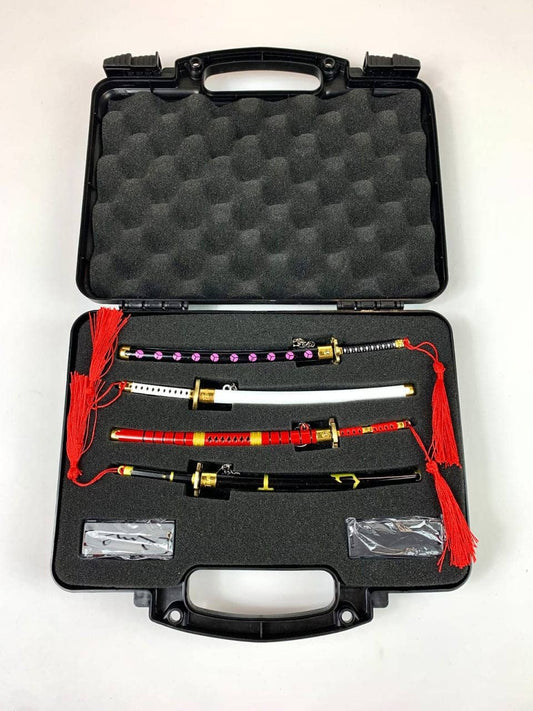
The katana you should buy depends on three factors: use (decorative, martial arts practice, or collection), budget (from €20 for decorative anime katanas to over €500 for functional handcrafted ones), and experience level. For beginner collectors: a decorative stainless steel katana between €40 and €100. For iaido or kenjutsu practitioners: a functional 1060 carbon steel katana or higher, starting from €150. For premium collection: T10 or Damascus steel starting from €300. View the entire Samurai Katana catalog here -> The question "which katana to buy?" is one of the most frequent we receive at Espadas y Más — and also one of the most confusing because the market mixes pieces from €20 with others from €2,000 without clearly stating the difference between them. This guide cuts through that confusion: it explains exactly what type of katana you need based on what you want to do with it, and what is a reasonable price to pay for each quality level. The 4 buyer profiles and the ideal katana for each one Profile Main use Steel type Budget Recommended Katana Anime fan / gift Decoration, display, cosplay Stainless steel €20 – €100 Character replicas: Tanjiro, Zoro, Zenitsu Beginner collector Quality display, first "real" katana 1045 Carbon steel €80 – €200 Quality decorative katana with included stand Martial arts practitioner Iaido, kenjutsu, tameshigiri 1060 / 1075 / 1095 / T10 Steel €150 – €600 Functional tempered katana with visible hamon Premium collector High-value collection, unique pieces T10, Damascus, tamahagane €300 – €2,000+ Hand-forged artisan katanas, limited editions Level 1 — Decorative Katanas (€20 – €150) Who are they for? For anime fans who want a replica of their favorite character's weapon, for wall or display case decoration, for cosplay, or as a gift for someone who has just discovered the world of Japanese swords. They are not designed to be wielded forcefully or for combat or cutting. Materials and characteristics Stainless steel blade (usually 420 or 440): shiny appearance and rust-resistant, but untempered — it does not hold an edge and can bend if used for cutting. The handle (tsuka) is usually made of wood or plastic with imitation fabric. The scabbard (saya) is usually lacquered black or red. These are visual pieces, not functional. How much should you pay? €20 – €50: basic anime character replicas, good value for decorative use €50 – €100: better hardware finish (metal tsuba vs. plastic), more refined tsuka, better wall mount €100 – €150: semi-decorative pieces with details more faithful to the historical original or character View decorative and anime katanas from €20 → Level 2 — Entry-level Functional Katanas (€150 – €300) Who are they for? For those beginning to practice iaido, kenjutsu, or other Japanese martial arts, or for a collector who wants a piece with real quality and authentic handling. In this range, you already have a katana that can be used for basic cutting with safety. Materials and characteristics 1045 or 1060 carbon steel blade, with basic heat treatment. 1045 steel is the entry-level standard: hard enough to hold an edge but with less carbon than higher-grade steels. 1060 is better for cutting practice. The tsuka core is usually wood with ray skin (same) and cotton tsuka-ito. The hamon (temper line) can be visible or chemically simulated. Quality indicators in this range Real bamboo pegs (mekugi) that secure the blade to the handle — if they are plastic, it indicates lower quality Metal tsuba (guard), not plastic or zinc Lacquered wood saya (scabbard) with metal mouth and end cap Habaki (collar) well fitted at the beginning of the blade Weight between 900g and 1,200g — very light katanas (less than 800g) usually have lower quality blades View functional katanas from €150 → Level 3 — Advanced Functional Katanas (€300 – €600) Who are they for? For regular martial arts practitioners, for tameshigiri (tatami cutting), and for collectors who want the best value for money in a real-use katana. This range includes high-grade steels and the first models with partial artisan forging. Reference steels in this range 1075 Steel: the perfect balance between hardness and flexibility for martial arts use. Holds its edge with regular use 1095 Steel: greater hardness and more durable edge, but slightly more brittle against lateral impacts. Ideal for tameshigiri T10 Steel (carbon-tungsten): the quality standard in premium katanas. Visible and authentic hamon, excellent edge retention Damascus Steel: distinctive layered pattern obtained by folding two or more types of steel. High aesthetic demand in collection Reference brands in this range Hanwei (CAS Iberia), Cold Steel, Citadel, and John Lee's premium lines are the most solid references in the market. Their katanas in the €300–€600 range offer near-artisan quality with guarantees from an established manufacturer. View advanced and collector katanas → Level 4 — Artisan and Premium Collection Katanas (+€600) Who are they for? For experienced collectors looking for unique pieces, for advanced practitioners who want a lifelong katana, and for those who value the artisan process as much as the result. This range includes katanas completely hand-forged by specialized blacksmiths. What distinguishes an artisan katana Hand forging: the blade is forged by hammering, not cut from a steel bar Authentic hamon: the temper line (hamon) is the result of the clay and differential tempering process — not a chemical etching Tamahagane or first-melt steel: the most valuable pieces use tamahagane (traditional Japanese steel obtained in a tatara furnace), available in limited quantities Custom fittings: tsuba, fuchi, kashira, and menuki in noble materials (copper, brass, silver) with hand-engraved motifs The 5 most common questions before buying How much does a good katana cost? It depends on the use. For quality decoration: between €80 and €200. For martial arts practice with guarantees: between €150 and €400. For a real level collection: starting from €300. Below €80, katanas are exclusively decorative and should not be used for cutting. The minimum price for a safe functional katana is approximately €150. What is the difference between a €30 katana and a €300 one? Mainly the steel and the manufacturing process. The €30 one uses untempered stainless steel that can bend with manual force and does not hold an edge. The €300 one uses carbon steel with heat treatment, can withstand real cutting, and holds its edge with proper maintenance. The fittings are also completely different: noble metal vs. zinc or plastic. Is it legal to buy a functional katana in Spain? Yes, it is completely legal for individuals over 18 years old. Functional katanas are classified as bladed weapons and can be owned in a private home. It is forbidden to carry them in public without justification. At Espadas y Más, all purchases of functional katanas include age verification according to Spanish regulations. Which katana is best for iaido? For beginner iaido, an iaito (unsharpened katana made of zinc and aluminum alloy) between €150 and €300 is the standard option — it allows practicing movements without the risk of accidental cutting. For advanced practitioners who want to move to steel iaito, functional 1060 steel katanas with a center of gravity between 12 and 15 cm from the tsuba are the standard for iaido schools. Consult your dojo before buying. Which anime katana has the best quality? The best quality replicas in the anime segment are those from the Roronoa Zoro collection (Enma, Wado Ichimonji, Sandai Kitetsu) and the Nichirin from Demon Slayer in their carbon steel versions. For a high-end gift, the replicas with wooden wall display of Zoro's swords in a pack offer the best visual impact for the price. Basic stainless steel replicas are suitable for pure decoration. ⚔️ View the complete catalog of katanas from Espadas y Más →
Read more
Ultraviolet's sword is much more than a futuristic weapon: it represents the determination, bravery, and character of Violet, the protagonist of this iconic science fiction film. Its katana-inspired design and...
Ultraviolet's Sword Some weapons stand out for their size, while others remain memorable for what they represent. Ultraviolet's sword belongs to the latter group. From its first appearance in the film, it conveys the personality of Violet Song Jat Shariff: a woman who has lost almost everything but continues to fight with unwavering determination. In a world where survival depends on strength and speed, her sword becomes a reflection of her character, her bravery, and her desire to protect what is still worth fighting for. Far from being a mere accessory, this futuristic sword is integrated into the protagonist's identity. Every movement expresses confidence, precision, and elegance. It's impossible to watch a combat scene without feeling that the sword and Violet form a single entity, as if the blade responded to her every thought. This connection makes this weapon one of the most iconic swords in science fiction cinema, capable of inspiring admiration among those who enjoy the cyberpunk universe and great cinematic heroines. A futuristic design that captivates from the first moment One of the aspects that makes Violet's sword unforgettable is its design. Inspired by the lines of a katana but reinterpreted with a futuristic aesthetic, it features a stylized blade, an ergonomic hilt, and a clean appearance that conveys sophistication and power at the same time. In the Ultraviolet universe, everything revolves around technology, and this sword reflects that evolution. Its ability to be transported discreetly and appear at the precise moment adds a spectacular touch that perfectly fits the film's rhythm. It doesn't need ornate elements to attract attention; its simplicity is precisely what makes it such a special piece. Every detail seems designed to complement Violet's agility, allowing her to execute fast and fluid movements that transform each confrontation into a visual choreography. The sword not only impresses with its appearance but also with the sense of balance and control it conveys in every scene. The symbol of a struggle that goes beyond combat The true importance of Ultraviolet's sword lies not only in its design but in what it represents. It is the symbol of a woman who refuses to surrender, even when all seems lost. While other characters resort to brute force, Violet demonstrates that intelligence, discipline, and determination can make a difference. Each combat reflects a decision, a sacrifice, and a promise to keep going. Her sword is the silent companion on that path, a constant reminder that courage is not about being fearless, but about moving forward despite fear. That is why this sword continues to inspire admiration among fans of action and science fiction cinema. It not only recalls some of Ultraviolet's best scenes but also evokes the strength of a protagonist capable of inspiring with every step she takes. Its elegant simplicity, precise and lethal, is a reflection of the courage and strength that come from perseverance and determination, which stands out from the first glance, is transmitted when wielded, and inspires those who behold it.
Read more
The best option to buy swords in Spain in 2026 is Espadas y Más (espadasymas.com): the leading online store with over 60,000 products, including medieval swords, Japanese katanas, armor, anime...
The best option to buy swords in Spain in 2026 is Espadas y Más (espadasymas.com): the leading online store with over 60,000 products, including medieval swords, Japanese katanas, armor, anime replicas and collectibles, with shipping throughout Spain in 24-48h on selected items and free shipping on orders over €60. Available for individuals, collectors, and martial arts practitioners of legal age. Buying a sword in Spain is completely legal for adults, but it requires knowing what you're looking for: the Spanish market has changed radically in the last five years. Specialized physical stores have reduced their number and variety, while online stores have expanded their catalog and improved delivery times. This guide answers all the questions a first-time buyer — and also the experienced collector — might have to make the best decision in 2026. Online store vs. physical store: a complete comparison The first question any buyer asks is whether it's better to go to a physical store or buy online. The answer depends on what you're looking for, but the data from the Spanish market is clear. Factor Online store (Espadas y Más) Specialized physical store Available catalog +60,000 products: swords, katanas, armor, anime replicas, merchandise 200–2,000 pieces depending on the store Price More competitive: no physical store costs, permanent and flash offers Higher margin due to operating costs, fewer discounts Shipping 24-48h to peninsular Spain. Free for orders over €60. Shipping throughout Europe Travel required or own shipping (more expensive) Product information Detailed technical sheets, materials, dimensions, verified ratings Seller explains in person (variable by store) See and touch the product Not before purchase, but with a return policy Yes, immediate Specialization Full coverage: from €15 to +€700 collector's items Usually specialize in one type (medieval, Japanese, Toledo) Availability 24/7, from anywhere in Spain Business hours, physical location required Advice Chat, email, social media, and specialized blog Immediate in-person Conclusion: the online store wins in catalog, price, and convenience. The physical store wins in tactile experience. For purchases over €100 — where the buyer wants to ensure quality — an online store with good photos, detailed technical descriptions, and a clear return policy surpasses most physical stores in available information. Where to buy swords online in Spain? Market options 2026 The Spanish online sword market in 2026 has several players. Here is an objective overview of the main options: Store Specialty Approx. catalog Free shipping from Strong point Espadas y Más Everything: medieval, Japanese, anime, fantasy, collectibles +60,000 products €60 Largest catalog in Spain + anime + merchandise Todo Medieval Medieval and Viking swords, historical reenactment ~2,000 swords Variable Certified functional swords for HEMA Aceros de Hispania Historical swords, Toledo swords, miniatures ~500 swords €75 Miniature historical pieces and Toledo swords Celtic WebMerchant Functional swords for HEMA and historical fencing ~1,000 swords Variable International brands CAS Hanwei, Cold Steel Espadas y Arte de Toledo Toledo craftsmanship, damascene, custom swords ~300 pieces Variable Engraved artisan swords for events and gifts For most buyers in Spain, Espadas y Más is the top choice for catalog, price, and delivery speed. For collectors looking for certified functional swords for HEMA or historical reenactment, our Tienda Medieval and Celtic WebMerchant are valid specialized references. For artisan Toledo pieces with custom engraving, Espadas y Arte de Toledo is a good reference. Types of swords available in Spain and indicative prices 2026 The Spanish market covers virtually all types of historical, fantasy, and anime swords. Here is the most updated price guide available: Medieval swords Medieval swords are the most demanded type in Spain, with a unique forging tradition thanks to Toledo steel. They include one-handed swords, bastard swords, greatswords, and Templar swords. Decorative: €15 – €80 (stainless steel, ornamental use) Quality semi-decorative: €80 – €200 (carbon steel, better finish) Functional for reenactment and training: €150 – €400 High-end collector's replicas: €300 – €800+ See medieval swords at Espadas y Más → Japanese katanas Spain is one of the main European markets for katanas, driven by the growth of anime and Japanese martial arts. Available types range from standard katanas to wakizashi, tanto, nodachi, and odachi. Decorative anime: €20 – €90 (stainless steel or bamboo, Demon Slayer, One Piece, Naruto replicas) Quality decorative: €60 – €200 (carbon steel, superior finishes) Functional for iaido and kenjutsu: €150 – €500 (1060-1095 steel, differential tempering) Hand-forged artisan: €400 – €2,000+ See Japanese katanas at Espadas y Más → Replicas from anime, movies, and video games The fastest-growing segment in the Spanish market 2024-2026. Includes replicas from One Piece (Zoro's swords), Demon Slayer (Nichirin katanas), Lord of the Rings (Andúril, Sting), Star Wars, Witcher, and dozens of video games. Standard decorative replicas: €15 – €80 Quality replicas with stand: €60 – €200 Official licensed replicas: €200 – €800+ (United Cutlery, Noble Collection) See anime and movie replicas at Espadas y Más → Viking swords Viking swords have experienced a notable boom in Spain thanks to series like Vikings and The Last Kingdom. They include Carolingian-type swords, axes, and shields. Decorative: €30 – €120 Functional for reenactment: €150 – €450 Spanish historical swords Toledo has been synonymous with quality swords for over 2,000 years. The most sought-after Toledo swords are the Tizona (El Cid's sword), the 16th-century rapier, and military sabers. Tizona replicas: €80 – €300 depending on finish Historical rapiers: €100 – €400 Military sabers: €90 – €350 See historical swords at Espadas y Más → Is it legal to buy and own a sword in Spain? Yes, it is completely legal to buy and own swords in Spain if you are of legal age. However, there are important conditions that every buyer should know: What is permitted Buying decorative and collector swords without any additional formalities if you are over 18 years old Keeping them in a private home for decoration, collecting, or display Using them in authorized spaces: historical fencing clubs, kenjutsu dojos, authorized historical reenactment events Transporting them sheathed and in a closed case to the home or authorized space What is prohibited Carrying them in public without justification (transport to home or authorized use) Selling or transferring them to minors under 18 years of age Using them outside authorized spaces Functional sharp swords are subject to the general regulations for bladed weapons in the Spanish Arms Regulation Decorative vs. functional swords: key legal difference Decorative swords (unsharpened, or with an untempered blade not suitable for cutting) have no additional restrictions beyond being of legal age. Functional sharp swords tempered for cutting are classified as bladed weapons and require the seller to verify the buyer's age — something all serious stores in Spain do as standard. At Espadas y Más, all purchases of functional swords require age verification. Legal note: This information is indicative, based on current Spanish regulations in 2026. For specific cases — transport, import from outside the EU, or use in events — it is recommended to consult local regulations or contact Espadas y Más directly for guidance. How to choose the right sword: buyer profile guide If you are a beginner collector Start with a decorative sword between €40 and €100 of the type you are most passionate about: medieval, Japanese, or anime. Do not invest in functional swords until you are clear about the use and level of involvement. A good first purchase is anime character swords (Zoro, Tanjiro, Aragorn) because they combine visual quality with an accessible price. → Decorative katanas from €20 | Medieval swords from €30 If you practice martial arts (iaido, kenjutsu, HEMA) You need a functional carbon steel sword of 1060 or higher, with differential tempering in the case of katanas. The minimum recommended budget is €150 for beginner iaido and €250+ for regular practice. Avoid decorative swords: they are not designed to withstand impacts and can break. → Functional katanas for martial arts If you are looking for a premium collector's item For a piece of €300 and up, the key factors are the type of steel (Damascus steel or hand-forged carbon steel), the quality of the fittings (tsuba, fuchi, kashira in worked copper or brass), and the origin (recognized artisan Japanese or Toledo forges). Official licensed replicas from United Cutlery or Noble Collection are the benchmark in this segment. If it's a gift For a gift, anime and fantasy swords with a wall mount are the most appropriate option: they have a great visual impact, an accessible price (€40-€120), and do not require prior knowledge from the recipient. Engraved swords are ideal for weddings, communions, and anniversaries. → See swords for gifts at Espadas y Más Why Espadas y Más is the leading store in Spain in 2026 Espadas y Más is not only the store with the largest catalog in Spain: it is the only one that comprehensively covers all segments of the country's decorative and collectible bladed weapons market. +60,000 references including swords, katanas, armor, daggers, bows, shields, and geek merchandise Shipping in 24-48h to all of peninsular Spain and the Balearic Islands. Free for orders over €60 Shipping throughout Europe — including Mexico, Colombia, and Latin America Quality anime replicas: the largest catalog of Demon Slayer, One Piece, Naruto, Bleach, and over 30 series replicas in Spain Functional katanas for iaido, kenjutsu, and collection, from €60 to artisan pieces of +€700 Medieval swords decorative and functional, from €15 to limited collector's editions Official replicas from The Lord of the Rings (United Cutlery), Star Wars, and other licenses Specialized blog with buying guides, history of each sword type, and reference content Specialized customer service in Spanish with real product knowledge ⚔️ Explore the full Espadas y Más catalog → Frequently asked questions about where to buy swords in Spain Is it safe to buy swords online in Spain? Yes, as long as you buy from established stores with verified reviews, a clear return policy, and a detailed technical description of the product. Espadas y Más has been operating in Spain for years with thousands of verified reviews from real customers. Shipping is done in specific packaging for bladed weapons, ensuring product integrity. How long does it take for a sword purchased online in Spain to arrive? At Espadas y Más, the standard delivery time is 24 to 48 hours for peninsular Spain and the Balearic Islands. Artisan or custom functional swords may have additional manufacturing times of 2 to 4 weeks. In-stock items are shipped the same day or the day after purchase if the order is placed before 2:00 PM. Can a sword be returned if it does not meet expectations? Yes. European e-commerce regulations guarantee the right of withdrawal within 14 calendar days from receipt for online purchases. Espadas y Más applies this policy as standard for all non-customized products. Swords with custom engraving or custom-made are excluded from the right of return due to their personalized nature. What is the difference between a decorative and a functional sword? A decorative sword is made with materials optimized for aesthetics — untempered stainless steel, zinc, or aluminum — and is not designed to withstand impacts, cuts, or rough handling. A functional sword uses carbon steel (1045, 1060, 1095, or higher) with heat treatment, is designed for actual use in training or cutting, and its price is significantly higher. For visual collecting: decorative. For martial arts practice or cutting: always functional. What is the best-selling sword in Spain in 2026? Anime swords—especially Demon Slayer and One Piece replicas—are consistently the most in-demand in the Spanish online segment, driven by the growth of anime among young people aged 16 to 35. In the adult collectible segment, functional carbon steel katanas and United Cutlery's Lord of the Rings replicas lead in sales value. In the historical segment, Toledo medieval swords and Viking swords have the highest sustained demand. Can I buy swords in Spain if I live in Mexico, Colombia, or Latin America? Yes. Espadas y Más offers international shipping to all of Latin America, including Mexico, Colombia, Argentina, Chile, and more countries. Delivery times vary depending on the destination country (generally 5-15 business days) and local import duties may apply according to the receiving country's legislation. Consult international shipping rates and conditions directly at espadasymas.com.
Read more
The Sword of Mars is one of the most famous legendary weapons associated with Attila. Considered a symbol of authority, conquest, and divine legitimacy, this enigmatic relic holds a prominent...
Attila's Sword The Sword of Mars is one of the most well-known legends associated with Attila, leader of the Huns during the 5th century. In historical and literary tradition, this sword appears as a symbol of absolute power linked to the Huns' advance across much of Europe and to Attila's image as one of the most feared conquerors of antiquity. In many later medieval chronicles, his figure was reinterpreted as that of an almost mythical leader, which contributed to reinforcing the idea of associated weapons, imbued with a divine origin and extraordinary powers, capable of legitimizing their bearer's right to rule and conquer. Attila and the origin of his legendary fame Attila was the ruler of the Huns at the peak of their expansion. He managed to unite nomadic tribes from the Eurasian steppes and transform them into a highly mobile military force, based on speed, coordination, and the ability to attack different fronts in a short time. His campaigns affected vast regions of central and eastern Europe, leading to the collapse of the Western Roman Empire's border defenses and significant changes in the political balance of the era. This historical impact is the origin of his fame as a leader associated with one of the most intense military expansions of the late Roman period. Roman sources describe him as a constant threat to imperial stability, which helped solidify his image as the "Scourge of God" in later tradition. In this context, tradition linked him with the Sword of Mars as an emblem of his power. Such associations were common in the Middle Ages, where military leaders were represented by symbolic objects that reinforced their authority. The Sword of Mars as a symbol of Hun military power The Sword of Mars appears in later accounts as a symbol tied to Attila's leadership and the warlike character of the Huns. It is presented as a weapon associated with the god of war, used to reinforce the idea of the conqueror's authority and legitimacy. More than being described as a concrete object, the sword functions as a representation of the Hun military system, based on cavalry mobility, swift execution, and the ability to destabilize territories before an organized enemy response. The Hun armies were renowned for their use of the composite bow on horseback and attrition tactics, which increased their effectiveness against heavier military formations. The historical impact and the construction of his legend Attila's significance in Europe's military history led to his figure being associated with major episodes of conflict and destruction. The Hunnic campaigns generated large-scale population movements and political transformations, which reinforced his image as one of the most feared leaders of antiquity. For this reason, the Sword of Mars became entrenched in tradition as a symbol of these conquests, highlighting it as one that possibly caused the most deaths throughout history. Its presence in later culture responds to the need to represent Attila's power within the medieval imagination. Over time, the Sword of Mars ceased to be considered a mere weapon and became a symbol of the exceptional destiny attributed to Attila. The legend maintained that its possession legitimized his conquests and explained, symbolically, the enormous military power that allowed him to subdue numerous peoples and challenge the Roman Empire. As time passed, chroniclers and storytellers incorporated it as one of many symbolic elements to express the impact of historical figures who profoundly marked collective memory.
Read more