América
Astronomical Knowledge of the Mayans: Predictions, Calculations, and Meanings
Systematic Sky ObservationThe Mayan civilization, which flourished from approximately 2000 BCE to the 16th century, d...


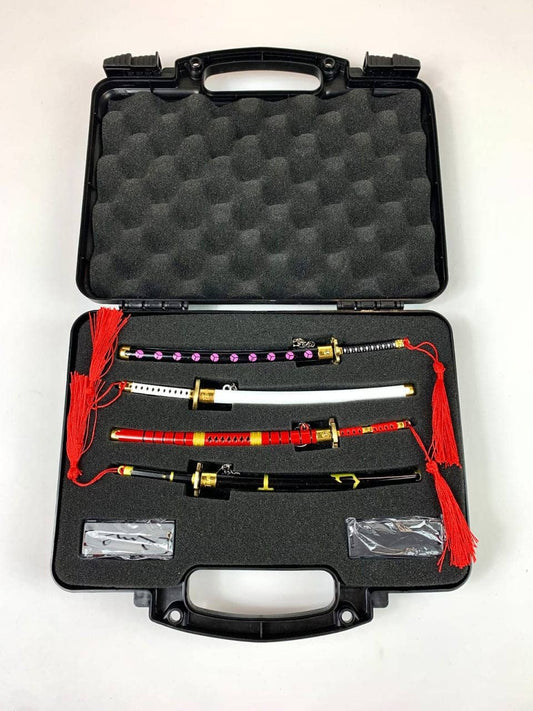


Katana vs Toledo Sword When it comes to legendary weapons, few objects evoke as much respect as the Japanese katana. Its razor-sharp edge, the elegance of its design and the skill associated with the samurai arts have fuelled its myth as one of the best melee weapons ever created. But is the katana really superior to all other swords, including European ones? This debate, popularised by cinema and some urban myths, deserves a more detailed and contextualised analysis. Check out this cool Katana Wado Ichimonji The context of katana and swords It is crucial to understand that an absolute comparison between weapons ignores fundamental factors such as historical context, fighting styles, and armor. Sengoku period samurai wore light armor composed of sheets of leather and metal that protected their torso, arms, forearms, and upper thighs. This armor, while effective against slashes and thrusts from Japanese weapons, had weak points in vital areas and amplified impacts by lacking significant internal padding. While it allowed good mobility in the torso and arms, it limited leg movement, which could be crucial in combat. On the other hand, the Spanish rodelero wore more complete and thicker armour, with a breastplate, backplate, shoulder pads and greaves that offered greater protection. In addition, he had a padded vest that absorbed impacts and a rodela, a shield that not only served to defend himself, but could also be used as an offensive weapon to strike or charge against the enemy. This Jin Sakai katana is incredible! Comparison of weapons The katana Advantages : The curved blade and long handle of the katana make it an exceptional cutting tool. Kenjutsu movements, focused on precise and fast cuts, are ideal for fast combats and at medium distances. Its design allows for agile maneuvers, such as the use of the tsuba (handguard) or grip changes to adapt to short distances. Disadvantages : Its focus on slashing reduces its effectiveness against strong armor. The lack of a shield leaves the samurai at a tactical disadvantage against an opponent with additional protection. Additionally, the thrusting technique, less prominent in kenjutsu, limits its ability to penetrate strong armor. The Toledo sword Advantages : Similar in length to the katana, but with a straight edge and optimized design for thrusts. This, combined with the use of only one hand, allows the rodelero to maintain greater reach and flexibility in his attacks. The sword can execute both cuts and stabs with great effectiveness. Disadvantages : Although versatile, the weight of the armor and shield can slightly reduce attack speed compared to the samurai. However, this is offset by the defensive capabilities and tactical design of the equipment. Check out our best Toledo Swords! Combat style: The key is in the technique The samurai bases his style on fluid movements, with quick and precise cuts, favouring dynamic combat. However, against a heavily armoured swordsman, the usual kenjutsu techniques are limited. The katana, although powerful, cannot easily penetrate the Spaniard's armour. The rodelero , on the other hand, uses a tactical approach that combines simultaneous defense and attack. The rodelero allows him to protect himself while launching precise counterattacks with his sword. The estocada, difficult to detect due to its linear speed, is especially dangerous in combat. Conclusion: Who has the advantage? In a confrontation between a samurai and a rodelero, both with similar technical skills, the Spanish rodelero would have the advantage due to his superior weaponry. The more complete armor and the use of the rodela allow him to compensate for the samurai's agility and skill with the katana. However, as in any combat, individual skill and strategy are determining factors. This Tizona sword is so cool! An expert samurai could take advantage of the unprotected areas of the rodelero, such as the limbs or face, to execute lethal cuts. On the other hand, a well-trained rodelero would have a greater chance of dominating the situation thanks to his defensive equipment and the versatility of his Toledo sword. This analysis, rather than settling the debate, seeks to highlight the importance of context and specific conditions in any comparison of historical weapons. What do you think? Leave us your comments!
Read moreThe best Japanese Katanas. In our store, we have items of all kinds, but if there is something that defines us and that we love to offer to our esteemed customers, it is our precious Japanese katanas. We know that among our customers there are practitioners of Iaido, kenjutsu, and of course many just want a katana for display and to have at home, it may or may not be functional, simply decorative (and many times they are great anime katanas!). That's why we bring you some of the best products in our store. Don't miss out! We're sure you'll love them! You'll love this functional katana from Jin Sakai! The use and types of katanas: Our online store is the most complete on the market, offering a wide range of models for all tastes and at the best prices. At Espadas y Más, we are specialists in original Japanese katanas. We have an exceptional selection of high-quality katanas, handcrafted by the best craftsmen in Japan. Our katanas are made from premium materials such as carbon steel, stainless steel and Damascus steel. Each one is forged using traditional Japanese techniques to ensure authenticity and excellence. This Enma display Katana is great! We have katanas for different purposes, including: Martial arts : Perfect for practicing disciplines such as kendo, iaido and battojutsu. Collection : True works of art, ideal for lovers of Japanese swords. Decoration : Elegant pieces that add a distinctive touch to any space. Find the katana you are looking for and experience having an authentic Japanese piece. But we still have a big surprise for you! Are you an anime fan looking for a special piece for your collection? Our LED katanas will immerse you in the world of your favorite series. Let yourself be enveloped in a spectacle of light and colour with the most authentic replicas of your favourite characters' swords! Explore our exclusive collection of LED katanas, created for true collectors: Kimetsu no Yaiba : Unleash your inner demon hunter with the katanas of Tanjiro Kamado, Nezuko Kamado, Giyu Tomioka, and many more. One Piece : Wield the swords of Roronoa Zoro and feel the strength of a true swordsman. Naruto : Unleash the power of chakra with the katanas of Naruto Uzumaki, Sasuke Uchiha and Kakashi Hatake. Demon Slayer : Face demons with the most iconic swords in the series. Other series : We have LED katanas inspired by your favorite anime. Why choose our LED katanas? Unmatched Quality : Made from high quality materials, our LED katanas are detailed and faithful replicas. LED Lighting : Each blade incorporates color-changing LED lights for mesmerizing visual effects. Artistic design : Each katana perfectly captures the essence of the character and his universe. Collectibles : Ideal for displaying in your room or showcase. Light up your collection and make your LED katanas the center of attention for all anime fans! We hope you liked our katanas, and remember that at Espadas y más we are always here to help you. Don't hesitate to tell us your doubts and questions!
Read moreWelcome to an article about Swords and More. We hope you are all well. Today we want to tell you about a topic that we are sure you will find interesting, specifically, we are going to... Compare the Japanese katana with the medieval sword! KATANA VS MEDIEVAL SWORD Both the katana and the medieval sword are great weapons used in warfare throughout the history of the nations of the world. Below we will compare the most important technical aspects of both weapons. Balance and Maneuverability: -Katana: Its balance is delicate, allowing for quick and precise movements. Skilled blacksmiths achieve a distribution of mass that guarantees stability in each blow. -Medieval Sword: It can vary in balance depending on the specific design, but it is usually heavier and less agile than the katana. Check out this medieval carbon steel sword Percussion Center: -Katana: It has a “sweet spot” along the blade for powerful blows with minimal vibration and recoil. -Medieval Sword: The point of impact can vary depending on the design, but is rarely optimized in the same way as in the katana. Check out this Witch King's Sword from Lord of the Rings Blade Geometry: -Katana: The curvature of the blade (sori) concentrates the force along the edge, improving cutting ability and reducing resistance. -Medieval Sword: It can have a straight or slightly curved blade, but it does not focus as much on optimizing the geometry for cutting. I love this medieval German sword! Materials: -Katana: Traditionally forged with tamahagane, a steel cast from iron sand, known for its purity and strength. -Medieval Sword: Made with various types of steel, often less refined than tamahagane. Check out this cool Kill Bill Katana with display stand and accessories! Metallurgical Techniques: -Katana: Modern swordsmiths employ a wide range of high-quality steels and alloys, optimizing strength, durability and flexibility. -Medieval Sword : It depended largely on the techniques available at the time and region, which influenced the quality and characteristics of the steel used. This One Piece Wado Ichimonji Katana is amazing! Both weapons were important in their historical and cultural context, and for collectors and practitioners of Japanese or European martial arts (HEMA), we have the best products available, but what do you think is the best option, a katana or a medieval sword? Tell us!
Read moreWelcome to a new article on Swords and More. Today, we want to be useful to all those customers who really want to buy a katana but don't know where to start. We tell you everything you need to know to make the right purchase! Which katana should I buy? The first thing you need to decide is whether you want an authentic Japanese katana (Shinken) or a decorative one (Iaito or unsharpened Shinken). Shinken are sharp swords and are designed for cutting, while Iaito and unsharpened Shinken are for practice or display. (Keep in mind that traditionally Shinken were real katanas that came from Japan, made by a craftsman etc. However, due to the increase in the market in recent years, any sharp katana has come to be called Shinken, at least in non-specific environments. This terminology is the one we will use in this post, for the sake of simplicity.) Sharp Katanas (Shinken) If you want to buy a sharp katana, designed for cutting, you have different price ranges and models. Some belong to famous television series or movies like this katana , while others are designed in a more traditional way like this model that we show you below. Choose the one that best suits what you are looking for and the use you are going to give it, whether for the mere pleasure of having it at home or in your dojo or for the practice of cutting with soft objects, tameshigiri, etc. It is important that you like it, since it will be with you for a long time. (If you want a sharpened model but prefer it unsharpened, contact us, we can do it) Dull Katanas (Iaito) Usually, blunt katanas are called iaito. Within this wide range of katanas, you can opt for a proper iaito, for the practice of Iaido , (like this spectacular model) or a more decorative katana, which you may like, but is not functional like the one we show you below. Any option is good, since they are all high-quality katanas, within the scope for which they are designed, and there are even customers who look for a katana that does not have a steel blade, but rather a bamboo one, for aesthetic reasons, comfort, or even safety, such as this model . At Espadas y más we are here to help you, do not hesitate to contact us so we can resolve your doubts, whether it is about which katana to choose or any other question related to the store!
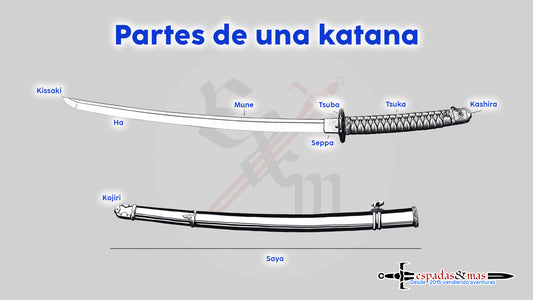
Read moreWelcome to a new article from Espadas Y Más. Today we bring you a very special post, which we are sure will be of interest to you. We are going to tell you what the parts of a katana are! Parts of a katana As you know, the katana is one of the most famous Japanese swords in history. Below we tell you the parts into which it is divided! Check out this spectacular katana for iaido! Ho (刃): This is the blade of the katana and is made primarily of steel. The blade has one sharp side and one dull side. Mune (棟): This is the back or spine of the blade. It can have different shapes, such as a diamond-shaped or round mune. Kissaki (切先): This is the sharp tip of the blade. The shape of the kissaki can vary, the most common being the chu-kissaki (half point) and the o-kissaki (large point). Ha (刃): This is the edge of the blade, which is what cuts. The ha must be extremely sharp to be effective in combat. Boshi (鋩子): This is the tip of the blade, near the kissaki. The shape and design of the boshi can vary and are distinctive features of each sword. Nakago (中心): This is the tang or unsharpened part of the blade that extends into the handle (tsuka). The nakago has inscriptions that provide information about the smith, the date of manufacture, and other characteristics of the sword. Check out this Katana Wado Ichimonji from One Piece! Tsuba (鍔): It is the sword's hand guard, designed to protect the wielder's hand from the opponent's attacks. Tsuka (柄): This is the handle of the katana. It is usually made of wood and wrapped with leather and cord to provide a comfortable and secure grip. Menuki (目貫): These are ornaments or decorations found on both sides of the handle, below the grip cord (tsuka-ito). Menuki can be of different shapes and represent traditional or symbolic themes. Did you like it but prefer the bamboo one? Same (鮫): This is sharkskin or similar material used to wrap the handle under the grip cord. It provides a non-slip surface and improves the aesthetics of the handle. Ito (糸): This is the cotton or silk cord used to wrap the handle over the shark skin. The ito not only serves as a decorative element but also provides additional grip. Kashira (頭): It is the end of the handle (tsuka) that serves as a counterweight and is firmly attached to the end of the handle. Fuchi (縁): This is the collar or ring that is placed at the base of the handle, near the hand guard (tsuba), to secure the tsuka-ito in place. Saya (鞘): It is the sheath or cover of the katana, generally made of wood and lacquered to protect the blade when not in use. Any questions? Check out our katana shop directly! Koiguchi (鯉口): This is the mouth of the saya, where the blade of the katana is inserted. The koiguchi is usually made of metal or a reinforced piece of wood. Kojiri (鐺): This is the end of the saya, opposite the koiguchi. The kojiri can be made of metal or other materials and has a decorative and protective function. We hope you enjoyed it and find it useful in learning the parts of a katana, either at a basic level or in detail!
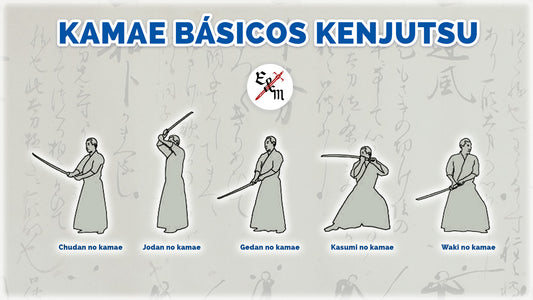
Read moreWelcome to a new article from Espadas Y Más. Today, we want to talk to you about the postures of Japanese Budo with katana, used in Kenjutsu, iaido and related arts in which the katana is used such as ninpo. Remember that you can buy your favorite katanas in our store Basic Positions (Kamae) with Katana Welcome to a new article from Espadas Y Más. Today, we want to talk to you about the postures of Japanese Budo with katana, used in Kenjutsu, iaido and related arts in which the katana is used such as ninpo. The kamae we are talking about today are: - Chudan no kamae: The sword is held in front of the body, approximately at chest or stomach level. The blade is generally pointed towards the opponent or slightly downwards. The grip of the sword is firm but not tense, allowing for fluid movement and quick response to the opponent's actions. The body is balanced, with the feet shoulder-width apart. The knees are slightly bent and the back is straight. This posture allows mobility and stability during combat. In this stance, the swordsman is prepared to both attack and defend. The position of the sword and body allows for quick transitions between strikes, parries, and other techniques. Check out this katana, One Piece Fan ;) -Jodan no kamae: The sword is held above the head or slightly in front of the forehead. The blade is usually angled downwards towards the opponent, ready to deliver powerful overhead blows. The hilt of the sword is strong yet flexible, allowing for quick and precise movements. The position of the hands facilitates offensive and defensive actions from the high stance. The body is upright with the feet shoulder-width apart. The knees are bent to maintain balance and stability, and the back remains straight. This posture allows for agility and quick movements during combat. In "Jodan no kamae", the swordsman is prepared to deliver overhead slashes, while also being prepared to defend against high-level attacks. The elevated position of the sword allows for strong downward slashes and thrusts. A perfect katana for Iaido practice -Gedan no kamae: The sword is held low, often at or below waist level. The blade is positioned to defend against low attacks and can be quickly raised to counterattack. The sword's grip is firm and adaptable, allowing for quick changes of direction and fast defensive maneuvers. The hand position facilitates offensive and defensive actions from the low stance. The body is in a low position, with the knees bent and the back slightly leaning forward. The feet are placed shoulder-width apart to maintain stability and allow for agile movement. In "Gedan no kamae", the swordsman is prepared to defend against low blows and to launch counterattacks from the low stance. The low stance provides a solid base for strong thrusts and sweeps aimed at the opponent's lower body. Check out this Functional Katana from Kill Bill! -Kasumi no kamae: The sword can be held in a less conventional or more fluid manner, making it difficult for opponents to predict the direction of attacks or defenses. The practitioner may use subtle body movements, weight shifts, or changes in stance to create confusion and mislead the opponent. "Kasumi no kamae" may emphasize the development of heightened awareness, intuition, and the ability to read and respond to the opponent's movements on a deeper, more intuitive level. The stance encourages adaptability and improvisation, allowing the practitioner to adjust their techniques and strategies based on the specific situation and the opponent's actions. Our Wakizashi Collection -Kasumi no kamae: The sword is held close to the body, often hidden behind the back or to the side, making it difficult for the opponent to anticipate the direction or timing of attacks. The sword grip is relaxed but prepared, allowing for quick and unexpected movements. The body is turned slightly to one side, with the sword hidden behind the back or near the hip. The knees are bent and the back is straight to maintain balance and stability. In "Waki no kamae", the swordsman is prepared to defend against attacks while also being ready to launch surprise counterattacks from the hidden position. The deceptive nature of this stance can be used to create openings and exploit the opponent's vulnerabilities. We hope you enjoyed this introduction to kenjutsu kamae. Don't miss new posts for more guides and tutorials!
Read more
Today, knowing that many of you have acquired katanas in our store , we will tell you 5 very useful tips to take care of the maintenance of your favorite...
Welcome to this article on the Espadas Y Más blog. Today, knowing that many of you have purchased katanas in our store , we will tell you 5 very useful tips to take care of the maintenance of your favorite weapons. Check out our functional katanas! Regular Cleaning: Regular cleaning is essential to prevent dirt, moisture and corrosion from building up on your katana. After each use, be sure to gently wipe the blade with a soft, clean cloth to remove any residue. Use a katana-specific oil to protect the blade from rust and maintain its characteristic shine. Proper Storage: Improper storage can cause irreparable damage to your katana. Avoid exposing it to moisture, direct sunlight, and sudden changes in temperature. Use a cloth sheath or a wooden stand designed specifically for katanas to protect it from bumps and scratches. Also, make sure it is placed in an upright position to prevent warping of the blade. Functional Kill Bill Katana Periodic Inspection: Perform regular inspections of your katana for any signs of wear, corrosion, or loosening of components. Pay particular attention to the integrity of the blade, handle, and guard. Edge Maintenance: The edge of a katana is one of its most important features, so it requires special care. Use a fine-grit sharpening stone to keep the edge sharp and even. Avoid using abrasive tools that can damage the blade and compromise its integrity. Red Sharp Functional Katana Respect and Reverence: Last but not least, always treat your katana with respect and reverence. Keep the samurai tradition alive by honoring the essence and meaning of this noble weapon with simple examples such as not leaving it standing without support, since touching the ground directly could damage its saya. Jin Sakai's Katana We hope that these 5 tips have been useful to you. Always remember to properly maintain your katana, take advantage of the offers in our store and, above all, enjoy it!
Read more
If you are looking for a functional katana for practicing martial arts, cutting objects, or simply enjoying its aesthetics, there are some key features you should keep in mind.
The katana , that legendary Japanese sword, is not only a symbol of power and beauty, but also a formidable tool in the hands of an expert. If you are looking for a functional Japanese katana to practice martial arts, cut objects, or simply enjoy its aesthetics, there are some key features you should keep in mind. (And we also have discount codes for VALENTINE'S DAY) Sheet: Material: Carbon steel is the traditional choice and offers a balance of hardness, flexibility and strength. Stainless steel is more resistant to corrosion, but can be more brittle. Forging: Traditional hand forging (tsukurikomi) produces a stronger, sharper blade. Machine forging is less expensive, but may sacrifice quality. Edge: The edge should be sharp and even. A good edge can easily cut through paper, fabric, and other materials. Geometry: The curvature of the blade (sori) and the shape of the tip (kissaki) are important for handling and precision. Red Sharp Functional Katana! Tsuka (handle): Material: Beech or oak wood are popular choices, offering strength and durability. Wrapping: The ito (string) should be made of cotton or silk, and be tightly fitted for a firm grip. Tsuba (guard): The tsuba protects the hand and can be made of metal, wood or even ivory. Functional Kill Bill Katana! Saya (sheath): Material: Magnolia wood or bamboo are the traditional materials, offering protection and lightness. Fit: The saya should fit the katana perfectly to prevent it from moving or becoming damaged. Functional Shirasaya Katana! Other features: Habaki: The habaki is a piece of metal that sits between the blade and the tsuba, and helps hold the blade in place. Mekugi: The mekugi are two bamboo pegs that hold the blade to the handle. Bohi: The bohi is a longitudinal channel that runs through the blade and reduces its weight without sacrificing its strength. Additional considerations: Experience Level: If you are a beginner, it is advisable to start with a less expensive and easier to handle katana. Intended Use: If the katana will be used for martial arts practice, it is important to choose one that is sturdy and durable. With these features in mind, you will be better prepared to find the perfect functional katana for your needs in our store!
Read more
In the vast landscape of Japanese history, one singular figure stands out whose legacy has stood the test of time: Miyamoto Musashi. Through his life, Musashi forged a unique path...
In the vast landscape of Japanese history, one singular figure stands out whose legacy has stood the test of time: Miyamoto Musashi . This Edo period samurai left an indelible mark on the history of martial arts and warrior philosophy. Through his life, Musashi forged a unique path that goes beyond mere skill with the katana, exploring the nature of combat and its wisdom, as well as the art of living – and dying. Musashi's Youth: Miyamoto Musashi was born in 1584 in the tumultuous feudal era of Japan. From a young age, he demonstrated exceptional skills in combat, with his first military experience coming at the age of thirteen . He faced off against Arima Kihei, an experienced warrior, and emerged victorious using a makeshift wooden shovel as a weapon. This event marked the beginning of a life dedicated to honing his skills and studying combat strategies. Check out our katanas ! Musashi's Journey: Musashi embarked on a traveling journey, known as the " Nanshū Kōran " or "pilgrimage of truth-seeking". During this time, he honed his skill with the katana , challenging and defeating numerous opponents, earning himself a formidable reputation. His notable duels include the legendary clash against Sasaki Kojirō on Ganryūjima Island. The Writing of "The Book of Five Rings": Throughout his life, Musashi was not only a master of the sword, but also a notable philosopher and strategist. In his moments of retirement, he wrote "Gorin no Sho" or "The Book of Five Rings." This treatise not only addresses combat tactics, but also explores the essence of strategy, perception, and adaptability in everyday life. Check out our practice katanas: https://espadasymas.com/collections/katanas-de-practicas His deepest teaching: Musashi embraced the concept of " mushin " or "mindless mind." This involves reaching a state of mind where the mind is not obstructed by unnecessary thoughts or superfluous emotions. This state of emptiness allows for a quick and efficient response in critical situations. Miyamoto Musashi passed away in 1645, but his influence lives on today. His focus on simplicity, adaptability, and self-mastery has endured not only in Japanese martial arts, but also in fields such as philosophy, business, and self-help. The principles Miyamoto Musashi espoused have transcended time and space. His timeless approach continues to inspire those who seek the path of mastery and wisdom. Get one of our functional katanas: https://espadasymas.com/collections/katanas-funccionales
Read more