América
Astronomical Knowledge of the Mayans: Predictions, Calculations, and Meanings
Systematic Sky ObservationThe Mayan civilization, which flourished from approximately 2000 BCE to the 16th century, d...


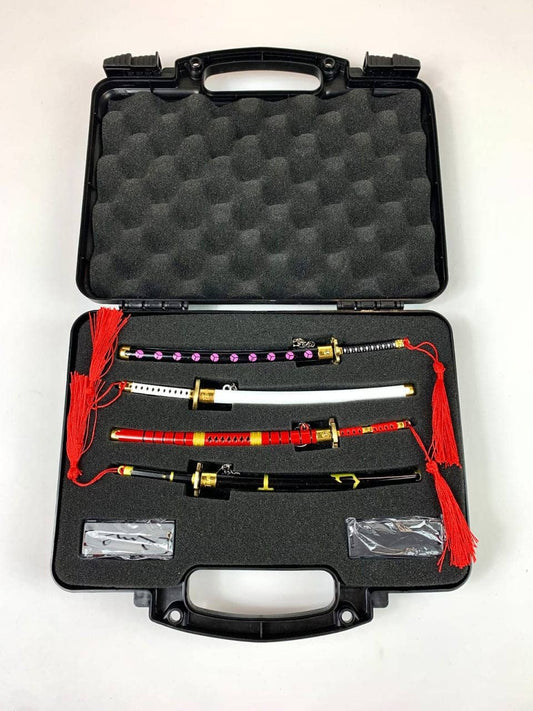

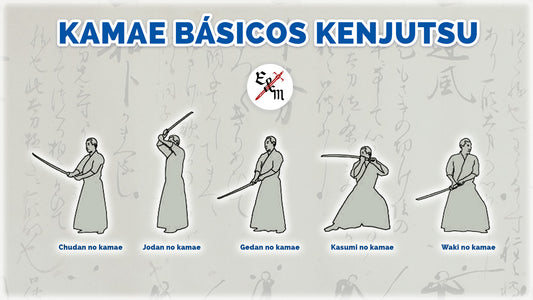
Welcome to a new article from Espadas Y Más. Today, we want to talk to you about the postures of Japanese Budo with katana, used in Kenjutsu, iaido and related arts in which the katana is used such as ninpo. Remember that you can buy your favorite katanas in our store Basic Positions (Kamae) with Katana Welcome to a new article from Espadas Y Más. Today, we want to talk to you about the postures of Japanese Budo with katana, used in Kenjutsu, iaido and related arts in which the katana is used such as ninpo. The kamae we are talking about today are: - Chudan no kamae: The sword is held in front of the body, approximately at chest or stomach level. The blade is generally pointed towards the opponent or slightly downwards. The grip of the sword is firm but not tense, allowing for fluid movement and quick response to the opponent's actions. The body is balanced, with the feet shoulder-width apart. The knees are slightly bent and the back is straight. This posture allows mobility and stability during combat. In this stance, the swordsman is prepared to both attack and defend. The position of the sword and body allows for quick transitions between strikes, parries, and other techniques. Check out this katana, One Piece Fan ;) -Jodan no kamae: The sword is held above the head or slightly in front of the forehead. The blade is usually angled downwards towards the opponent, ready to deliver powerful overhead blows. The hilt of the sword is strong yet flexible, allowing for quick and precise movements. The position of the hands facilitates offensive and defensive actions from the high stance. The body is upright with the feet shoulder-width apart. The knees are bent to maintain balance and stability, and the back remains straight. This posture allows for agility and quick movements during combat. In "Jodan no kamae", the swordsman is prepared to deliver overhead slashes, while also being prepared to defend against high-level attacks. The elevated position of the sword allows for strong downward slashes and thrusts. A perfect katana for Iaido practice -Gedan no kamae: The sword is held low, often at or below waist level. The blade is positioned to defend against low attacks and can be quickly raised to counterattack. The sword's grip is firm and adaptable, allowing for quick changes of direction and fast defensive maneuvers. The hand position facilitates offensive and defensive actions from the low stance. The body is in a low position, with the knees bent and the back slightly leaning forward. The feet are placed shoulder-width apart to maintain stability and allow for agile movement. In "Gedan no kamae", the swordsman is prepared to defend against low blows and to launch counterattacks from the low stance. The low stance provides a solid base for strong thrusts and sweeps aimed at the opponent's lower body. Check out this Functional Katana from Kill Bill! -Kasumi no kamae: The sword can be held in a less conventional or more fluid manner, making it difficult for opponents to predict the direction of attacks or defenses. The practitioner may use subtle body movements, weight shifts, or changes in stance to create confusion and mislead the opponent. "Kasumi no kamae" may emphasize the development of heightened awareness, intuition, and the ability to read and respond to the opponent's movements on a deeper, more intuitive level. The stance encourages adaptability and improvisation, allowing the practitioner to adjust their techniques and strategies based on the specific situation and the opponent's actions. Our Wakizashi Collection -Kasumi no kamae: The sword is held close to the body, often hidden behind the back or to the side, making it difficult for the opponent to anticipate the direction or timing of attacks. The sword grip is relaxed but prepared, allowing for quick and unexpected movements. The body is turned slightly to one side, with the sword hidden behind the back or near the hip. The knees are bent and the back is straight to maintain balance and stability. In "Waki no kamae", the swordsman is prepared to defend against attacks while also being ready to launch surprise counterattacks from the hidden position. The deceptive nature of this stance can be used to create openings and exploit the opponent's vulnerabilities. We hope you enjoyed this introduction to kenjutsu kamae. Don't miss new posts for more guides and tutorials!
Read more
Today, knowing that many of you have acquired katanas in our store , we will tell you 5 very useful tips to take care of the maintenance of your favorite...
Welcome to this article on the Espadas Y Más blog. Today, knowing that many of you have purchased katanas in our store , we will tell you 5 very useful tips to take care of the maintenance of your favorite weapons. Check out our functional katanas! Regular Cleaning: Regular cleaning is essential to prevent dirt, moisture and corrosion from building up on your katana. After each use, be sure to gently wipe the blade with a soft, clean cloth to remove any residue. Use a katana-specific oil to protect the blade from rust and maintain its characteristic shine. Proper Storage: Improper storage can cause irreparable damage to your katana. Avoid exposing it to moisture, direct sunlight, and sudden changes in temperature. Use a cloth sheath or a wooden stand designed specifically for katanas to protect it from bumps and scratches. Also, make sure it is placed in an upright position to prevent warping of the blade. Functional Kill Bill Katana Periodic Inspection: Perform regular inspections of your katana for any signs of wear, corrosion, or loosening of components. Pay particular attention to the integrity of the blade, handle, and guard. Edge Maintenance: The edge of a katana is one of its most important features, so it requires special care. Use a fine-grit sharpening stone to keep the edge sharp and even. Avoid using abrasive tools that can damage the blade and compromise its integrity. Red Sharp Functional Katana Respect and Reverence: Last but not least, always treat your katana with respect and reverence. Keep the samurai tradition alive by honoring the essence and meaning of this noble weapon with simple examples such as not leaving it standing without support, since touching the ground directly could damage its saya. Jin Sakai's Katana We hope that these 5 tips have been useful to you. Always remember to properly maintain your katana, take advantage of the offers in our store and, above all, enjoy it!
Read more
Discover the best items in our shop ! From samurai katanas to medieval swords, we explore the most coveted products that have captivated lovers of history and fantasy.
Discover the best items in our shop ! From samurai katanas to medieval swords, we explore the most coveted products that have captivated lovers of history and fantasy. Join us on a journey through time and imagination as we unravel the mystery behind these iconic items: We present to you the WADO ICHIMONJI KATANA Zoro's Wado Ichi Monji katana from One Piece is a must-have for fans of the animated series and martial arts lovers. This katana is the perfect replica of the sword used by Zoro's character in the famous One Piece series, and is one of the most popular in the series. The blade of the sword is made from 440 stainless steel, which gives it excellent strength and durability. The handle of the katana is designed to offer maximum comfort and a great handling feel. The full tang of the katana also helps to balance it and ensure its strength and durability. We bring you ENMA'S KATANA FROM ONE PIECE The best thing about this bamboo katana (here its functional steel version) is that its design and measurements are identical to the original steel ones, but lighter due to the material used. In addition, it is strong and durable, ensuring that you get the experience of having an authentic samurai katana in your hands. The bamboo blade is 66 cm long, while the handle measures 31 cm, making a total of 103.5 cm for the complete katana. Both are made from high-quality wood and coated with Cordura for added strength and softness to the touch. The katana comes with a specially designed wooden sheath to protect the blade, as well as adding an even more authentic touch to the whole set. With it, you can display and store your katana in complete safety. The incredible ATLANTEAN SWORD OF CONAN THE BARBARIAN This is an exact replica of the sword from the movie . From the intricate details on the quills and pommel to the deep runes on the powerful blade, this sword is truly a masterful reproduction. Conan the Barbarian was a 1982 blockbuster starring Arnold Schwarzenegger that was a worldwide success. The film has spawned countless movies and video games, including Conan Exiles. GERAL DE RIVIA THE WITCHER SILVER SWORD The Witcher is a computer role-playing game by Polish development studio CD Projekt RED . It is based on a series of books by Polish fantasy writer Andrzej Sapkowski about the witcher and monster hunter Geralt of Rivia . An incredible silver sword of Geralt of Rivia from The Witcher, your favorite character from the books, series and video games from CD Projekt. The silver sword serves as a weapon against all types of monsters, since most of the monsters that appear are very sensitive to silver. This is the silver sword made of stainless steel by the Witcher Geralt of Riva. Delivered with scabbard. All of these items are of great quality and delight our customers. We will soon bring you more, in the meantime, do not hesitate to take a look at our website!
Read more
If you are looking for a functional katana for practicing martial arts, cutting objects, or simply enjoying its aesthetics, there are some key features you should keep in mind.
The katana , that legendary Japanese sword, is not only a symbol of power and beauty, but also a formidable tool in the hands of an expert. If you are looking for a functional Japanese katana to practice martial arts, cut objects, or simply enjoy its aesthetics, there are some key features you should keep in mind. (And we also have discount codes for VALENTINE'S DAY) Sheet: Material: Carbon steel is the traditional choice and offers a balance of hardness, flexibility and strength. Stainless steel is more resistant to corrosion, but can be more brittle. Forging: Traditional hand forging (tsukurikomi) produces a stronger, sharper blade. Machine forging is less expensive, but may sacrifice quality. Edge: The edge should be sharp and even. A good edge can easily cut through paper, fabric, and other materials. Geometry: The curvature of the blade (sori) and the shape of the tip (kissaki) are important for handling and precision. Red Sharp Functional Katana! Tsuka (handle): Material: Beech or oak wood are popular choices, offering strength and durability. Wrapping: The ito (string) should be made of cotton or silk, and be tightly fitted for a firm grip. Tsuba (guard): The tsuba protects the hand and can be made of metal, wood or even ivory. Functional Kill Bill Katana! Saya (sheath): Material: Magnolia wood or bamboo are the traditional materials, offering protection and lightness. Fit: The saya should fit the katana perfectly to prevent it from moving or becoming damaged. Functional Shirasaya Katana! Other features: Habaki: The habaki is a piece of metal that sits between the blade and the tsuba, and helps hold the blade in place. Mekugi: The mekugi are two bamboo pegs that hold the blade to the handle. Bohi: The bohi is a longitudinal channel that runs through the blade and reduces its weight without sacrificing its strength. Additional considerations: Experience Level: If you are a beginner, it is advisable to start with a less expensive and easier to handle katana. Intended Use: If the katana will be used for martial arts practice, it is important to choose one that is sturdy and durable. With these features in mind, you will be better prepared to find the perfect functional katana for your needs in our store!
Read more
Are you ready to enter an epic battle without the risk of losing an eye? Then get ready to enter the exciting world of softcombat! Yes, you heard right, those...
Are you ready to enter an epic battle without the risk of losing an eye? Then get ready to enter the exciting world of softcombat! Yes, you heard right, those epic sword and shield battles that transport you to faraway lands without the need for real armor! What is Softcombat? Picture this: a group of people gathered in a green field, wielding foam swords and handmade shields. They face each other with the ferocity of brave warriors of old, but without the risk of ending up in the infirmary. That's softcombat at its core! Softcombat is a form of simulated combat using weapons and shields made from soft, safe materials such as polyurethane foam and fiberglass. It's like medieval cosplay, but with less drama and more fun. Check out our Softcombat team! The Softcombat Team To dive into the world of softcombat, you'll need the right equipment. Don't worry, you won't have to mortgage the castle to acquire it and we have the best equipment in our store! Arms: Swords: The centerpiece of the softcombat arsenal. From katanas to double-edged swords, there's one for every combat style. Softcombat Swords! Axes and Hammers: Perfect for those who want to add a touch of barbarism to their game. Axes and hammers! Polearms: From spears to halberds, ideal for reaching your opponents from afar. Shields: Round: The favorites of novice squires. Rectangular: Ideal for wider coverage. Towers: For those who want to defend an entire kingdom. The best shields in our store! Rules of the Game Now, before you jump into battle, it's important that you know the rules of softcombat. We don't want it to turn into some senseless medieval mayhem! -Valid hits: Only hits made with the soft part of the weapon count. Nobody wants a black eye because of a misused sword. -Honor and respect: Respect your fellow fighters. Biting and pinching are not allowed. -Count the hits: Don't cheat, every hit counts! Benefits of Softcombat Now, it's time to talk about the most surprising benefits of softcombat. Not only is it a fun way to pass the time, but it also has some pretty cool side effects! -Exercise: Running, dodging, and punching are great ways to stay fit without feeling like you're exercising. -Skill development: You will learn strategy, coordination and teamwork without realizing it. -Stress relief: Having a bad day at the office? Nothing like letting off steam with a friendly bout of softcombat to release tension. So what are you waiting for? Grab your foam sword, put on your cardboard armor and join the battle. See you on the battlefield, brave warrior! May the honor be with you!
Read more
Medieval combat reenactment is a fascinating journey into the past, where swordsmanship and knightly honour intertwine in an exciting and authentic spectacle. In this article, we will explore the key...
Medieval combat reenactment is a fascinating journey into the past, where swordsmanship and knightly honour intertwine in an exciting and authentic spectacle. In this article, we will explore the key elements that make this practice a unique and captivating experience. Reviving the Epic of the Middle Ages Medieval combat reenactment is not just a sport, it is a passion rooted in history and tradition. Participants study ancient manuals such as the Fiore de liberti , learn authentic combat techniques and immerse themselves in the culture of chivalry. Every swing of the sword and every swing of the shield transports us to an era of bravery and honour lost in time. Check out our medieval swords! Authenticity in Every Detail Authenticity is the cornerstone of medieval combat reenactment. From the making of armour to the choice of weapons, the aim is to faithfully recreate the atmosphere and spirit of the period. Participants strive to capture the essence of medieval chivalry, keeping alive the values of honour, respect and camaraderie . Check out our historical swords! Spectacle and Excitement in the Arena Medieval combat offers a thrilling and adrenaline-filled spectacle. Whether in individual duels or pitched battles, the clash of steel and the clatter of armour create an electrifying atmosphere that captivates audiences of all ages. Each encounter is a display of martial skill and courage, transporting us to a world of bravery and adventure. Check out our Viking swords! Preserving History for Future Generations Beyond entertainment, medieval combat reenactment plays a vital role in preserving history. Through research and teaching, participants become guardians of the past, passing on the legacy of chivalry to generations to come . In an ever-changing world, this practice connects us to our roots and reminds us of the importance of honoring the memory of those who came before us.
Read more
Greetings, archery lovers and curious knowledge seekers! Today at EspadasYMás we dive into the wonderful universe of the bow
Greetings, archery lovers and curious knowledge seekers! Today at EspadasYMás we dive into the wonderful universe of the bow, a tool that has left its mark on history since time immemorial. Get ready for a journey full of fascinating facts, historical anecdotes and a touch of fun as we explore the evolution and types of bows that have shaped the course of humanity! The origin in antiquity Let's travel back in time, long before smartphones were a reality and social media dominated our lives. From the lands of ancient Mesopotamia to the forests of Europe, the bow has been the inseparable companion of human beings, from hunting to battle. Imagine our ancestors, silently stalking their prey or defending their homes with primitive but effective bows. The bow was the weapon that made the difference between survival and defeat! Check out our arches! But what would the world of archery be without the diversity of its types ? Let's unravel this archery mystery! The Classic Recurve : With its curved limbs, the recurve bow is the image that comes to mind when we think of archery. Used by ancient civilizations and modern enthusiasts, this bow combines elegance and performance like no other. The Noble Longbow : Go forth, aspiring Robin Hoods! The longbow is the epitome of simplicity and grace. Straight and powerful, this bow has spanned centuries of history and still remains a preferred choice for archery purists. Check out our amazing professional bows! The Innovative Compound : If technology and precision are your thing, the compound bow is your best ally. With its futuristic design and pulley system, this bow is the choice of archers looking to take their skills to the next level. Look at our arrows The Powerful Pulley Bow : Want speed and stability? The pulley bow is the answer! With its ingenious design and unmatched power, this bow is the secret weapon of many archery champions in high-level competitions. Our arches for recreations The Traditional: A Return to the Roots: Made of wood and a love of tradition, the traditional bow takes us back to a time of heroes and legends. Simple, authentic and full of charm, this bow is a tribute to the archers of yesteryear. We also have accessories for archers! By the way, stay tuned, because we'll soon bring you a little surprise ;) 💕 💕 💕
Read more
In the vast landscape of Japanese history, one singular figure stands out whose legacy has stood the test of time: Miyamoto Musashi. Through his life, Musashi forged a unique path...
In the vast landscape of Japanese history, one singular figure stands out whose legacy has stood the test of time: Miyamoto Musashi . This Edo period samurai left an indelible mark on the history of martial arts and warrior philosophy. Through his life, Musashi forged a unique path that goes beyond mere skill with the katana, exploring the nature of combat and its wisdom, as well as the art of living – and dying. Musashi's Youth: Miyamoto Musashi was born in 1584 in the tumultuous feudal era of Japan. From a young age, he demonstrated exceptional skills in combat, with his first military experience coming at the age of thirteen . He faced off against Arima Kihei, an experienced warrior, and emerged victorious using a makeshift wooden shovel as a weapon. This event marked the beginning of a life dedicated to honing his skills and studying combat strategies. Check out our katanas ! Musashi's Journey: Musashi embarked on a traveling journey, known as the " Nanshū Kōran " or "pilgrimage of truth-seeking". During this time, he honed his skill with the katana , challenging and defeating numerous opponents, earning himself a formidable reputation. His notable duels include the legendary clash against Sasaki Kojirō on Ganryūjima Island. The Writing of "The Book of Five Rings": Throughout his life, Musashi was not only a master of the sword, but also a notable philosopher and strategist. In his moments of retirement, he wrote "Gorin no Sho" or "The Book of Five Rings." This treatise not only addresses combat tactics, but also explores the essence of strategy, perception, and adaptability in everyday life. Check out our practice katanas: https://espadasymas.com/collections/katanas-de-practicas His deepest teaching: Musashi embraced the concept of " mushin " or "mindless mind." This involves reaching a state of mind where the mind is not obstructed by unnecessary thoughts or superfluous emotions. This state of emptiness allows for a quick and efficient response in critical situations. Miyamoto Musashi passed away in 1645, but his influence lives on today. His focus on simplicity, adaptability, and self-mastery has endured not only in Japanese martial arts, but also in fields such as philosophy, business, and self-help. The principles Miyamoto Musashi espoused have transcended time and space. His timeless approach continues to inspire those who seek the path of mastery and wisdom. Get one of our functional katanas: https://espadasymas.com/collections/katanas-funccionales
Read more
Did you know that there have been different types of katanas throughout Japanese history? Delve into the mists of samurai and shinobi history from the ancient clans to the Tokugawa...
There are 8 main types of Japanese katanas classified by blade length and historical function: the standard katana (60–80 cm), the wakizashi (30–60 cm), the tanto (less than 30 cm), the tachi (more than 70 cm, for cavalry), the nodachi (more than 90 cm, for open-field infantry), the kodachi (45–60 cm, versatile), the naginata (30–60 cm blade on a 120–150 cm shaft), and the odachi (more than 90 cm, ceremonial and elite weapon). Katana Collection -> The katana is much more than a sword: it is the symbol of the samurai's soul, a work of metallurgical engineering that took centuries to reach its definitive form. But what popular imagination calls a "katana" is actually a family of Japanese swords with very distinct names, proportions, and purposes. A wakizashi is not the same as a nodachi; a naginata is not a type of katana in the strict sense, but it shares the same forging lineage and martial philosophy. In this guide, you will find the history, exact measurements, historical use, and current relevance of each of the 8 essential types. The 8 types of Japanese katanas at a glance This table is the most complete quick reference in Spanish on the types of Japanese swords. Use it to identify any piece at a glance: Type Blade length Main period Historical bearer Main use Modern use Katana 60–80 cm Muromachi Period (14th–16th c.) onwards Samurai Foot combat, cutting Collection, kenjutsu, iaido Wakizashi 30–60 cm Edo Period (17th–19th c.) Samurai (secondary weapon) Indoor combat, seppuku Collection, daishō pair Tanto Less than 30 cm Heian Period (9th–12th c.) onwards Samurai, nobles, women Close combat, self-defense Collection, artistic cutlery Tachi More than 70 cm (more curved blade) Heian–Kamakura Period (9th–14th c.) Mounted samurai Mounted combat, cutting from horseback Collection, museums Nodachi 90–120 cm Nanbokuchō Period (14th c.) Elite foot infantry Breaking formations, anti-cavalry Collection, cosplay, exhibition Kodachi 45–60 cm Kamakura Period (12th–14th c.) Samurai, civilians Versatile: thrusts and cuts Collection, kenjutsu Naginata Blade 30–60 cm + shaft 120–150 cm Heian Period (9th–12th c.) onwards Warrior monks, samurai, women Anti-cavalry, distance control Martial art (naginatajutsu) Odachi More than 90 cm (up to 160–180 cm) Nanbokuchō–Muromachi Period (14th–16th c.) Exceptional warriors, ceremonies Ceremonial, intimidation, open field Collection, display pieces Looking to add some of these types to your collection? At Espadas y Más you will find more than 200 Japanese katanas of all types: from decorative anime replicas to functional katanas forged from carbon steel. Shipping in 24-48h to all of Spain. 1. Katana — the quintessential samurai sword History and origin The katana in its definitive form emerged during the Muromachi Period (1336–1573), although its roots go back to the tachi of the previous period. Unlike the tachi, which was worn suspended from the belt with the edge facing down for use from horseback, the katana was worn tucked into the obi (sash) with the edge facing up, allowing for drawing and cutting in a single fluid motion — the philosophical and technical principle of iaido. Its manufacture in tamahagane, a high-carbon steel obtained through the tatara smelting process, gives it a combination of extreme sharpness and flexibility that European metallurgy took centuries to match. Technical characteristics Blade length: 60–80 cm (between 2 and 2.5 shaku) Curvature: moderate, designed for cutting in motion Edge: single, on the convex side of the blade Handle (tsuka): 25–30 cm, for two-handed grip Carried: edge up, tucked into the obi What it is used for — then and now Historically: foot combat, ritual executions, and symbol of samurai status. The Tokugawa Shogunate (1603–1868) reserved the right to carry a katana exclusively for the warrior class. Today: practice of kenjutsu and iaido, collecting, anime replicas, and popular culture. At Espadas y Más: See full katana collection → 2. Wakizashi — the inseparable companion History and origin The wakizashi consolidated as a weapon during the Edo Period (1603–1868) as the samurai's short sword, forming together with the katana the famous daishō — the pair of swords that defined an elite warrior. Unlike the katana, the wakizashi could be carried indoors: it was common for samurai to leave their katana at the entrance of a castle but keep their wakizashi with them at all times. Its best-known use outside of combat is seppuku, the ritual of honorable suicide practiced as an alternative to capture or dishonor. Technical characteristics Blade length: 30–60 cm (between 1 and 2 shaku) Curvature: similar to the katana but more pronounced in proportion Edge: single Carried: edge up, next to the katana in the obi What it is used for — then and now Historically: combat in confined spaces where the katana was too long to wield, backup weapon, and ritual seppuku. Today: collecting, complementary piece in the daishō pair, and single-handed kenjutsu practice. 3. Tanto — the samurai's dagger History and origin The tanto is the oldest short Japanese sword in the formal sense, with documented examples dating back to the Heian Period (794–1185). Originally it had no curvature — it was practically straight, a direct heir to Chinese influence — and evolved into more elaborate forms over the following centuries. It was the first samurai weapon to acquire artistic status: smiths competed for the elegance of the blade, the finish of the habaki, and the engravings on the tsuba. Noblewomen and samurai wives carried a tanto as a self-defense weapon and ritual tool. Technical characteristics Blade length: less than 30 cm (less than 1 shaku) Curvature: minimal or none in older models Edge: single or double depending on the period Use: single-handed What it is used for — then and now Historically: close combat in maximum proximity situations, penetration of armor at joint gaps, self-defense for civilians, and rituals. Today: high-end collecting and artistic Japanese cutlery. At Espadas y Más: See tantō and Japanese knives → 4. Tachi — the precursor to the katana History and origin The tachi is the mother sword of the katana. It preceded it during the Heian and Kamakura Periods (9th to 14th centuries), when Japanese combat was dominated by cavalry. Unlike the katana, the tachi was worn suspended from the belt with the edge facing down, which facilitated drawing upwards to cut the enemy from a moving horse. Its blade is longer and more curved than that of the standard katana, specifically designed to maximize the effectiveness of a downward arcing cut from horseback. When cavalry lost prominence to foot combat during the Muromachi Period, the tachi was gradually replaced by the katana, which was more practical for foot samurai. Technical characteristics Blade length: generally more than 70 cm, with greater curvature than the katana Curvature: high (koshizori — curvature concentrated at the base of the blade) Edge: single Carried: suspended from the belt, edge down — opposite to the katana What it is used for — then and now Historically: equestrian combat, major battles of feudal Japan between the 10th and 14th centuries. Today: museum pieces and high-value collectibles. Reproductions frequently appear in historical video games and anime. 5. Nodachi — the sword of the strongest warriors History and origin The nodachi — also called ōdachi in some classifications — is the quintessential field sword, designed for combat in open formations. It reached its peak during the turbulent Nanbokuchō Period (1336–1392), when large open-field battles between the Northern and Southern clans demanded weapons capable of breaking spear formations and stopping cavalry. Its imposing size had an additional psychological effect: seeing it in the hands of the enemy was enough to demoralize entire formations. Only the largest and most trained warriors could wield it effectively, which made the nodachi a symbol of exceptional strength. The Tokugawa Shogunate eventually banned them for being incompatible with civil order. Technical characteristics Blade length: 90–120 cm (more than 3 shaku) Overall length: can exceed 150 cm Curvature: moderate, similar to the katana but on a larger scale Carried: on the back or carried by an assistant due to its size What it is used for — then and now Historically: open-field battles, breaking spear formations, and anti-cavalry combat. Today: collection pieces with great visual impact, cosplay, and exhibition. It is one of the most sought-after types by collectors looking for imposing pieces. At Espadas y Más: See large-format katanas and collection pieces → 6. Kodachi — the versatile sword of the adaptable warrior History and origin The kodachi holds an ambiguous and fascinating position within the classification of Japanese swords: its length (45–60 cm) places it between the wakizashi and the katana, sharing characteristics with both. Unlike the wakizashi, which was the ritual companion to the katana in the daishō, the kodachi had its own identity as a primary weapon for fighters who preferred speed and maneuverability over reach. The master swordsman Miyamoto Musashi, the most famous Japanese warrior in history, made the Niten Ichi-ryū style famous, which combined katana and kodachi — although many historians debate whether the secondary weapon was actually a wakizashi. Technical characteristics Blade length: 45–60 cm (area of ambiguity with the wakizashi) Curvature: moderate Use: can be used with one or two hands Key difference from wakizashi: more elaborate tsuba and greater independence as a primary weapon What it is used for — then and now Historically: versatile one-handed combat, pairing with a second sword in two-sword styles, civilian self-defense use. Today: collecting and kenjutsu practice for those who prefer one-handed styles. 7. Naginata — the weapon of monks, samurai, and warrior women History and origin The naginata is technically a polearm — a katana blade mounted on a long wooden shaft — but it shares the same forging process, the same single-edge philosophy, and the same martial tradition as Japanese swords. It reached its peak use during the Heian and Kamakura Periods as an anti-cavalry weapon: the combination of reach and curved edge allowed for unhorsing riders and cutting the legs of horses without entering their range of action. Over time, it became the quintessential weapon of the sōhei (Buddhist warrior monks) and, notably, of samurai women (known as onna-bugeisha), who preferred it because it allowed them to maintain distance from physically stronger opponents. Tomoe Gozen, the most famous onna-bugeisha in Japanese history, is always depicted with a naginata. Technical characteristics Blade length: 30–60 cm, curved and single-edged like a katana Shaft length (ebu): 120–150 cm, made of lacquered wood Overall length: 150–210 cm Weight: 1–2 kg depending on the model What it is used for — then and now Historically: anti-cavalry control, defense of castles and homes, weapon of onna-bugeisha. Today: naginatajutsu is one of the few Japanese martial arts where women compete predominantly and with their own internationally recognized category. 8. Odachi — the sword of gods and heroes History and origin The odachi is the largest sword in the Japanese pantheon, and its history oscillates between the martial and the sacred. With blades that can exceed 150 cm — some ceremonial examples reach 3 meters — the odachi was physically impossible for most warriors to wield: it required years of specific training and an exceptional physical constitution. Many odachi were never used in combat: they were offerings to Shinto temples, symbols of divine power, and ritual objects of spiritual importance equivalent to that of the deadliest weapon. The Nanbokuchō period was its military zenith; after the restrictions of the Tokugawa Shogunate, its function was exclusively ceremonial. Today, the most important Japanese temples preserve original odachi from the 14th and 15th centuries as national treasures. Technical characteristics Blade length: more than 90 cm in military models; up to 3 meters in ceremonial pieces Curvature: moderate to low Carried: on the back with an assistant for drawing, or directly over the shoulder Weight: 2–4 kg in functional models What it is used for — then and now Historically: 14th-century open-field battles, ritual offerings, symbol of supernatural power. Today: odachi replicas are the most visually impactful pieces in any collection, and appear in role-playing video games like Elden Ring and Dark Souls as legendary, high-tier weapons. At Espadas y Más: See large-format katanas and Japanese swords → What is the difference between katana, tachi, and nodachi? This is the most frequent question when studying the types of Japanese swords. The answer in three points: Length: katana (60–80 cm) → tachi (more than 70 cm, with greater curvature) → nodachi/odachi (more than 90 cm, up to 180 cm). The odachi surpasses the nodachi in size although both terms are often used synonymously. Way of carrying: the katana is worn with the edge facing up in the obi; the tachi hangs with the edge facing down; the nodachi and odachi are carried on the back. Context of use: the katana is the weapon for foot combat; the tachi is the weapon for cavalry; the nodachi and odachi are open-field and ceremonial weapons respectively. How to choose the type of katana for your collection? It depends on three factors: If you are looking for historical authenticity: a standard katana or a tachi are the pieces with the greatest cultural value and the easiest to find in collection quality. If you practice martial arts: the functional katana (for kenjutsu and iaido) or the bokken and iaito (for training). See practice katanas → If you are looking for visual impact: the nodachi or the odachi are the most imposing pieces in a display case or exhibition. The tanto and wakizashi are ideal for compact collections or to complete a daishō. At Espadas y Más, we have all types in different finishes, materials, and price ranges. Explore the complete collection of Japanese swords → Frequently Asked Questions About Katana Types How many types of katanas are there? In the classic Japanese classification, there are 8 main types according to blade length and function: katana, wakizashi, tanto, tachi, nodachi, kodachi, naginata, and odachi. There are also specialized variants such as the iaito (for practice), the shirasaya (without guard), the chokutō (straight blade predating the katana), and the ninjato (popularly associated with ninjas, although its historical existence is debated). What is the difference between a katana and a wakizashi? The main difference is length: the katana has a blade between 60 and 80 cm, while the wakizashi measures between 30 and 60 cm. Both form the daishō, the samurai's pair of swords. The wakizashi was used in indoor combat where the katana was too long to handle and as a backup weapon when the katana was lost or broken. What type of katana is most suitable for collecting? For beginner collectors, a standard decorative or anime katana offers the best balance of price, aesthetics, and availability. For advanced collectors, the most valued pieces are the tachi with historical fittings, the artisan-forged tanto, and the display odachi. In all cases, the key factor is the quality of the steel and fittings (tsuba, fuchi, kashira) rather than the length. Is it legal to own a katana in Spain? Yes, katanas and Japanese swords are legal in Spain for adults as collectibles and ornamental items for use in a private home or authorized spaces. It is forbidden to carry them in public or sell them to minors. Decorative katanas without an edge or untempered do not have additional restrictions; functional sharp ones are subject to general regulations for bladed weapons. What type of katana do anime characters use? It varies by character and series: Tanjiro Kamado (Demon Slayer) uses a standard adapted Nichirin katana; Roronoa Zoro (One Piece) uses a three-katana style that combines a standard katana with swords of different lengths; Naruto characters use kunai and tanto. The nodachi appears in historically themed series like Rurouni Kenshin and in video games like Elden Ring and Ghost of Tsushima.
Read more