América
Astronomical Knowledge of the Mayans: Predictions, Calculations, and Meanings
Systematic Sky ObservationThe Mayan civilization, which flourished from approximately 2000 BCE to the 16th century, d...


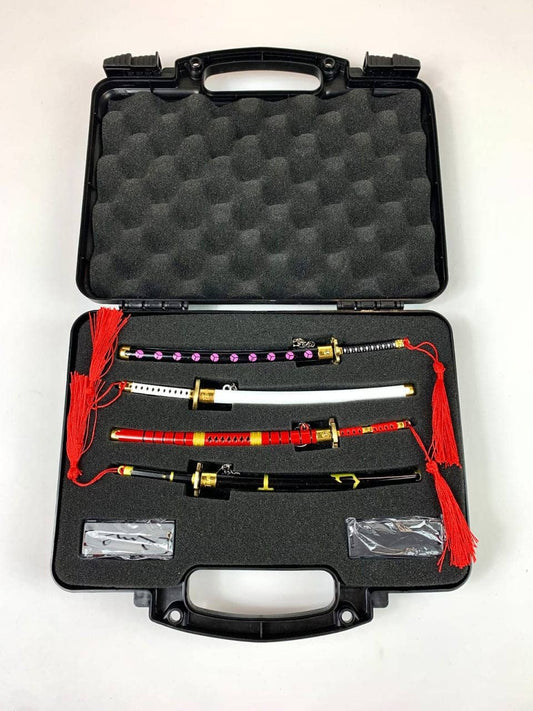


Swords were an essential part of Spanish history, from medieval knights to duels of honor. Today its use is symbolic, sporting or decorative. This article explains when swords ceased to...
Swords have been a historical symbol of power, honor, and military prowess in Spain. From ancient medieval warriors to the knights of the Reconquista, swords played a crucial role in the country's military and cultural history. But what is happening with these weapons today? Let's answer these questions by analyzing their use, their history, and current legislation. When did swords stop being used? The use of swords as weapons began to decline as technological advances transformed warfare. With the advent of firearms, swords ceased to be the primary weapon in combat. However, their presence in military ceremonies and parades continued until more recent times, and in some countries around the world they still retain great social and cultural relevance. Today, swords are mainly used for sporting, collecting, or recreational purposes, such as in historical fencing. In what year did swords cease to be used? It is difficult to pinpoint an exact year in which swords ceased to be used completely, as their disappearance was gradual. In Spain —as in much of Europe— the sword lost its practical function between the end of the 19th century and the beginning of the 20th century, coinciding with the widespread use of modern firearms. During the 19th century, sabers and swords were still used in armies, especially by officers and cavalry, but with the arrival of repeating rifles and automatic pistols, their value as a combat weapon decreased drastically. From then on, swords were restricted to ceremonial, gala or symbolic uses within the armed forces. In civilian life, swords had already ceased to be part of everyday attire towards the end of the 18th century, when carrying a sword in the street went from being a sign of status to an anachronistic custom. Since then, its use has been limited to collectors, historical reenactments, or sport fencing practices. Is it legal to carry a sword in the street in Spain? No. Spanish law prohibits carrying swords or any bladed weapon in public spaces without a justified reason. According to Royal Decree 137/1993, of January 29 (Weapons Regulations), and its subsequent modifications, carrying a sword in the street is considered illegal, except in specific and authorized situations. The safe transport of a sword is only permitted if there is a legitimate reason, such as its transport to exhibitions, museums, fencing training, filming, or cultural events and historical reenactments. In these cases, the weapon must be properly sheathed, protected, and not ready for immediate use. In short, carrying a sword as a weapon or accessory in public is prohibited, as it may constitute the crime of carrying prohibited weapons or a serious administrative offense, depending on the context. When were swords banned? In Spain, it is not prohibited to own or keep swords in the private sphere, provided they are not intended for violent use or carried in public places. The 1993 Weapons Law regulates their possession, transport and use, allowing citizens to keep them in private homes, museums, fencing academies, collectors' shops or historical reenactments. Swords are considered bladed weapons permitted for use in collection, exhibition or sport, but must be kept out of the reach of minors and stored securely. Therefore, owning a sword at home or in a collection is completely legal in Spain, as long as its decorative, sporting or cultural use is respected and it is not used as an offensive weapon or carried in the street without justification. However, since the 1993 Decree cited in previous points, its carrying in public has been regulated, restricted to particular cases and prohibited as an accessory or tool for personal defense. When did swords begin to be used? Swords began to be used in the Iberian Peninsula more than two thousand years ago. From Iberian and Roman swords to the famous Toledo sword, Spain became a benchmark for the manufacture of high-quality edged weapons. During the Middle Ages, swords became established as a symbol of nobility and military prowess, playing a fundamental role in the battles of the Reconquista and in combats between knights.
Read more
In Spain, the regulations on weapons are clear: carrying or using a sword for self-defense is not usually legal, although it could give rise to some debate. This article explains...
The idea of using a sword for self-defense might seem like something out of a movie, but in real life, Spanish firearms regulations are clear and restrictive. Good intentions alone are not enough: the possession, carrying, and use of weapons (including bladed weapons like swords) are regulated by the Firearms Regulations and the Penal Code, which distinguish between possession at home, public display, legal carrying, and prohibited weapons. Which self-defense weapons are legal? In Spain there are approved products for personal defense (for example, approved sprays) whose sale and use are regulated by ministerial orders and health requirements. However, beyond these, any readily available object can be legally used to repel an attack, provided it can be justified under the self-defense provision of the Penal Code. In such cases, the decisive factor is not the object itself, but the circumstances: the existence of an unlawful attack, its immediacy, necessity, the absence of a less harmful alternative, and proportionality between the force used and the attack suffered. The minimum force necessary to neutralize the threat and stop the attack should be used. However, if, for example, brass knuckles or other objects designed to injure, whose possession and use are prohibited, are used, there is a risk of criminal penalties even if self-defense is claimed. Is it illegal to use a sword for self-defense? Using a sword in public as a means of self-defense is, in practice, highly problematic and usually illegal. Many swords, knives, or machetes may be considered "prohibited weapons" or bladed weapons whose possession and carrying in public places are limited or prohibited by the Weapons Regulations. Carrying or displaying a sword in the street may lead to police intervention, confiscation of the object, and administrative or criminal penalties if it is considered a threat or illegal possession. The legal concept that justifies defensive violence is self-defense (Art. 20.4 Penal Code and its interpretation by jurisprudence). For the exemption to apply, certain factors must be present, including the proportionality between the means employed and the aggression. The use of a sword raises the bar: in such a case, it would be examined whether there were less harmful means and whether the response was proportionate. Using a sword—a potentially lethal weapon—will hardly be considered proportionate except in extreme and demonstrably proven situations. What are the permitted uses in self-defense? The law allows the right to self-defense, but always in accordance with the principle of proportionality: the reaction must be necessary and proportionate to the attack. Furthermore, self-defense does not exempt one from liability if the object used is prohibited or its possession is not authorized. The Penal Code punishes the illegal possession of weapons and establishes penalties that may include imprisonment or disqualification. Which self-defense weapons are legal? For self-defense there are legal and regulated solutions: approved sprays (according to health regulations), personal alarms, tactical flashlights and other non-lethal or low-damage devices. Authorized sprays are listed in official catalogs and their marketing and use are subject to homologation and age requirements. Bladed weapons purchased as collector's items or for domestic use are generally only permitted within the home and with restrictions on their transport. They may be used for self-defense if readily available and in compliance with the standards of legitimate self-defense, but this right may not apply if the response was disproportionate, for example, if the weapon causes serious injury or death to the aggressor. It is important to note that the illegal possession or carrying of a firearm, in itself, can lead to liability. Case law is highly nuanced, and each case depends on evidence, witnesses, injuries, and context. What is permitted to carry for self-defense? In practice, the recommended and legal thing to do is to carry only approved non-lethal weapons and avoid any object that could be considered a prohibited weapon. Carrying a sword, a sharp machete, automatic knives, or any other type of weapon on the street can lead to police intervention and possible charges. Security forces are conducting checks to reduce the presence of bladed weapons in public spaces; in some regions, operations and sanctions have been intensified. It is recommended to primarily and exclusively carry approved Pepper Spray. In summary... No, using or carrying a sword in the street for self-defense is not a legally recommended option in Spain: regulations and jurisprudence prioritize proportionality, public safety and the prohibition of dangerous weapons in public. If you're looking to protect yourself, opt for approved, non-lethal means. Check with the Civil Guard or local police to find out which products are authorized and avoid exposing yourself to fines or criminal charges. While prioritizing the use of approved pepper spray is recommended, in cases of imminent threat or other specific circumstances, a special permit may be obtained for other types of defensive weapons. For specific issues, always consult official sources and, if necessary, legal advice. Self-defense courses, classes, and workshops are always a practical and very useful long-term option, as is prevention. In case of an attack, it is recommended to: Prioritize fleeing and asking for help if possible; avoiding confrontation is the safest and legal option. When it becomes necessary to defend yourself, try to use the minimum force necessary to neutralize the threat and stop the aggression. Do not display or carry prohibited weapons (brass knuckles, certain knives, tasers, etc.). It is also recommended to always check that pepper sprays are approved before purchasing them. After the incident: report/notify the police , look for witnesses, take photos of injuries and save any evidence (clothing or objects) and go to a medical service; all this helps to justify the self-defense version. If there are legal consequences, consult a criminal lawyer as soon as possible (jurisprudence is very nuanced and each case is decided by its evidence and context).
Read more
Is it legal to walk around with a sword in Spain? The legislation distinguishes between possession, transport and carrying. Carrying a sword, katana, or dagger in public is prohibited without...
The presence of bladed weapons in the street—swords, katanas, daggers, or knives—frequently raises questions. In Spain, firearms regulations are extensive and distinguish between possession (having something at home), transport (carrying it from one place to another), and carrying (carrying it in public for use). Below we will answer some of your most frequently asked questions. Is it legal to carry a sword? Generally speaking, it is not permitted to carry a sword in public unless there is a legitimate reason (transport from the place of purchase to the home, use in exhibitions, sports practices or accredited collecting). The Weapons Regulations (Royal Decree 137/1993) and the guidelines of the Ministry of the Interior prohibit the carrying and display of bladed weapons when they may generate public alarm or danger; transport must be carried out in a justified and safe manner. Practical advice: If you buy a katana or other sword, keep it sheathed and in the trunk or packaging, and also keep documentation that justifies its use (purchase certificate, proof of registration in club or event). Avoid carrying it in your hand on the street: it may result in fines or police intervention. What weapons can I have at home without a license? The regulations allow the possession at home of many bladed weapons (blunted collectible swords, replicas, decorative sabers), provided they are not expressly prohibited. The Regulation sets exceptions: certain objects (for example, automatic knives or bladed weapons listed as prohibited) cannot be marketed or possessed. The Civil Guard and the Ministry of the Interior distinguish between weapons that require authorization and objects permitted for collecting or home decoration. Recommendation: Keep the pieces at home, out of public view, preferably in display cases or boxes, and avoid sharpening replicas that were sold without an edge (sharpening can turn the piece into a problematic object). Is it illegal to have a sword at home? No, owning a sword at home is not automatically illegal , as long as it is not prohibited by law and is not used to intimidate or commit crimes. Yes, it can be illegal if it involves weapons expressly prohibited by the regulations (for example, certain types of automatic knives or listed models). If in doubt, consult the list of prohibited weapons from the Ministry of the Interior and the weapons classification of the Civil Guard . What non-lethal weapons can I use for self-defense? In Spain there are approved and limited options: self-defense sprays (pepper) approved, approved batons and other non-lethal devices approved by health authorities and the Weapons Regulations. Not all aerosols or devices are permitted: only those approved by health authorities appear on official lists. Use should be limited to proportionate self-defense; misuse may constitute a crime. Examples and precautions: Approved pepper spray : permitted to carry and use for self-defense (provided it is one of the authorized models). Consult the official list from the Ministry of Health. Batons or defensive items : their civilian use is regulated; they will function as a defensive tool only if the action respects proportionality. In summary Owning a sword at home is legal, unless it is of a prohibited type, but Carrying it in public is prohibited except for justified reasons (transport, sport, exhibition or accredited collecting). For self-defense, the accepted and safe option is approved devices (authorized sprays, approved batons) and, above all, training in self-protection and prevention measures. If you have any doubts about a specific model (katana, decorative sword, knife), it is advisable to check its classification in the Weapons Regulations and consult with the Civil Guard or the Ministry of the Interior, and their list of prohibited weapons.
Read more