


América
Astronomical Knowledge of the Mayans: Predictions, Calculations, and Meanings
Systematic Sky ObservationThe Mayan civilization, which flourished from approximately 2000 BCE to the 16th century, d...




In this fourth part, insect-inspired Pokémon reach a deeper symbolic level, transforming into almost mythical figures. Creatures like Scizor, Frosmoth, or Iron Moth combine real biology with concepts of evolution, technology,...
In this fourth part, the entomological inspiration reaches its most symbolic form. Here, insects cease to be simple natural creatures to become legendary entities, guardians of balance, omens, and almost divine figures. Pokémon uses real biology as a starting point, but transforms it into mythology, spirituality, and abstract concepts deeply linked to Japanese and universal culture. Scizor – The Steel Insect Scizor derives from Scyther, but its inspiration expands towards armored beetles and the idea of forced evolution. It maintains the predatory insect structure, with limbs adapted for combat. The Steel type symbolizes an unnatural, almost industrial evolution. Scizor represents the fusion between living organism and weapon, a reinterpretation of the insect as a perfect combat machine, where biology is subjected to extreme optimization. Accelgor and Escavalier – Evolution and Rivalry Both are based on shelled insects, especially beetles, reinterpreted from a symbolic perspective. Escavalier represents armor, defense, and slowness; Accelgor, the loss of the shell in exchange for speed. This alternative evolutionary line poses a unique concept: gaining something means losing something else. Here, Pokémon uses entomology to talk about sacrifice, adaptation, and opposing evolutionary paths. Frosmoth – The Ice Moth Frosmoth is inspired by arctic moths (or "poodle" moths) and insects adapted to extreme climates. Its wings, furry body, and delicate flight faithfully reflect real moths. Frosmoth merges fragility and resilience. It represents ephemeral beauty that survives in hostile conditions, becoming an almost poetic figure within the Pokémon bestiary. Centiskorch – The Inner Fire Centiskorch is based on centipedes and other elongated arthropods. Its segmented body and multiple legs clearly resemble these animals. Fire symbolizes inner energy and aggression. Centiskorch exaggerates the primal fear of long, fast insects, transforming it into a volcanic creature that embodies chaos and constant threat. Slither Wing – The Primitive Past Slither Wing is inspired by moths, reinterpreted from a prehistoric approach. It maintains recognizable wings, antennae, and insectoid structure. But it represents an ancestral, wilder, and more powerful form. Here, the insect is not delicate, but a primitive predator, reminding us that evolution does not always lead to fragility, but also to brute strength. Iron Moth – The Artificial Future Iron Moth also takes a moth as its base, fused with a futuristic design. Although the basic silhouette is still that of a winged insect. This Pokémon represents the opposite extreme to Slither Wing: technological evolution. The insect becomes a machine, symbolizing a future where nature is reinterpreted, replicated, or replaced by technology. Kleavor – The Totemic Insect Kleavor is inspired by hard-shelled insects and natural cutting tools. Its arms resemble limbs adapted for felling or defending territory. Kleavor connects the insect with the ritual and the ancestral. Its design evokes stone totems and primitive tools, uniting biology, spirituality, and ancient culture in a single creature. When inspiration becomes myth At this stage of the saga, Pokémon no longer just observes insects: it mythologizes them. It transforms them into symbols of the past, of the future, of natural balance, and of the conflict between biological and artificial evolution. Satoshi Tajiri's original inspiration reaches its most mature form here. The child who collected insects gave way to a universe where these tiny creatures represent ideas as grand as time, technology, survival, and identity.
Read more
Wonder Woman's weapons combine Greek mythology, divine magic, and heroic symbolism within the DC universe.From the Lasso of Truth to the Godkiller Sword, each artifact reflects values such as justice,...
Wonder Woman is one of the most complex and symbolic figures in the DC universe. Diana of Themyscira is not only an Amazonian warrior and immortal princess but also the bearer of an arsenal deeply linked to Greek mythology, divine magic, and the concept of just war. Her weapons do not represent wanton destruction, but rather balance, truth, and the defense of the innocent, making her a bridge between the human and the divine. The Lasso of Truth: a symbol of justice and honesty The Lasso of Truth, also known as the Lasso of Hestia, is Wonder Woman's most iconic weapon. Forged by Hephaestus with divine energy, it is unbreakable and compels anyone caught in it to tell the truth, in addition to breaking spells and illusions. This magical artifact symbolizes Diana's absolute commitment to truth, moral justice, and compassion, differentiating her from other superheroes focused solely on strength. The Amazon Bracelets: defense and self-control Wonder Woman's bracelets, forged from Zeus's shield, are indestructible and capable of deflecting bullets, energy, and magical attacks. By clashing them together, Diana can release devastating shockwaves. Beyond their defensive function, they represent Amazonian discipline, the self-control of power, and the historical memory of the slavery overcome by the Amazons. The royal tiara: leadership turned into a weapon Wonder Woman's tiara is not just a symbol of royalty. Made of sacred metal, it can be used as a highly accurate throwing weapon. This object embodies her dual role as warrior and peace ambassador, uniting leadership, honor, and divine heritage. Divine swords: slaying gods and fighting with wisdom Among the most powerful weapons is the Godkiller Sword, capable of harming or destroying divine entities. It appears in both comics and films, especially in Batman v Superman and Wonder Woman. It represents the challenge to destiny and courage in the face of the absolute. Alongside it, the Sword of Athena symbolizes strategic and ethical warfare. Associated with the goddess of wisdom, it reinforces the Amazonian ideal of fighting with intelligence, honor, and moral purpose. Shield of Themyscira and Gaea's girdle Wonder Woman's shield, forged with Amazonian magic, offers almost absolute protection against physical and supernatural attacks. It is the emblem of the defense of the innocent and resistance against chaos. Gaea's girdle, for its part, increases Diana's strength and resilience, connecting her with the vital energy of the earth. It symbolizes balance, nature, and ancestral power. Asteria's golden armor and minor artifacts Asteria's golden armor, seen in Wonder Woman 1984, allows flight and withstands extreme damage. It is a tribute to Amazonian heroic sacrifice. Additionally, Diana has used other magical artifacts such as the Spear of Artemis, the Mirror of Circe, and relics associated with Hermes and Gaea. An arsenal based on eternal values Wonder Woman's weapons are not mere combat tools. Each reflects values such as justice, truth, wisdom, honor, and compassion. Diana of Themyscira does not fight for conquest, but for balance, demonstrating that true power resides in ethics and an unshakeable will.
Read more
In this third part on insect-inspired Pokémon created by Satoshi Tajiri, we explore how these designs have evolved from simple references to nature to much more complex and symbolic concepts....
From Nature to Myth: The Most Complex Insects in the Pokémon Universe Over the generations, entomological inspiration in Pokémon has evolved. What began as an almost direct representation of real insects observed in Satoshi Tajiri's childhood transformed into more complex designs, where biology blends with symbolism, exaggeration, and almost spiritual or mythological concepts. In this third part, we analyze Pokémon that no longer just reflect real insects, but abstract ideas such as metamorphosis, loss, vital energy, or the scientific exaggeration of the natural world. Nincada, Ninjask, and Shedinja – The Molt and the Void Nincada is inspired by cicada nymphs, insects known for spending years underground before emerging. The evolution process reflects the molting of the exoskeleton typical of many insects. Ninjask represents extreme speed after metamorphosis, while Shedinja introduces a unique concept: an "empty body" that comes to life. Shedinja symbolizes the abandoned husk, taken to an almost spiritual plane, becoming one of the most conceptual Pokémon in the entire saga. Volcarona – The Solar Moth Volcarona is inspired by moths, but reinterpreted from a mythological approach. Its wings clearly resemble those of a moth, with symmetrical patterns and a delicate structure. However, Volcarona does not just represent an insect, but the sun itself. According to the Pokédex, its presence replaced sunlight when it was scarce, making it a symbol of rebirth, warmth, and survival. Here, entomology merges with mythology. Scolipede – The Giant Centipede Scolipede is based on centipedes, arthropods known for their speed and venom. The segmented body, multiple legs, and aggressive posture faithfully reflect these animals. Pokémon exaggerates its size and ferocity, transforming it into a nightmare creature. Its venomous attacks and speed symbolize the ancestral fear of fast, hard-to-control arthropods. Durant – The Strength of the Swarm Durant is inspired by ants, one of the most organized social insects on the planet. Its design reflects the segmented structure and jaws of worker ants. Durant represents collective power over individual power. Its resilience and capacity for work symbolize the strength of the group, a concept very present in both nature and Japanese culture. Buzzwole and Pheromosa – Scientific Exaggeration Buzzwole and Pheromosa, belonging to the Ultra Beasts, are based on insects like mosquitoes and cockroaches, taken to an almost experimental extreme. Despite their exaggerated design, they retain key features of real insects: segmented bodies, multiple limbs, and recognizable structures. Buzzwole represents muscle hypertrophy and uncontrolled energy, while Pheromosa embodies speed and extreme fragility. Both seem more the result of a scientific experiment than simple natural observation, marking a radical shift in the original approach. Metamorphosis, Void, and Transcendence in Pokémon Design In these later generations, Pokémon stops limiting itself to reproducing real insects and begins to explore deeper ideas: metamorphosis as destiny, the empty husk as a spiritual symbol, the insect as a deity or as an experiment. Satoshi Tajiri's inspiration doesn't disappear, but evolves. What began as a children's game of catching insects becomes a complex symbolic language, where nature serves as a basis for talking about life, transformation, and power. With this third part, it becomes clear that insects not only gave rise to Pokémon, but grew with the saga, transforming into some of its deepest and most memorable concepts.
Read more
The Spider-Man: Brand New Day trailer has sparked numerous theories among fans after breaking viewing records. Far from revealing the plot, the preview suggests key changes to the character: possible...
The trailer for Spider-Man: Brand New Day has become one of the most significant phenomena in recent cinema after achieving record-breaking viewership in record time. However, beyond the media impact, what has truly caught attention is the type of speculation it has generated. Unlike other trailers in the genre, this one features no villains, shows no clear confrontations, and avoids any scene that would allow for identifying the main plot. This forces the analysis to focus on the visible details. An Isolated Protagonist The Spider-Man: Brand New Day trailer confirms that Peter Parker is still completely alone after the events of Spider-Man: No Way Home, where he accepts that the world forgets who he is through a spell that erases his identity from everyone's memory, thus losing all personal ties. From there, the most widespread theories suggest that this isolation could be the trigger for his deepest transformation. Part of the fandom suggests that solitude is accelerating Peter Parker's mutation. Other interpretations go further, suggesting that this process could lead to a darker version of the character, where the main conflict would not be external, but internal. We also have here a letter written by Peter that a fan took the trouble to translate despite its fleeting appearance, it says: “Hi, my name is Peter Parker, and you don’t remember me, but I have something to tell you that’s going to sound crazy. It’s the truth, and I know you’re going to believe me, because you’re so good at knowing when I’m lying.We used to know each other. We were together. But something bad was going to happen to the world and the only way to stop it was to make everyone forget about me. Because I’m not just Peter Parker, I’m Spider-Man.And sometimes, Spider-Man has to do the hard thing, even if it breaks Peter Parker’s heart. Maybe you’ll never read this. Maybe I’m just writing this for myself. Maybe that’s my responsibility. To live alone with the truth.But the truth is, I love you. And I hope deep down, something inside you (remembers?) that you love me too.” This has led to speculation, not only that the burden of being forgotten is beginning to weigh on his shoulders, but that he might be torn between approaching his former girlfriend or not, and that he might be tempted to reveal his identity. In this same vein, many fans have speculated that she might again discover his identity as Spider-Man on her own, or that he might reveal it, leading to two different viewpoints: that she would believe him, as her instinct had told her so before, and she might feel familiar with him; or that she would not believe him, as she doesn't remember him well enough to detect anything strange in his behavior, given that she would remember him always as Spider-Man, so his actions wouldn't feel different to her... Villains: The Visible Absence as the Main Clue Another key aspect of the Spider-Man: Brand New Day trailer is that no identifiable villain appears. There are no clear faces or silhouettes that allow for recognizing a specific enemy, although a combat scene is shown at the end of the preview without revealing the identity of those involved. However, in several sequences, a strange phenomenon is perceived: something invisible seems to move from one body to another, as if a presence passes between different people to escape. It is not shown directly, but the effect is there and has been noted by part of the fandom. Furthermore, there is a mention in the trailer itself of facing an enemy they cannot see. From what is visible, several interpretations emerge. One of the most commented on is that this "something" could be an entity linked to the multiverse, even interpreted by some as a kind of presence or consciousness that uses bodies to move undetected. For those who don't give relevance to that detail, the theories go in another direction: that Spider-Man himself could become the axis of the conflict, not necessarily as a traditional villain, but as an unstable figure, supported by Banner's comment that, if he is mutating, it could be dangerous. Changes in Visual Approach The Spider-Man: Brand New Day trailer includes action and combat scenes, with visible confrontations at different points in the preview. However, it does not focus its promotion on large destructions or spectacular explosions. Based on this, theories focus on the possible tone of the story. Some fans suggest that a storyline related to the loss of control over Peter Parker's abilities could be explored, while others interpret that the approach could be darker, centered on the consequences of that possible mutation. Changes in the Character's Powers: The Most Important Speculation One of the most widespread debates surrounding Spider-Man revolves around the evolution of his powers and what that implies for his very nature. Throughout different stories, it has been suggested that his abilities are not static, but can develop over time, becoming more precise, more intense, and even more arachnid-like than human. This idea has led many to interpret that he is not just a hero who improves, but someone who could be progressively transforming into something different. On the one hand, there are those who argue that this evolution is a logical extension of his origin: if his powers come from a biological alteration, it is consistent that this alteration continues to adapt. In this context, the trailer reinforces the idea of this possible change by showing the character hanging from a web outside a window, not wearing his suit. The scene suggests that the web was created by himself, in a state of sleepwalking or unconsciousness and not through the technological devices he used, which suggests that this version of Spider-Man would not be one that depends on technology, but one that possesses biological webs on its own. The presence of figures like Hulk in his human form is also shown, at a moment when he seems to explain to Peter Parker the transformation process and the phases related to a spider. This interaction points directly to the idea that the character could be going through an initial phase of change, linked to the origin or intensification of his powers. In this part, it is mentioned that a spider goes through three phases of transformation during which it is vulnerable, and if it survives, it could be considered a rebirth, something that can be thought to allude to the film's title indirectly. This fact is what leads many fans to consider that this Spider-Man could be Man-Spider, the "Spider-Man," and that the mutation leads him to cross the border of what is human. Some fans interpret that, as Spider-Man and the X-Men have shared stories in the comics in which Parker is even a professor within the mutants' school, Marvel is trying with this film to leave the door open for a next one that includes that connection, even speculating that this Spider-Man could be the one who goes to Charles Xavier for help.
Read more
The second season of One Piece continues the live-action adaptation of Eiichiro Oda's manga, solidifying its position as one of Netflix's most ambitious productions. In this new installment, Monkey D....
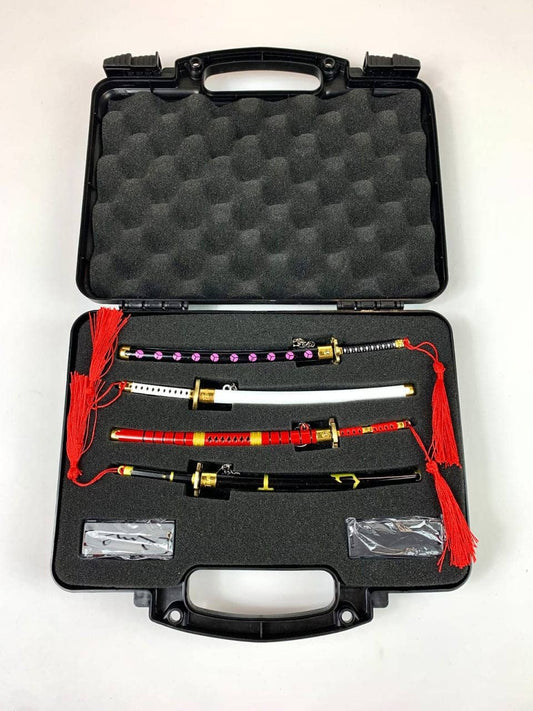
The live-action adaptation of One Piece, based on Eiichiro Oda's manga, solidified its position as one of Netflix's most ambitious projects. The series combines adventure, fantasy, and pirates in a format that respects the original material, making it a phenomenon within live-action anime adaptations. Its success not only attracted manga followers but also new viewers unfamiliar with the original universe. Season 1 Summary The first season introduced Monkey D. Luffy and his goal of becoming the King of the Pirates. Throughout the episodes, the origins of the Straw Hat crew, including Roronoa Zoro, Nami, Usopp, and Sanji, are developed. The narrative covers key arcs of the East Blue, with an emphasis on the formation of the group and the initial confrontations against significant enemies, laying the groundwork for future development. Season 2 Launch and Reception Following the premiere of the second season of One Piece (live action) on Netflix on March 10, 2026, with 8 episodes released simultaneously, the reception among the public and critics has been overwhelmingly positive, particularly highlighting its faithfulness to Eiichiro Oda's manga and the improvement in narrative scale, visual effects, and production design. One of the most commented aspects has been the introduction of Tony Tony Chopper, whose live-action adaptation generated great anticipation and, after his debut, has received a generally favorable welcome, valuing the balance between realism and respect for the character's original design. Likewise, the incorporation of new characters and the crew's progress have been well-received, solidifying the expansion of the series' narrative universe. In terms of audience, the season has maintained strong performance within the platform, ranking among the most-watched content during its launch and reinforcing the series' position as one of the most successful live-action adaptations in Netflix's recent catalog. Returning Characters and New Additions The second season retains the main protagonists: Monkey D. Luffy continues to lead the crew, accompanied by Roronoa Zoro, Nami, Usopp, and Sanji. Among the new characters, the introduction of Tony Tony Chopper stands out, as well as antagonists and allies related to more complex organizations in the series' universe, including key characters from the Alabasta and Drum Island sagas, such as Captain Smoker, Nefertari Vivi, Tashigi, and the villain Crocodile. These additions expand the development of relationships and internal conflicts. Plot of the New Season Season 2 extends the story beyond the East Blue, introducing entry into the Grand Line, a much more dangerous sea zone. The plot incorporates new challenges, islands, and conflicts, including the appearance of organizations like Baroque Works. This implies a change in narrative scale, moving from local adventures to conflicts with greater impact within the pirate world, where the protagonists' decisions have broader consequences. Universe Expansion and Narrative Elements One of the most relevant aspects of this season is the expansion of the universe, with greater development of the power system, new island cultures, and a more complex narrative. The production relies on more elaborate visual effects and diverse settings to represent the Grand Line, consolidating the epic tone of the story. Furthermore, the characters' backstories are delved into, adding greater emotional depth and psychological evolution. Season Production and Development Filming for the second season of One Piece (live action) proceeded with a higher budget than the first installment, reflecting Netflix's confidence in the project. The planning included the adaptation of several important narrative arcs from Eiichiro Oda's manga, which has allowed for an expansion of the story's scale and the consolidation of the narrative universe's development in this new stage of the series. Following its premiere, the season has reconfirmed its success within the platform's catalog, remaining among the most-watched content during its first few weeks. The positive reception from both the public and critics has reinforced the long-term viability of the project, opening the door for future seasons to continue adapting the main arcs of the manga, thus confirming the strength of the adaptation and its ability to consolidate itself as one of the most relevant franchises in the live-action format. For now, however, the third season can already be considered confirmed, as filming began in November of last year, 2025.
Read more
In this second part, we analyze more insect-inspired Pokémon created by Satoshi Tajiri, delving into their relationship with Japanese culture, entomology, and the creative evolution of the Pokémon universe. From...
More Insects in Pokémon: Japanese Culture and Creative Evolution Satoshi Tajiri's fascination with insects was not limited to the most obvious or popular forms. As the Pokémon universe grew, so did the diversity of creatures inspired by the world of arthropods, incorporating complete life cycles, real behaviors, and cultural references deeply rooted in Japan. In this second part, we explore Pokémon inspired by less traditional but equally significant insects, which expand Tajiri's original vision and demonstrate how observing nature continued to influence the design of new generations. You can also see the first part: "Some Pokémon created by Satoshi Tajiri, inspired by insects that fascinated him - Part 1" Ledyba and Ledian – The Protective Ladybugs These Pokémon are based on ladybugs, insects associated in many cultures with good luck and natural balance. Similarities Their rounded bodies, vibrant colors, and spot pattern clearly reflect real ladybugs. Abilities Ledian excels in support and speed moves, more geared towards cooperation than direct attack. This connects with the symbolic image of ladybugs as harmless and beneficial creatures. Spinarak and Ariados – The Lurking Spider Although not strictly insects, Spinarak and Ariados are inspired by spiders, arthropods frequently included in entomological studies and Japanese iconography. Similarities Their body structure, long legs, and ability to spin webs clearly recall nocturnal hunting spiders. Abilities Their attacks like Sticky Web or Pin Missile reflect real hunting and prey capture techniques, exaggerated for Pokémon combat. Yanma and Yanmega – The Dragonflies of the Sky Yanma is inspired by dragonflies, insects highly valued in Japan as symbols of speed, strength, and determination. Its evolution, Yanmega, maintains that inspiration but expands it with traits of prehistoric giant dragonflies, explaining its larger size and more powerful appearance. Similarities Their large compound eyes, transparent wings, and elongated body faithfully reproduce the anatomy of real dragonflies. Abilities Yanma and Yanmega stand out for their speed and aerial attacks, reflecting the ability of these insects to change direction mid-flight and hunt with precision. Heracross – The Rhinoceros Beetle Heracross is based on rhinoceros beetles, extremely popular in Japan, where symbolic fights between these insects are even held. Similarities The large frontal horn and robust build match the real species traditionally used in these encounters. Abilities Heracross combines brute strength with grappling and charging techniques, exaggerating the competitive and territorial behavior of these beetles. Shuckle – Absolute Defense Shuckle blends elements of shelled insects with other small arthropods that use natural shelters for protection. Similarities Its body retracted inside a shell is reminiscent of insects that hide in cracks, logs, or other shells to survive. Abilities Shuckle stands out for its extreme endurance and defensive abilities, reinforcing the idea that survival does not always depend on strength, but on adaptation. When Observation Becomes Myth This second selection demonstrates that Satoshi Tajiri's inspiration went far beyond the most obvious insects. Through life cycles, real behaviors, and Japanese cultural symbolism, these Pokémon expand the original universe and consolidate the relationship between nature, imagination, and design. Far from being simple combat creatures, these Pokémon reflect a keen observation of the natural world and a deep cultural connection with insects, silent pillars of Pokémon's birth.
Read more
In the Harry Potter universe, the magic wands of Hogwarts professors reflect their personality, history, and abilities. From Dumbledore and the Elder Wand to McGonagall and Snape, each wand symbolizes...
In the world of Harry Potter, magic wands are not just tools, but extensions of the soul and personality of the one who wields them. Each wand reflects the essence of its owner, showcasing power, wisdom, and character. Especially at Hogwarts, the renowned school of magic, professors possess wands that symbolize their abilities and teachings, making them key elements in understanding the magic and history of their occupants. Hogwarts: Center of Magic and Teaching Founded millennia ago, Hogwarts has been home to generations of witches and wizards. Divided into four houses—Gryffindor, Slytherin, Hufflepuff, and Ravenclaw—the school not only teaches spells, charms, and potions, but also values such as courage, loyalty, and cunning. Each professor, from Dumbledore to Umbridge, has a wand that reflects their personality and the subject they teach, uniting magical symbolism with education and leadership. The Professors and Their Wands Albus Dumbledore Dumbledore's wand, the Elder Wand, is one of the Deathly Hallows. Made of elder with a Thestral tail-hair core, it symbolizes supreme power, responsibility, and wisdom. It represents the combination of knowledge, sacrifice, and kindness, teaching students that true power lies in ethics and understanding. Minerva McGonagall Her wand, made of oak with a unicorn hair core, symbolizes transformation and discipline. Elegant and precise, it reflects her ability to guide students and her mastery of Transfiguration magic, showing how skill and intelligence can coexist with authority. Severus Snape Snape's wand, made of ebony with a phoenix feather core, represents duality, control, and profound knowledge. It reflects his aptitude for magical defense, advanced options, and his personal history marked by sacrifice and silent protection. Pomona Sprout Sprout's wand is a vine wand, a symbol of growth and nature. It reflects her connection to magical herbs and plants. It teaches the importance of Herbology and how magic can be in harmony with natural life and fertility. Filius Flitwick Flitwick carries a small cherry wood wand with a bird feather core. It represents agility, skill, and precision. Its use in Charms highlights the importance of control and creativity in magic, adapting to any magical situation. Rubeus Hagrid Although his wand is broken, Hagrid demonstrates that magic also lies in love, understanding, and the care of magical creatures, reminding us that power does not always depend on the perfection of the instrument. Sybill Trelawney Trelawney's wand is a willow wand, linked to intuition and perception. It symbolizes mystery and connection to the unknown. It teaches how divination and magic can be connected to the mind and spirit. Gilderoy Lockhart Ash wand with a bird feather core. It reflects vanity and a desire for recognition, reminding students that fame does not replace real courage or ethics in magic. Remus Lupin Ash wand with a wolf hair core. It represents resilience, control, and the teaching of dark magic. His story shows how to overcome personal difficulties and teach with empathy. Dolores Umbridge Umbridge's is a willow wand with a bird feather core. It symbolizes authoritarianism and control, recalling the dangers of misused power and the need for resistance against oppression.
Read more
CLAMP is a Japanese collective known for creating interconnected universes within manga and anime. Since the late 1980s, their works have shared characters, concepts, and alternate worlds that form a...
CLAMP is a creative collective founded in 1987 by Satsuki Igarashi, Ageha Ohkawa, Tsubaki Nekoi, and Nanase Ohkawa. Over several decades, the group has developed an extensive catalog within manga and anime, with works published in various genres and formats, and has masterfully linked them together. This article analyzes some representative titles, not as an exclusive selection, but as clear examples that allow understanding their system of interconnected universes, one of CLAMP's most recognizable hallmarks. The Concept of Interconnected Universes in CLAMP A central characteristic of CLAMP's work is the structural reuse of characters, settings, and narrative concepts. This approach appears recurrently in much of their production and allows different stories to share recognizable links. Characters can appear in alternate contexts, with different roles, but maintaining common traits. This narrative resource is not anecdotal, but a planned element that connects multiple works within the same creative framework. Some Notable Titles Magic Knight Rayearth and the First Alternative Worlds (1993) This is one of the first clear examples of this approach. The series features three protagonists transported to a fantasy world with a specific mission. It introduces elements such as interdimensional travel, rules unique to each world, and relationships that influence the plot's development. Although CLAMP had other earlier works, this title clearly identifies the basis of their multiversal narrative. Cardcaptor Sakura and the Consolidation of the Model (1996) Cardcaptor Sakura solidified the studio's international success. The story follows Sakura Kinomoto, tasked with retrieving the Clow Cards after their accidental release. The series presents a defined episodic structure, with constant plot progression and character evolution. Although it is not the only CLAMP work with these characteristics, it is representative for its narrative clarity and its balance between adventure, magic, and character development. xxxHolic and Explicit Connections Between Works (2003) With xxxHolic, a more supernatural approach is adopted through the story of Kimihiro Watanuki, a young man capable of seeing spirits. The series establishes direct connections with other works of the studio, both in terms of characters and concepts. These relationships confirm that CLAMP's stories do not function in isolation, but as parts of a larger narrative framework. Tsubasa: Reservoir Chronicle and the Shared Multiverse (2005) This is one of CLAMP's most ambitious projects. It brings together alternate versions of characters from different series in a story centered on inter-world travel. The plot is based on clear rules about time, space, and memory, and acts as the central axis of the multiverse created by the studio, reinforcing the interconnection between titles. Continuity and Narrative Expansion in Cardcaptor Sakura: Clear Card (2016–2019) Cardcaptor Sakura: Clear Card continues the original story with new magical elements and conflicts. The series maintains consistency with previous events and demonstrates CLAMP's ability to expand a narrative without breaking its internal structure, something also observed in other continuations and reinterpretations within their catalog. Artistic Style and Visual Coherence CLAMP's visual style is characterized by stylized figures, detailed designs, and a recognizable aesthetic. This approach remains constant in most of their works, including many not mentioned in this article, facilitating character identification and reinforcing the visual unity of their narrative universes. Expansion of the Shared Universe In addition to the mentioned titles, there are many other equally notable works, such as Tokyo Babylon, Chobits, Kobato, Clover, or Legal Drug, among others, which are also part of the collective's creative framework. In these, one can trace thematic echoes, character reuse, and subtle—or explicit—connections with other series, reinforcing the idea of an expanded narrative universe. These interrelationships, which include alternate versions of characters or cross-appearances, consolidate the multiverse as one of CLAMP's distinctive features.
Read more
Over the decades, March has been a key month for the release of films that transformed modern cinema.From the rise of gangster films to the consolidation of science fiction and...
The month of March is not usually associated with major summer or Christmas commercial releases, but over the decades it has been the starting point for some of the most influential films in audiovisual history. From modern cinema classics to television fictions that redefined narrative. Below, we review some of these films released in March, with a precise summary of their plot to understand why they remain relevant today. The Godfather / 1972 – 54 years ago Directed by Francis Ford Coppola, The Godfather was released in March 1972 and is considered one of the best films in cinema history. The plot follows the Corleone family, a powerful Italian-American organized crime organization, and focuses on the transformation of Michael Corleone, who goes from being a young man outside of family business to becoming a ruthless leader. The film revolutionized mob cinema, offering a complex view of power, family loyalty, violence, and moral corruption. Its influence extends to this day, both in cinematographic language and in the construction of criminal characters and narratives. The Matrix / 1999 – 27 years ago Released in March 1999, The Matrix marked a before and after in contemporary science fiction. The film posits that humanity is trapped in a simulated reality created by intelligent machines to subdue human beings. Neo, the protagonist, discovers the truth and joins a resistance fighting to free humanity. Beyond its plot, The Matrix made an impact with its visual aesthetics, technical innovations, and philosophical depth, exploring concepts such as identity, freedom, and the control over being creators of our own destiny. Its March release cemented its place as one of the most influential works in action and science fiction cinema. Logan / 2017 – 9 years ago Logan was released in March 2017 and represented a break within superhero cinema. Set in a near future, the story features an aging, weary, and physically deteriorated Wolverine, living in hiding while caring for a weakened Professor X, until the appearance of a girl with similar abilities forces Logan back into action. The film addresses themes such as sacrifice, fatherhood, decay, and redemption, offering a more mature and realistic approach to the genre. It is considered one of the most mature comic book adaptations ever made. Beauty and the Beast (live action) / 2017 – 9 years ago The live-action adaptation of Beauty and the Beast was also released in March 2017. Based on the classic Disney animated film, the film tells the story of Belle, an intelligent and independent young woman, and her relationship with a cursed beast who must learn to love to break a spell. The film was a huge commercial success and solidified the trend of Disney live-action remakes, although not all of its live-action films have had the same success. Its March release showed that this month can also be key for large family and romantic productions within fantasy cinema.
Read more
