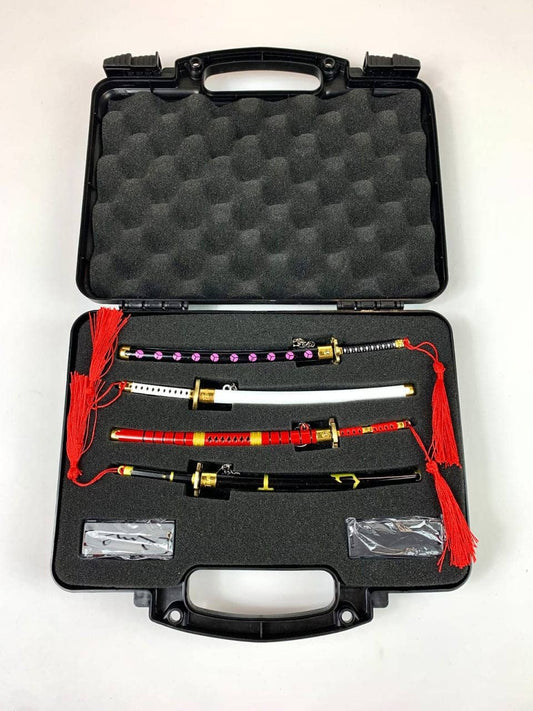


Masamune and Muramasa, Two Opposing Masters of Katana Forging
The legendary katanas of Gorō Nyūdō Masamune and Muramasa have transcended time, becoming an essential part of Japanese folklore. They reflect the duality between good and evil, a recurring concept in samurai culture. These samurai swords stand out not only for their beauty and craftsmanship but also for the stories of mysticism and power that surround them.

The Wisdom of Masamune: The Saint of Katanas
Masamune, known as the "saint of katanas," was a master swordsmith of the Kamakura period (1185-1333). His forging technique was unparalleled, achieving a perfect balance between hardness and flexibility. His swords were not only deadly weapons but also symbols of honor, justice, and masterful craftsmanship.
Masamune's katanas were renowned for their sharpness, strength, and elegant design. It is said that he imbued his creations with a spiritual aspect, making them much more than mere weapons. Katana forging in Japan is an ancient art, and Masamune elevated this practice to a legendary level.

The Shadow of Muramasa: Cursed Swords
Muramasa, unlike Masamune, is remembered for forging katanas with extraordinary sharpness, yet enveloped in a sinister aura. Born approximately two centuries after Masamune, his swords were considered "bloodthirsty" and believed to induce madness and violence in their wielders.
Many Japanese legends attribute a kind of "curse" to Muramasa's swords, which has made them objects of fascination for lovers of samurai history and legendary sword forging. Although, of course, there is no concrete evidence of this supposed curse, the stories have persisted in popular culture.
The Encounter of Masamune and Muramasa: A Timeless Myth
It is often said that Masamune and Muramasa were rivals, even though historical reality tells us they lived almost 200 years apart. However, their swords coexisted in the same time and space, giving rise to fascinating myths about confrontations between the two smiths, especially due to the differences that make them almost opposites: Masamune, a symbol of calm and moderation, contrasted with Muramasa's impetuous and violent image.
One of the most well-known tales is the Challenge of the Swords, in which both smiths test their creations in a stream. Muramasa's katana, Juuchi Fuyu ("merciless winter"), indiscriminately cut everything it touched, whereas Masamune's, Yawarakai-Te ("tender hand"), avoided damaging what was unnecessary. A monk who witnessed the test declared that Masamune's katana was the true masterpiece, as it distinguished between good and evil.

The Waterfall Test and Katana Forging, another version of Masamune vs Muramasa
Another similar legend, or perhaps another version of the same, tells that Masamune and Muramasa forged swords for the shogunate and, to prove their quality, they threw them into a waterfall. Muramasa's sword cut every drop of water it touched, while Masamune's glided through the water without resistance. This narrative reinforces the perception that Masamune created sacred swords, while Muramasa was the forger of cursed weapons.
The Legacy of Masamune and Muramasa in Popular Culture
The duality between Masamune and Muramasa goes beyond legends; it represents the eternal struggle between balance and chaos. Their legendary samurai swords have inspired countless stories, anime, manga, and video games, keeping alive the fascination with Japanese katana forging.
Through these stories, interest in the history of Japan and its traditions continues to grow. Every katana tells a story, and every ancestral forge hides secrets yet to be discovered. In a world where the line between myth and reality is blurred, the legends of Masamune and Muramasa continue to captivate those who seek the art and mystery of samurai swords.
Perhaps they are not legendary swords, but if you take a look at our katanas here, you surely won't regret it.